Brevity between pages: Remembering the legacy of Austin Clarke
On September 27, 2024, Toronto Metropolitan University (TMU) hosted the second day of a two-day conference on acclaimed Barbadian-Canadian author Austin Clarke, organized in collaboration with McMaster University. Conference attendees gathered to reflect on the transnational and diasporic context of Clarke’s writing and discuss his legacy and the future of Black Studies.
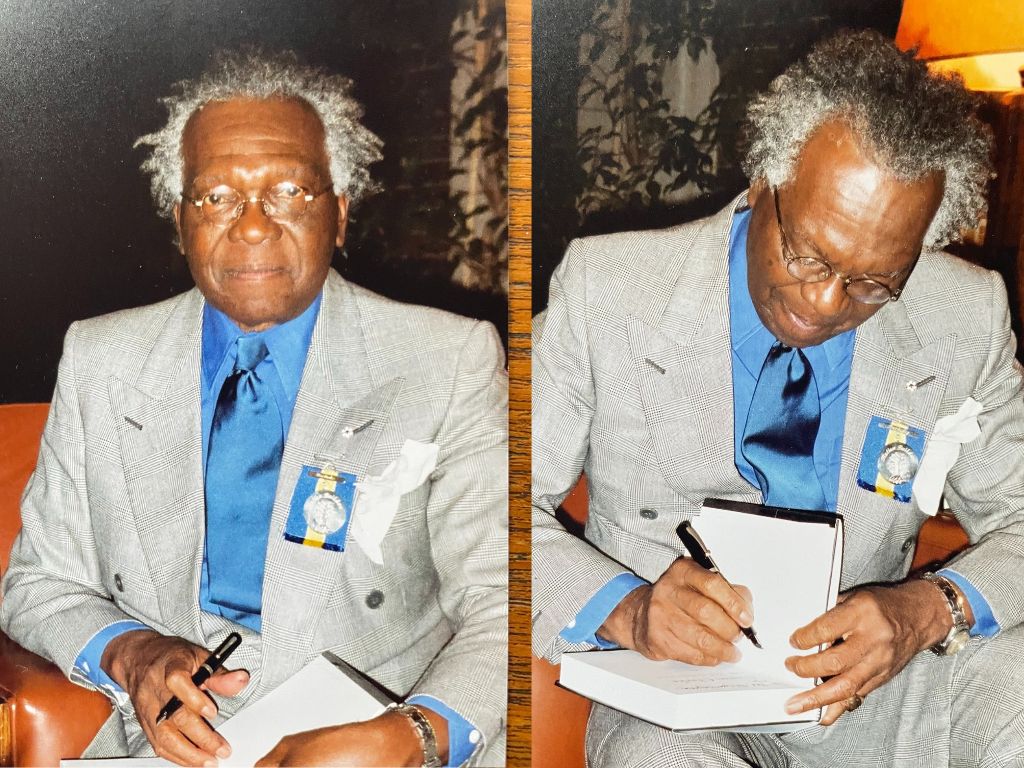
Austin Clarke. Photos courtesy of Patrick Crean.
Clarke’s prolific career included working as a columnist and broadcaster, lecturing on Creative Writing and African American literature, advocating for the Civil Rights movement and the formalization of Black Studies programs; however, he is most remembered for writing fiction that explored the complex lives of Caribbean immigrants in Toronto and for his trailblazing role in Black Canadian fiction.
His most celebrated works include the Toronto Trilogy, The Survivors of the Crossing, When He Was Free and Young and He Used to Wear Silks, and the 2002 Scotiabank Giller Prize-winning novel The Polished Hoe.
“With Love, Dad”: Imaging and Imagining Austin Clarke
Darcy Ballantyne, professor in the Department of English, inaugurated the first talk of the day by revisiting and reimagining her relationship with Austin Clarke. From recalling the tactile details of their first encounter to re-examining the marginal notes on old manuscripts and photographs, Ballantyne constructed a personal archive that revealed their shared history and Clarke’s lesser-known practices as an author.
“What I first dismissed and almost discarded as simple scraps of arbitrarily marked-up paper actually charted Austin's trajectory across the city that he loved via the many hotel lounges, clubs, and bars where he sat thinking or working on story ideas and revealed his rigorous daily writing practice. The methodology tells its own story about the writer who is crafting the story.”
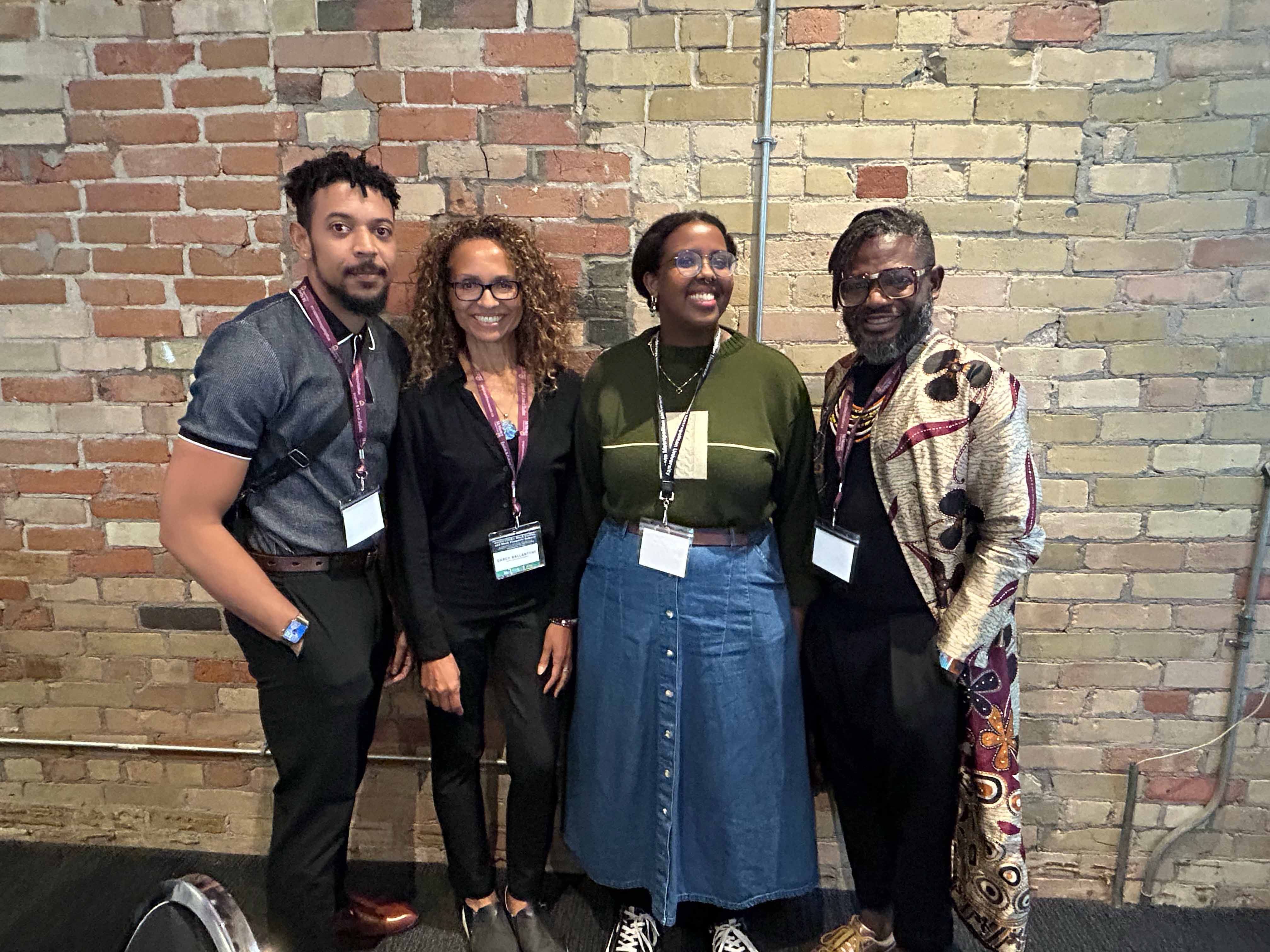
Conference organizing team.
From left: Linzey Corridon (McMaster), Darcy Ballantyne (TMU), Suad Alad (TMU), Ronald Cummings (McMaster).
The anecdotes and annotations on page corners contained Clarke’s many ideas, critiques, passions and frustrations. His diary entries held tender dreams of achieving success and feelings of hopelessness at the prospect of institutionalizing Black Studies programs.
While Clarke is remembered for the genius of his prose, reflecting, Ballantyne shared, “I often think his true form is the small note scribbled on a scrap of paper, napkin, in a diary, or on the page of a book.”
The loose threads of Clarke’s life gleaned from these scraps of writing and pulled tightly together and woven into Clarke’s history also tell of the burgeoning Black literary movement in Toronto.
Digitizing Black Life
In their round-table discussion, Interim Associate Dean of Research and Graduate Studies Mélanie Knight and Associate Dean of Undergraduate Studies Anne-Marie Lee-Loy discussed their forthcoming initiative: The Black Archival Routes and Risings project.
The project considers how archives’ insufficiently or incorrectly labelled photographs, documents, and artifacts fail to account for the vastness and richness of Black history in Canada. In addition to documenting and digitizing the history of Black life and settlement, the project seeks to establish an opportunity for old and new generations to contribute to the “storying” of Canadian narratives.
Like TMU’s new interdisciplinary Black Studies Minor, housed in English in the Faculty of Arts, The Routes and Risings project is part of the legacy of Clarke and other Black intellectuals who strove to represent Black life and explore the complexities of Black history in Canada.
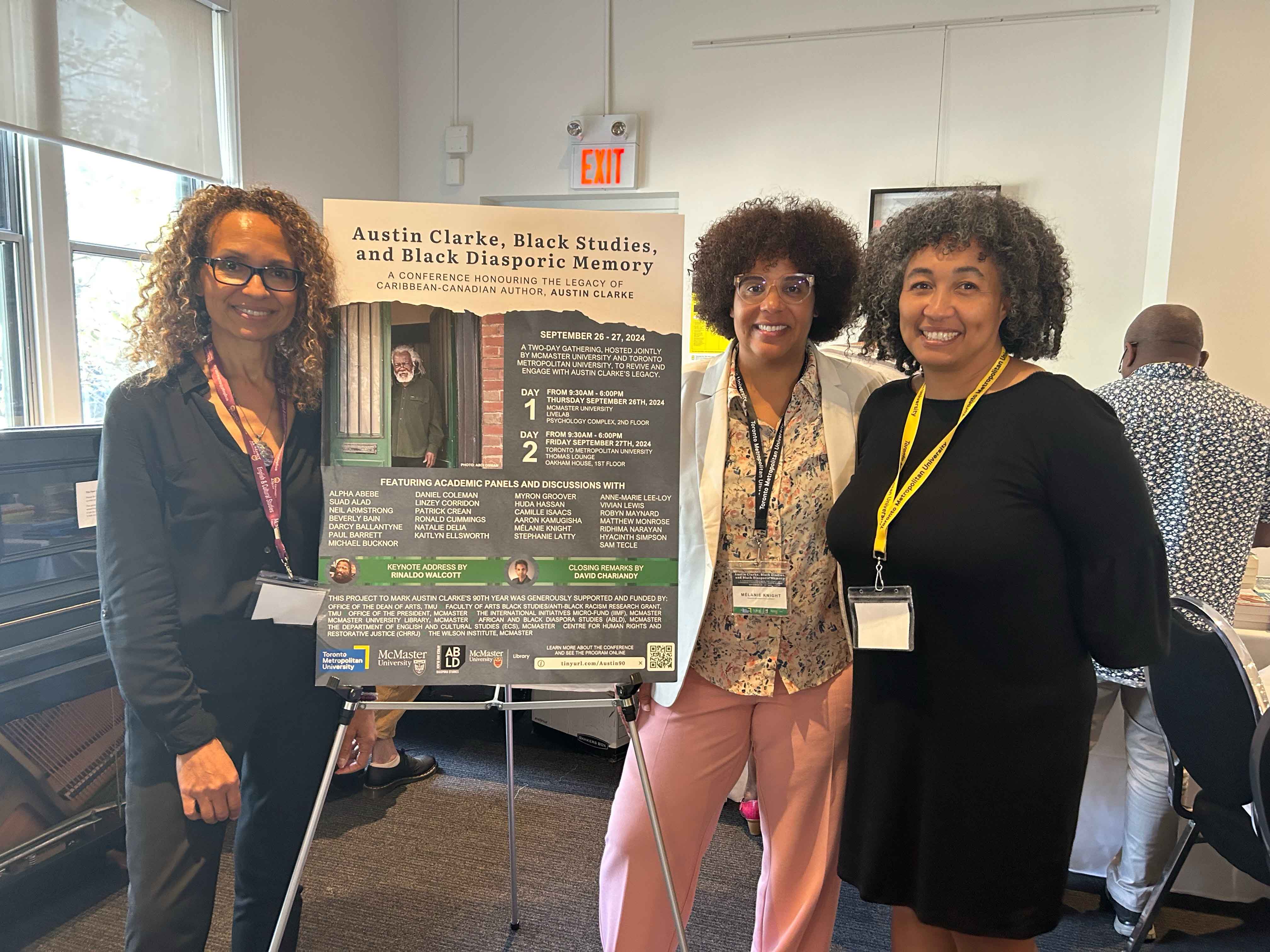
Darcy Ballantyne, Mélanie Knight and Anne-Marie Lee-Loy pictured with the Austin Clarke, Black Studies, and Black Diasporic History conference poster.
“What Austin Clarke was doing, even before the official archive, was archiving stories. He was disseminating them, telling them, giving access to other people who wanted to respond to those stories.”
Many of Clarke’s literary works map Black immigrants onto the vibrant cityscapes and street corners that often preclude them from belonging. His stories elucidate the invisibility, discrimination, and exploitation of Caribbean diasporic communities and invite critical conversation around the lived experiences of West Indians in Canada.
Recounting her early connections to Clarke’s work, Knight remarked how The Polished Hoe resonates with the possibilities and tensions of building Black collections.
"The phrase ‘mess is message’ has always stayed with me and speaks to the ways in which the current state of archives is a bit of a mess in relation to Black history. Clarke's fictional work speaks to our history, experience and place in Canada and beyond."
Caribbean Domestics and Canadian Identity in Austin Clarke’s Fiction
During her panel, English professor Hyacinth Simpson explored a selection of Clarke’s works as a critique of Canada’s anti-black discrimination and exclusion of Black women’s labour as vital to the nation.
Simpson’s discussion examined the history of Canada’s Caribbean Domestic Scheme (external link) , a migrant labour program that recruited women primarily from Barbados and Jamaica to work in Canadian homes. Simpson also explored the intersections of domestic labour, nationhood and identity, gender, and belonging in relation to Clarke’s writing.
Remembering Austin Clarke
Renowned writer and academic David Chariandy concluded the conference by offering remembrance and reflection of Clarke’s legacy from a personal perspective. Chariandy recalled the energizing atmosphere of the cafes, lounges, and Clarke’s own living room, where he gathered with some of the most prolific Black Canadian scholars and authors, from Rinaldo Walcott to Dionne Brand, to discuss writing and Black life into the late hours.
“Your home was the living archive of Black genius in the Americas.”
Chariandy’s comments were particularly resonate, for his memories reveal the impact that Clarke had on authors and intellectuals of his generation—tracing the long-lasting legacy of Clarke as a model, a mentor, and an inspiration for Black Canadian art and activism.
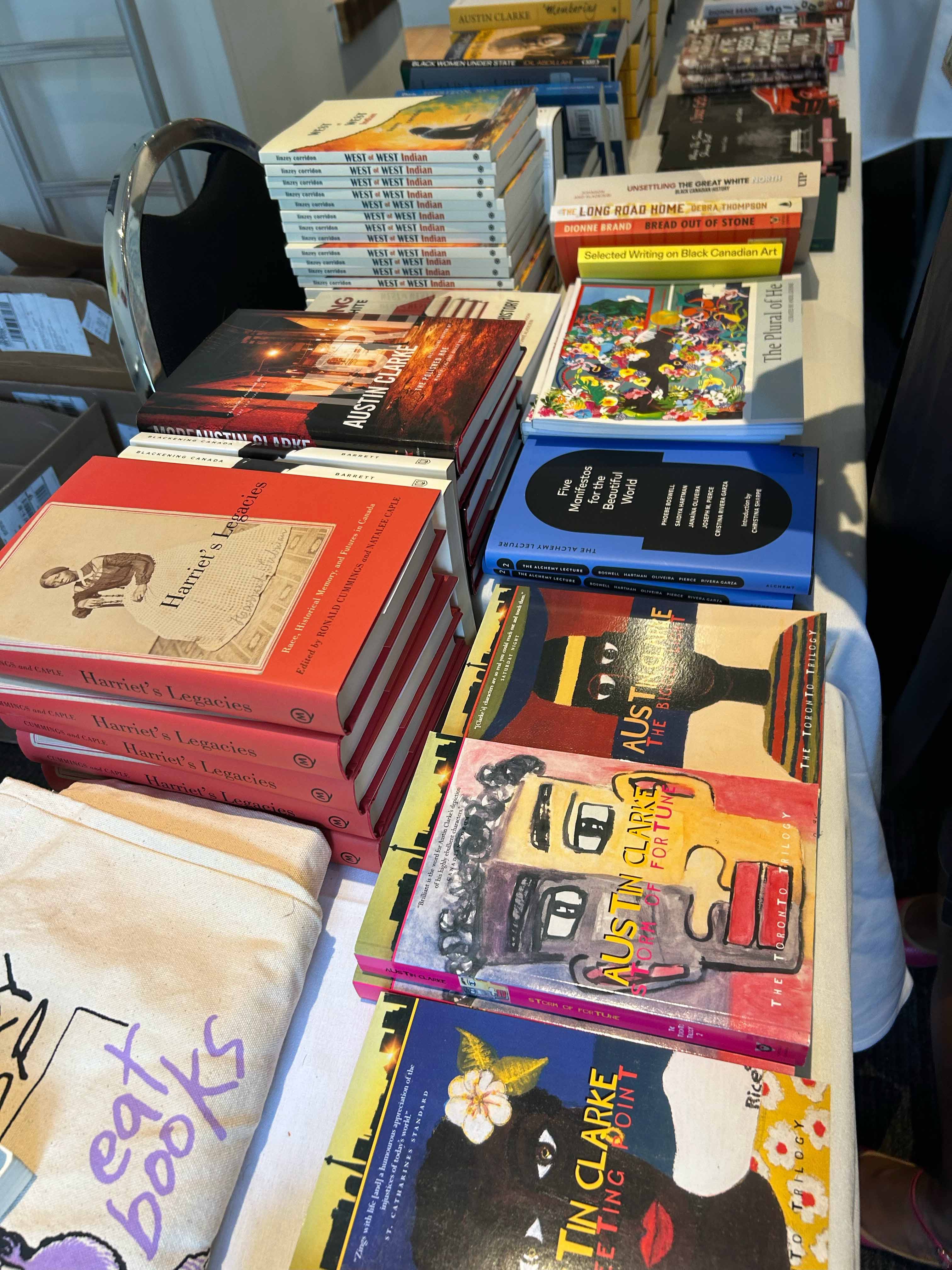
A table of books featuring some of Austin Clarke’s most famous works alongside the scholarly and creative works of other Black writers. Provided by Another Story Bookshop.