Empowering Voices: TMU Arts students engage in the Global Black Diplomacy Summit
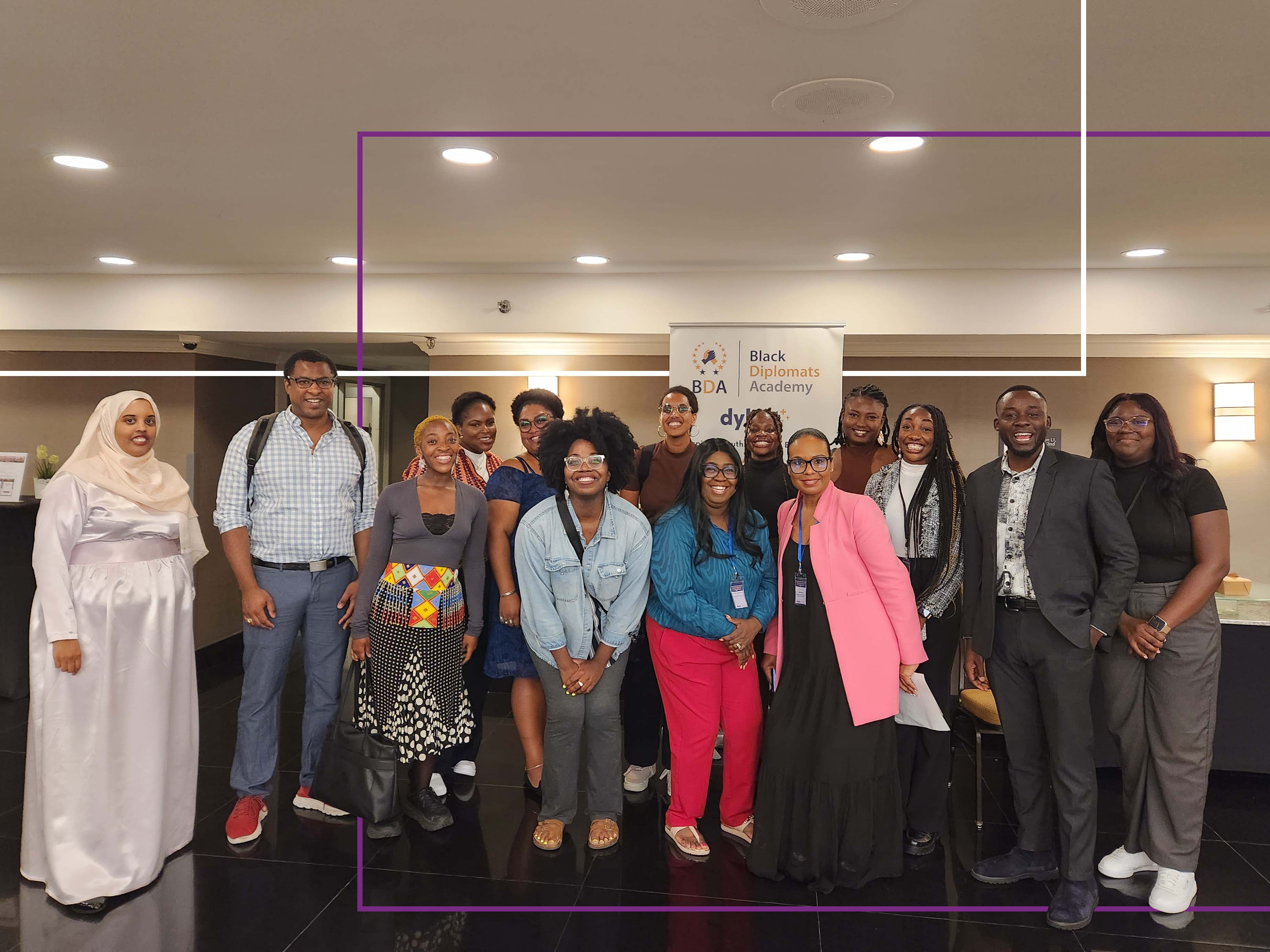
TMU Faculty of Arts students and Past and Present Fellows of the Black Diplomacy Academy at the Black Diplomats Global Summit.
At the beginning of the summer semester, I was walking into Jorgenson Hall when I bumped into a woman and complimented her on her glasses. I came to discover that it was the Associate Deputy Minister for Canadian Heritage (external link) . I was touched that she took a few moments to ask me about my role on campus as the Black Student Success Facilitator for the Faculty of Arts.
This led to the Honourable Mala Khanna sharing about the incredible work of the Black Diplomats Academy (external link) and connecting me directly to the Founder of Developing Young Leaders of Tomorrow Today (DYLOTT), Candies Kotchapaw. Candies is also the visionary behind the Black Diplomat’s Academy as well as the Fellowship program for aspiring Black-identified diplomats/youth under 35. Fellows have the opportunity to engage with folks in the foreign and domestic service, participate in the newly established United Nations Permanent Forum for People of African Descent in New York and learn from specialists in a variety of areas. A major part of my role is to connect students with opportunities that foster their growth and development and expose them to co-curricular activities that complement their studies.
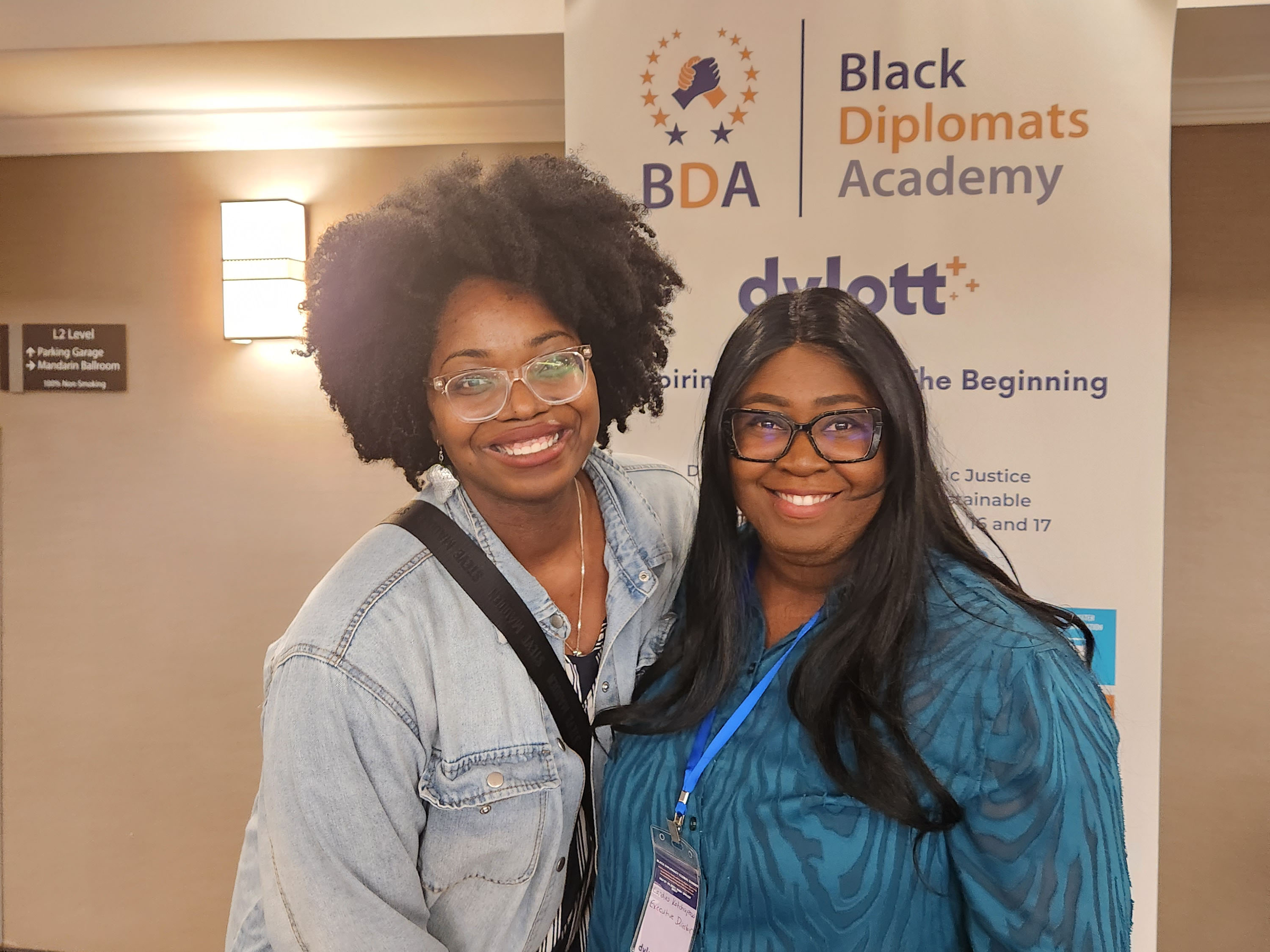
Siobhan Stewart (left), Black Student Success Facilitator at TMU's Faculty of Arts with Candies Kotchapaw (right), Founder of Dylott and Creator of the Black Diplomats Academy.
It was not until I connected with Anamika Baijnath, who is a Project Manager in the Centre for Teaching and Learning on a separate initiative, that she mentioned the Black Diplomacy Global Summit (external link) , which was to be held in Toronto at the end of July. After our discussion and my explanation of how wonderful an opportunity this would be for our students, she graciously offered to sponsor a few tickets for students. I was so deeply moved by this gesture of solidarity and true allyship, which put her commitment beyond words into action. I immediately reached out to students on my mailing list.
I thought I would only have two or three responses to my call-out for participation, given that engagement is generally lower in the summer months, but almost 20 students replied with interest in attending. It became very clear to me that these are the types of spaces and places our students want to be exposed to. Traditionally, there has been an underrepresentation of Black-identified people in Diplomacy. However, through the work of this organization and others, that is changing. I did not want to have to turn anyone away simply because of funding.
I immediately contacted Avala Moore, who is a colleague in the Student Experience Centre and works very closely with the Society of Arts, Social Sciences and Humanities (external link) (SASSH) to ask if they could possibly fund additional tickets for students. I want to extend a sincere thank you to the newly elected members of SASSH for their prompt coordination and action which allowed for the funding of additional tickets. These student leaders met with me on a Friday evening, less than 2 days after I experienced an explosion of interest. There were at least 5 or 6 members of their society present to have quorum for voting purposes. I was incredibly moved by their leadership and partnership with supporting Black-identified students in the Arts. Well done, SASSH!
Our university is a signatory on the Scarborough Charter (external link) , which is a national document in which colleges and universities across Canada commit to redressing anti-Black racism and fostering Black inclusion and Black flourishing.
“Universities and colleges are central to enabling the just, fulsome realization of human potential and thriving. They play a pivotal role in redressing anti-Black racism by removing structural barriers to equity, inclusion and social justice, with full recognition of our intersectional identities, while advancing the innovative research, critical thinking and engaged dissemination of knowledge that foster substantive equality, human dignity, and sustainability.”
Seeing the students experience the presence of diplomats, policymakers, change agents, government officials, not-for-profit executive directors, and international leaders was a sight that brought tears to my eyes on multiple occasions. Witnessing their curiosity and engagement in the space, asking questions and making new connections was what I imagine Black Flourishing to be. There is nothing that can replace the power of seeing someone who looks like you accomplish goals and create concrete impacts in the world. While the folks who participated in the summit are current TMU students, they certainly will become alumni who will inspire, push boundaries and continue to demonstrate Black excellence.
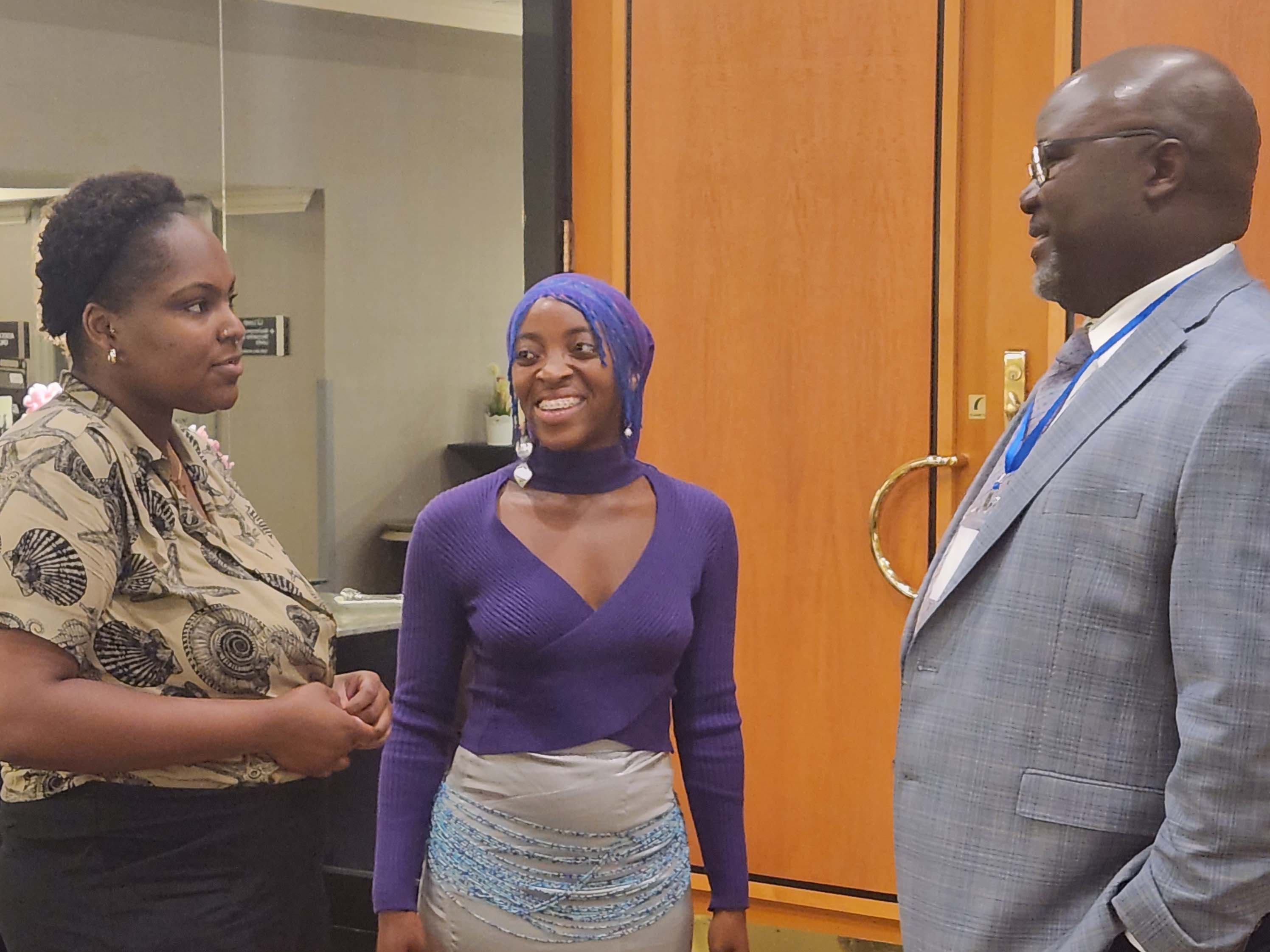
Faculty of Arts students networking with Yves-Gérard Méhou-Loko, Secretary General of the Canadian Commission for UNESCO.
There is still much work to be done, but the successful participation of multiple students and imagining what could be possible for their futures has been one of the highlights of my experience in my role so far.
To:
- My supervisors, Dr. Melanie Knight (Interim Associate Dean, Research & Graduate Studies and Advisor to the Dean of Arts on Blackness and Black Diasporic Education) and Dr. Anne-Marie Lee-Loy (Associate Dean of Undergraduate Studies), who have consistently supported my new ideas and empowered me to coordinate this initiative and act quickly when an opportunity arose;
- Anamika Baijnath, a staff member who never asked to be acknowledged but was willing to support and open a door for others to have an opportunity so selflessly;
- The Honourable Mala Khanna, a government official who, while running to her next appointment, was patient and gracious enough to be curious about the challenges experienced by Black students while also sharing a resource I hadn’t heard of;
- Student leaders from SASSH who gave up time on a Friday night to stand for what was possible for other students in this faculty and demonstrating their commitment to inclusion;
- All of the Fellows of the Black Diplomats Academy (past and current), diplomats, changemakers and people of influence who took a moment to listen and have a conversation with Black students about their dreams; and
- Candies Kotchapaw and the Board of DYLOTT that built the Black Diplomats Academy which built a space for our students to thrive and shine.
And last but not by any means least, to our Faculty’s Black-identified students who had the courage to attend, fully participate and be vulnerable enough to express your dreams, goals, and visions for your life, I salute you, I thank you, and I graciously honour you for the privilege of your partnership!
Rising in Power,
Siobhan
Black Student Success Facilitator, Faculty of Arts