Film professor publishes monograph on Franco-Cambodian filmmaker
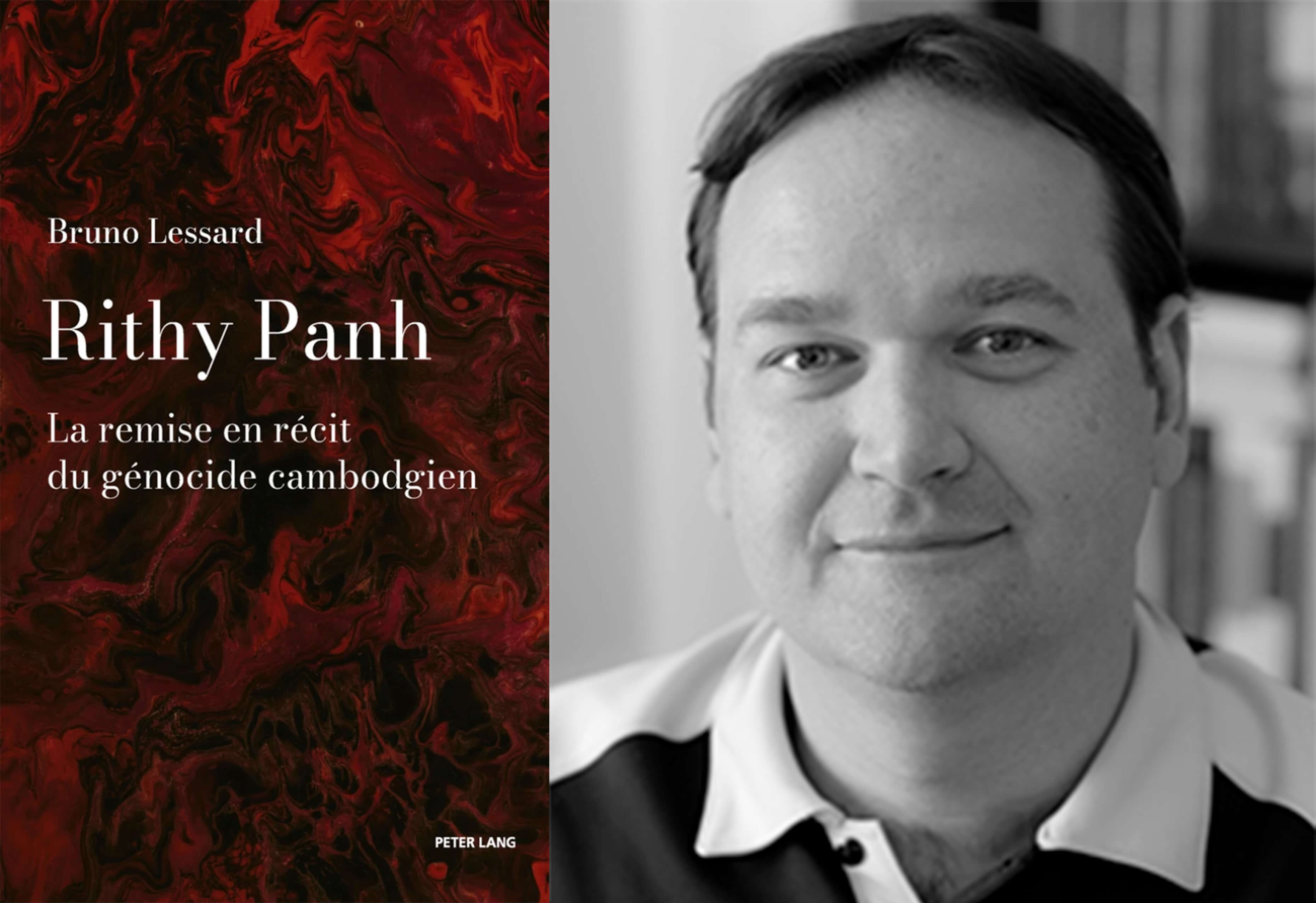
Dr. Bruno Lessard, a professor in the School of Image Arts at Toronto Metropolitan University has recently published a monograph on Franco-Cambodian filmmaker Rithy Panh, titled: Rithy Panh: La remise en récit du génocide cambodgien (external link) .
We sat down with Professor Lessard to learn more about his monograph.
--
What inspired your book, Rithy Panh: La remise en récit du génocide cambodgien?
I have always been drawn to documentaries about genocide and the writings of genocide survivors, and, for a number of years, I taught French-Cambodian filmmaker Rithy Panh's documentaries in the Doc Media program. Panh is a survivor of the Cambodian genocide (1975-79), and his is a unique case because he makes films and he writes books as well. Being very familiar with his corpus of films and writings based on my teaching, I decided to write a book about his work during my last sabbatical leave. Because all the primary sources and most of the secondary sources were in French, I made the decision to write the book in French having a francophile readership in mind.
The book examines Panh's writings in relation to his documentary films about the Cambodian genocide and its aftermath. The original narrative in the films and its retelling in the books raises fundamental questions: why did an award-winning filmmaker like Rithy Panh turn to writing to retell the Cambodian genocide and to further explore the process of mourning? What role do Panh's publications play in his "work of remembrance" and in the construction of his unique persona as a survivor-witness? In the book I show that Panh's writings complement his documentary films by retelling the Cambodian genocide in an innovative and unexpected way, while also enabling a unique form of memory work within contemporary testimonial literature. It's Panh's exceptional contribution to two areas - the genocide documentary and Southeast Asian testimonial literature - that inspired me to take on this book project about the Khmer Rouge's genocidal acts.
Walk me through the process of writing it – how long did it take from start to finish? What did you enjoy about the process? What were some hurdles you overcame?
The writing took about a year, which is standard for me in the case of a monograph, followed by the peer-review process and the revisions to the manuscript, which both took about six to eight months in total. What I appreciate the most about the writing process, especially in the context of a sabbatical leave and a long-term project such as a monograph, is the luxury to spend long periods of time with a filmmaker (and writer in this case) and explore their corpus. This kind of solitary work appeals to me as a scholar.
One particular challenge at an early stage in the research process was to find interviews with the filmmaker. Because most of the literature on Panh is in English, there were very few references to interviews given in French newspapers, periodicals, and online venues. I spent a considerable amount of time searching the web for interviews. I made a point in the manuscript to use the survivor's own words as much as I could, so referring to interviews in French was crucial.
Another challenge was to fully understand notions in the Khmer language that don't really have any equivalents in French (or in English for that matter). In Panh's films and books, one comes across indigenous notions such as "baksbat", which is a collective form of trauma affecting the Cambodian nation that doesn't really reflect what in the West we call "PTSD" and its emphasis on individual trauma, and "kamtech", which refers to the complete physical annihilation of the human at the hands of the Khmer rouge without leaving any traces of the crime committed. I learned a great deal about Cambodian history and culture, and about the Khmer language itself, researching and writing the book. It's the unexpected things you learn along the way that make writing a book a very unique thing.
What do you want people to take away from the book?
People who are familiar with Panh's work know him for outstanding documentaries such as S21: The Khmer Rouge Killing Machine and The Missing Picture (nominated for Best Foreign Language Film at the 2014 Oscars). However, very few people (including Panh scholars, which surprised me) had taken the time to read the books he published between 2003 and 2020. The combination of the visual and the literary makes us see the man's contributions in a different light: his voice truly is unique in documentary film history and in testimonial literature given his positionality: a Southeast Asian artist expressing himself in French. Another take away from the book is how inspiring Panh's story is. Panh fled Cambodia in his early teens to reunite with his brother who was living in France. There he learned French while going to film school. He eventually returned to Cambodia to make his first documentary in the late 1980s. Against all odds, Panh has enjoyed incredible critical success around the world, and his films have been shown at the most prestigious film festivals such as Cannes and Berlin. His publications in French reveal yet another dimension of his contribution to the understanding of the Cambodian genocide. I hope the monograph will inspire those who aren't familiar with his writings to read a fascinating book such as Panh's The Elimination, for example, which has received numerous literary prizes around the world.
Thank you!
--
Professor Lessard’s book is available in the TMU library in both electronic and hardback versions, or at this link (external link) for purchase.