FCS Academic Plan 2025-2030
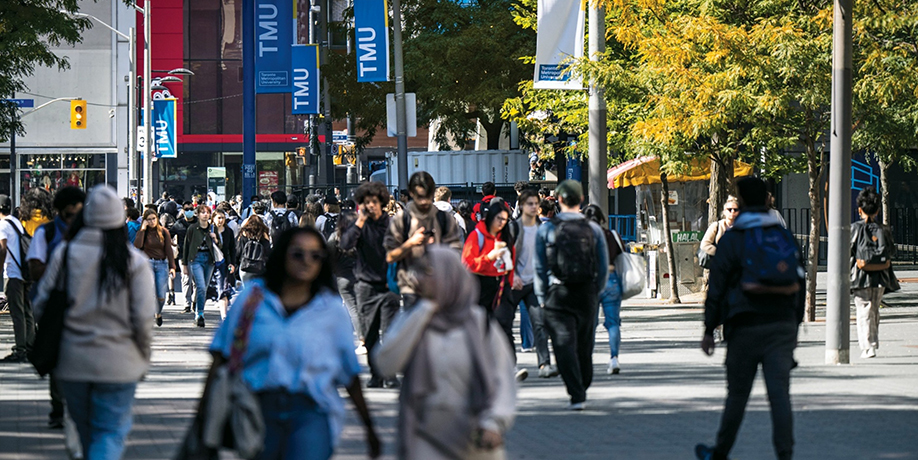
The FCS Academic Plan 2025-2030 identifies seven strategic goals that align with those in TMU's Academic Plan. Ambitious, bold and forward-looking, the plan reflects our values of equity, impact and community transformation.
As we embark on the Faculty of Community Services’ 2025-2030 Academic Plan, we begin by acknowledging the land on which our institution stands.
We operate on the Treaty Lands of the Mississaugas of the Credit First Nation and on the traditional territories of Anishinaabe Peoples, the Huron-Wendat, Haudenosaunee Nations, and many other Indigenous Nations and Peoples who have stewarded these lands since time immemorial—land that is now home to Inuit, Métis and First Nations Peoples from across Turtle Island. We honour and uphold the Dish With One Spoon Treaty, we commit to valuing the Two Row Wampum and we vow to treat the land and people with an understanding grounded in relational accountability and co-learning.
We encourage our community members to take time to recognize the lands on which we teach, learn and live and we commit to educate ourselves on Indigenous histories and the ongoing impacts of colonialism. As we advance our mission, we remain committed to creating pathways for meaningful engagement and partnerships with Indigenous communities, ensuring that our academic and social contributions reflect the principles of respect, relevance, reciprocity and responsibility.
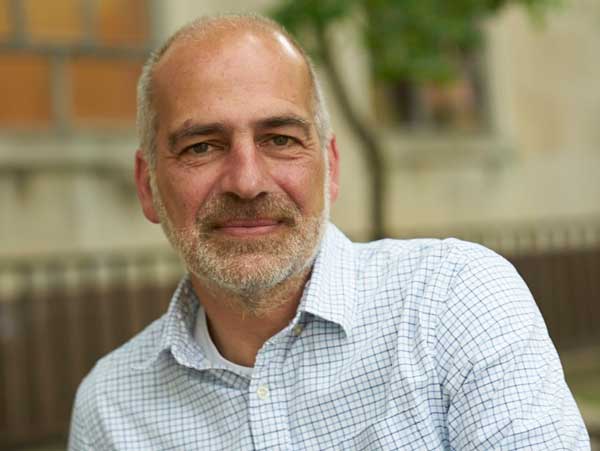
Over the past five years (2020-2025), the Faculty of Community Services has demonstrated its commitment to responding to social needs, supporting students through turbulent times, and producing knowledge that is of immediate relevance to social relations and the political economies of Ontario, Canada, and the world. During the pandemic, FCS programs continued to be present in person. Almost all our professions were deemed essential. The Daphne Cockwell School of Nursing participated in vaccine clinics; our Social Work colleagues and students provided essential peer to peer counselling and support. Colleagues in Public Health were part of the public education strategies, ensuring public health recommendations found traction within TMU’s community and beyond. Early childhood educators provided child care services and child and youth care practitioners were present to support youth through their isolation wherever they were. From the pandemic to a world in disorder, the past five years were a time for FCS faculty, staff and students to engage with issues and themes that are complex, that are very real, and from which we cannot hide. I am proud to have been the Dean of a Faculty that navigated these circumstances with humility but also with determination.
The coming five years (2025-2030) bring new challenges and new opportunities. The world continues to present itself as precarious. From economic instabilities to social and political inequities, and from spaces of exclusion and inaccessibility to the suffering of people here and abroad from the evils of war and violence, we enter these next five years determined to contribute goodness and value to our local communities and to the world. Notwithstanding funding constraints, we nevertheless want to optimize our resources, our knowledges, and our relationships such that we can be relevant and impactful with our actions locally and globally. To this end, our Academic Plan 2025-2030 is designed to be ambitious, bold, and unapologetically forward-looking. From new programs and degrees in tune with 21st century priorities to doubling down on efforts at reconciliation, and from practicing equity at all levels of our Faculty to ensuring wellness across all roles in our Faculty, we aim to push ahead to do better. Our students rely on us to provide them with current, practical, meaningful skills and abilities that allow them to thrive in workplaces not through passive labour but through the exercise of new leadership. We intend to meet them where they are at. From nutrition and food sciences to how we design our cities and public spaces, and from our focus on accessibility to the protection of young people subject to exploitation, FCS will advance the goals of TMU’s Academic Plan by staying true to its commitments to communities, equity, and innovation in sectors such as health care, education, and social justice.
I am proud of the FCS Academic Plan. Together, the seven priorities identified will strengthen FCS and provide endless opportunity for achieving our aspirations. Of course, we will succeed only as a collective of faculty members, contract lecturers, staff and students, and only in partnership with our extensive list of community partners, representing the full diversity of communities across Ontario. The FCS Academic Plan is about relationships – together we thrive!
Dr. Kiaras Gharabaghi, Ph.D
Dean, Faculty of Community Services
Spring 2025
- FCS put forward an Action Plan, designed to conceptualize our actioning of TMU’s priorities. After receiving feedback from central and Faculty based units, we drafted the FCS Academic Plan and presented it to the FCS Dean’s Council, which includes the academic leadership of all FCS Schools.
- Directors were asked to share the draft with their colleagues in Schools, solicit feedback, and report back on ideas, suggestions, edits and desired changes.
October 2025
- The draft academic plan was distributed to all FCS community members in mid-October for confidential and individual feedback by the end of October.
- Based on all feedback received, revisions were made and a final FCS Academic Plan 2025-2030, was produced.
The Faculty of Community Services is built on the values of equity, impact, and community transformation. We aim to improve social, economic, and political conditions locally and globally that center human dignity, while working to disrupt existing structures that reflect the inequities of colonial and neocolonial institutions and social relations. We champion and support contributions to new, innovative, forward-looking social relations built on the strengths of diverse ways of knowing, being, and doing.
Congruent with TMU’s Academic Plan 2025-2030, Transforming Futures, our strategic goals are:
- Recruit and engage with students representing diverse demographics and lived experiences and support their intellectual and social growth through excellent, critical, and innovative pedagogies within and across professional fields.
- Strengthen equity-focused and community-engaged research in local and international research collaborations and build spaces for direct and ongoing reciprocal research learning and community relationship.
- Strengthen contributions to reconciliation and Indigenous resurgence by building purposeful relationships with Indigenous communities, advancing Indigenous-informed pedagogies and scholarship, and providing support and mentorship to Indigenous faculty, staff and students.
- Build degree and non-degree academic programs that transcend traditional disciplinary siloes and prepare students to understand and engage with the complexities and fluidity of Canadian and global social relations and political economies.
- Be a leader in the production of diverse knowledges, structures and processes related to public health, healthcare, nutrition, health equity, education, andurban spaces through transdisciplinary, interprofessional and innovation-based pedagogies, curriculum, research and creative activity.
- Be locally relevant and impactful and globally engaged and connected in everything we do.
- Support the establishment of a Faculty-level equity strategy that promotes equity in community care, belonging and human flourishing of our staff, faculty and students, and takes action on anti-racism and anti-oppression.