Exploring leadership at TMU
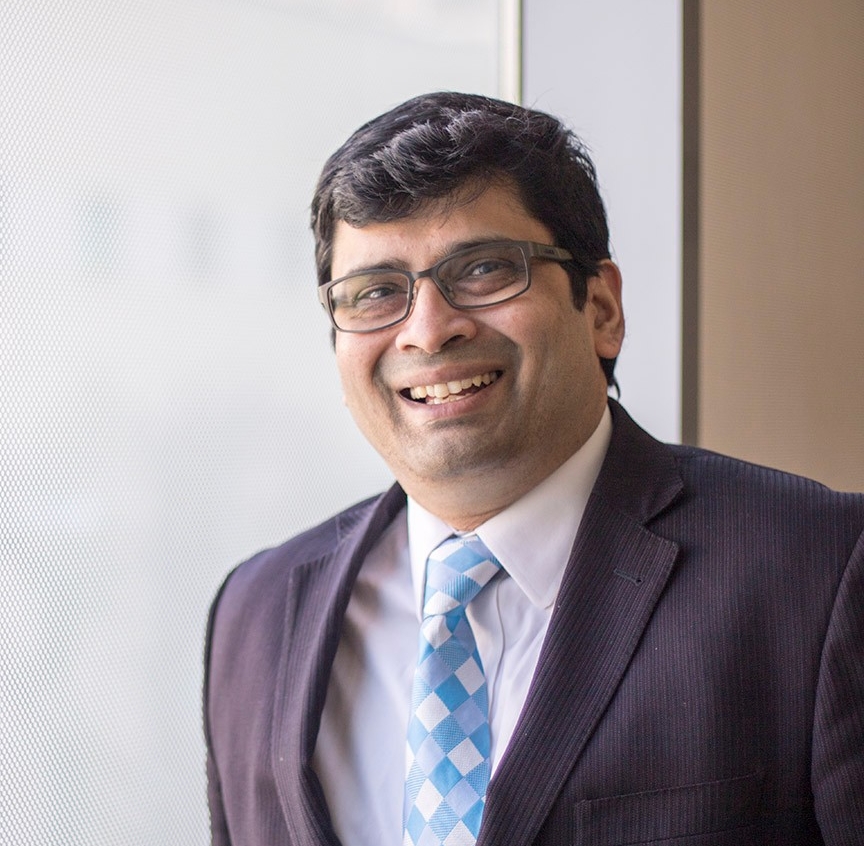
Sri Krishnan
Dean, Faculty of Engineering and Architectural Science
Sri Krishnan’s leadership journey at Toronto Metropolitan University (TMU) has spanned over 25 years, during which he has held a variety of roles, including associate dean, research, development, and external partnerships, graduate program director for Electrical and Computer Engineering (ECE), assistant chair for Research and Graduate Studies in ECE, department chair of ECE and founding program director for Biomedical Engineering, among others.
As the newly appointed Dean of the Faculty of Engineering and Architectural Science (FEAS), he shares his reflections on his career, the evolving landscape of engineering education and his vision for the future of the faculty.
You’ve held a variety of leadership roles at TMU, how do you think your past leadership position(s) have prepared you for your current role as Dean?
Over my 25 years at TMU, I’ve witnessed tremendous transformation—three name changes to our department (Dept. of Electrical Engineering → Dept. Electrical and Computer Engineering → Dept. of Electrical, Computer, and Biomedical engineering), our Faculty (Faculty of Engineering and Applied Sciences → Faculty of Engineering, Architecture, and Science → Faculty of Engineering and Architectural Science), and ultimately, our university (Ryerson Polytechnic University → Ryerson University → Toronto Metropolitan University). These changes reflect the evolution of our institutional identity and ambition, and I’m proud to have played a small and meangingful part in this remarkable journey.
During this time, I’ve had the privilege of serving in several progressive leadership roles, including Associate Dean (Research, Development, External Partnerships, and Graduate Programs), Department Chair, Graduate Program Director, Interim Dean of FEAS, Founding Co-director of iBEST, and Founding Program Director for Biomedical Engineering. These experiences have provided me with a deep operational understanding of both academic and research ecosystems, and have shaped a strategic, collaborative approach to institutional growth. Now, with TMU’s foundation stronger than ever and momentum clearly building, I believe this is the moment to lead FEAS with purpose and drive tangible societal impact through inclusive education, interdisciplinary collaboration and innovation.
What are some factors outside of TMU that will influence your priorities as Dean?
Similarly, what are some internal developments at TMU that are likely to shape your priorities for FEAS?
Externally, rapid advancements in quantum technologies, artificial intelligence, cybersecurity, digital health, urban systems and sustainability are significantly reshaping engineering education and research. These trends are driving an urgent need for interdisciplinary problem-solving and entrepreneurial thinking—an approach that aligns closely with my emphasis on building strategic interdisciplinary clusters and innovation ecosystems. At the same time, the growing emphasis on equity, diversity, and inclusion (EDI) in the workforce compels engineering and architecture faculties to reimagine hiring, mentorship, and training practices. Additionally, public research funding is becoming increasingly performance-based and intersectoral, reinforcing the importance of strong, sustained partnerships with industry, healthcare and community organizations.
Internally, TMU is evolving into a comprehensive, research-intensive institution with a growing focus on innovation, impact and societal relevance. My contributions to building educational programs and foundational research infrastructure at FEAS have helped catalyze this transformation. As Dean, my goal is to scale these efforts further, aligning them with institutional priorities and global benchmarks. Strengthening the student experience—through enhanced co-op opportunities, experiential learning and an innovation-focused culture—will remain a central priority, ensuring that our graduates are equipped to thrive in a rapidly changing world.
Leading within a collegial governance framework is both challenging and rewarding.
What advice do you have for colleagues stepping into formal or informal leadership roles at TMU, for fostering collegial decision-making?
Drawing from over two decades of leadership at TMU, I’ve learned that successful leadership depends on cultivating trust, collaboration and transparency at every step. Collegial decision-making thrives when collaborations are built on respect, leadership is shared and communication is open. For example, the success of initiatives such as the Biomedical Engineering program, which integrated five departments, is a testament to what interdisciplinary collaboration and shared vision can achieve—far beyond what top-down mandates allow. One of the most rewarding aspects of leadership at TMU has been watching colleagues thrive when given the space to lead, whether as student advisors or research cluster leads. My advice: empower others, lead with integrity, uphold equity and inclusion, and foster a culture where people feel heard, valued and inspired to contribute.