From the First Day Forward
Esther Ignagni on Access, Justice and Inclusive Teaching—Q&A
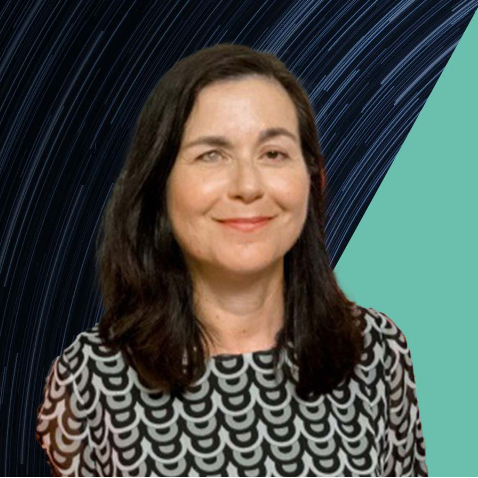
On the first day of class, Dr. Esther Ignagni still feels the same thrill she did decades ago. For her, teaching goes beyond sharing knowledge—it’s about disrupting assumptions, fostering access, and embedding justice into every discussion. Now entering her second year as executive director of the Centre for Excellence in Learning and Teaching (CELT), and with years of experience in TMU’s School of Disability Studies, Esther reflects on what drives her teaching, how she mentors emerging scholars, and her vision for classrooms where every student can thrive.
You’ve taught at TMU for many years. What continues to draw you to the classroom each term?
“I have taught for many years at TMU, and I still get excited about the first day of class.
One of the pleasures in teaching Disability Studies is that students have deep personal connections to the course content; their lives, like all of ours, have been touched by disability, distress, chronic illness, or neurodivergence. Many arrive with hazy assumptions about the material they’re going to encounter. These assumptions are quickly disrupted. Students encounter the complexities of disability experience as a way to see their bodies, relations, communities and values quite differently.”
Can you share something about your own teaching practice that feels especially meaningful to you?
“A couple of themes stand out for me about my own teaching.
First, I have deep roots in online teaching. Disability Studies is one of the only programs outside The Chang School that offers the majority of its program online. In part, this was motivated by an attempt to enhance accessibility for our students. While I’ve developed a critique of accessibility claims of online teaching over the years, I also embrace its promise of flexibility for working, rural, remote, and disabled learners1.
Prior to the pandemic, my school was mostly going it alone, experimenting with technological innovation to create a more welcoming pedagogy. With a little duct tape, a tripod, and Skype, we could create what felt like radical forms of access. The best moment was when we brought students living on ventilators in long-term care facilities into our class. It was one of those moments that both demonstrated and transgressed institutional constraints under which some disabled Canadians continue to live.
I’m also proud of the many emerging scholars I’ve been able to invite and co-learn with in Disability Studies. While most worked under contingent and limited conditions, they always brought theoretical innovation, currency, and energy to the university. After cutting their pedagogical teeth at TMU, they’ve gone on to expand disability, mad, and Deaf studies across Canada and internationally.
For my more established colleagues and myself, this mentorship is crucial to building our field and securing its interdisciplinary relevance. More personally, it pays forward the mentorship I received throughout my teaching career. I am so grateful to those who encouraged me to take risks in my classroom and to create an engaged pedagogy that is relevant, connected to community, and oriented toward social transformation.
I still think with my first Disability Studies co-instructor, Catherine Frazee, who so generously shared a fabulous syllabus – which, while considerably changed over the years, retains its capacity to surface the most engaging and evocative questions about human dignity, vulnerability, and justice.”
 1Space precludes me from saying more about the promise and peril of online teaching, but see the work of my former TMU colleagues, Chelsea Temple Jones and Fady Shanouda (2025), Troubles online: Ableism and access in higher education (external link) . Athabasca University Press.
What does it mean to teach with access and justice in mind?
“Access is about building community, recognizing our interdependence, and allowing students to bring their whole selves into the class. It requires creativity, ingenuity, and reciprocity. Access hinges on justice: we must create the conditions for decolonial, racial, gender, and class justice in our learning spaces. We can build access by thinking about our relationship to the land, dismantling colonial and racist concepts, taking steps to mitigate the financial pressures on students, and building in flexibility around the conditions under which students carry out assessments.
Whose and which knowledges, ideas, and debates can be shared in the classroom—and how they can be taken up, reimagined, critiqued, and resisted—are all matters of access. How we answer these questions as a class influences who can have a sense of belonging.
Access requires continuous critical engagement and reflection. We must be mindful that access does not intensify conditions of injustice. For instance, a significant access friction is workload concerns, particularly for those more precariously positioned within the university, such as contract lecturers or pre-tenure faculty.
Creating access demands significant labour, since access is a moving horizon. We’ve learned through crip politics that having an automatic door to the classroom can offer us access to new and desirable learning spaces, but every opportunity forces an encounter with new exclusions—both our own and those of the communities we may inadvertently displace.
I’d like to return to where I began with this question. Access is about how we make our way together—it’s watching out for each other and making sure we are all okay. In the classroom, there are countless small acts that instructors do to create access. Over the years, I’ve watched my colleagues hold access check-ins; build in flexibility around assignment deadlines; create multimodal ways for students to engage with material; organize in-class snack exchanges; amplify the perspectives of Black, Indigenous, racialized, queer, and crip/mad academics and artists on the syllabus; and otherwise create relaxed learning spaces.”
How can faculty and contract lecturers build this into their practice?
I would suggest reaching out to the resources, workshops, and events available to us through TMU. I’d also suggest that folks turn to the (google slide) TMU Leadership Competencies (external link) , which offer many often-taken-for-granted, pragmatic steps for developing a justice-oriented approach to your teaching, research, and service work. One of the best suggestions I’ve taken away is the value of staying connected to your own communities while also seeking out opinions and perspectives that differ from your own. Those insights return in difficult moments and when I’m feeling unsure.”
What do you see as some of the most promising directions – or biggest challenges – for teaching and learning at TMU?
“We are asking some challenging questions in higher education right now.
The backlash against rights and justice work in the university is deeply worrying for a large urban, commuter university like TMU. How do we hold on to the promise of decolonial and EDIA work without falling into commodification and tokenism? How can we be both critical of, and critical with, social justice work in the face of forces trying to erase past and current equity and justice efforts?
Technology continues to disrupt our learning and teaching. How can we promote a critical, responsible and ethical stance toward new technologies, including Generative AI, both in our own work and its impact on how and what we teach in the classroom?
How do we respond to students’ questions about the relevance of higher education as they face growing financial pressures? What can we do at the university to mitigate the economic, time, and energy inequities that constrain what a university education could be?
I want to end by turning to the work done by the Centre for Excellence in Learning & Teaching (CELT). CELT has an incredibly dedicated group of staff committed to supporting the TMU learning and teaching community through pedagogical expertise, innovative teaching methods, educational technologies, and support for academic integrity and experiential learning. We invite you to engage in these critical questions in our workshops and events in the year ahead.”