Challenge Accepted: Mentorship Beyond the Data
Challenge Accepted: Mentorship Beyond the Data
A national experiment in curiosity, teamwork and bringing data to life
STUDENT-LED INNOVATION
When more than 300 students across Canada applied to the 2025 Migration Data Challenge, most expected a week of intense problem-solving, late-night brainstorming, and the thrill of competition. What they didn’t expect, and what made the experience stick, was how much they would learn from the people guiding them through it.
In May 2025, Bridging Divides ran its first national Migration Data Challenge, inviting teams from partner universities to explore underused datasets and tackle open-ended questions about housing, services, mobility, and newcomer integration. It wasn’t a simulation. Students worked with real migration data, often combining it with additional publicly available sources, to see what stories the numbers could tell about the places they come from and the communities they hope to support.
There were prizes, a public showcase, and judges from Statistics Canada, Immigration, Refugees and Citizenship Canada (IRCC), the National Research Council, and Toronto Metropolitan University. But awards weren’t the point. Participants left with new ways of approaching data, stronger presentation skills, and a clearer sense of how their work might influence policy or practice. Much of that came from one of the Challenge’s most distinctive elements: mentorship.
When ideas meet experience
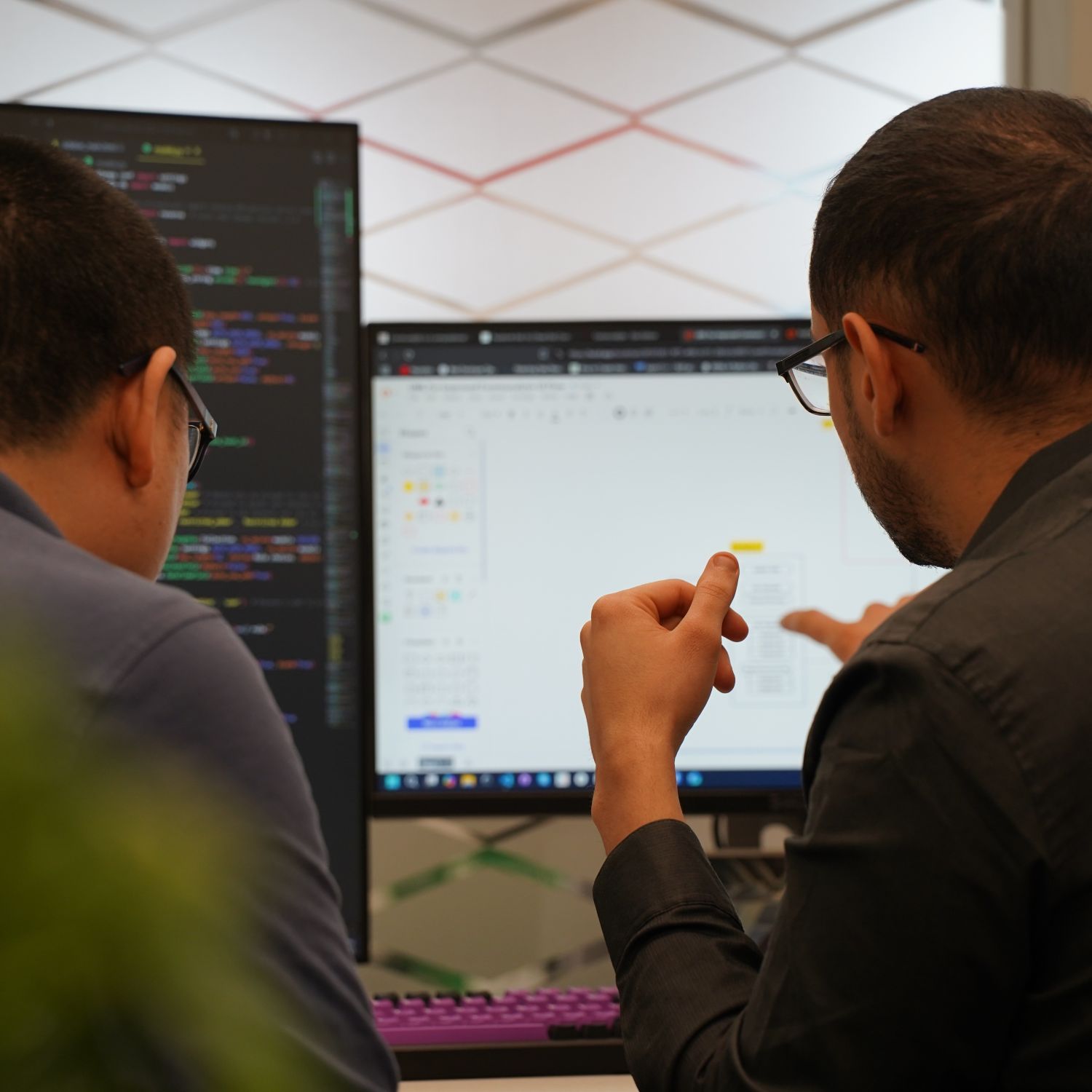
To guide teams through the messy middle of research and problem-solving, the Challenge brought in mentors from the public service, the nonprofit world, and tech startups. They helped students navigate ambiguity, refine their questions, and connect what data shows to what people experience.
One of them was Craig Damian Smith from Pairity AI. Smith has spent years working at the crossroads of migration, policy, and technology, and he immediately noticed an interesting pattern: students often started with very focused queries.
“Most came in with very specific data questions,” he explained. “I urged them to take a step back and reflect on the policy problem first. What is the puzzle here? What are we actually trying to understand?” He also encouraged them to embrace the personal experiences that often shaped their interests. “It was obvious the focus was informed by their lived experience, but they weren’t saying it. Sometimes stating it clearly makes the work stronger.”
In the final presentations, several teams grounded their projects in personal stories, connecting analysis to lived reality, something mentors and judges appreciated.
While Smith offered a bridge between academia and tech, Aida Radoncic from the Ontario Public Service approached mentorship from another angle. Radoncic is a humanities graduate who transitioned into data science later in her career, and she recognized herself in many of the students navigating both technical and human questions.
“The passion they had, the curiosity, that was really striking. Talking through problems with them was so mentally stimulating. I was like, oh my! This is so much fun.”
What stood out to her was how students worked to connect their findings to real-world meaning. “In industry, you are communicating data to people who do not speak statistics. You have to understand why it matters. What is at stake? How does this improve outcomes on the ground?”
She believes the Challenge gave students the chance to think across disciplines, to start with a dataset but also consider the social, cultural, and human context behind it. “You need the technical side, but you also need the human side. Nothing exists in a vacuum.”

From the University of Alberta, Team JPK made of Precious Ajilore, Justina Nemhara, and Koyinsola Titiloye won Best Overall Submission
The job market is changing, so must the skills
Both mentors spoke to a broader shift in the world students are entering. Public and private sectors are blending together, and emerging technologies are reshaping everything from product development to policymaking. The pace of change, especially with AI, is something entirely new.
“Innovation and change are not really the purview of the government, nor should they be,” Smith said. “But with AI, the type and scope are novel, and the pace is something never seen before.” Policymakers are reacting to technologies already in use, which in his view makes cross-sector collaboration essential. “Researchers shouldn’t position themselves completely against partnering with the private sector. We need to understand the impacts of what is being developed.”
He also sees gaps between student training and what employers need. “We see huge cohorts of computer science students entering a job market that has fundamentally changed after having been trained for something else.” Academic programs, he added, can help by emphasizing transferable skills such as stakeholder relations, product timelines, and communicating evidence to different audiences.
For Radoncic, that openness to collaboration resonated on a personal level. “I don’t have a PhD, and I don’t come from a math or technical background at all. I come from the humanities,” she said. Moving into technical work showed her how valuable it is to draw on more than one kind of training. “There is a lot of movement toward interdisciplinarity. Employers are realizing they need critical thinking, cultural awareness, and social science perspectives.” It is also why she found the Challenge so meaningful.
“I very much wish this existed for me when I was a student.”
Why we do this
One participant summed it up simply: “Because data is people, and there are faces behind the numbers.” Students expressed gratitude for the support, the quick feedback, and the opportunity to learn from professionals who had walked entirely different paths into the world of data. As one team member put it, “When we started, the data was a lot and we were confused. Our mentor helped us create a vision. I’m really glad I got to be part of this.”
If the Migration Data Challenge demonstrated anything, it is that collaborative initiatives spanning universities, public institutions, and tech innovators can spark real learning. Smith sees these partnerships as essential. Too much migration research, he argues, focuses on the very real risks of new technologies, but that attention can sometimes overshadow the possibilities for positive impact. Cross-sector collaboration can help shift the conversation toward solutions rather than fear.
As he put it, “If you are in a room with policymakers and trying to talk about improving systems, being alarmist doesn’t help. They stop listening. The technology is already there, it is already happening.” The concern many researchers have is legitimate, he noted, but it reflects only one side of how technology will shape policy, regulation, and programming.
Thinking back to her experience, Radoncic offered a reflection that became something of an anchor for this story. “Being a mentor, the back and forth with the students, it brought me life,” she said.
“Why else do we do this? The data we work with comes from people. From the real world. And students need to understand that.”
In the end, the Migration Data Challenge was a successful exercise in interdisciplinary problem solving. And above all, it was fun. A reminder that curiosity and community, matched with thoughtful guidance, can turn a week of hard work into something that stays with you long after the final presentation ends.

Bridging Divides graduate students from TMU Thomas Zhao (left), Lina Al Waqfi (centre) and Luke Guardino (left) won their team - Nexus Navigator - the Best Visualization Award.

In this issue of Bridges:
What Happens When You Invite People In
Narratives of Citizenship: Seeing Belonging Through a Newcomer Lens
Listening to Learn in Canada’s Housing Research
AI Takes a Village: How Collaboration is Powering Canada’s Digital Future
Challenge Accepted: Mentorship Beyond the Data
Plus: Fall 2025 Allies in Action