Report Launch: Leveraging Community Arts for Immigrant Integration
Photos by: Luisa Pereira Seabra da Cruz and Cyrus Sundar Singh
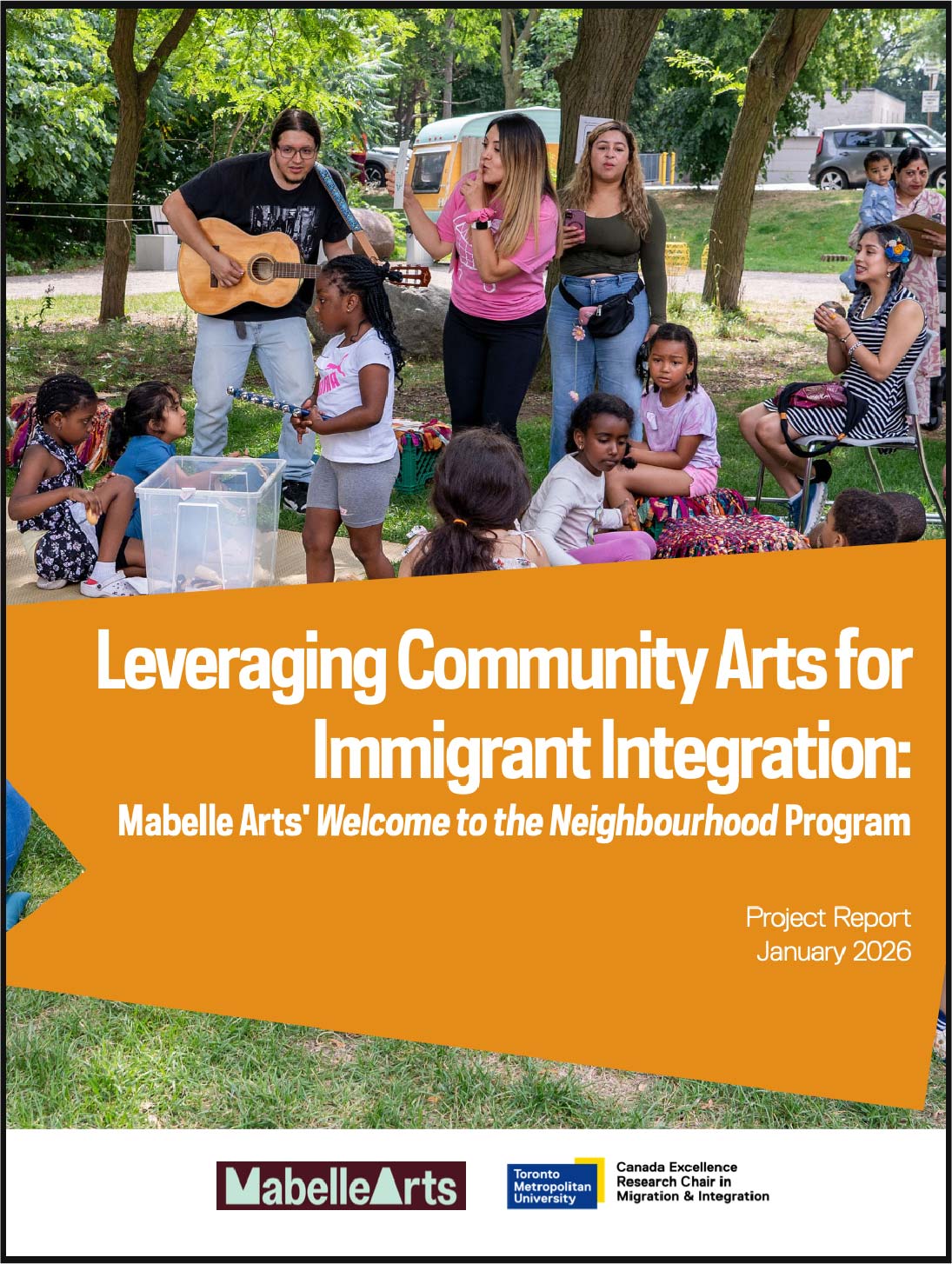
What does it take for a place to begin to feel like home? For many immigrants and newcomers, the answer is found not only in housing or employment, but in spaces of creativity, connection, and shared storytelling. On January 29, 2026, a community gathering at East End Arts brought this idea to life, marking both the launch of a new project report and the successful completion of (PDF file) Leveraging Community Arts for Immigrant Integration, a collaborative research partnership between the Global Migration Institute at Toronto Metropolitan University and community arts agency Mabelle Arts.
With focus on Mabelle Arts’ Welcome to the Neighborhood (WTTN) program, this collaborative project, funded by the Social Sciences and Humanities Research Council (SSHRC) and led by Senior Research Fellow Alka Kumar, was initiated in 2023 with the objective of deeply understanding the role and impact of community arts on immigrant integration, both generally in the lives of immigrants, refugees, and newcomers who move to the GTA and to Canada; and more specifically, to highlight how the program supports newcomer artists in their integration into the arts-ecosystem in Canada.
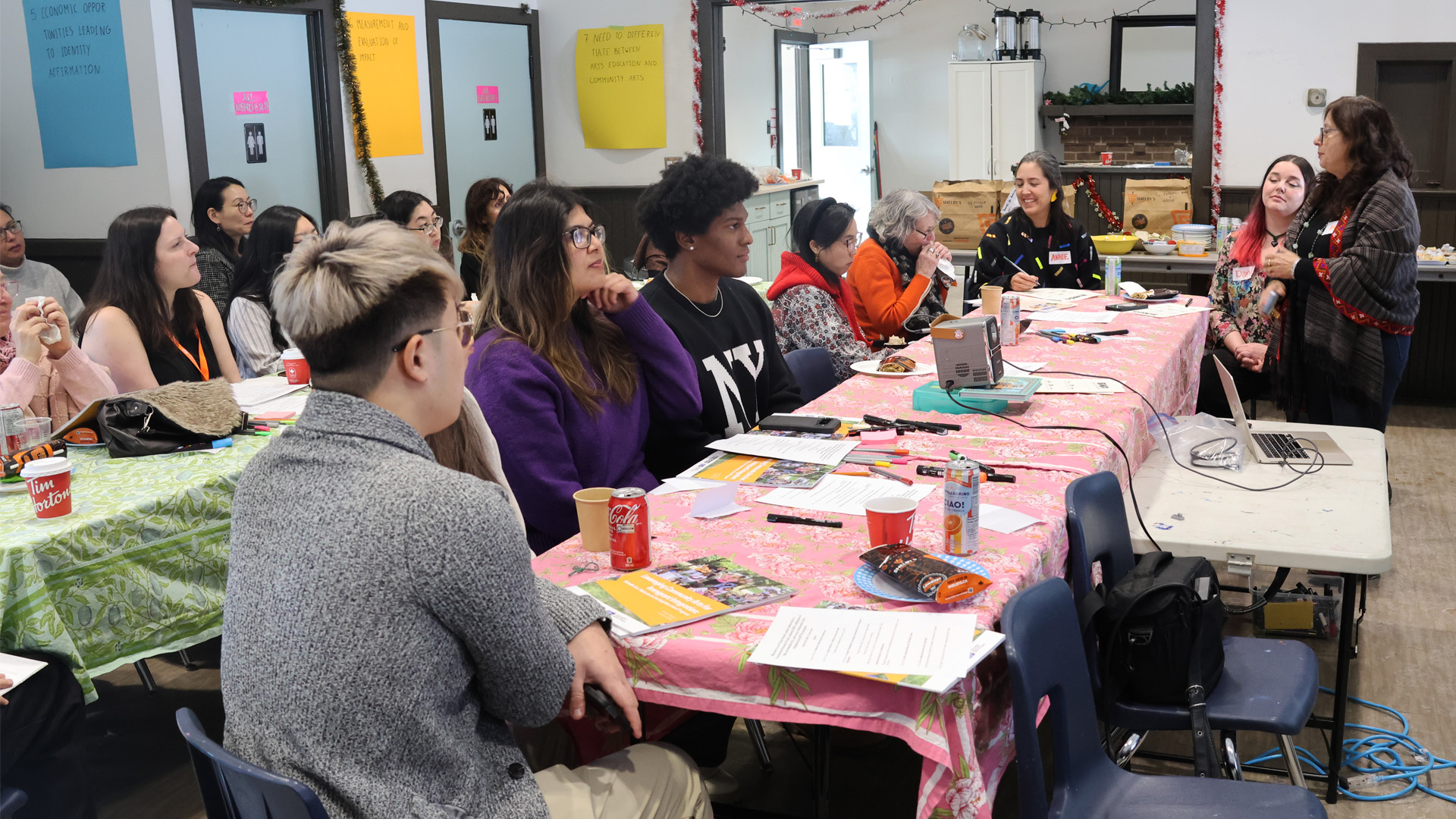
Centring on a key question: “Do you feel like the place you’re in is home?” both through the project journey and for the report launch event, our goal was to bring together in conversation a variety of stakeholders who played an integral role in making this research possible. Research participants joined the discussion, as did researchers interested in arts-based methods, including those who employ creative practices in migration and in other social sciences. Partners from community arts agencies and service providers from the settlement sector participated; artists, practitioners and a few decision makers were present too.
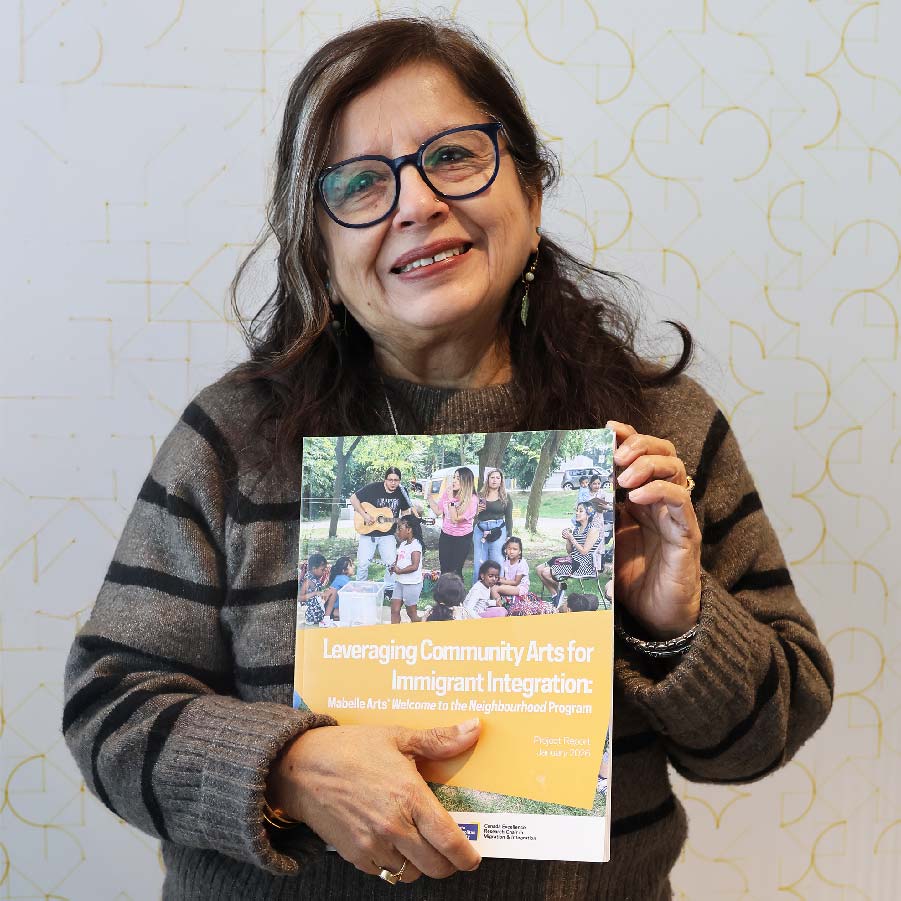
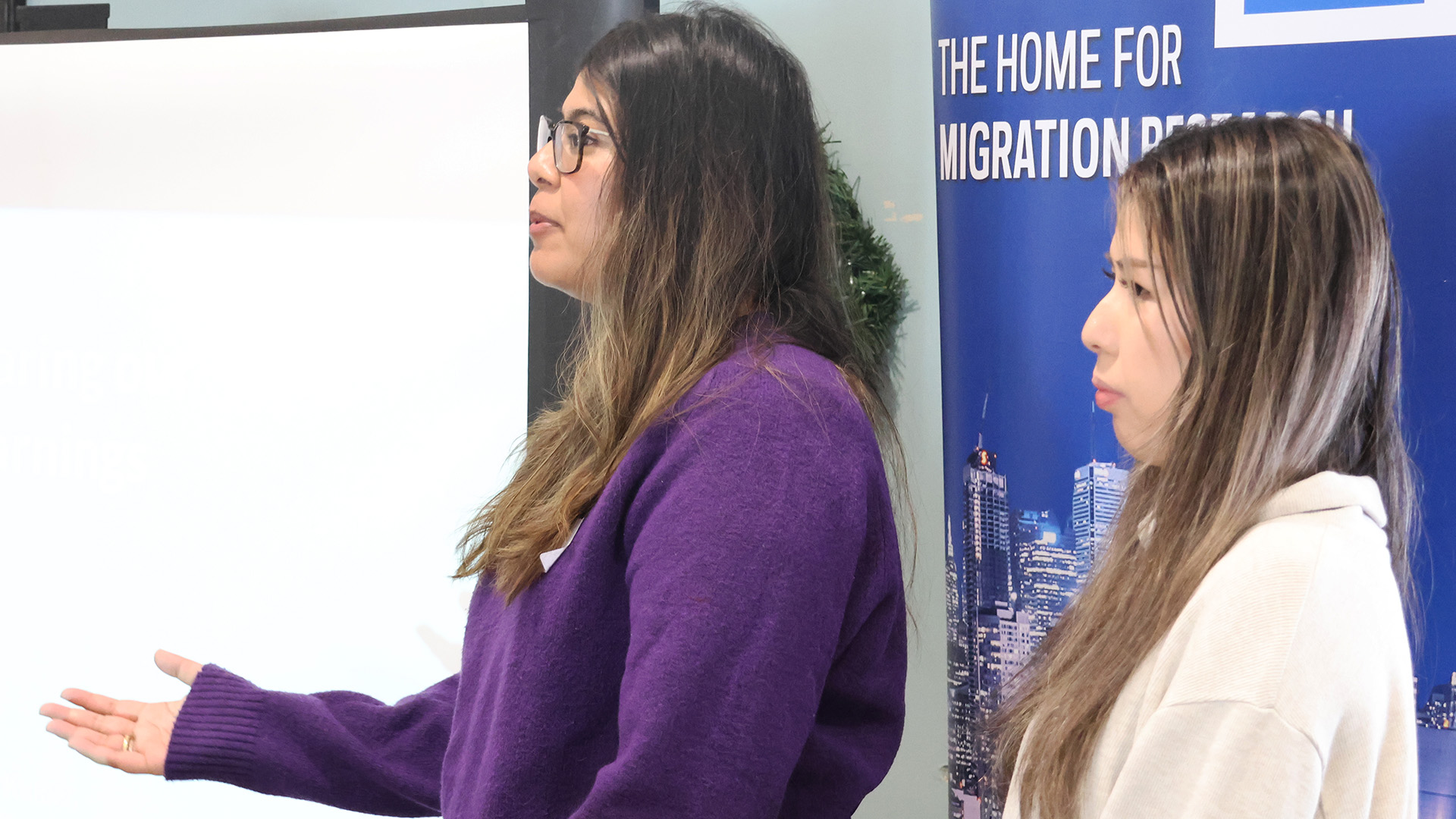
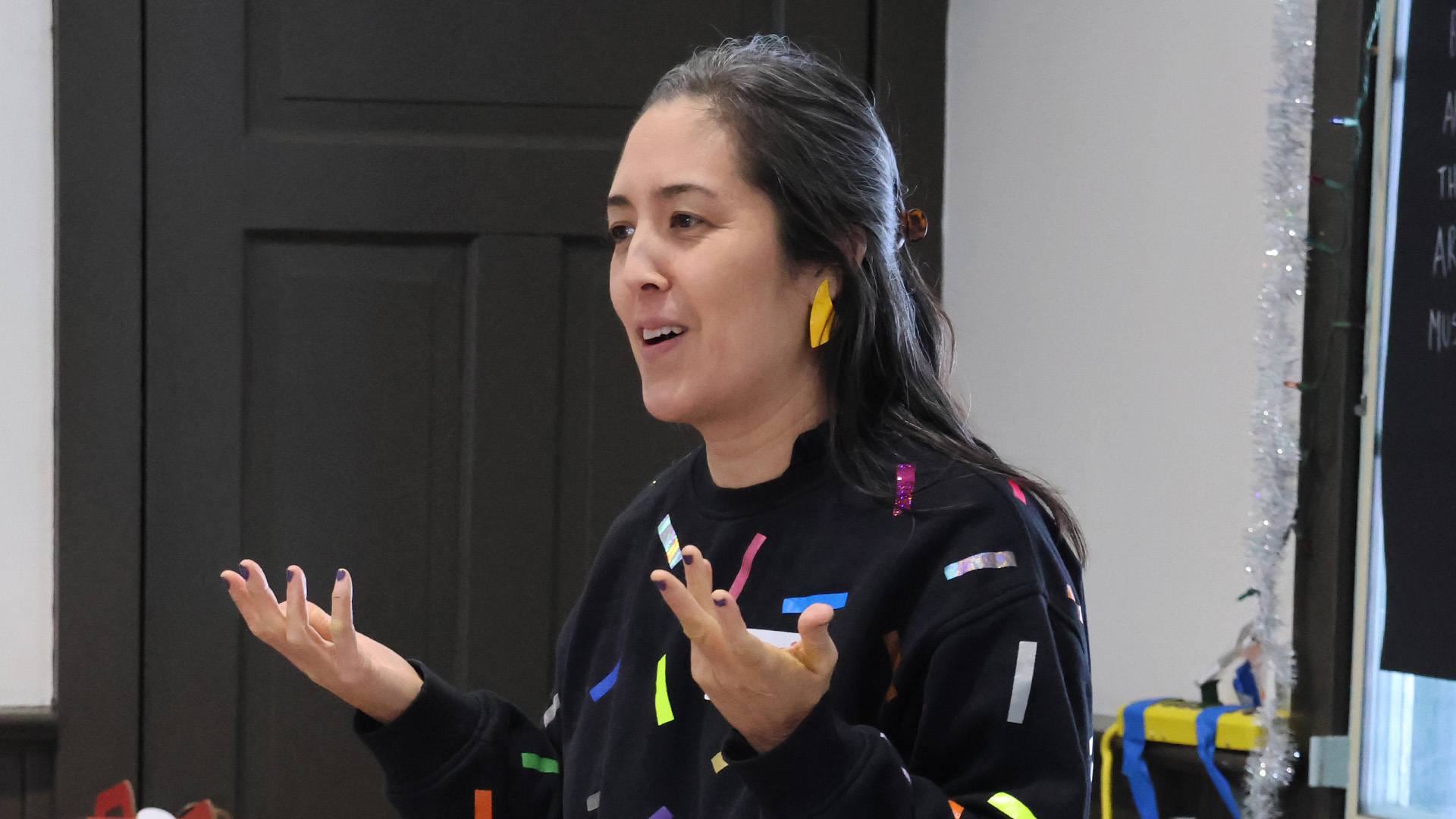
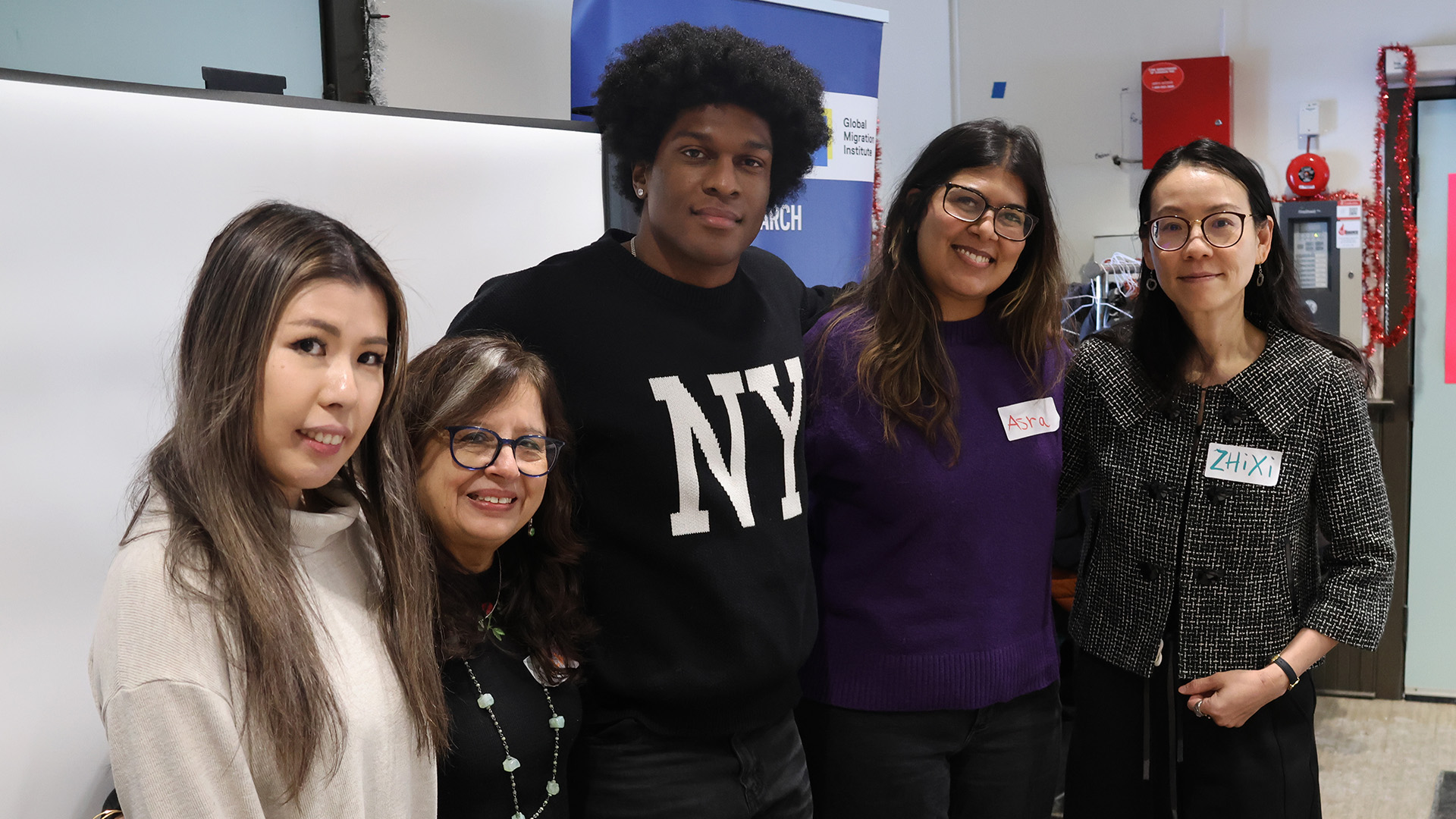
Alka Kumar, Leveraging Community Arts for Immigrant Integration Research Lead, CERC Migration Senior Research Fellow and Project Coordinator.
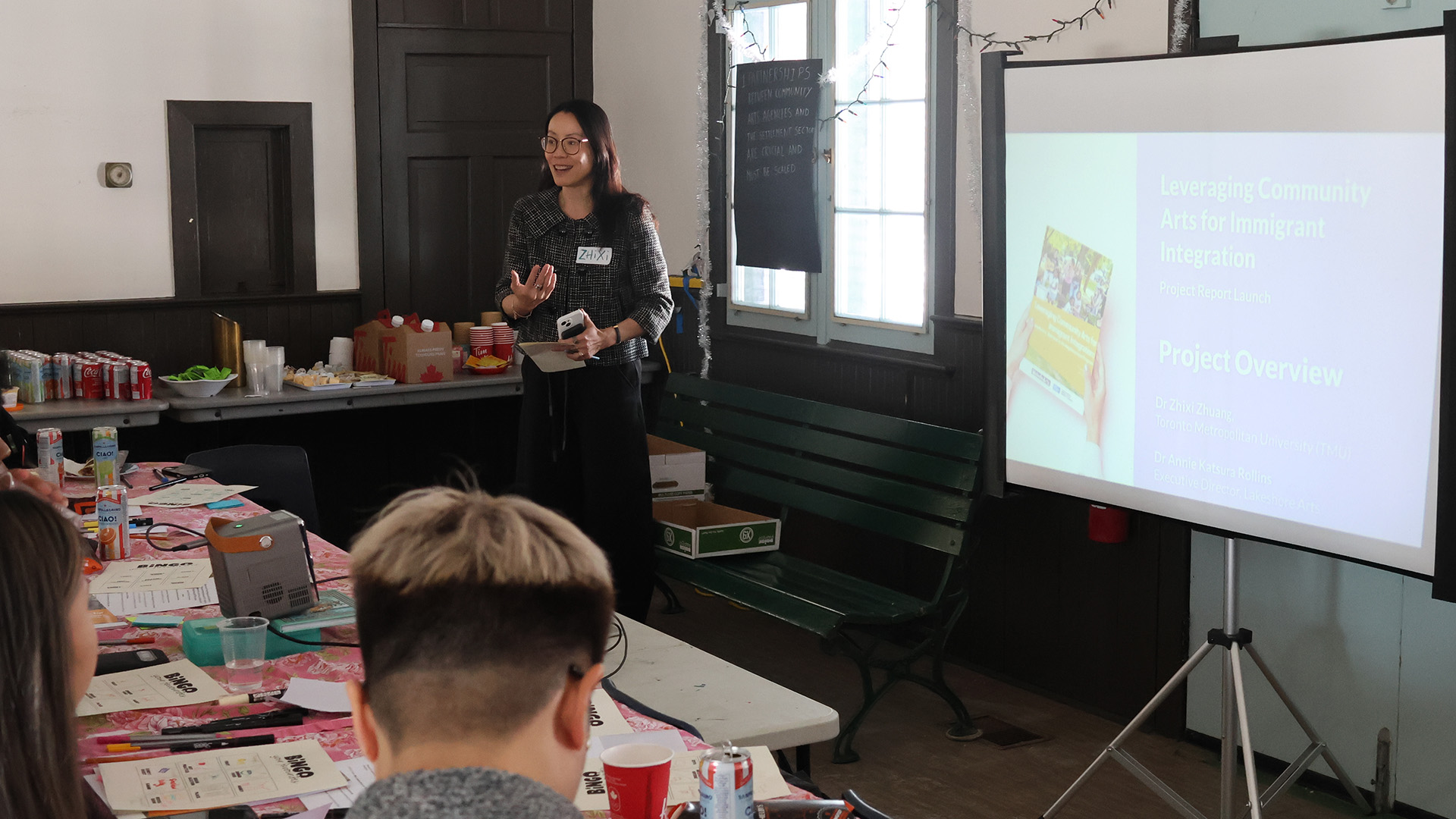
Zhixi Zhuang, co-applicant on the research project and an Associate Professor at the School of Urban and Regional Planning, at Toronto Metropolitan University.
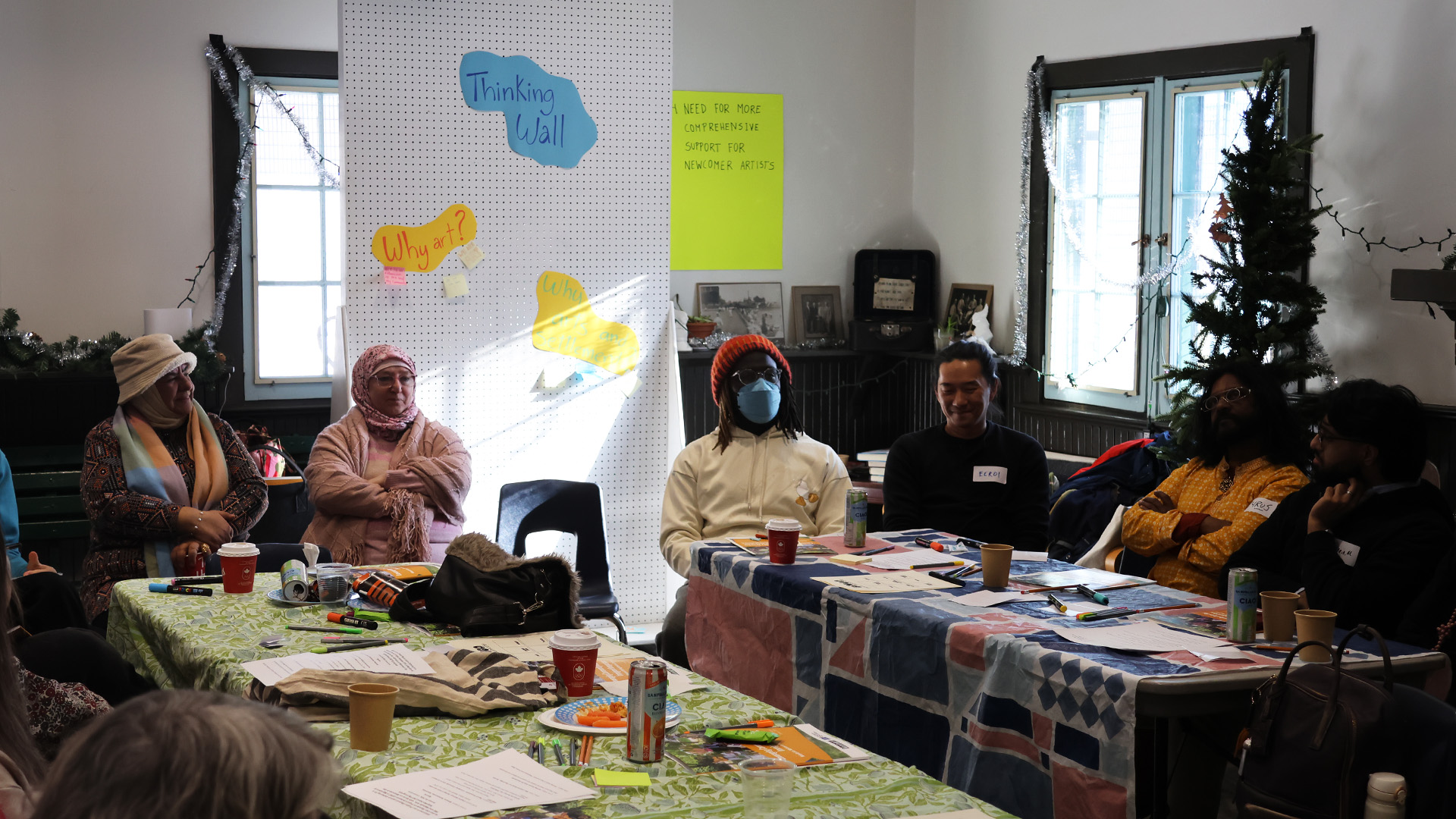
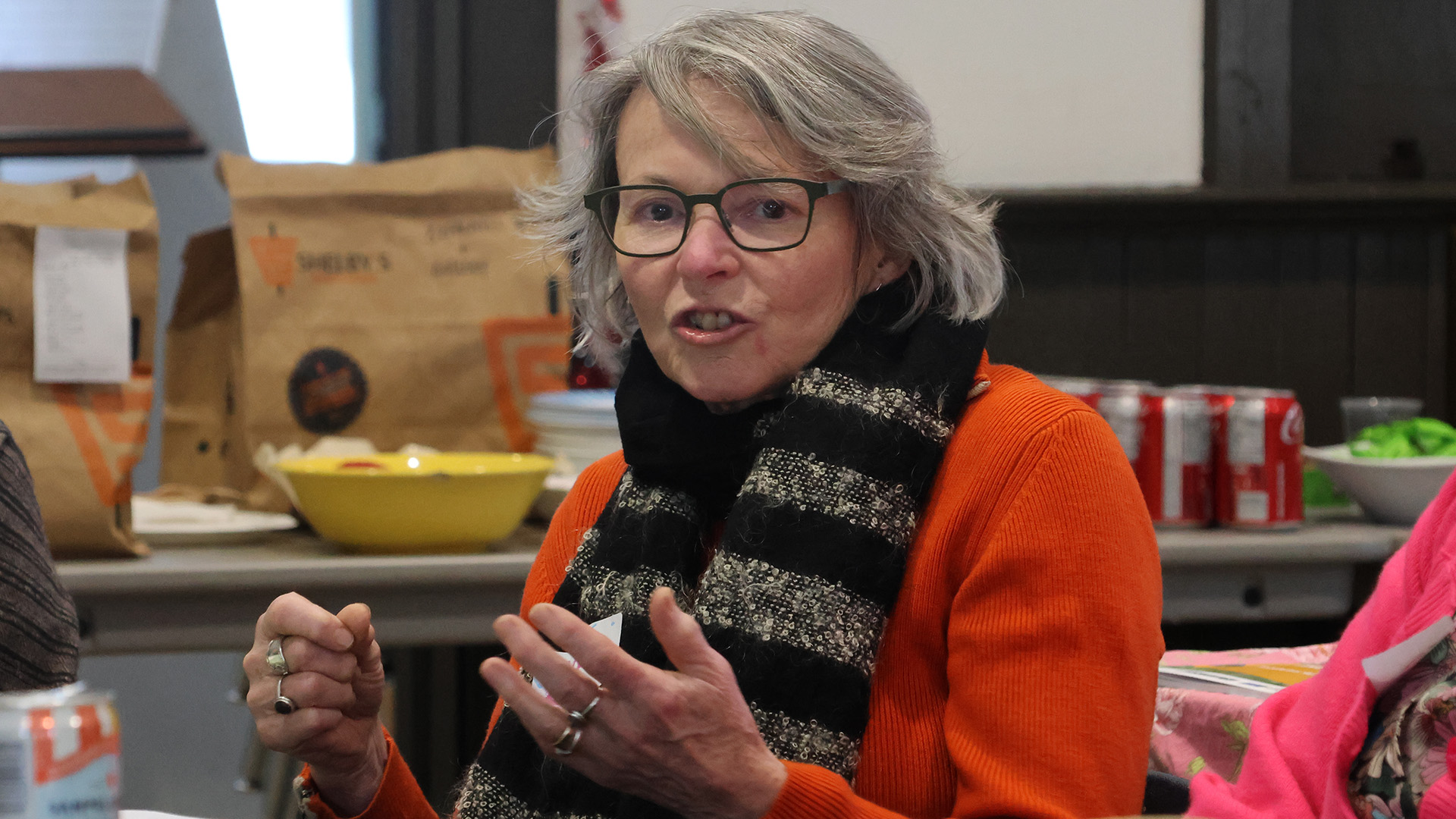
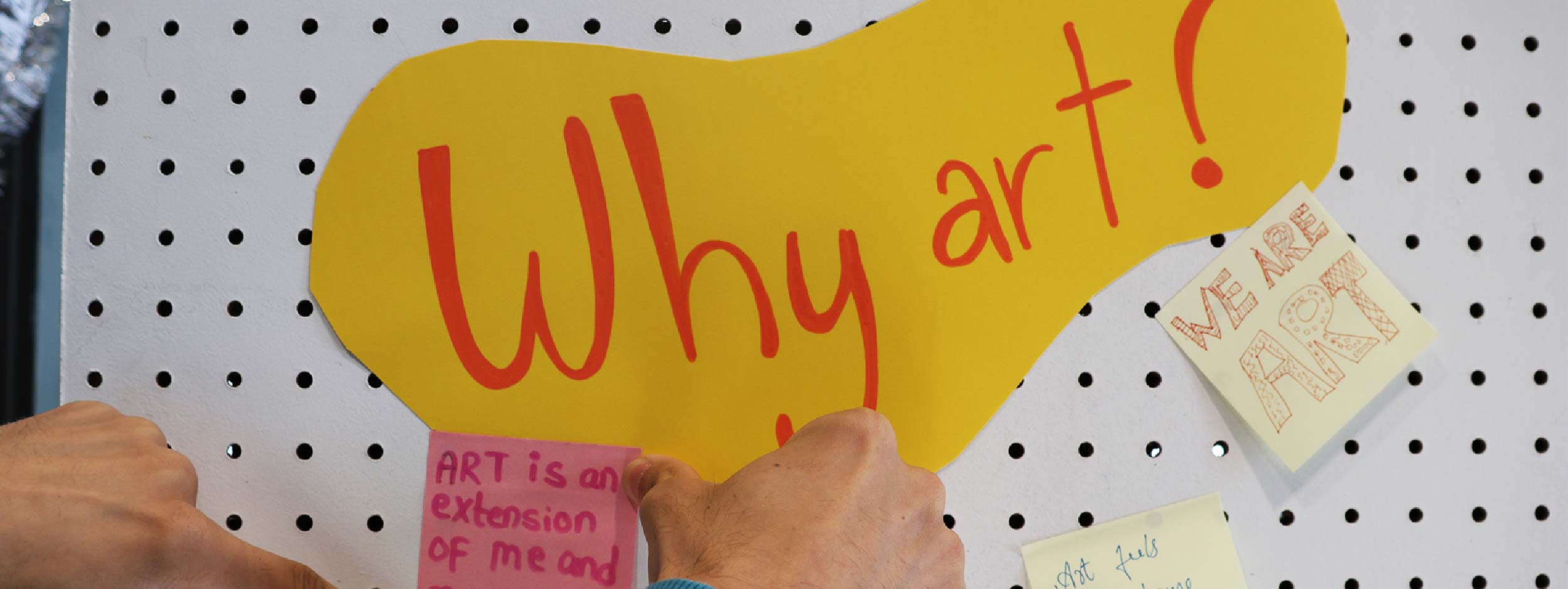
The research team shared their experiences of participating in the research, and they discussed methods used to gather data. Key findings and recommendations were presented, and using discussion prompts and arts-based activities, an engaging conversational space was created where research participants and community members could share their stories of participating in the project, expressing their perspectives on the relationship between community arts, community-building and integration, and why it was significant. Reflections on challenges and positive experiences that played a role in integration journeys of individuals, and highlights from research results led us to imagining and creating action-pathways for moving forward.
Some of the research evidence reiterated that community arts, as a field, is more than making art; and when working in partnership with the settlement sector to support immigrants and newcomers, it becomes rather a space for community-building. Such a fostering of relationships leads to the creation of ‘social infrastructure’ that helps individuals to collectively forge a sense of connection with others; the result being individuals experiencing a stronger sense of self and well-being; as well as feelings of belonging in their new environment.
Key recommendations from this report advocate for the expansion of partnerships between community arts agencies and the settlement sector, as these relationships have the potential for 'social prescription,' that can in turn enhance mental health benefits for immigrants and newcomers. Further, additional funding is also critical to comprehensively address the barriers newcomer artists face in integrating into the workforce in Canada. Funding can be used for developing resources for artists- for providing mentorship and for building networks with creatives who have more experience in the arts-sector-regionally and nationally. This can better prepare new entrants to pursue opportunities to implement their arts projects and ideas. Resources put into this kind of learning and training will have long term benefit, leading newcomer artists to not only be economically self-reliant but also create pathways for reclaiming their identity as artists, creators and culture-makers, thus contributing more meaningfully in civic participation and active citizenship to build a more cohesive society.
As the conversations from this gathering made clear, when creativity is centred as a tool for connection and care, community arts can play a powerful role in shaping more inclusive futures, where feeling a sense of belonging in the everyday becomes a shared possibility rather than a distant goal.