Clay meets code at TMU’s Design + Technology LAB
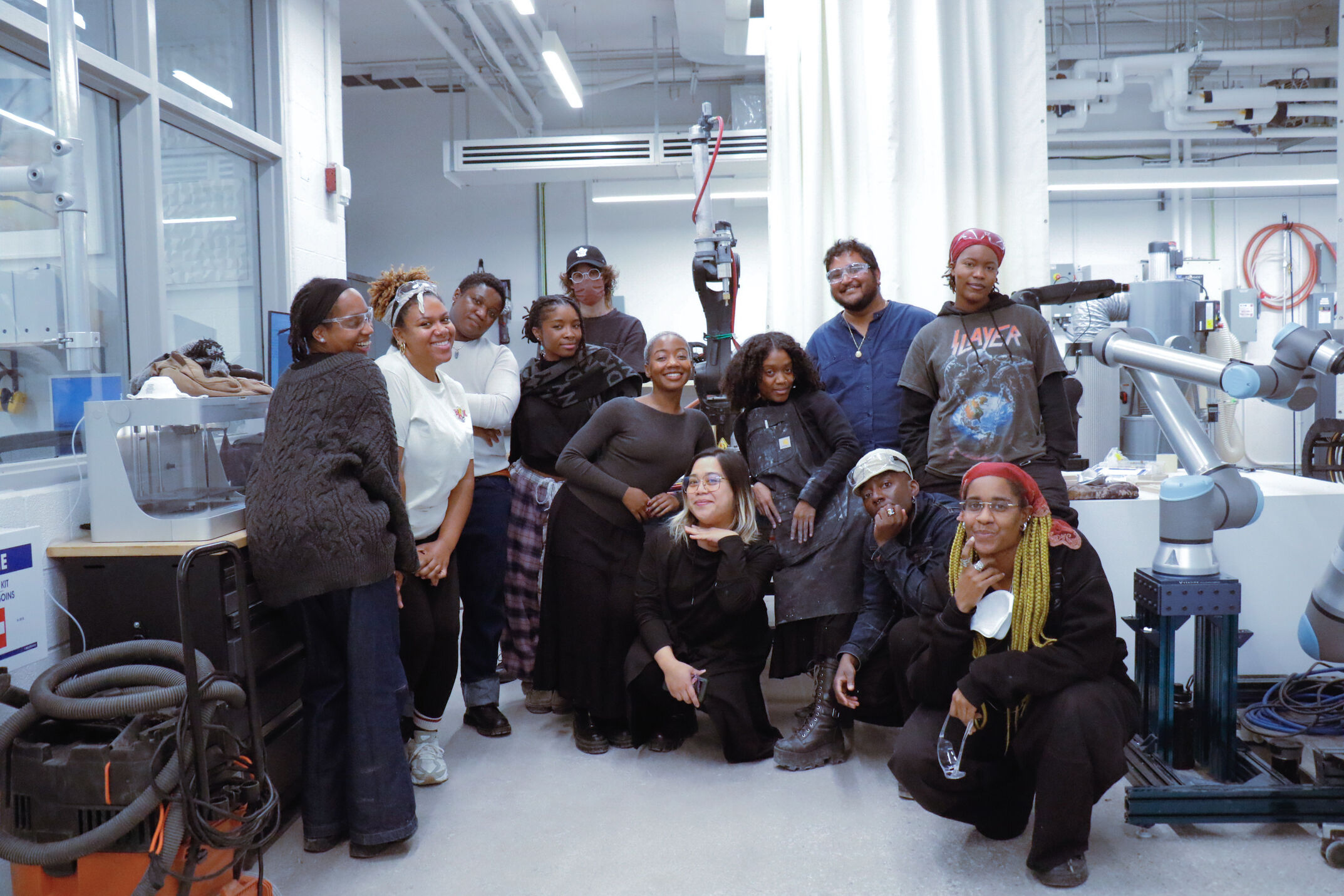
Local artists, designers, and creatives gather alongside a robotic arm at TMU’s Design + Technology LAB for the "Additive Art" workshop. Led by artist Erica Whyte and TMU fabricator Wyatt Armstrong, the hands-on session brought participants together to explore the intersection of traditional ceramic craft and cutting-edge 3D printing.
Last December, the Design + Technology LAB (opens in new window) at Toronto Metropolitan University became a site of experimentation, collaboration, and dialogue as artists gathered for Additive Art, a one-day workshop exploring clay 3D printing and robotics. Led by artist Erica Whyte in collaboration with TMU instructor and Design + Technology LAB fabricator Wyatt Armstrong, the workshop invited participants to consider how emerging technologies can be shaped by creative practice and community values.
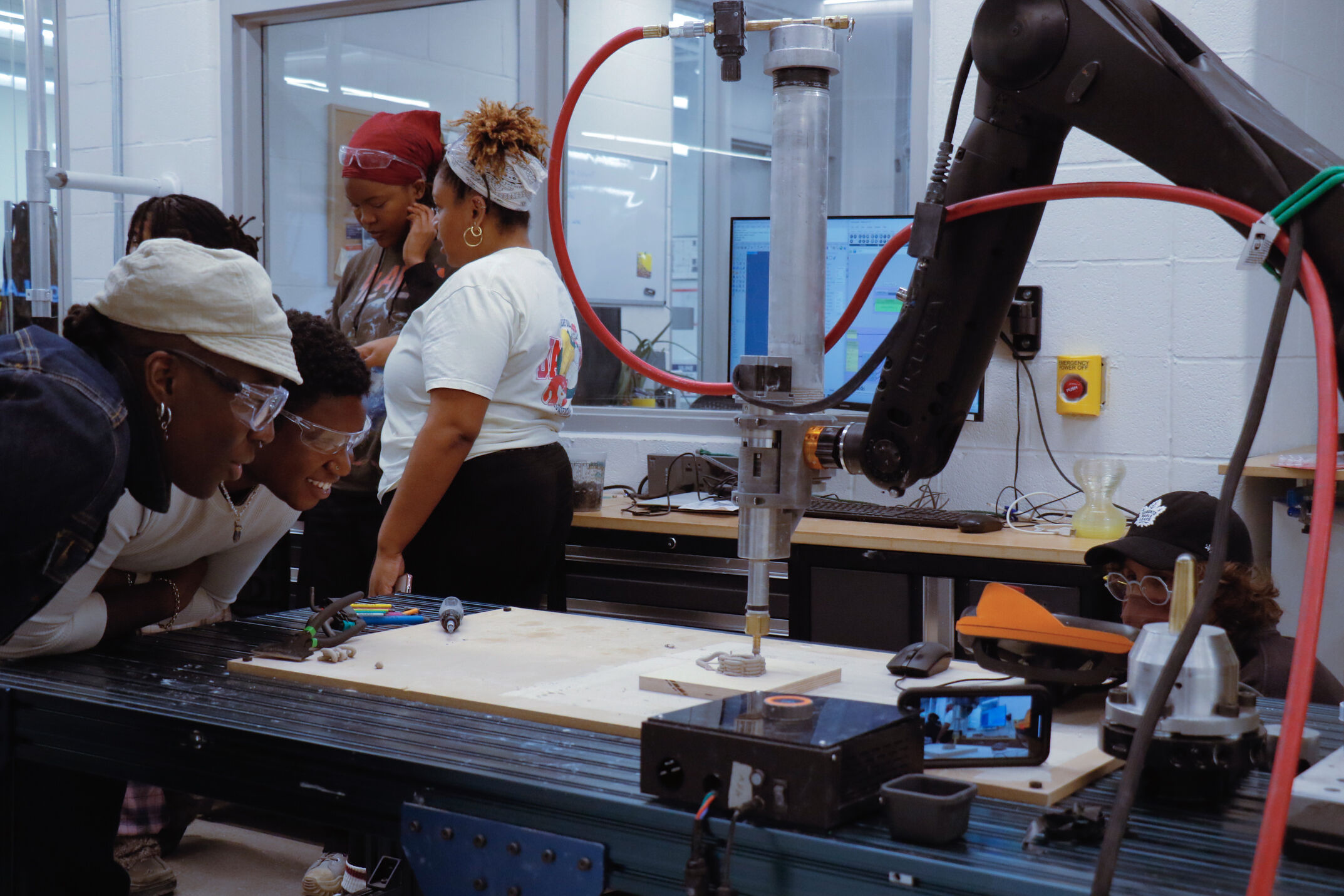
Participants in the workshop lean in to observe a robotic arm precisely extruding clay. The workshop provided a unique opportunity for ceramicists and artists to experiment with digital fabrication tools.
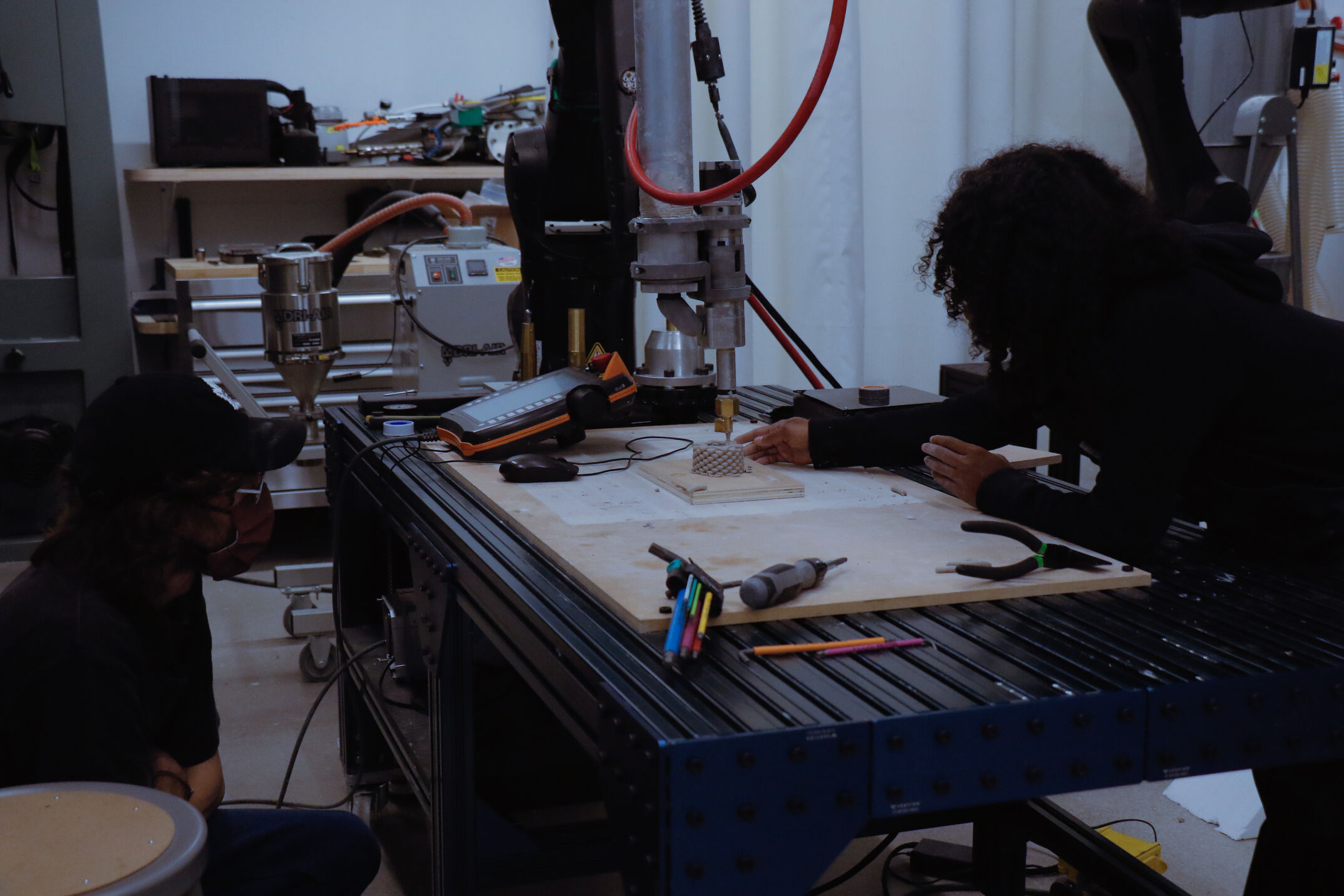
Participants getting hands-on with a freshly printed clay piece, showcasing the workshop's focus on bridging the gap between digital precision and the tactile nature of ceramic craft.
The workshop grew out of Additive Art, a seven-month research project organized by Whyte that explored the possibilities of ceramics and robotics as complementary tools. Working closely with Armstrong, Whyte adapted a clay 3D printing system within the Design + Technology LAB, integrating it with an industrial robotic arm. Building on this research, Whyte and Armstrong opened their process to a group of Toronto-based artists, designers and creatives with the support of Black Artists’ Network in Dialogue. (external link, opens in new window)
“I think a lot about how interesting it would be for novel tools like robotics to be more common and accessible,” says Whyte. “This process made it clear that something compelling always comes out of expanding knowledge around specialized tools and artistic practices.”
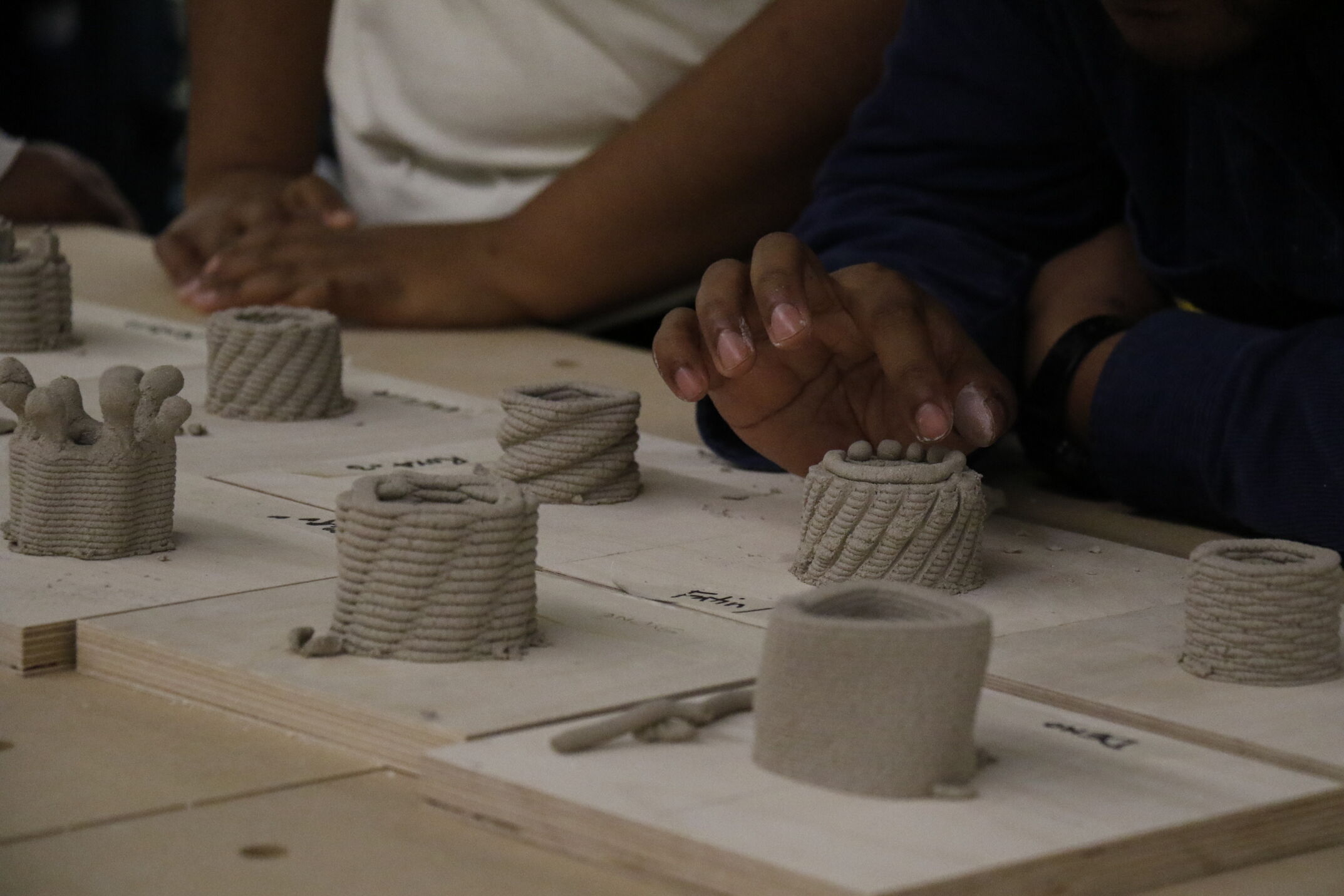
Prototypes display the distinctive, layered textures of 3D-printed clay. The workshop yielded 11 unique pieces, which were later bisque-fired at the School of Interior Design to preserve their natural finish.
The workshop returned to the essentials of ceramic craft, hands-on making, and iterative experimentation, inviting participants to explore how communities shape new technologies and how tools like 3D printing can amplify personal and cultural expression. “It was a pleasure to facilitate this workshop with Erica and work with a number of enthusiastic ceramicists curious about digital techniques,” says Armstrong.
All 11 ceramic pieces, along with earlier prototypes, were bisque-fired at the School of Interior Design (opens in new window) , preserving the stoneware’s natural tones and texture — a final touch that highlighted the balance between digital precision and tactile making.
Supported by the Toronto Arts Council (external link, opens in new window) , the Design Fabrication Zone (opens in new window) , the Design + Technology LAB, and Black Artists’ Network in Dialogue (external link, opens in new window) , the project shows how TMU’s The Creative School connects artists, students, and industry in collaborative, community-driven innovation. The workshop underscored university labs as spaces for experimentation, learning, and inclusive creative exchange.

The Creative School at Toronto Metropolitan University
The Creative School is a dynamic faculty that is making a difference in new, unexplored ways. Made up of Canada’s top professional schools and transdisciplinary hubs in media, communication, design and cultural industries, The Creative School offers students an unparalleled global experience in the heart of downtown Toronto.

