The Creative School launches Canada’s first ever International Live Journalism Festival
The International Live Journalism Festival, a vibrant gathering of industry professionals, students, alumni and community members, took place in Toronto for the first time. The event unfolded at The Creative School at Toronto Metropolitan University. Spearheaded by Journalism Professor Sonya Fatah and presented in collaboration with stitched! (external link) , the live journalism lab she founded in 2019, the festival brought the world of journalism to life.

A century-long practice transformed
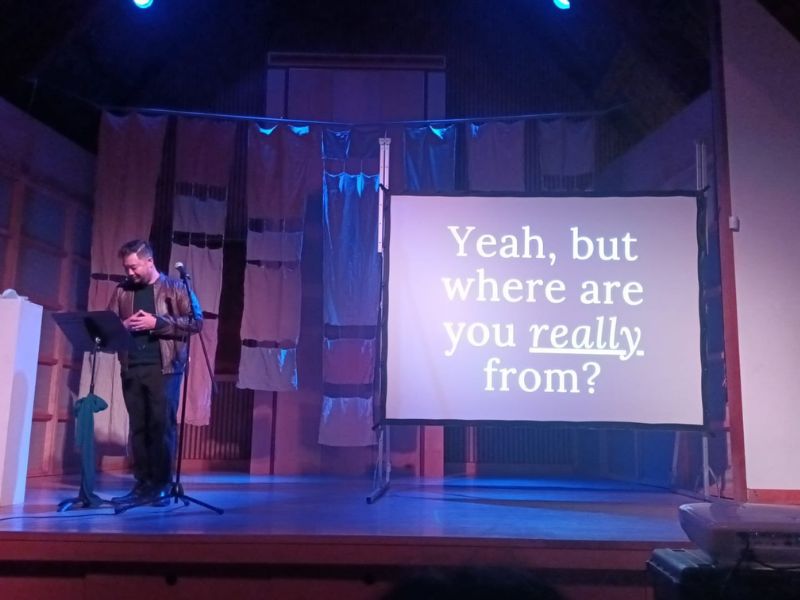
Several spaces across The Creative School were transformed into dynamic on-stage performances where journalism transcended its traditional boundaries and blossomed into interactive experiences. Attendees were not just spectators; they became active participants in a mesmerizing world of interactive journalism. The festival's itinerary featured live pitches, Q&A sessions, collaborative workshops, interactive artist-led workshops, and panels that engaged in spirited debates. Each session was curated to explore a diverse range of live journalism topics, including investigative practices, ethics, media literacy, and the battle against misinformation.
Live journalism explained
Live journalism is, as the name suggests, a format in which journalists perform stories on stage, before live audiences, employing a range of approaches, including immersive and collaborative storytelling. Live Journalism takes timely news topics and brings them to life through immersive, live in-person performances. It’s an expansion of traditional storytelling formats beyond the constraints of a page or a soundbite. The format engages audiences with meaningful news stories with the depth and emotional nuance of live theatre. Bringing journalists and readers together using multimedia methods such as speeches, workshops, and other storytelling mediums, live journalism offers a collaborative approach to expressing ideas and issues.
"Because nothing is really new but derivative from other forms, live journalism borrows from a series of ancient and contemporary practices to breathe community-focused life into journalistic practice," said Sonya Fatah. "In an age of shuttered newsrooms and distrust in media, live journalism - which is being practiced in several places globally - has the potential to connect journalists and organizations with the publics they serve."
Live journalism is a great way for students to interact with various storytelling formats and gain insight from audiences and performers. Fatah introduced live journalism at The Creative School through Global Campus Studio twice in 2018. In 2019, she co-led a live journalism course and in 2023, taught it for the first time in the Journalism program. She hopes that the course will increase students’ interest in experimental journalism and community-based reporting methods.
Canadian media and journalism censorship
There has never been a more challenging time for journalism. With the advancement of social media, information is openly accessible, but the accuracy and credibility of the information received are harder to find.
Journalists are adapting to storytelling in the digital world, now navigating Bill C-18, the “Online Online News Act” requiring platforms to pay news outlets for posting content on their sites. As a result of the bill, Meta has blocked Canadian users from viewing and interacting with content from news outlets on Facebook and Instagram.
Live journalism is a valuable practice for audiences and journalists to communicate in the same environment and contribute to shared ideas. Involving audiences in the storytelling process via live journalism bridges the gap between the media and the consumer, something that is lacking in digital media environments.
“From the point of view of a journalist, presenting a story before an audience ensures more accountability,” said Fatah. “From the point of view of the audience, it helps to potentially build trust.”
For more information about the annual International Live Journalism Festival, visit livejournalismfest.com (external link, opens in new window) .

The Creative School at Toronto Metropolitan University
The Creative School is a dynamic faculty that is making a difference in new, unexplored ways. Made up of Canada’s top professional schools and transdisciplinary hubs in media, communication, design and cultural industries, The Creative School offers students an unparalleled global experience in the heart of downtown Toronto.