How creativity is at the centre of innovative education
Before taking on the role of Dean in The Creative School, Charles Falzon was a successful Canadian entertainment executive, having produced nearly 2,000 hours of television programming, feature films and documentaries. Besides being a TV industry veteran, he has also developed and managed theme parks, publishing companies and a global toy licensing operation. Falzon has been recognized in the industry with notable accolades including several Gemini Awards and an International Emmy Award nomination. Most recently, Falzon was also nominated for a Canadian Screen Award this year as part of a team with the Innovation Studio’s Communities Create (external link, opens in new window) Initiative.
An RTA graduate, Falzon established a successful career as an executive producer and entrepreneur in the creative entertainment industry early on. It was during this time that Falzon was tasked with helping to build a fledgling British TV show (based on a book series) about a small blue train car named Thomas the Tank Engine. Falzon understood that the potential of this property was not the train, but the story of the child and how they connected to Thomas personally, a story with international reach. The objective was to create an immersive experience for that child that transcended platforms, places and people. Regardless of nationality, gender, age, or location, Thomas centered around the audience experience. It was how he made both kids and grandparents feel when they read the books, played with the toys, or watched the show.
Falzon helped transform Thomas and Friends into a global franchise with movies, television shows, theme parks, models, games, and more. Years later, in his 40s, Falzon performed a similar feat with The Guinness Book of World Records, a book series that documented human achievements. Soon, the small books were large and glossy, with big pictures and attention-grabbing, texturized covers. Sales took off and soon came TV shows, museums, and a new sense of authority that Guinness was the definitive source of the best in human achievement.
Charles Falzon, Dean of The Creative School
Key learnings from a journey in creativity
This connection with audiences extended to international markets. Recognizing that various stories and modes of entertainment transcended borders, Falzon went on to produce hundreds of successful media properties on various platforms, most of them international co-productions. Today, he is recognized by his peers as a pioneer in international coproductions and distribution.
Five key drivers
At the heart of these entrepreneurial achievements were five key drivers; Falzon operated with the conviction that imagination must never be stifled, that an international perspective is imperative, that an awareness of audience tastes is core, that diversity of talent and perspectives leads to unique strengths, and that success is a fine blend of creativity, entrepreneurship and integrity.
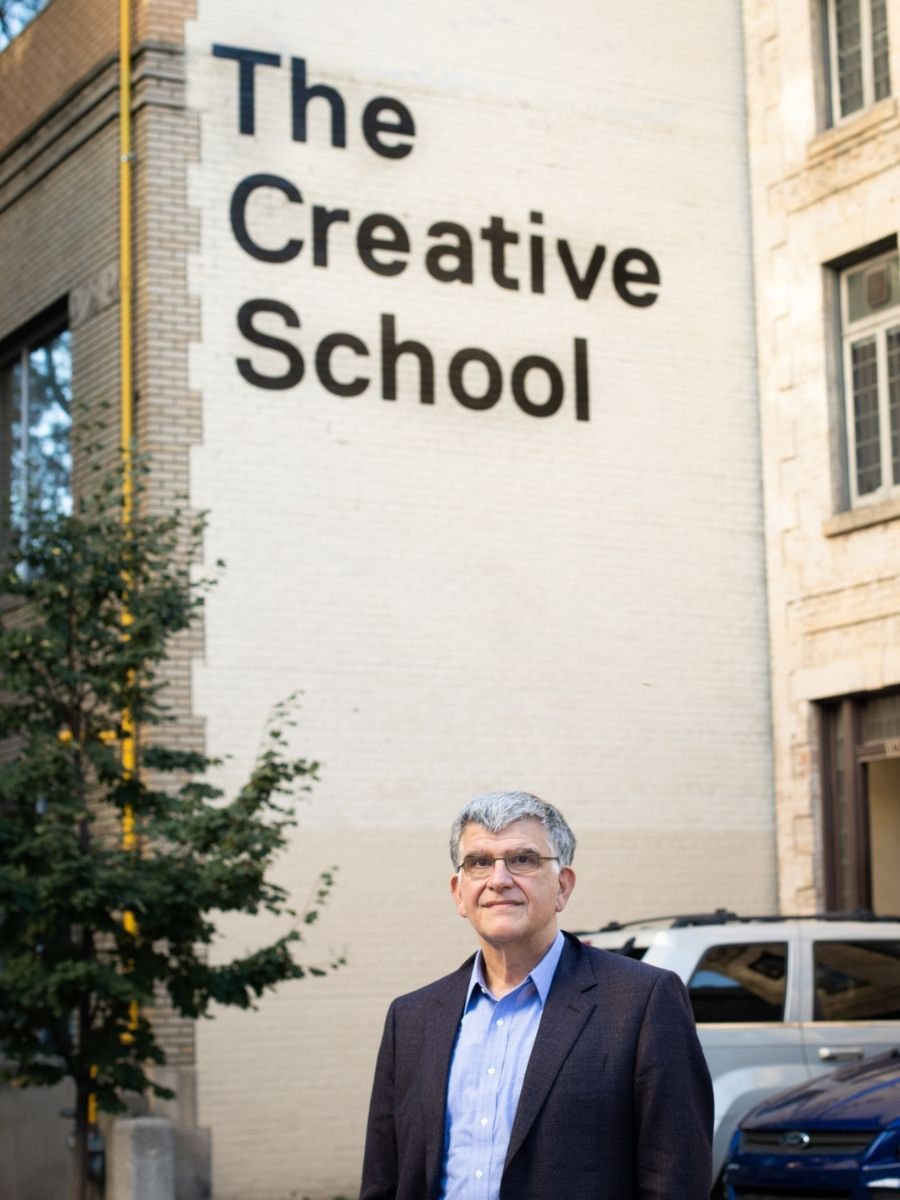
Dean Charles Falzon at The Creative School
Today, as Dean of The Creative School, Falzon implicitly continues to impart this five-part framework into every facet of the faculty. The Creative School’s transdisciplinary innovation hubs, the plethora of international experiences and impactful labs focused on audiences, social change and design thinking, are all examples of this. Creativity underpins not only “traditional'' artistic expressions but can also be mobilized to support social change. Creativity, in its expanded definition, deeply informs a variety of fields from business to medicine. Creative approaches to problem-solving demonstrate the breadth of creative innovation within the faculty from Saagajiwe (external link, opens in new window) , The Creative School’s Transdisciplinary Centre for Indigenous Research and Creation, to the recently launched Healthcare User Experience (HUE) Lab (external link, opens in new window) , an innovative and collaborative space that brings together medical humanities, patients and practitioners to improve the health care experience.
A vision for the future
The Creative School offers broad ranging and world-class opportunities for a successful, purposeful and meaningful future in the creative fields, providing students the freedom to design their futures. Creative zones labs and hubs encourage students to collaborate and create new pathways of expertise and work together to co-create and build their skills. This professional depth with transdisciplinary and international underpinning makes The Creative School a place like no other.
“It is important to have depth in your discipline, because it’s your specialty,” said Falzon. “But when you collaborate with a symphony of diverse creative lenses and instruments, you can really have a profound impact.”
This idea of harmony also extends to the professional connections available at The Creative School via unparalleled industry networks;one of the reasons The Creative School stands apart. In fact, Falzon estimates The Creative School boasts several hundred advisors, industry experts, collaborators, and business leaders available to students. These networks spread across the globe and even include a brand-new campus in Cairo (opens in new window) , Egypt.
“It’s not just about focusing on the marketplace and society as it is today. Success comes from a richness of creative tools and new ways of thinking that opens up a breadth of choices for the Canadian creative leader,” said Falzon. “All of this is about the future. Our role is to empower new thought and new talent looking at the next 10 years and beyond. To do that well, we all must be comfortable with pivoting and shifting and taking risks. That's what creativity is all about.”

The Creative School at Ryerson University
The Creative School is a dynamic faculty that is making a difference in new, unexplored ways. Made up of Canada’s top professional schools and transdisciplinary hubs in media, communication, design and cultural industries, The Creative School offers students an unparalleled global experience in the heart of downtown Toronto.
