What goes around, comes around: Circular Economy Month at TMU

Can you imagine a world where the everyday items we throw away aren’t considered waste, but instead valuable resources waiting for a second life?
This month, TMU is celebrating Circular Economy Month (external link) by highlighting ways our community can reduce waste, participate in reuse and repair initiatives, and practice proper waste sorting on campus.
Why is circularity important at TMU?
Circularity encourages us to be mindful of our consumption habits and to think critically about the environmental impacts of our everyday purchasing decisions. Engaging in circularity programs also helps save money and supports fairer access to resources through reuse and repurposing.
By thinking holistically about how we purchase, use and dispose of items at TMU, we can build a greener, more sustainable campus.
Support for circularity is directly tied to our vision for a sustainable campus, supporting two of the goals outlined in TMU’s Sustainability Action Plan: zero-waste by 2035 and net-zero emissions by 2045.
Building a culture of circularity at TMU
Give gently-used items a second life
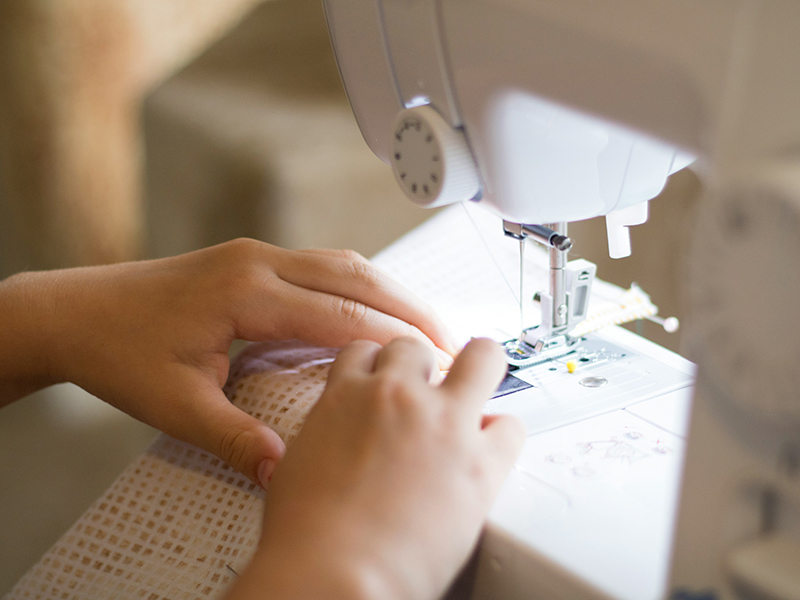
Repair workshops: Happening on various dates between October to December, the Sustainability Office and TMU Libraries' Digital Media Experience (DME) Lab are hosting a repair workshop. Bring your damaged items like electronics, clothing, jewelry, books and other non-hazardous goods and gain hands-on repair skills.
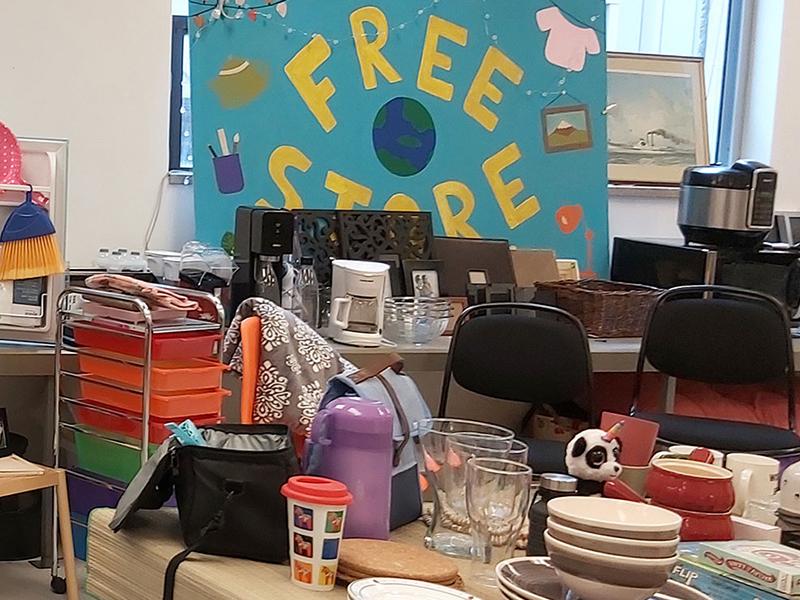
Donation drive: Bring your secondhand items to VIC-403 during the Free Store pop-ups (11 a.m. - 2 p.m. on Tuesdays) or anytime at the donation bin on VIC-800 (to the left of the elevators). It’s a simple way to declutter, share, and give useful items a second life.
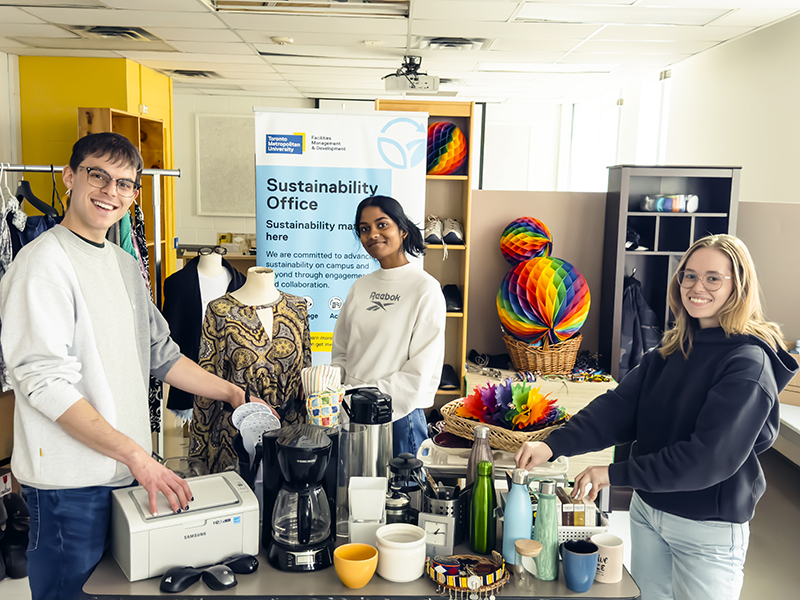
Free Store pop-ups: Students can take home free, secondhand items like school supplies, electronics, home decor and more. No cost, no waste, just reuse!
Close the loop by sorting waste correctly
Circularity relies on proper sorting because recycling and composting only work when materials stay clean. Contaminating waste streams undermines our diversion efforts and sends valuable resources straight to landfills. In fact, 97% of TMU’s landfill waste could be diverted through the organics, recycling, or other specialized programs already available on campus!
Help keep resources circulating by using TMU’s four-stream waste bins and specialized recycling programs:
Organics
Food scraps, used napkins, and compostable packaging.

Mixed paper
Paper, notebooks, and cardboard.
Container recycling
Coffee cups, cans,
and glass.
Landfill
Plastic utensils, tinfoil, and wrappers.
Specialized recycling streams
Batteries, electronics, textbooks, and more.