Precision Phosphene Control
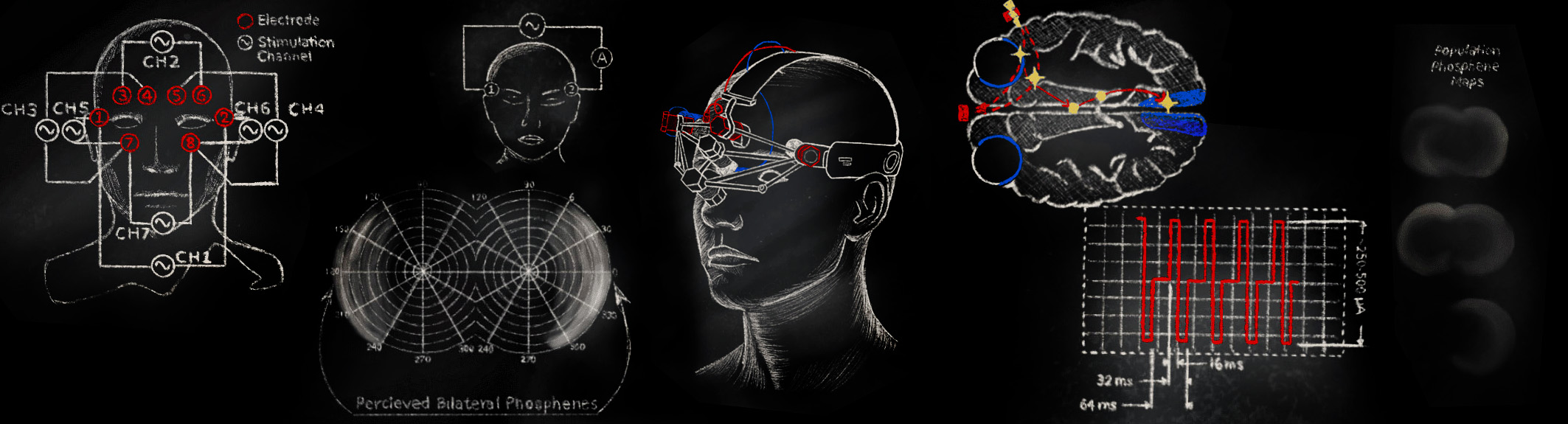
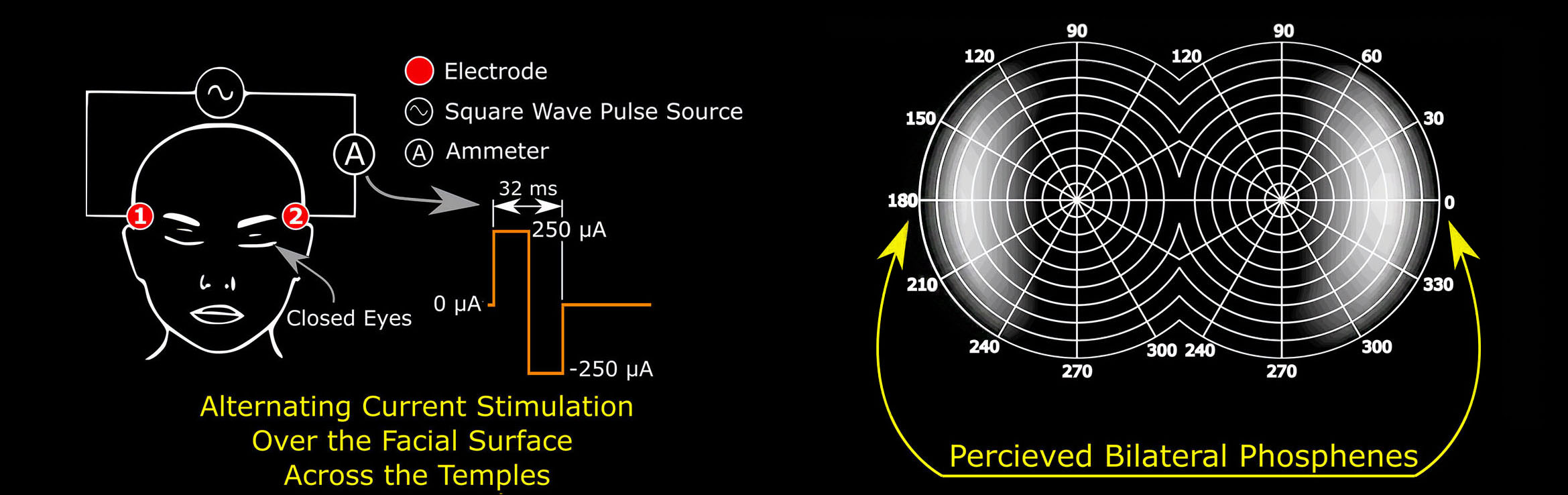
This project envisions a non-invasive cutaneous electrical stimulator to induce phosphenes as a novel approach to prostheses for the visually impaired. Phosphenes are visual phenomena that occur in the absence of light. We aim to enhance the safety, cost-effectiveness, and accessibility of the technology. The device is envisioned to provide real-time visual guidance, facilitating navigation and improving quality of life. Another focus is the use of novel electrical stimulation techniques, which enable precise control over the location and intensity of phosphenes, thereby improving phosphene resolution—a key limitation of this technology. As shown in the figure below, an early study found that electrical stimulation over the temples produces the perception of bilateral phosphenes.
The figure below depicts an early attempt that led to the independent discovery of phosphenes (perceived bilaterally within the visual field) when the temples are electrically stimulated. This finding led to the ponderance of whether the perception, loci, and shape of phosphenes can be altered, since bilateral phosphenes had reproducible spatial loci and characteristics, instead of being a broadly uniform and constant perception of a light flash. This question was later addressed through a human study.
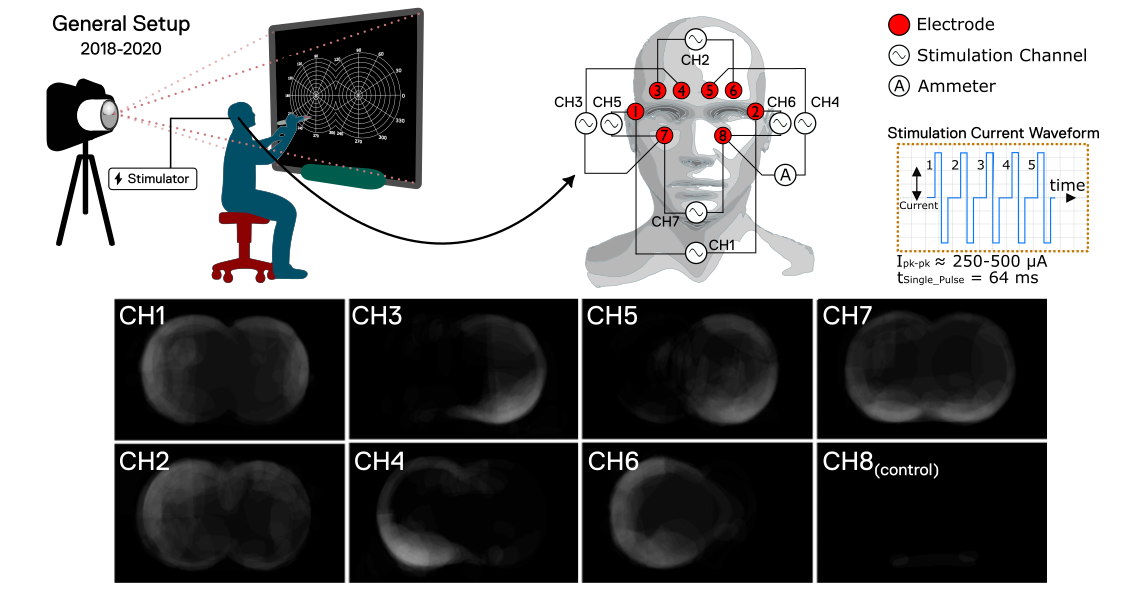
Our early feasibility study inspired the exploration of how changing the site of facial stimulation affects the spatial characteristics of phosphenes. In a human study, distinct phosphenes were induced by applying an array of electrodes to the facial skin, thereby controlling the site of electrical stimulation. By inducing distinct, discriminable phosphenes, it should be possible to convey valuable information (e.g., directional navigation) to a visually impaired person, enabling the realization of low-level artificial vision, without the need for surgery. The status quo in this field of research has mainly triumphed through the surgical insertion of electrode arrays into the retina or the visual cortex. Our research seeks a non-invasive alternative to the current invasive advances.
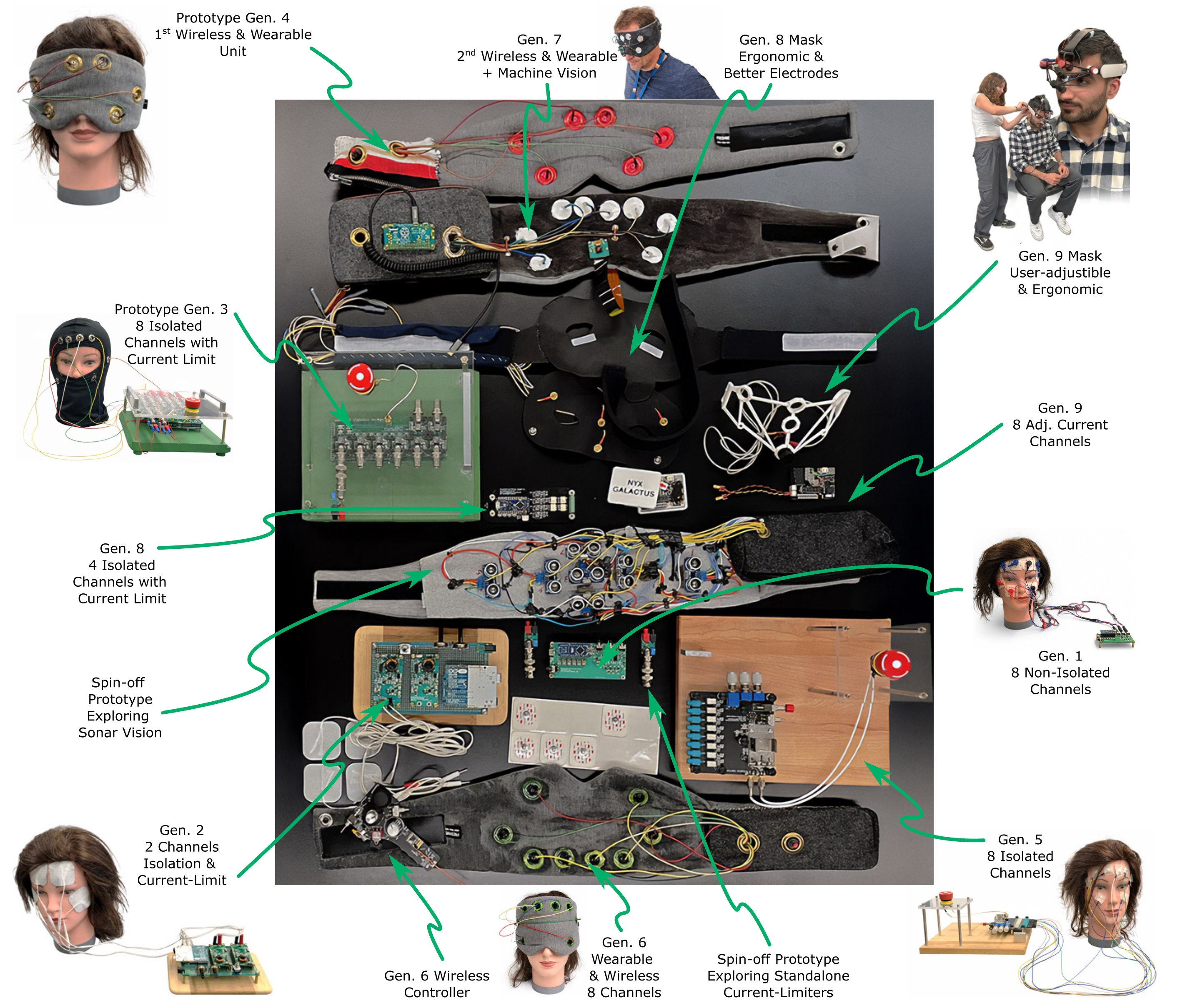
The new findings inspired the evolutionary prototyping and development of nine generations of phosphene stimulators, leading to the naming of this class of devices "The Phosphentron." This development further prompted the exploration of the safety, efficacy, and applications of such devices, which would have required large-scale longitudinal human studies. The prohibitive nature of such studies prompted the optimization of phosphene stimulation via computational modelling of electrical stimulation before proceeding to field testing of this technology.
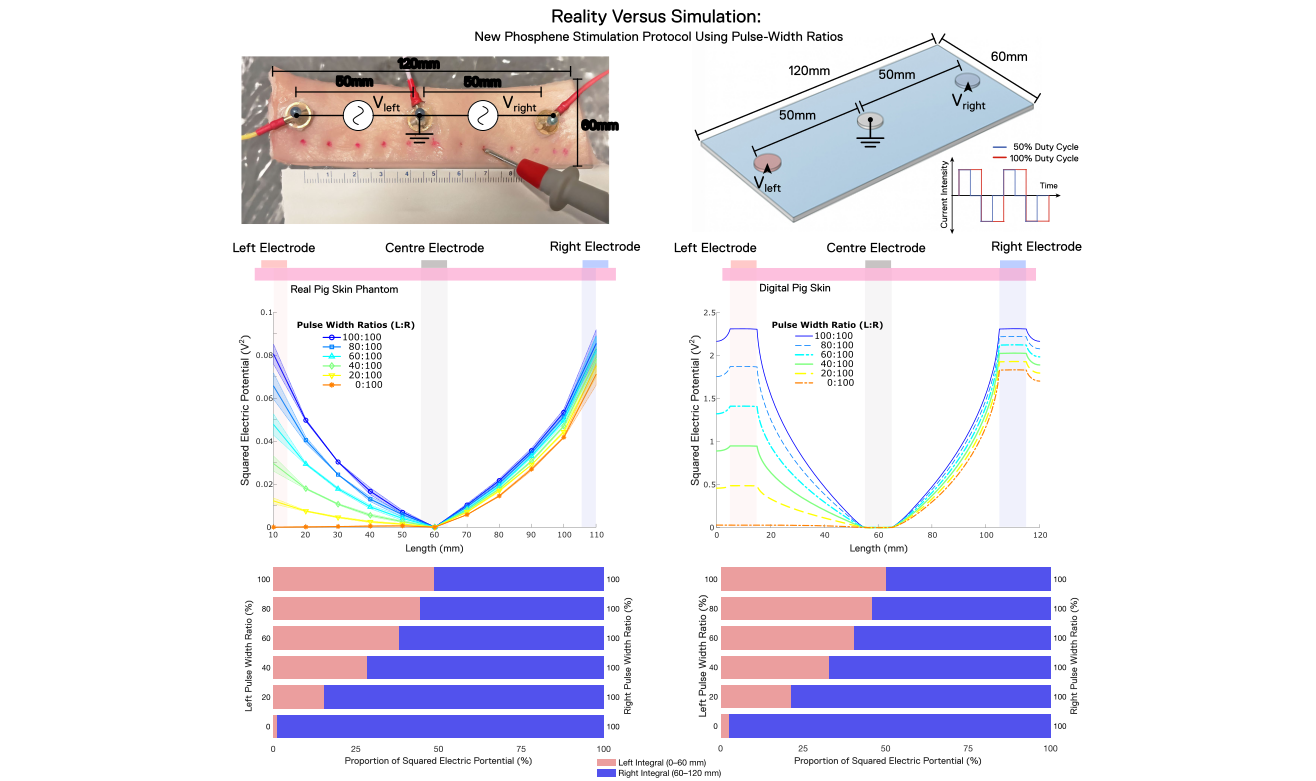
The latter computer modelling research revealed novel stimulation methods that could reduce the number of electrodes while increasing the controllable varieties of phosphene shapes and loci, thereby improving the effectiveness of the Phosphenotron as a visual prosthesis. The ongoing theoretical research is ever-increasingly encouraging us to move forward with future human studies for us to test our key hypotheses. The following diagram depicts our theoretical feasibility research of using pulse-width modulation to modulate phosphenes. The computational findings were also validated using testing on an ex-vivo porcine model. The behaviour of electrical flow can be modelled this way, while still requiring human studies to confirm the perceptual transferability of the in-silico findings from the proposed novel stimulation method.