Holographic Interferometry
Light can be used as a ruler when it transmits through or reflects off something. This field utilizes interferometry to detect surface or bulk material changes (deformation, chemical reactions, matter phase change, etc) by allowing a reference laser to interfere with the light passing through or emanating from a sample. By comparing the two beams, you can make ultra-precise measurements without needing to cut open your sample. It’s a contactless way to watch surfaces and internal changes at tiny scales.
A hologram is a very interesting concept: the recreation of an object's light field (all the light information that allows one to see and recognize an object or entity) without the actual presence of the object itself (shown in this photo (external link, opens in new window) , courtesy of Wikimedia Commons). In advanced holography setups, the light field can be configured so a hologram can be viewed from multiple angles and maintain full parallax, like an actual 3D object (learn more in this How are holograms possible? video (external link, opens in new window) , courtesy of 3Blue1Brown).
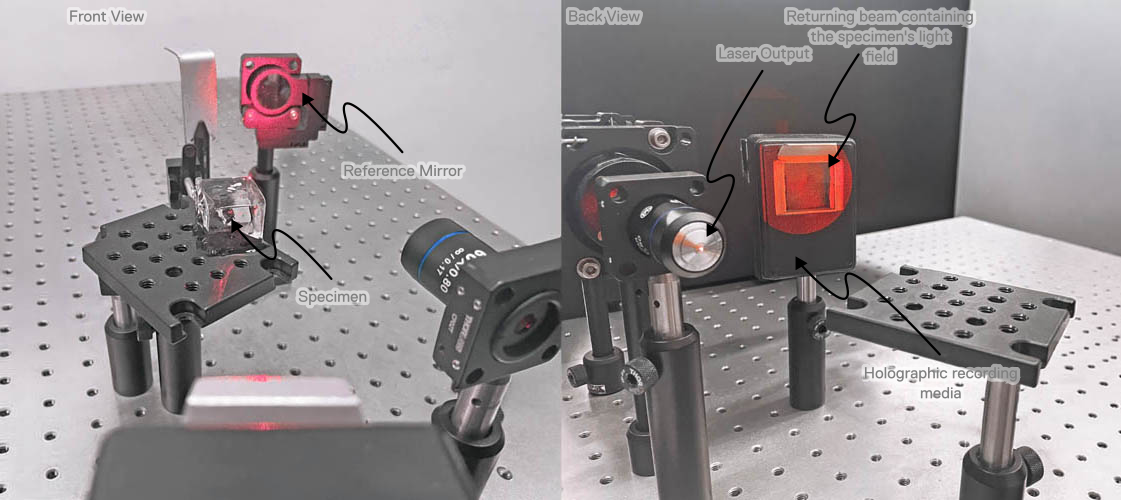
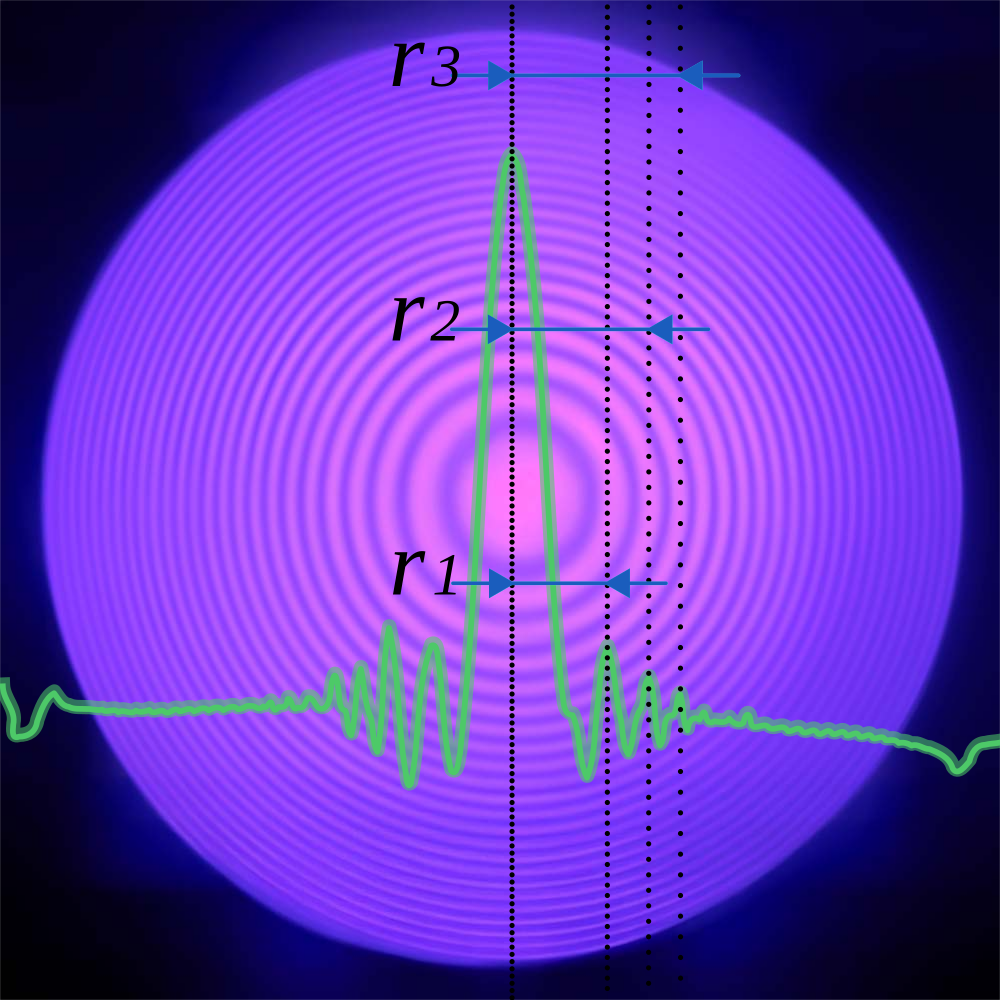
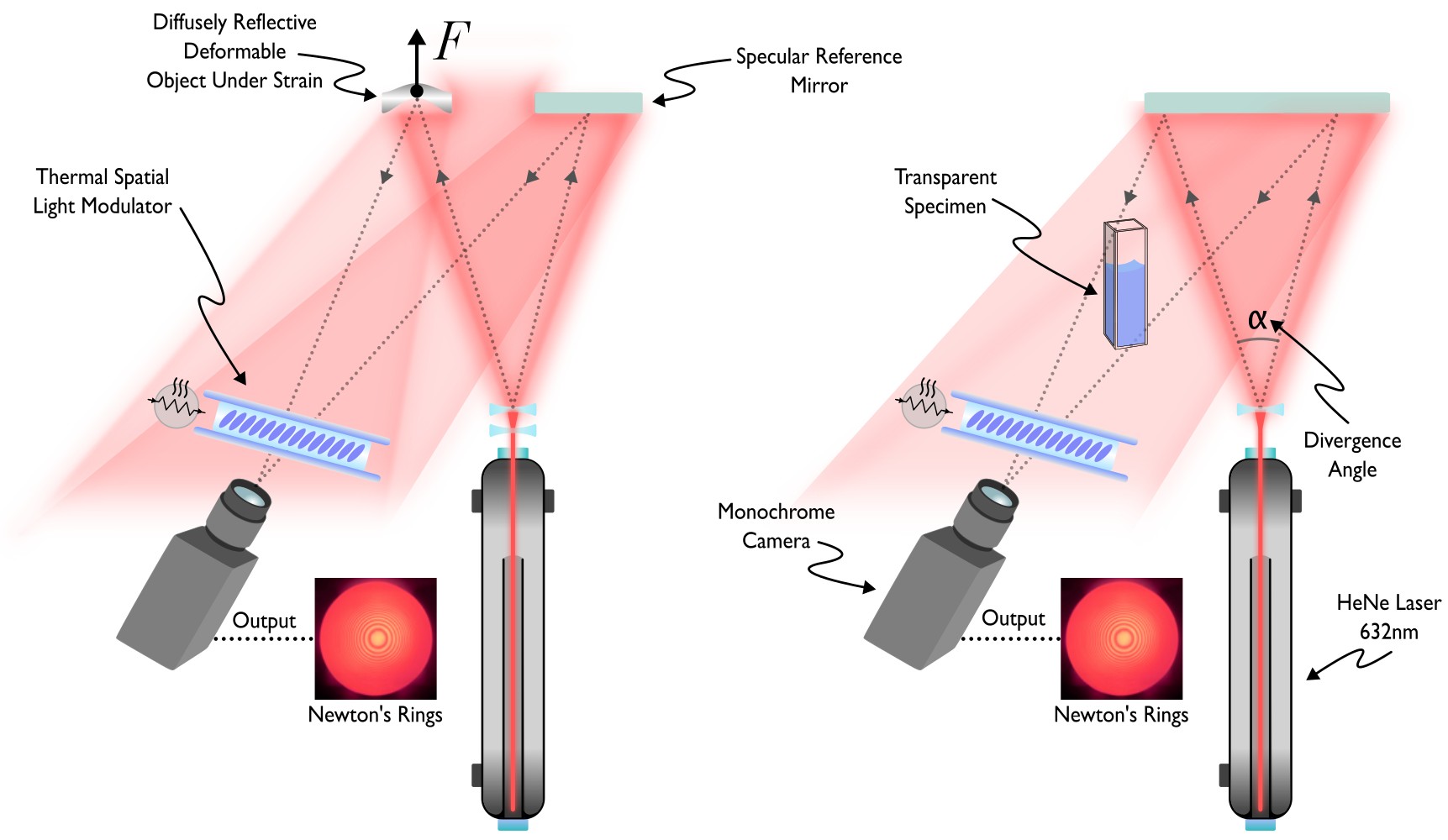
Our lab has acquired an advanced holographic recorder that can repeatedly record and erase holograms, enabling repeated experiments. When the light field of an object is recorded, any modifications of the object (microscopic bending/warping, heating/cooling, chemical reactions, solute concentration, phase change, etc) will cause slight deviations in the light field compared to its original recorded state. This difference will generate interference patterns that manifest as Newton's rings (seen in the figure above) that carry valuable phase information. These patterns can be analyzed to precisely quantify the degree of such modifications. The diagram below shows some ways holographic interferometry can be used to quantify mechanical stress (left) and water salinity (right).
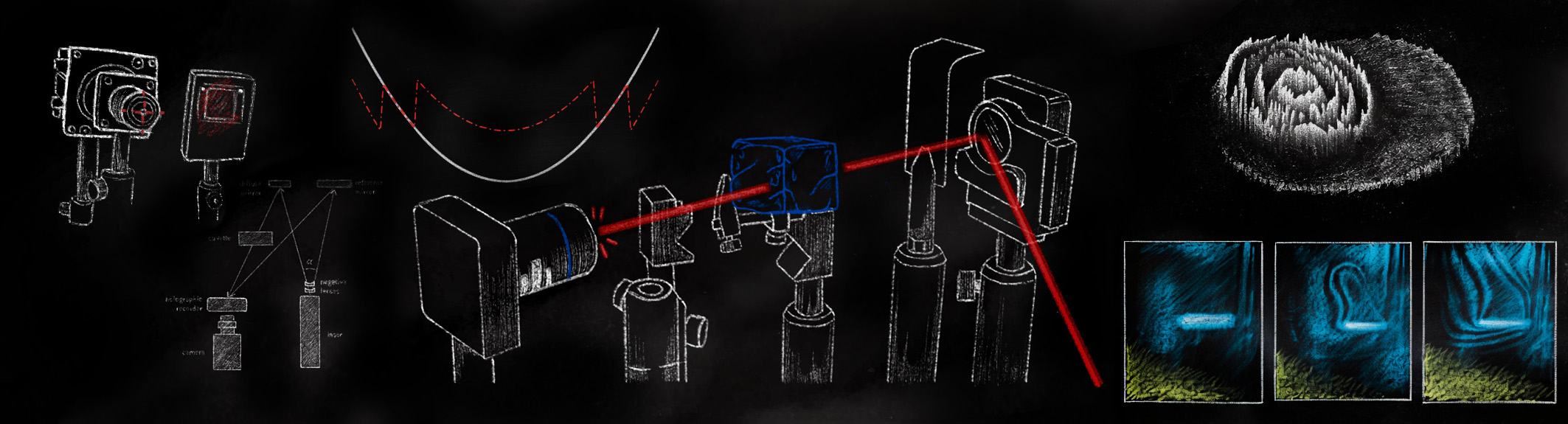
The following diagram depicts a real setup used to study the temperature change of an ice cube. When light enters a transparent medium (like ice), it slows down by a factor equal to the medium's refractive index. Furthermore, the temperature of a medium can modulate its refractive index, thereby changing the light field transmitted through it, allowing holographic interferometry to finely observe this trend. Mathematically, changes in refractive index to four decimal places of precision should be detectable with this technology, making it a valuable tool in metrology.