Alumnus Jon Wylie discusses what the creative industry has to offer

While Production Alumnus Jon Wylie has transitioned out of the performing arts, he still carries lifelong lessons from his days at Theatre School, highlighting how creative skills are universally applicable.
Jon is an experienced Executive with over 30 years of demonstrated success in Operational Consulting. He is skilled in Client Engagement and thought leadership, with a focus on organizational and community engagement, enabling employees and management to re-engineer and rethink their business. A team player and business professional, Jon graduated from the School of Performance’s Production Program, with additional undergraduate studies at the University of Toronto in Economics, Philosophy & Political Science.
Jon is currently a Managing Partner & Executive Member of Proudfoot, a Management Consulting Company. He worked in professional theatre for about 10 years before making the switch. During his time in the theatre world, he held a number of positions, including Assistant Stage Manager at the Shaw Festival, Touring Manager for the National Tap Dance Company, and many more.
He had “just finished being the youngest Company Manager for the Alberta Ballet, running a North American tour" when he asked some older colleagues what they felt was missing in the artistic community. The answer he got from them was: business. Artistic companies and individuals were lacking the business insight needed to lift their projects to the next level.
So I said, that's what I'm going to do. I'm going to understand business, and bring it back to the arts community. I'm still in the understanding phase, but I plan to bring it back one day.
So what exactly is Management Consulting? Management Consultants work with companies spanning a number of industries, to help them set goals for their company. Proudfoot takes their business to the next level, by following through and helping their clients realize those goals.
The way Jon sees it, “for every pair of hands, we get a free brain. How do we engage with that brain?” This kind of thinking is a part of a global shift in perspective that has been happening over the last several years, and has been sprung into centre stage during the pandemic. “Since we spend so much of our lives at work, there is an increasing demand for that work-space to feel like a second family,” Jon points out. Employees need to feel valued in the relationship, “not just economic value, but recognition, the feel-good-factor, the feeling that my contribution is of value and makes a difference.”
The skills Jon utilizes every day for his work in Management Consulting, are skills that he says he cultivated in his time at the School of Performance, formerly the Theatre School.
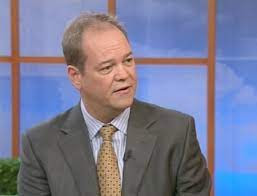
Jon Wylie guest lecturing at guest Western University.
Having a deep theatrical background suited me greatly for being a Management Consultant. You have to deal with ego, be an effective communicator, and to do that you need to be an effective listener.
Many of those skills were developed in his time as a Stage Manager, "dealing with artistic staff, commercial guys, helping to coordinate...a lot of the communication wasn't taking. It was listening, then asking a question, and listening more." This skill set has translated to his current profession and contributed to his enormous success.
"The great thing about the Theatre School is that everyone has something of value to contribute. You should never underestimate the power of a team. Working together, you'll always get there faster." While there might be a lot of "right" answers in Management Consulting, "generally every engagement is going to be different. It's being able to be adaptive." This lesson translates back to the performing arts - it’s not about getting it “right,” but about people enjoying their time working with you. “Those are the people who will recommend working with you in the future.”
“When I look back on my life, I say, well, that was a turning point. Not René Descartes or Rousseau, or the Leviathan, or understanding economic theory - it was working together."
Jon says he learned three main lessons from his time at theatre school which he carries with him. “One: Never underestimate the power of a team. Everyone has something to contribute. Two: you have to have passion. Passion will make up for an awful lot of mistakes. And three: discipline. You have to have discipline.” Jon clarifies that to him, discipline does not equal following a set of rules. Discipline means “showing up at rehearsal five minutes early, ready in costume, or warmed up and ready to go… it’s being present, committed, and doing your part.”
You can create great art just by having that passion, but if you have the discipline, you can do anything.
Jon believes in “investing in people.” He remembers student life like it was yesterday, and although living in toronto is like “winning the lottery,” it can also be very expensive for students.
Jon recalls commuting from Scarborough during his time at the school. “I used to take the subway or the bus, and lots of times I’d miss that last bus because of a late call, and I’d walk. I didn’t have taxi fare. Then I’d wake up and go to class the next morning” He remembers having to make the decision between paying for subway fare home, or pizza for dinner. There were even nights where he would sleep on campus, in the studios beneath the theatre.
Remembering this lifestyle, and his belief that the connection you get through live theatre "is what helps us to be human," drives Jon to give back to the new generation through his generous Wylie Award for Excellence in Theatre Production.
When asked to reflect on how the world is changing for the new generation, Jon noted there seems to be more integration between our social and work lives. “Your work family is sometimes like your second family. It’s the people you’re spending eight to ten hours with a day.” People are beginning to request a better quality of life at work, and Jon sees nothing wrong with that. “We shouldn’t be unhappy about saying that things could be better, and being prepared to contribute to that.”
While the future will also have it’s challenges, Jon remains optimistic.
The great thing is the human capacity to overcome challenges in front of us. We should not be afraid, because we have the capacity to overcome, and remake how we engage.
Jon believes that it is the next generation who will be driving sustainable change. This generation will make the demands, “and the other generations have to say, okay, we agree, and we will support you.”
In giving advice to the younger generation, Jon says "perseverance has been my single greatest skill. You just have to persevere." He reflects, "I expect to go back to theatre. Maybe be a sound technician. At one point in time, I'll be working for one of those theatre students I helped."