Recycling & Waste
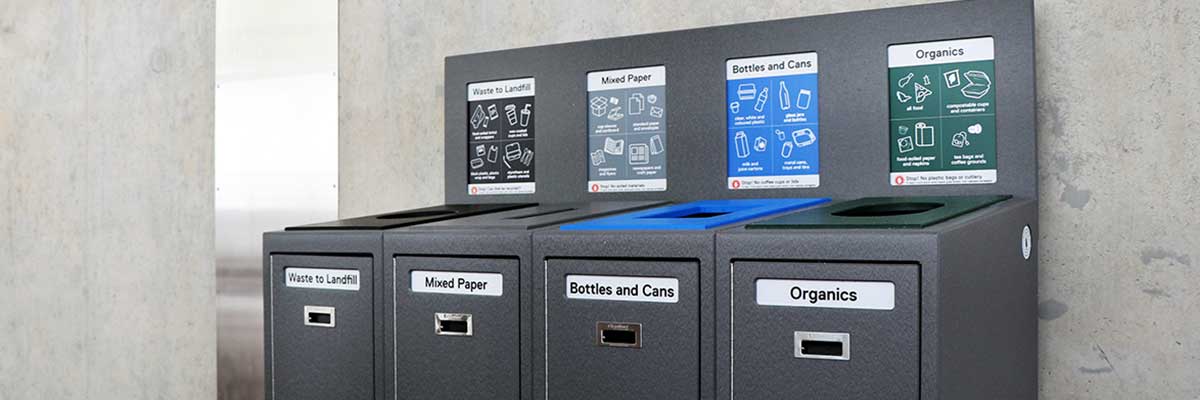
Toronto Metropolitan University is committed to sustainable waste management practices. Reducing our consumption, reusing more, recycling, and composting, means the university sends less waste to landfill. It also helps to preserve precious natural resources and contributes to efforts to save energy, conserve water and reduce greenhouse gas emissions and other pollution.
The Sustainability Office provides programming, education and outreach on ways to reduce waste generated on campus and proper recycling and composting practices to help divert waste from landfills.
TMU follows a comprehensive waste management procedure in compliance with Ontario Regulations 102/94 (Waste Audits and Waste Reduction Work Plans) and 103/94 (Industrial, Commercial and Institutional Source Separation Programs). This includes annual waste audits, most recently conducted in 2024.
Improving waste diversion
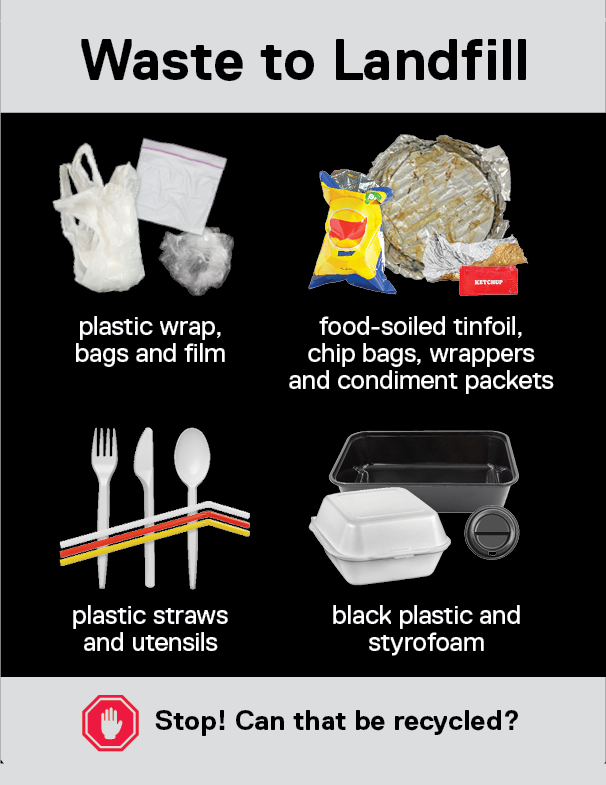
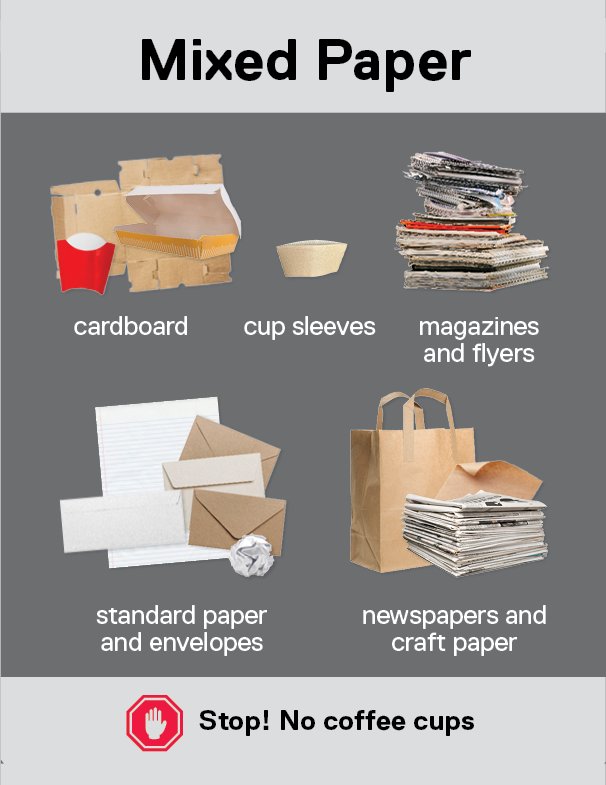
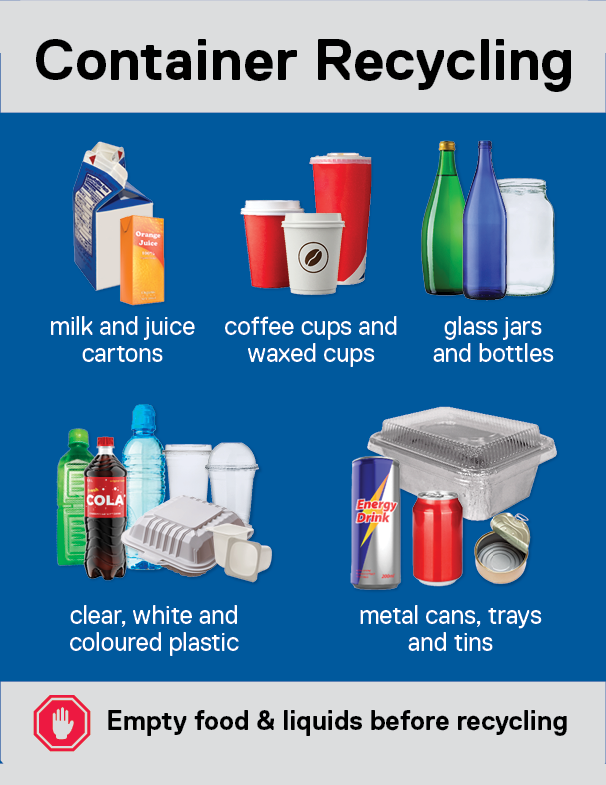
The university's most recent waste audit showed that over 60% of all waste sent to landfill could be composted or recycled through existing streams. The Sustainability Office took tangible actions to improve our waste diversion rate. Between 2018 and 2021, we transitioned the campus from a three-stream system (waste to landfill, bottles and cans (now container recycling), and paper) to include a fourth stream - organics. We upgraded infrastructure to ensure consistency of waste bin type and signage across campus and actively engaged and trained our students, faculty and staff on how they can take part in reducing waste and maximizing recycling.
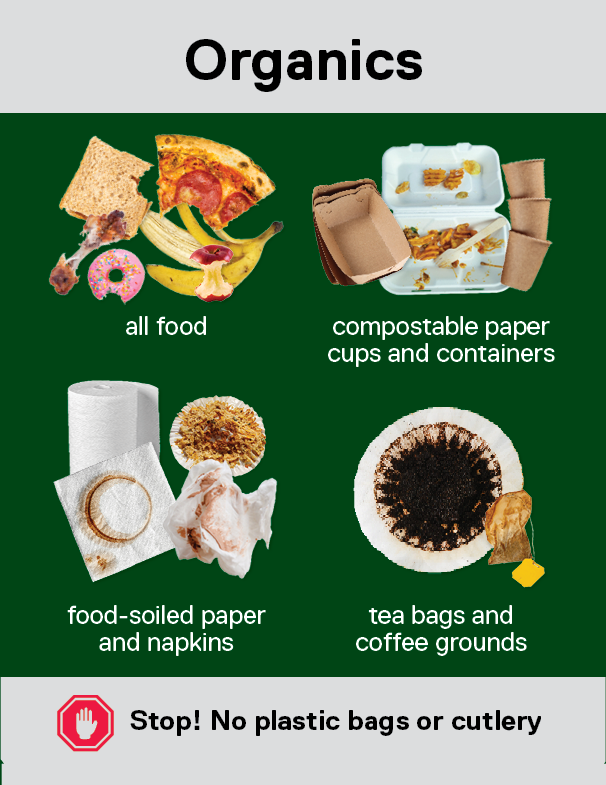
Waste reduction, resource recovery and reuse
Toronto Metropolitan University is focused on operating an efficient campus that prioritizes reuse and minimizes the amount of waste we produce. At TMU, we have a number of initiatives that individuals can take part in to reduce waste and support a reuse culture on campus. Learn more about Reuse and Repurposing programs at TMU.
Engagement and educational events
The Sustainability Office hosts a number of engagement events throughout the year to help TMU students, faculty and staff learn about how to properly dispose of waste on campus. This includes an interactive sorting game to strengthen community understanding of What Waste Goes Where.
We also started a waste monitoring program in 2016, where trained student volunteers are stationed beside ServiceHub bins in the Podium (POD) to help educate the community on what waste goes where. We participate annually in Waste Reduction Week, a national campaign that aims to raise awareness of waste reduction and a circular economy.
Annual waste audits
Toronto Metropolitan University has established procedures to minimize the use of disposable items and promote waste reduction through reuse and recycling. As part of our waste management process, we regularly conduct waste audits to evaluate and improve our programs. This includes:
- Collecting samples from various campus locations over a designated period;
- Sorting waste into predetermined categories to assess diversion rates;
- Measuring the total amount of waste diverted from landfill through current reduction, reuse, and recycling programs;
- Compiling audit reports summarizing findings and providing recommendations to enhance waste diversion efficiency; and
- Conducting site tours and interviewing personnel to gather insights on existing waste diversion practices.
These procedures help ensure we meet our waste reduction goals and continue to foster a zero-waste culture. For items that cannot be reused, we provide recycling and composting options across campus.
Learn more by reading the university’s (PDF file) most recent audit report and waste reduction plan*.
*The Sustainability Office at TMU is committed to accessibility for persons with disabilities. If you require this document in an alternative format, please contact sustainability@torontomu.ca.
TMU’s waste audit performance
TMU’s waste diversion performance has remained in the 30%–40% range for the past decade, consistently falling below Ontario’s 60% target. During the COVID-19 pandemic, TMU’s waste diversion rate experienced a sharp decline, falling between 17%-20% as waste volumes on campus dropped by nearly 75% due to reduced activity on campus.
Since 2023, TMU’s waste diversion rate has rebounded; as of 2024, TMU’s waste diversion rate is 37%. However, to reach our goal of becoming a zero-waste campus by 2035, we’re focusing on reducing waste at the source, expanding reuse initiatives and strengthening recycling and composting programs.
Annual waste diversion rate
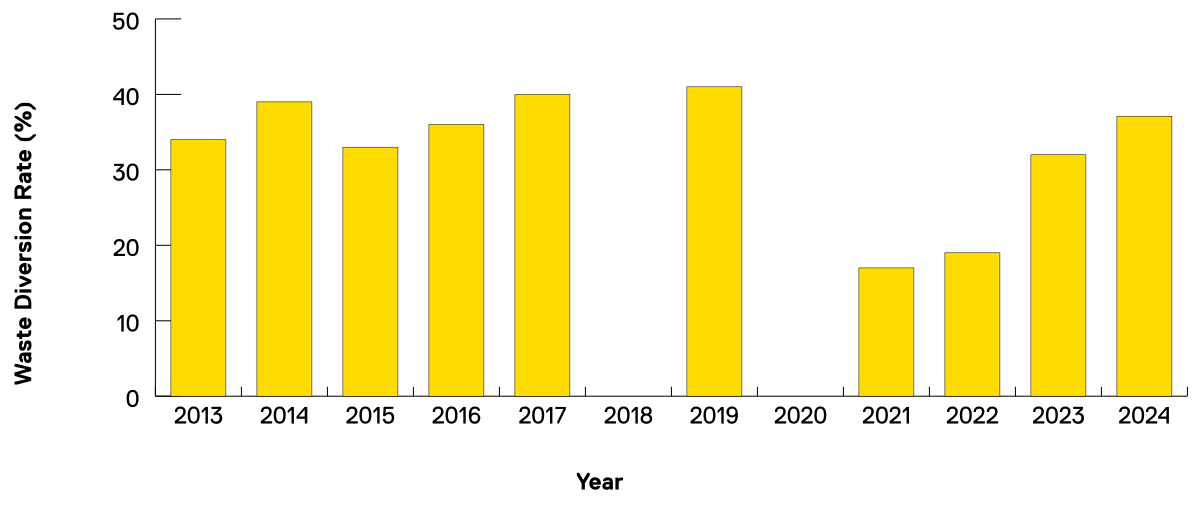
This bar graph shows TMU's annual waste diversion rates from 2013 to 2024 calculated in percentages.
| Year | Diversion Rate (%) |
|---|---|
| 2013 | 34 |
| 2014 | 39 |
| 2015 | 33 |
| 2016 | 36 |
| 2017 | 40 |
| 2018 | N/A |
| 2019 | 41 |
| 2020 | N/A |
| 2021 | 17 |
| 2022 | 19 |
| 2023 | 32 |
| 2024 | 37.1 |
Annual waste amounts by stream
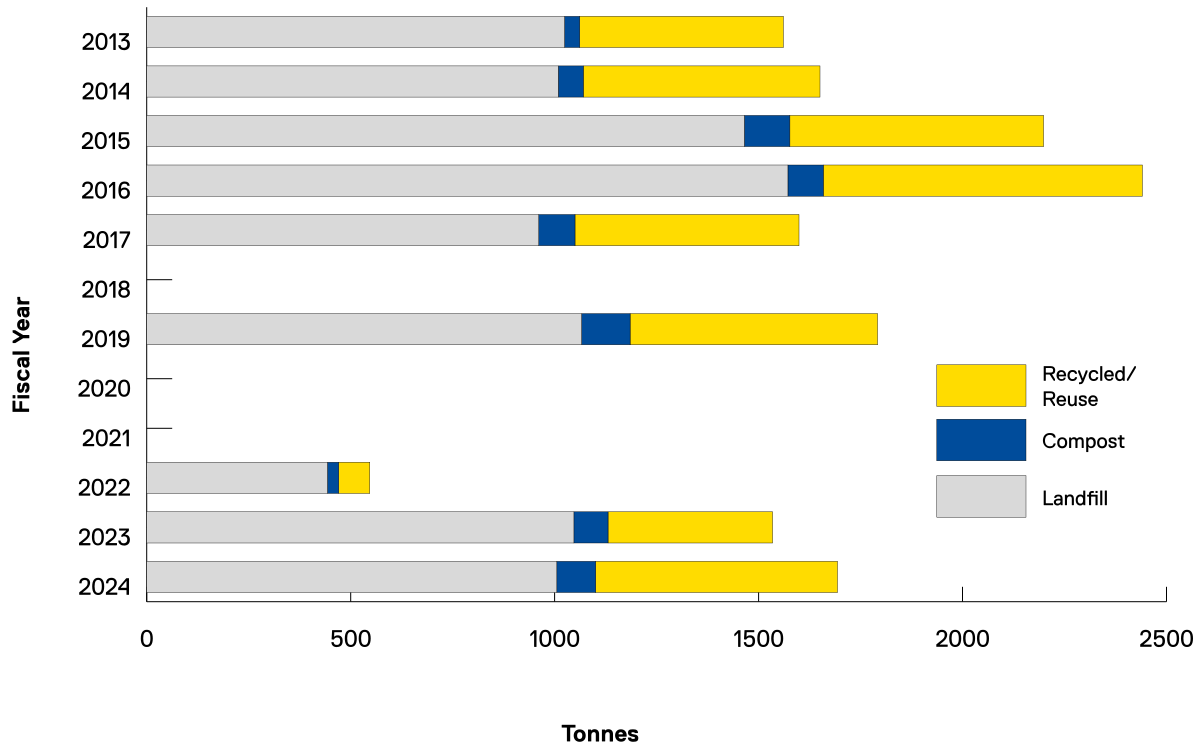
This bar graph shows TMU's annual waste amounts in tonnes by stream from 2013 to 2024.
| Year | Landfill | Compost | Recycled or Reuse |
|---|---|---|---|
| 2013 | 1024.29 | 37.15 | 499.28 |
| 2014 | 1008.9 | 61.39 | 580.39 |
| 2015 | 1465.08 | 111.62 | 622.04 |
| 2016 | 1572.07 | 86.57 | 782.31 |
| 2017 | 960.92 | 89.1 | 549.24 |
| 2018 | N/A | N/A | N/A |
| 2019 | 1066.04 |
118.95 | 606.68 |
| 2020 | N/A | N/A | N/A |
| 2021 | N/A | N/A | N/A |
| 2022 | 443.06 | 27.8 | 75.93 |
| 2023 | 1047.37 | 83.68 | 403.3 |
| 2024 | 1005.51 | 95 | 593.16 |
We continue to research and design effective ways to reduce waste at TMU, such as improved performance monitoring and developing toolkits to support zero waste programming.
Waste diversion and recycling at TMU
All streams of waste on campus are collected and removed by Waste Reduction Group, who began their contract with Toronto Metropolitan University in March 2018. This contractor handles and disposes of all TMU’s waste within Ontario, helping to reduce any additional waste in transporting materials.
After recycling, landfill and organics receptacles are emptied by Facilities staff, each stream is brought to a central location on campus, where it is collected by haulers from the Waste Reduction Group, and sorted at the end-site. Clean, recyclable items are sent to facilities that turn those materials into new products.
Organics are sent to anaerobic digester facilities in southwest Ontario, where bacteria/microorganisms break the organics down and turn it into a high-quality compost that is used for farming. As organics break down they produce methane gas, which is gathered in the enclosed facilities and used to power an electrical generator that feeds electricity back into the grid. At least one of these facilities also uses the heat produced by the generator (also enclosed), pumping it into onsite greenhouses to grow vegetables.
In Ontario, solid waste produced by the Industrial, Commercial and Institutional ICI) sector must be disposed of by the businesses and organisations that produce it. The municipality is not responsible for collecting the ICI sectors’ waste. This means that Toronto Metropolitan University, along with all other ICI actors, often independently contract out a company to collect and dispose of their waste. This independent management structure is why recycling rules at home may not be exactly the same as those on campus. Some key differences include:
- Plastic grocery bags are accepted in the City of Toronto blue bins but must go in Waste to Landfill bins at TMU.
- Styrofoam food containers and other styrofoam items are accepted in the City of Toronto blue bins but must go in Waste to Landfill bins at TMU.
- City of Toronto blue bins combine metal and paper recyclables, but TMU splits these into separate streams.
For more information on municipal waste separation, visit the City of Toronto website for details on how to deal with waste when you’re off-campus (external link) .
Minimizing plastic and disposables usage at TMU
TMU is committed to reducing our campus’ reliance on single-use plastics and disposables across all our operations. This commitment is reflected in our Sustainable Purchasing Guidelines, zero waste framework and a variety of operational practices. Highlighted efforts include:
- Food Services: TMU Eats has eliminated the use of single-use plastic straws and stir sticks and promotes the use of reusable containers through the use of Friendlier containers at the Hub Café and a bring-your-own-mug discount.
- Bottled-water-free campus: A bottled-water-free campus since 2013, students, faculty, staff and visitors have access to free drinking water through public fountains and refill stations.
- Green event support: Campus event organizers have access to sustainable guidelines and resources designed to help them avoid ordering single-use plastic items as swag or other event materials.
- Research and labs: Through the Green Labs Program, TMU supports researchers to reduce the use of single-use plastics in campus laboratories.
- Procurement: TMU’s Sustainable Purchasing Guidelines provides employees tips and strategies that allow them to prioritize purchasing plastic-free or reduced plastics products.
Greening our supply chains
At TMU, when exploring relationships with new vendors and service providers, we examine how closely their operations align with the university’s waste minimization goals. By ensuring our supply chains align with our sustainability goals, we’re helping to minimize waste production on campus.
Our procurement processes include sustainability practices as an evaluation factor, favouring suppliers who offer products and services with recycled content or recognized sustainability standards (e.g. FSC certified paper, EPEAT electronics, BIFMA compliant furniture, etc.).
External food service and event vendors are asked to minimize their use of single-use plastics and participate in our four-stream waste diversion program. For capital projects, contractors are encouraged to adopt waste reduction and recycling practices consistent with campus standards, as outlined in the (google doc) Sustainable Building Guidelines (external link) .
Improve your waste footprint!
Facilities Management and Development and the Sustainability Office offers waste audits and waste training upon request. If you would like us to conduct a personalized waste audit of your space or provide a waste training session to your team, please complete the request form. Thank you for your commitment to sustainable waste practices on campus!