Teaching Fellows

GenAI Fellowship - Applications Open
Applications for the Generative Artificial Intelligence Teaching Fellowship are open. Please apply by completing and submitting the (google form) Application Form. (external link) before 4 p.m. ET, Friday, January 23, 2026.
The Teaching Fellows Program celebrates and supports faculty at TMU committed to teaching excellence and transformative, evidence-informed pedagogy. Supported by a 3-year fellowship, Teaching Fellows lead a Scholarship of Teaching and Learning (SoTL) research project and gain access to exclusive professional development opportunities to connect with other educational leaders, deepen their pedagogy, and enhance their educational leadership skills. Teaching Fellows also serve as a liaison between the CELT and their faculties, coordinating and contributing to faculty-specific teaching development. More broadly, Teaching Fellows are recognized as institutional champions, working closely with the Centre for Excellence in Learning and Teaching (CELT) to foster a culture of teaching excellence at TMU and beyond.
Call for 2026 Teaching Fellows
Tenure-track or tenured faculty are invited to apply for the three-year fellowship. The fourth cohort will admit three fellows and run from January, 2026, to December, 2028. One of this cohort’s three fellowships will support a project focused on Teaching and Learning with Generative Artificial Intelligence (GenAI Teaching Fellowship).
Important Dates
2026 GenAI Teaching Fellowship (applications open)
| Date | Action |
|---|---|
| November 14, 2025 | Applications for GenAI Teaching Fellowship open. |
| January 23, 2026, at 4 p.m ET | Application deadline (applications must be submitted via the (google form) Application Form (external link) ). |
| January / February 2026 | Proposal adjudication by committee led by CELT and chaired by the Vice-Provost, Academic. |
| February 20, 2026 | Announcement of GenAI Teaching Fellow. |
2026 Teaching Fellowships (applications now closed)
| Date | Action |
|---|---|
| September 29, 2025 | Applications for the fourth cohort open. |
| October 8, 2025, 12 - 1:30 p.m. ET | Teaching Fellows Information Session (Zoom) — Watch the session recording. (external link) |
| October 31, 2025, 5 p.m. ET | Application deadline (applications must be submitted via the Application Form). |
| November 2025 | Proposal adjudication by committee led by CELT and chaired by the Vice-Provost, Academic. |
| December 5, 2025 | Announcement of selected Teaching Fellows. |
Applications must be submitted via the (google form) Application Form (external link) :
- (google doc) SoTL research proposal (external link) that systematically examines the impact of a teaching innovation or initiative designed to enhance student learning, aligned with one or more of TMU’s Priority Focus Areas (4 pages maximum, not including references). Proposals should include:
- Introduction/context
- Research questions
- Methods (including a timeline)
- Impact on TMU teaching and learning
- Dissemination plan
- Personal positionality statement (e.g., how have your experiences as an instructor led to this research? Why are you well-positioned to carry out this research?)
- References
- Completed budget form ( (google sheet) using a copy of this template (external link) ). See Budget and Eligible Expenses below.
- Curriculum vitae (CV)
- Letter of support from your dean (two pages maximum)
- Complete and submit the Signatures Form ( (google doc) using a copy of this template (external link) )
Projects should examine the impact of a teaching innovation or initiative designed to enhance student learning, aligned with one or more of TMU’s Priority Focus Areas. Note: at least one of this cohort’s three fellowships will support a project focused on Teaching and Learning with Generative Artificial Intelligence (GenAI).
- Indigenous Pedagogies
- Anti-Racist Teaching
- Inclusive Teaching
- Mental Health and Well-being
- Experiential Learning
- Teaching and Learning with Generative Artificial Intelligence (GenAI)
- Community-Engaged Learning
- Supporting International Students
- Supporting Student Success and Persistence
- Students as Partners in Creating Learning Experiences
- First-Year Experiences
- Blended Learning and Alternate Modes of Delivery
The Teaching Fellows Information Session was held on on 12:00 p.m. ET, October 8, 2025 (Zoom) answering questions about the program. Watch a recording of the the information session here. (external link)
Consider reviewing the following SoTL resources as you prepare your application:
- CELT’s SoTL Workshop Series (Slides (external link) / Playlist (external link) )
- Introduction to the Scholarship of Teaching and Learning ( (google slide) Slides (external link) / Video (external link) )
- Designing Impactful SoTL Research Questions and Methods ( (google slide) Slides (external link) / Video (external link) )
- Qualitative Methods in SoTL: Interviews and Focus Groups ( (google slide) Slides (external link) / Video (external link) )
- Quantitative Methods in SoTL: Surveys and Questionnaires ( (google slide) Slides (external link) , Video (external link) )
- Using SoTL Research to Inform Your Teaching ( (google slide) Slides (external link) / Video (external link) )
- CELT’s 3M National Teaching Fellows Seminar Series
- Prof. Libby Osgood (external link) (University of Prince Edward Island; 3M NTF ‘24)
- Join TMU’s SoTL Community Google Space (external link)
- Journals and Organizations
- Introductory SoTL Readings
- REB’s Guidelines on (PDF file) Research Ethics in the Scholarship of Teaching and Learning
During the fellowship, Teaching Fellows will be expected to:
- Design, conduct, and publicly share systematic research on the impact of a new teaching innovation or initiative designed to enhance student learning at TMU, including:
- Securing Research Ethics Board (REB) approval for their project by December 31, 2026. Please review REB’s Guidelines for (PDF file) Research Ethics in the Scholarship of Teaching and Learning.
- Completing data collection and analysis by December 31, 2027.
- Publishing a (google doc) public report (external link) based on their Fellowship project on the Teaching Fellows webpage (hosted on TMU Library’s RShare repository) by December 31, 2028.
- Give a public presentation or workshop based on their Fellows project in the final year of their program.
- Attend monthly Community of Practice meetings with other Fellows, beginning with a Teaching Fellows kick-off in January 2026.
- Submit an annual (google doc) progress report (external link) at the end of each year of the three-year fellowship.
- Serve as a key speaker at CELT and TMU events, including CELT workshops, seminars, and the TMU Learning and Teaching Conference.
- Serve on future adjudication committees for the Teaching Fellows program.
- Credit the Teaching Fellows in any publications, conference proceedings, or media appearances resulting from the funded project.
Teaching Fellows will have opportunities to:
- Participate in a Community of Practice focused on scholarly teaching and SoTL.
- Collaborate with other Fellows and CELT staff to co-create teaching and professional development resources.
- Develop their SoTL knowledge and skills through tailored meetings, workshops, and seminars.
Fellows receive a total of $11,000.00 CAD in research funding over the three-year fellowship, along with one course release (one semester) to be taken during the fellowship period.
At least 75% of funds must be used to hire Research Assistants. Remaining funds may support activities related to program goals, including:
- Promotion of SoTL to colleagues and peers (up to 5%)
- Materials and related costs (up to 5%)
- Travel and conference participation (up to 15%)
Proposals are reviewed by a committee chaired by the Vice-Provost, Academic or their designate. The adjudication committee members will include the CELT Executive Director, CELT Director of Teaching Development and Digital Learning, past Teaching Fellows, members of the Senate Learning and Teaching Committee, and members of CELT staff, to be announced in October 2025.
Applications will be evaluated based on:
- Clarity and rigor of the SoTL project proposal, including research questions, methods, and dissemination plans
- Alignment with Priority Focus Areas
- Feasibility of the proposed timeline and project goals within the three-year fellowship period
- Potential impact of the applicant’s project on TMU teaching and learning
- Strength and relevance of the applicant’s positionality statement
- Justification and appropriateness of the proposed budget
- Demonstrated commitment to teaching excellence and SoTL based on applicant’s CV and letter from the applicant’s dean
Budget Justification
Funding requests should conform to the rates and regulations of Toronto Metropolitan University, and be fully justified in terms of the needs of the project. Teaching Fellows are asked to provide a detailed explanation in the budget justification form as to how the funds will be used to achieve the project objectives. Additional funding and in-kind contributions should be clearly stated and will be taken into account.
Applications requesting to develop new technologies, software, or databases are subject to the adjudication committee requesting a consultation with Toronto Metropolitan legal in addition to the standard application requirements.
Eligible Expenses
- Student and non-student research assistant salaries and benefits - Please review the Hiring Guide. Funds may not be used to hire Academic Assistants (AAs), lab monitors, or invigilators.
- Professional/consulting services - Consulting fees and professional services (e.g., guest speakers, Indigenous elders, transcriptionists, etc.) are eligible expenditures. Please review the purchasing thresholds and demonstrate in the Budget Justification that expert advice is needed. If you have planned to contract consultants, please include a quote in your application (along with HST if applicable). Please review our policies for Paying Vendors, Independent Contractors, and making Honoraria payments.
- Travel and dissemination costs - a maximum of 15% of requested funds can be allocated towards travel costs directly related to the funded project, including reasonable conference travel costs (e.g., registration fees, food, hotel, etc.) to present a project's findings. Please include a detailed description of the conference and a strong rationale for the relevance to the project. The adjudication committee will prioritize requests to support student engagement in scholarly communities. Please review the Faculty & Staff Reimbursement Policy and Travel and Other Business Expenses Guidelines.
- Funds from other sources - Include all other contributors that are providing in-kind or financial contributions for the proposal. Indicate whether or not these funds have been confirmed.
- Software licenses - requested software must be clearly and directly linked to the project’s process or outcomes (i.e., the project relies on this particular software to be carried out).
- Equipment and hardware - requested equipment or hardware must be clearly and directly linked to the project’s process or outcomes (i.e., the project relies on this particular equipment or hardware to be carried out).
- Participant incentives - According to TMU’s (PDF file) Guidelines for Incentives, Reimbursements, and Compensation, an incentive is “anything offered to [research] participants, monetary or otherwise, to encourage participation in research” (p. 205*i). For example, gift cards, etc., may all be used by researchers to incentivize potential research participants to participate in research-related activities. While the University does allow incentives for research participants; there are some documents that need to be filled out in advance of dispersal. The (PDF file) declaration form and participant incentive form (external link) need to be filled out by the Project Lead and the recipients to acknowledge the incentive.
- Materials/food for research team meetings, Community of Practice meetings, or other related activities in support of the SoTL project and its dissemination.
Additional Notes and Ineligible Expenses
All non-consumable items purchased with the awarded funds will remain the property of Toronto Metropolitan University.
- Wages for faculty, regularly assigned teaching assistants, or staff members who would normally be employed by the University, are considered ineligible expenses.
- As part of accepting this grant, we ask that you share any plan to commercialize project outputs generated through the involvement of prospective student research participants during the research ethics and informed consent process.
- Fellows may not pay themselves with funds.
- Funds may not be used for capital expenditures (e.g., renovations).
- Funds will be made available in January 2026, after the recipients attend the Teaching Fellows kick-off session.
- Funds must be expended no later than December 2028.
- The administration of funds and initiation of HR contracts will take place through the Centre for Excellence in Learning and Teaching, on behalf of the Principal Investigator.
- Proposals require authorization of the department or school chair and dean.
We believe in the importance of Open Educational Resources (OER) — teaching, learning, and research materials that are published under an open license to permit their sharing and reuse by others. We expect Fellows to publish their fellowship outputs under an open license. Learn more about open licenses (external link) .

Dr. Alyssa Counsell
Dr. Alyssa Counsell is an Associate Professor in the Psychology department and Director of the Psychology and Statistics Education Research (PASER) Lab. Dr. Counsell is primarily interested in the scholarship of learning and teaching, especially as it pertains to statistics education. She studies topics such as statistics anxiety, attitudes toward statistics and statistical software, and statistics literacy. She also works to identify statistical challenges for applied researchers and explore ways to better emphasize research transparency and open science practices. Dr. Counsell has won several teaching awards and has been the recipient of over $250,000 from SSHRC to lead several research projects aimed at improving statistics education in the social sciences.
Project Abstract
Statistics courses are notoriously unpopular in psychology. Research demonstrates that undergraduate psychology students tend to hold negative attitudes toward statistics and high levels of statistics anxiety. However, limited research directly examines students' experiences in these courses. In this research project, I will employ a mixed methods approach to examine students' experiences after taking introductory level psychology statistics courses. Specifically, I will recruit students taking one of two different styles of psychology statistics (one that focuses more on hand calculations and another that focuses more on software). With this sample, I will use pre-post surveys to examine quantitative change in statistics attitudes and anxiety over the duration of their course. Next, I will conduct interviews to examine qualitative data on the student experience in their statistics course. As Psychology is in the process of revamping our statistics and methods courses at the undergraduate level, these data will provide valuable information about where we can make changes to best support student learning and mental health in statistics courses.
Dr. Terri Peters
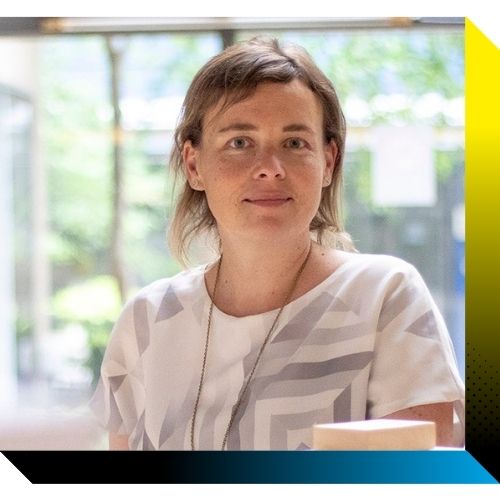
Dr. Terri Peters is an Associate Professor in the Department of Architectural Science where she teaches in the architecture and building science programs. She is a registered architect in the UK and holds a PhD in architecture from Aarhus Architecture School in Denmark where she researched the design and renovation of high performance housing. She has been a long standing member of the University’s Teaching and Learning Spaces Working Group, completed a two year course of teaching development instruction in 2021 called the University Teaching Development Program (UTDP), and has been the recipient of two TMU Learning and Teaching Grants from CELT. Dr. Peters is the recipient of the 2023 AVP International's Global Learning Award. Her research interests and areas of expertise are health and wellbeing in non-clinical environments, co-benefits of building performance and people performance in sustainable buildings, and biophilic and salutogenic design for long term care environments. In her research, she utilizes architectural design and building science methods to examine how building design impacts people’s experience of spaces, exploring the experiential qualities to understand how architecture can contribute to enhancing people's well-being. Her research into pedagogy aims to uncover ways in which design studio learning spaces, particularly those used in architecture programs, can positively influence student collaboration, productivity, and overall mental health.
Project Abstract
Design studio courses are the most important classes in architectural design education and the sites of enormous creative energy. “Studio” is both an open plan, collaborative learning environment in the building where students have a desk and do all of their coursework, and also the name for their yearly required academic course. The physical and social studio culture reflects a long standing tradition in schools of architecture in Canada and elsewhere, dating back at least 100 years to ideas from Beaux Arts education from the 1830s onwards and from the Bauhaus model. In the context of a return to in-person teaching after COVID-19, now is the time for testing new ideas for its reinvention. Through this project Peters will contribute to the profession’s broader understanding of new needs in disciplinary teaching, will examine innovative teaching and learning approaches, and will foreground pedagogies addressing social justice and inequity. Combining architectural and building science research methods, Peters aims to uncover ways in which design studio spaces, particularly those used in architecture programs, can positively influence student collaboration, productivity, and overall mental health. During her fellowship, Peters will focus on a project aimed at improving studio culture in architecture programs. Her goal is to understand the dynamics of teaching spaces and how they contribute to student success, emphasizing collaboration and well-being.
Bio
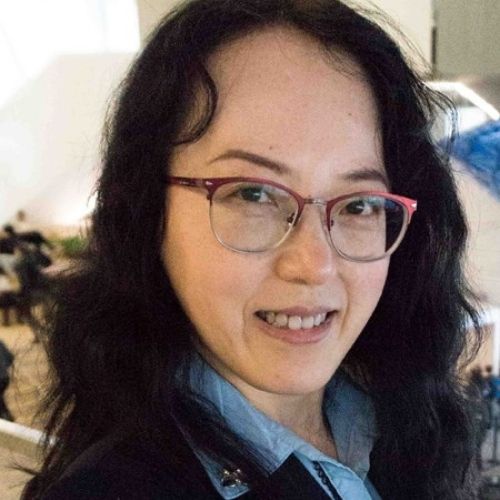
An innovative educator and a passionate researcher, Dr. Dong focuses on experiential education and applied research. She has been awarded numerous teaching awards for her teaching excellence including the most prestigious lifetime teaching achievement award at Toronto Metropolitan University, the Provost’s Award for Experiential Teaching (2018). She is also the recipient of multiple teaching awards, including the Dean’s Teaching Award (2020), Best Poster Award by Toronto Metropolitan LTO (2016), and the TRSM Innovation Teaching Fund (three times from 2017 to 2018). Dr. Dong is devoted to using emerging technologies to engage students not only within but also outside the classroom. Her recent project, funded by a Learning and Teaching Grant, examines the impact of using AI chatbots to improve student learning.
Project Abstract
Higher education learning is challenged by a rising trend of students working while studying. Studies have discovered that working while studying reduces learning time and increases fatigue and psychological detachment from school. Students who work while studying experience lower well-being and a higher probability of repeating or dropping out. To address the adverse impacts of working while studying, this project aims to experiment with seamless learning (learning anywhere and anytime) by engaging student learning beyond the classroom. In particular, the project proposes to (1) deploy an AI chatbot that serves as a 24x7 learning buddy and (2) motivate students to develop TikTok-like learning materials. By offering seamless learning via interactive technology and engaging learning materials, the project could stimulate student learning and cultivate positive student learning behaviors, resulting in not only enhanced learning outcomes but also a better work-study balance. As an early effort in seamless learning, the project bears significant theoretical and practical implications.
Bio
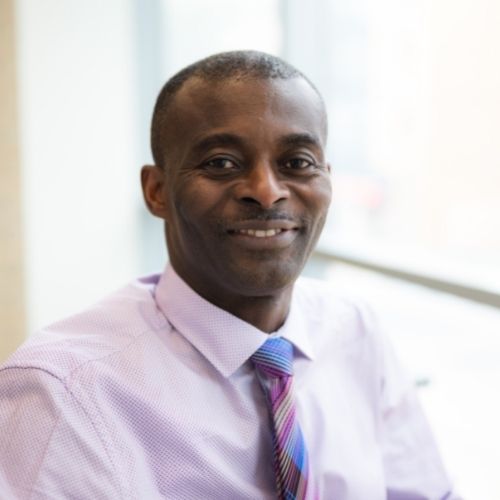
Dr. Duah joined the Mathematics Department in 2021 as an inaugural Assistant Professor in STEM Education Research. A Fellow of the UK Institute of Mathematics and Its Applications, Senior Fellow of the UK Higher Education Academy, and a BSc graduate from the London School of Economics, Dr. Duah is a mathematician with multiple identities and a multidisciplinary background. He received his PhD in Mathematics Education from the Mathematics Education Department, Loughborough University, UK and an MSc in Mathematics Education from the School of Education, University of Southampton, UK. He held positions in the UK as the Mathematics and Statistics Skills Centre Manager at the University of York and Senior Lecturer at the University of Chichester. Dr. Duah’s research interests are in quantitative social and educational research, and computational social science. He currently researches learning and teaching of undergraduate mathematics, transitions in undergraduate mathematics, and widening participation in the mathematical sciences.
Project Abstract
The advent of the faculty-student partnership movement (see for example, Cook-Sather et al. 2014 (external link) ) has shown that it is mutually beneficial for faculty and students to work together to explore issues of learning and teaching, and course design. The goal of such faculty-student partnership is often to enhance the student learning experience, improve achievement, and reduce student attrition. During his tenure as a teaching fellow at the Centre of Excellence in Learning and Teaching, Dr. Duah will develop and research a model of faculty-student partnership in Learning and Teaching Development. The partnership will work to introduce learning outcomes for all topics taught in two Mathematics courses, and align these with learning activities and assessment tasks. He will research this intervention in order to understand its impact on the student learning experience and achievement on the courses. The findings and implications of this scholarship of learning and teaching project will not only be of interest to all who teach mathematics to specialist and non-specialist students, but also those who teach courses on other programmes.
Bio
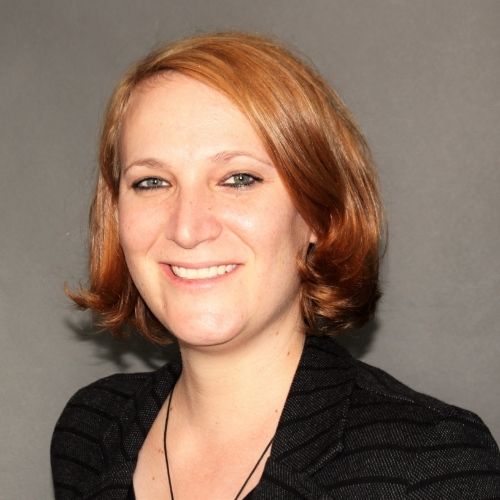
Dr. Osborne is a linguistic anthropologist housed in the Department of Languages, Literatures and Cultures. Key themes of her research focus on multilingualism, codemixing and switching, and more recently, the ways in which language can be leveraged as a political tool. She teaches courses in methods, anthropological theory, linguistics, and linguistic anthropology, among others. As an anthropologist trained in the four fields of the discipline with a focus on language, one of her core philosophies of teaching focuses on the funds of knowledge that students bring to the classroom. This approach takes as a foundational principle that students are not empty vessels waiting to be filled, but that they are fires to be stoked, whose ultimate contribution to a given intellectual space is to share their understanding of the world with others in the mutual construction of truth and knowledge.
Project Abstract
The focus of Dr. Osborne's project is to assess and analyze elements of the student experience in an Introduction to Anthropology course using a storytelling approach to teach complex anthropological concepts. Careful storytelling within anthropology engenders the use of the lessons of ethnography in ways that can be transferred into the learning environment without adding too much theoretical baggage to the project at the outset. In this way, integrating meaningful opportunities to tell stories as a transformational pedagogical tool is one that can be seamlessly integrated into classrooms across the university community. It is a tool that has the potential to increase the positive valency of student experience by fostering possibilities for drawing critical connections between students’ own experiences and the experiences of others, and it is a highly sustainable tool for learning focused on increasing the efficacy in learning.

Dr. Jennifer Poole
Jennifer or Jen Poole (she/her) is a first-generation white settler to T’karonto. In her professional life, she is an Associate Professor in the School of Social Work where her work has long been focused on madness, sanism(s), heartbreak and grief. While supporting and companioning learners is her priority, she has served in various leadership roles in her School and beyond. Current collaborative re-search projects focus on sanism(s) in the helping professions, the effects of white supremacy on grief and loss as well as interrupting colonialism and carcerality in education. She is also a co-parent, a community peer supporter, a TEDX talker and a very silly auntie. She is happiest outside.
Project Abstract
When grief comes to class: Gathering story, knowledge and experience on learning and teaching with grief
There is much scholarship on learning and teaching about grief. There is little on learning and teaching while grieving. This is partly because of what Anderson (2020) calls ‘grief managerialism’ or the pressure to manage grief out of educational spaces. However, during this pandemic and long before, grief has ‘come to class’ anyway. Consequently, this inquiry seeks to gather story, knowledge and experience to better understand: 1. How is grief ‘coming to class’ for learners and educators? 2. What knowledge(s) do learners and educators already have about how to meet and learn with and from grief? 3. What do learners and educators want to know and have access to when it comes to grief learning and resources? Informed by critical theoretical, community and activist work, the project will be grounded in a critical qualitative approach and guided by a group of learners and educators. Together, data and process decisions will be made, stories and knowledge(s) gathered and findings shared in ways that reach and teach multiple folx on and off campus.
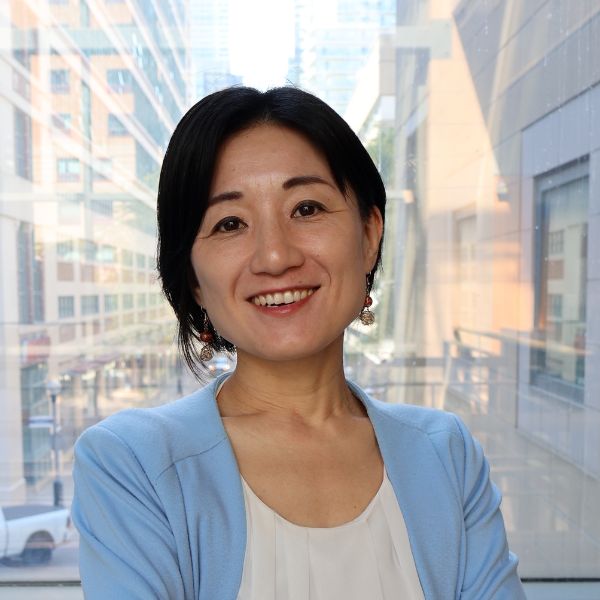
Dr. Yukari Seko
Dr. Yukari Seko is an Assistant Professor at the School of Professional Communication and an Adjunct Scientist at Bloorview Research Institute, Holland Bloorview Kids Rehabilitation Hospital. As a critical communication scholar by training, Yukari is interested in the potential role of communication in disrupting an oppressive system of normalcy and fostering an inclusive space where diversity can thrive. Communication settings that she has been studying include supervisor-student relationship in higher education, provider-client communication in pediatric rehabilitation, and food shaming at Canadian school lunchtime.
Project Abstract
Effective supervision is vital to graduate students’ successful and timely completion of their degrees, particularly for those from non-dominant backgrounds. This Teaching Fellow project “Implementing solution-focused communication in graduate supervision: A parallel community of practice for students and supervisors” stems from the belief that equity-minded higher education needs robust training and community building for supervisors to serve as agents of change. It also aims at supporting graduate students in developing their capacities to empower themselves and others.
Over the course of two years, I will: 1) co-design parallel Community of Practice (CoP) for supervisors and graduate students to practice solution-focused (SF) communication; 2) iteratively assess learners’ engagement and experience with the CoPs; and 3) create a sustainable network for supervisors and students within and beyond our university. This project is built directly on my Learning and Teaching Grant project (2020-21) that piloted Solution-Focused Graduate Supervision (SFGS).
Contact
For technical assistance, please email askcelt@torontomu.ca
If you have any questions or would like to discuss a potential proposal, please connect with Jacky Deng at jackydeng@torontomu.ca.