Leveraging community-arts for immigrant integration: Blog 3
What We Carry — Art and Identity in a New Land: Part 2

By: Asra Khan and Dorian Davidson
April 3, 2025
The following blog post is written in a two-part series of experiences encompassing themes of identity through creative expression and connection for newcomers. Part 1 is available here.
Asra’s Reflection
As I sat with newcomer artists at MabelleArts, watching them create and connect with others, I appreciated the inviting space around me, full of friendly smiles and excited chatter. I mused to myself, as I reflected, too-maybe regular people sharing their stories, backgrounds, and experiences are at the heart of community arts spaces…
This post is Part Two of the two-part blog series about the Mabelle Arts’ run community-arts program, Welcome to the Neighborhood (WTTN) that Dorian and I, Asra, observed on February 11th. If you have missed Part One, do read it on the CERC website, March 11, 2025.
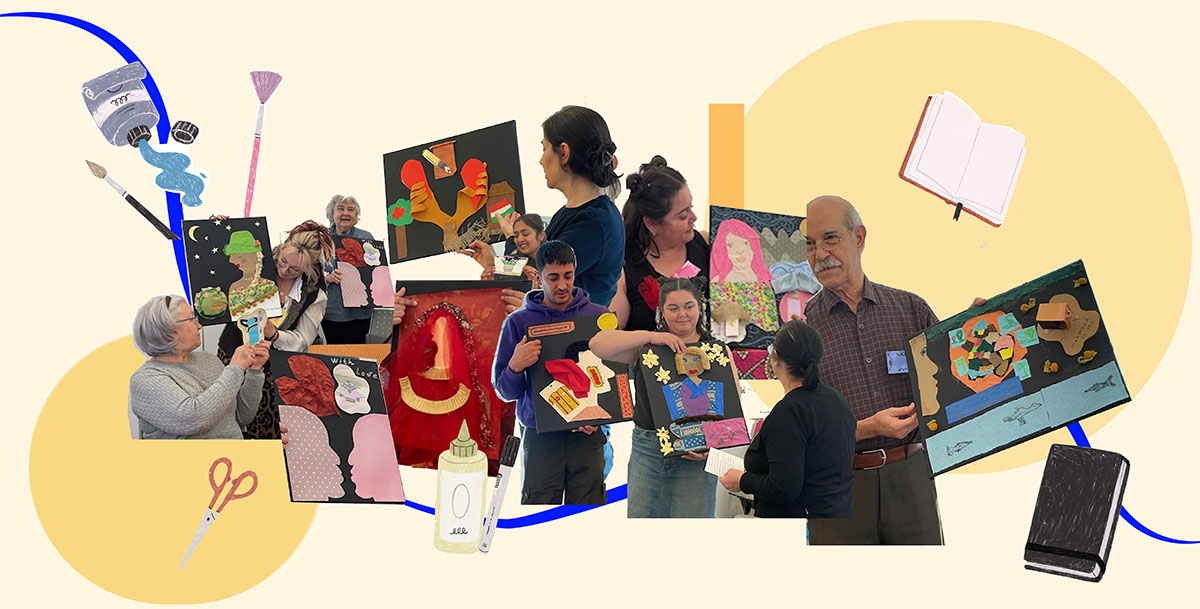
I wish now that I had reached 38 Mabelle Ave in Etobicoke somewhat earlier, and had the privilege to participate in this workshop, rather than just observe it. Each individual in this workshop seemed to be busy and motivated as they created their own art-piece around the theme of `self-portraiture.’ Watching what was going on around me, I noted that this self-exploration enabled newcomers to discover new parts of themselves, or maybe these were simply important pieces they had forgotten they carried within; pieces that could break through only in a safe environment where creative expression could thrive. There was an ease about the evening as it flowed without any specific schedule we were asked to follow. As always, snacks were handy through the evening, along with hot and cold beverages.
As participants began working on their art pieces, the carefree buzz of conversations and each person's true engagement in the workshop tasks allowed for natural interests to emerge easily. In our role as observers that evening, we could easily tell that meaningful bonds formed between people who might otherwise never have met.
Having arrived in Canada as a child 25 years ago, I understand that finding a space to connect with others is as important as it is overwhelming. The transition leaves you searching for familiar anchors in an unknown place. When I observed people talk about their culture's rich fabric, from bridal dresses to architecture, to sports, it was clear to me that people felt connected to the differences. The varied experiences that workshop participants talked about became connecting points. These cultural touchpoints transformed into pathways that helped people understand where others were coming from. They also helped them realize they are not alone in experiencing this confusing transition to a new space.
Newcomers with varying expertise in art feel connected to community arts spaces. These spaces provide a unique shared environment where newcomers can feel connected to their roots and to their rich cultural heritage. And they can learn from each other too.
Watching these participants find connection through art, being seen, with their work being appreciated by others in the room suddenly made them feel whole again. It was obvious that they felt proud sharing their heritage; and this also somehow revealed their need to feel connected to their roots and connect with others. Some participants were hesitant to speak directly about their homeland at first. However, the `process’ of creating their piece inspired by their experiences- using construction paper and fabrics that reminded them of their childhood landscape, or creating a traditional bridal gown from their culture- had mysteriously opened doors to natural and affirmative sharing.
It became clearer to me that day that integration into a new environment happens not just with language but through these moments of cultural and social exchange as well as through forming emotional connections. These spaces matter because they recognize that we all need places to be fully ourselves, share our stories, and connect with others through something meaningful. For newcomers navigating the challenges of starting over, creative communities offer artistic outlets and genuine human connection.
Dorian's Reflection
Being in the Mabelle Arts space allowed me to experience art through a different lens. I have always appreciated the beauty and history that rest in celebrated art pieces, housed safely in famous galleries and museums around the world. What struck me from those experiences was that art isn’t just about beauty, it’s about connection. Each piece was a window into another time, another life, another way of seeing the world. And now, I was feeling that connection more intensely. Mabell Arts left me more engaged, even moved, by this participatory experience of community-arts. The stories, personal experiences, and histories attached to each participant's piece were so unique that even though I had just met everyone for the first time, I was able to feel very connected to them. In attending this arts programming workshop and hearing each artist talk about what their piece meant to them, and even how it came to be, I learned new things about different countries and cultures, including Ukraine, Iran, Mexico, Turkey, and more.
Art was not just a history lesson today or for aesthetic pleasure, and I began to see art as an exercise that has the potential to bring people closer to each other. In that same vein, despite being a researcher with intentions of observing the processes occurring in the community arts space, I felt welcomed more as a guest and even felt compelled to participate in the activities myself. That is the true beauty of Mabelle Arts, and the uniqueness of their process of facilitating community-arts programs. The fact that they have the ability to create a natural and safe environment where a variety of individuals and groups can let go of their inhibitions and immerse themselves in a space where they experience being heard and seen is special. It is perhaps community arts in its truest and best form.
A lot of creative disciplines and projects that fall under `the Arts’ are often dismissed as a hobby, not taken seriously by adults to engage with for themselves. Creative learnings in younger generations, too, are often discouraged and are not seen as a practical and stable way to earn a living. This workshop made me think how this is such a reductive way of engaging with the arts! In no other medium can you express yourself with just a few pieces of paper and whatever you have around your living space. That is the true power of community arts, the ability to communicate your personal identity and culture without saying any words at all.