Migration Milestones -- Scrolling visualization documents research into West African migrants' journeys to the city of Lagos
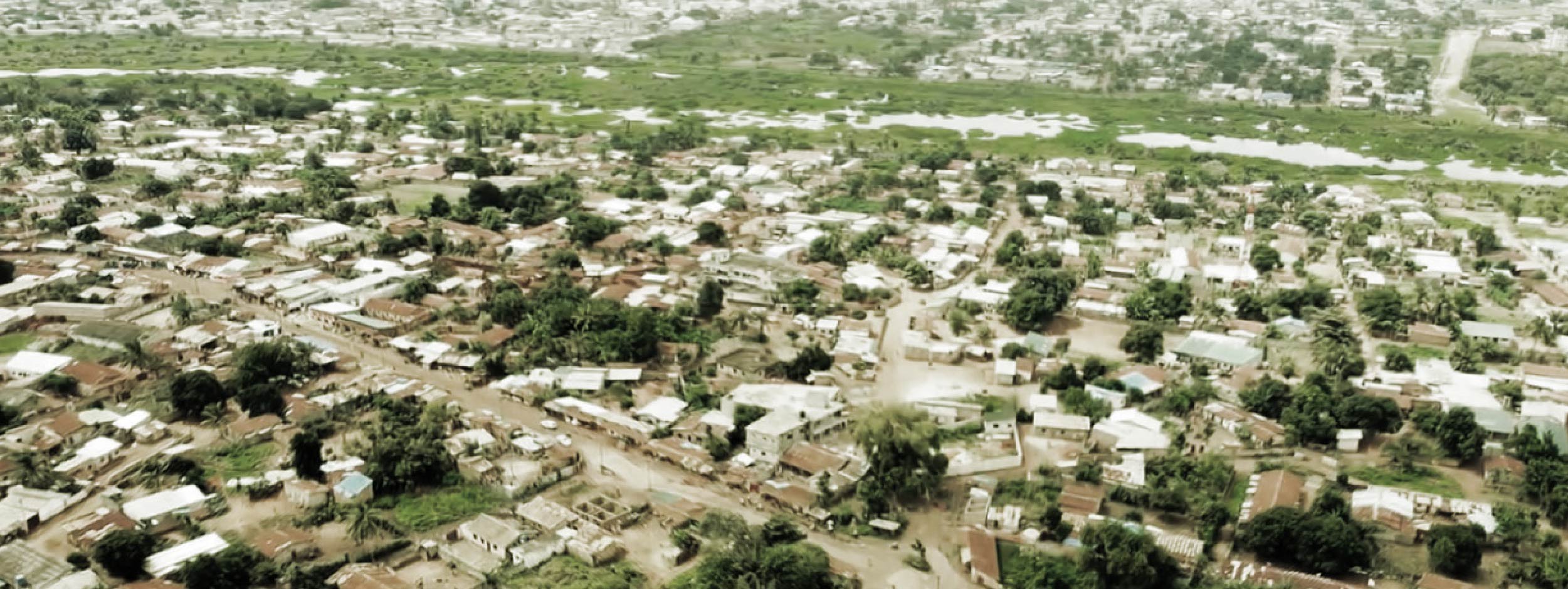
CERC Migration has released an interactive, scrolling web site to bring to life research into the on-the-ground experience of five West African migrants struggling to move to and settle in the city of Lagos. CERC Migration Research Fellow Oreva Olakpe undertook the research project to document the real-life journeys of migrants as a methodology to investigate the effectiveness of the Protocol on Free Movement established among West African countries in the 1970s.
“The creation of the Economic Community of West African States (ECOWAS) region in 1975 included many promises,” said Oreva. “A common passport for citizens of member states, for example, promised to improve the movement of people between countries. The free movement of goods and people is vital to the economic progress of the region, and, therefore, we need to understand whether [the protocol] is achieving its initial aims.”
To truly understand the conditions on the ground, Oreva interviewed as many as 16 people who had made their way to Lagos from various corners of West Africa. Lagos was chosen as the common arrival destination because it's Nigeria’s largest urban settlement, a mega-city in the region, and it is where thousands of migrants move each year to find work and start a new life.
The project focuses on the stages of the journey, from the motivations that lead people to leave their home, to the experience of arriving, settling and integrating into every day life. Milestones are the critical steps along the way to freedom of movement in the region.
Five migrant stories are presented as part of the interactive launch. Users can scroll through web-based stories supported with photos, personal quotes, video and expert narration. Oreva has analyzed all 16 interviews according to a freedom-of-movement indicator, which assigns points to each journey based on four characteristics: the quality of the experience at border crossings; how well the migrant is aware of their rights within the freedom of movement protocol; their ease of entry and exit at a border, with or without documentation; and how they're treated as they arrive or exit a country. How each journey scores according to the indicator will be the subject of a forthcoming paper.
The scrolling story experience was produced as a collaboration between CERC Migration and Gabby Resch (external link) , Assistant Professor, Ontario University of Technology.
Background
Historically, the people of West Africa enjoyed intraregional mobility. However, artificial borders brought about during colonialism created barriers to free movement and made it more difficult for people to move, settle and integrate within the region. The transposition of European conceptualizations of borders, citizenship and nationality meant that people in the region and throughout the continent lost the absolute freedom to move, settle and trade wherever they wanted. In addition, communities were split by arbitrary borders, leading to a fragmentation of communal life. Additionally, global migration governance and security imperatives, among many other factors, have further hindered freedom of movement.
ECOWAS was established in 1975, and the 1979 Protocol on Free Movement created a legal framework to anchor regional integration through trans-border mobility and regional trade. The 1993 version of the treaty incorporates freedom of movement into numerous parts of the treaty (articles 3, 32, 34 and 55), showing how important freedom in the region was becoming to regional relations.
Within the region, a common passport and travel certificates are some of the initiatives that now make West Africa borderless, and other measures have liberalized trade and harmonized monetary policies and laws. The Protocol on Free Movement is one of the key characteristics of ECOWAS because it gives West Africans the right of entry, to take up residence and to seek employment, provided that they have international health certificates and valid travel documents. Since the establishment of ECOWAS, West African states can only expel or repel migrants on the grounds of public order or national security. ECOWAS states are both sending and receiving countries of migrants within the region, and mega-cities like Lagos are destinations where migrants are settling and integrating.