Celebrating women in leadership at The Creative School
This International Women’s Day, The Creative School is celebrating three women Associate Deans who have paved the way for students, staff and faculty members at TMU: Jean Bruce, Associate Dean of Graduate Education, Sandra Tullio-Pow, Associate Dean of Undergraduate Education & Student Affairs, and Natalie Álvarez, Associate Dean of Scholarly, Research & Creative Activities (SRC). From supporting SRC activities to providing strategic academic leadership, the Associate Deans continue to create and foster a welcoming and inclusive environment for all members of The Creative School.

Jean Bruce, Associate Dean of Graduate Education
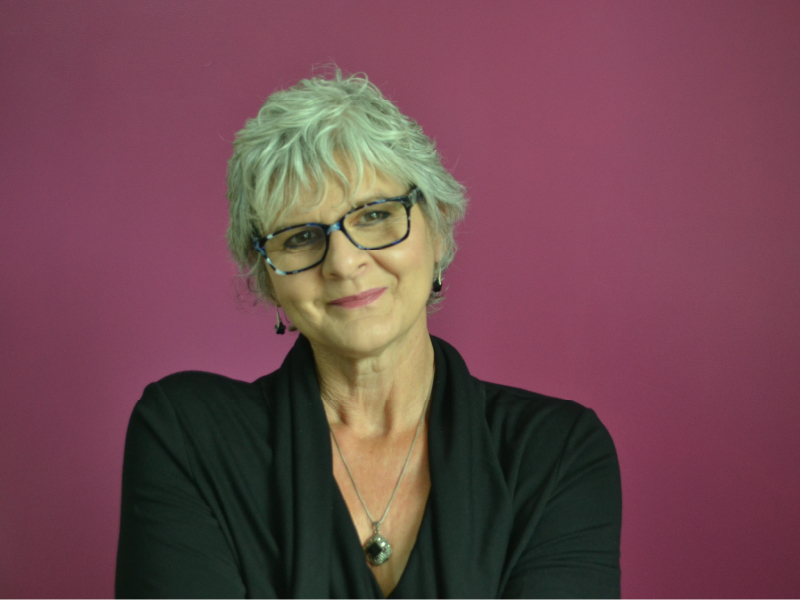
Sandra Tullio-Pow, Associate Dean of Undergraduate Education & Student Affairs
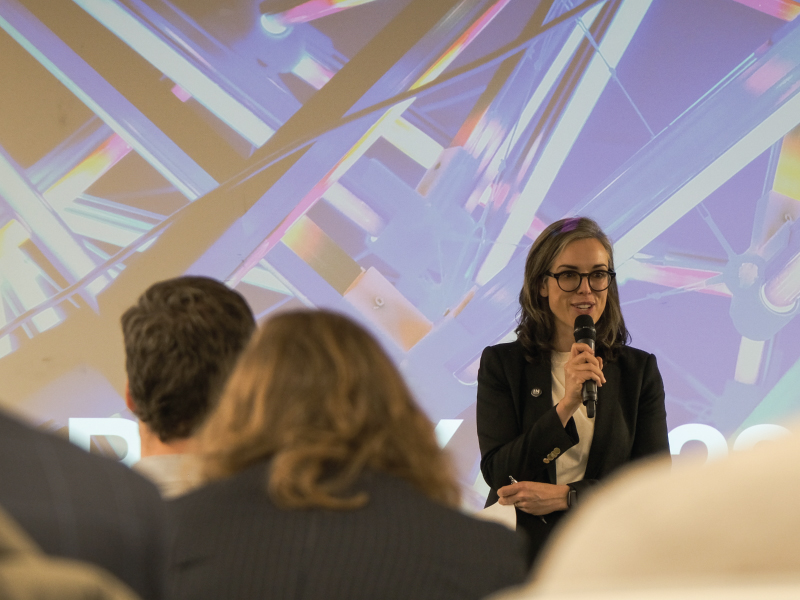
Natalie Álvarez, Associate Dean of Scholarly, Research & Creative Activities
Jean Bruce, Sandra Tullio-Pow and Natalie Álvarez share their insights about being a leader in academia and their journeys to becoming the women they are today.
What's a leadership lesson that you've learned that's unique to being a woman leader?
Stay focussed. Maintain your support systems within the university and outside it. It’s hard to generalize, but I count on my emotional intelligence and sense of fairness and collaboration among my amazing associate dean colleagues!
Can you think of a specific woman who's inspired you the most?
It’s really difficult to name one person. There have been numerous women (and men) who have inspired me at different times. Perhaps the first academic role model I recall occurred when I was an undergrad. I feel very lucky to have had great female professors when I was a film student at Brock University. They led by example and were supportive of my interests.
I’ll never forget that one film prof worked with me to help shorten and revise a paper that I had written so I could present it at an International Women’s Day faculty and student conference. I had no idea how to do that. It was so generous. That prof set a very high standard for me early on in terms of the many ways you can support students. She was inspirational for me and many other students.
Since then, I have encountered artists, filmmakers, television executives, who have inspired me in different ways. I try to support my own students in ways I’ve learned from all of them. I often meet with graduate students who I am not supervising to go over their work — whether proposals for archival projects, films, theses and dissertations. In my role as Associate Dean, I can sometimes directly intervene to help graduate students too.
How can women better enable and uplift each other, in academic spaces and in workplaces?
By really listening to people and offering support to other women (students, colleagues, staff) whose voices are sidelined. I sometimes acknowledge and repeat what someone else has said to underscore it so it doesn’t get lost. You might be surprised that this still happens in some meetings. By committing to respect ourselves and each other even when we may disagree. You can often learn things when you stay silent for a moment. By contrast, it’s also important to speak up. As a leader and a woman, I feel I should use my limited authority for good whenever possible.
Can you think of a specific woman who's inspired you the most?
My mother. My mother is not afraid to speak her mind, whether you want to hear her or not! She has always been very organized with established routines (I actively try to convince her to LOWER her standards now that she is 85 ….. without success). Her parents were 1st generation Canadians and she was the first in the family to go to college. The nuns had to advocate to my grandfather on her behalf, otherwise she would have been working in the family business (a small neighbourhood grocery store). She went to St. Joe’s in Hamilton, became a nurse and upon graduation went to California.
Those two things, professional education and leaving the community to work were pretty amazing things that my mother did. I was the first in my family to get an undergraduate degree, as well as a master’s degree. And it didn’t seem that daunting to leave the community and go across the country to the University of Alberta to pursue my PhD at 50 because she portrayed that no nonsense “can do” attitude.
What strategies do you have to help women obtain more prominent roles?
Mentoring is something I highly value. I try to put a bit of mentoring in everything I do whether it is the students I supervise, people who work with me pursuing graduate degrees or new faculty. In 2018 I was inducted into the University’s 25 year club. It was then that I realized how privileged I was to have a strong circle of female mentors around me in the School of Fashion. There were other women (academics) that helped me transition from being a designer to a design researcher (they were PhD’s at the time and I was not) and I partnered with them to apply for grants, which were successful.
I have a simple strategy, I invite folks for coffee and try to build relationships. I might encourage them to submit their work for an award. I remind people that a conference deadline is coming and that they should submit their work. It is all a little bit of nudge theory. Generally providing encouragement, building trust, being the voice of reason when things seem overwhelming. I never intentionally climbed the career ladder. I simply took opportunities when they presented themselves, that may have been a naive approach.
What advice would you give to women who are looking to advance their careers in academia?
Build yourself a circle of mentors. Actively pursue leadership opportunities. Many faculty have concerns about balancing service with their teaching and SRC. Service roles allow you to get to know many people in the university, people you can call and ask questions. One of the Associate Deans (Undergraduate Education in another faculty) I met when I first started this role was very helpful to me and continues to be a safe resource I can reach out to. I am not sure if it is a fluke when you work in a team that gels. I feel lucky that it is like that in the Dean’s office, with the other associate deans and with my immediate team. Always be authentic. Educate yourself how to do those tasks that leaders have to do, like having difficult conversations. Most importantly - Quiet that voice in your head that says you have not done “enough” for the next promotion.
What's a leadership lesson that you've learned that's unique to being a woman leader?
I’m inspired by models of leadership that draw strength from an unflagging curiosity about the knowledge and insights that others bring to the table. The postcolonial theorist Gayatri Chakravorty Spivak has this great phrase to describe the pressure academics feel to flex as “specialists muscle-bound by knowledge”. I admire forms of leadership that resist this tendency through deep and active listening, bringing people in, lifting people up, and proceeding with the assumption that every single person, regardless of their position, title, or role, possesses forms of knowledge I do not.
What advice would you give to women who are looking to advance their careers in academia?
Cold call, conspire, collaborate, and co-author. The most rewarding and impactful research of my career started with a cold call to pitch a collaboration with a woman whose scholarship I admired. Conspiring with women far outside my disciplinary field on how best to intervene in a challenge area through socially just research methods makes for powerful, energizing, and impactful work. As a performance studies scholar, collaboration is almost a default approach that comes from years of being in rehearsal and production development spaces that demand relational approaches to get the work done. But continuing that relational work on the page through co-authorship is so exciting and enjoyable. Co-writing is one of the most direct, satisfying, and mutually supportive ways in which women can share labour and advance their careers, especially for emerging scholars who are feeling the pressures of “publish or perish” even with the recognition that there are many forms research can take beyond the peer-reviewed publication.
 The Creative School at Toronto Metropolitan University
The Creative School is a dynamic faculty that is making a difference in new, unexplored ways. Made up of Canada’s top professional schools and transdisciplinary hubs in media, communication, design and cultural industries, The Creative School offers students an unparalleled global experience in the heart of downtown Toronto.