Physics Graduate Alumni Success Stories: Shadab Momim (Biomedical Physics ’20)
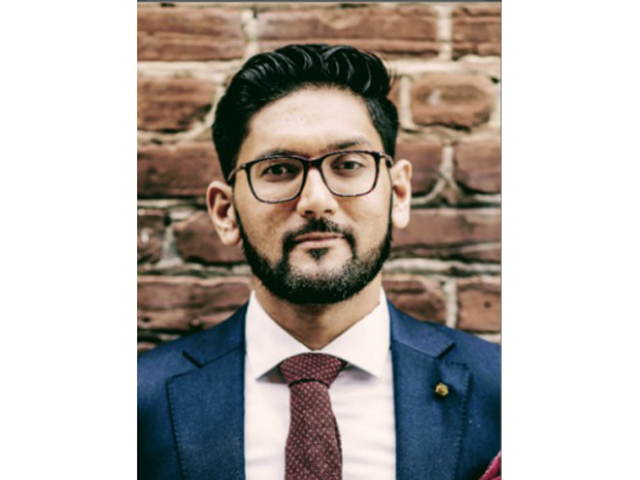
Shadab Momim, PhD (Biomedical Physics '20)
Back in 2009, Shadab Momin, PhD, began his undergraduate education in medical physics at Ryerson University. He quickly became absorbed in research and stayed the course, earning his graduate degree here.
Now in medical physics residency at Emory University School of Medicine (external link) , Momin shares his thoughts on Commission on Accreditation of Medical Physics Education Programs (CAMPEP) (external link) certification, residency, outlook on the field, and how RU equipped him for the journey.
CAMPEP: Path to Residency and Beyond
Momin earned his CAMPEP-accredited degree at the master’s level and speaks highly of the benefits. “CAMPEP is a professional certificate program that’s accepted around the world — Canada, US, Europe.” he says. “It opens the door to a great international career.”
CAMPEP is also a direct path to applying for medical physics residency.
“If you want to be a clinical medical physicist, residency is a must. But even for those who want to work in the industry for vendors, such as Varian or Elekta, having a residency experience is a huge plus.”
One year into his own residency and soon to start clinical rotations, Momin provides a glimpse into the experience.
“After graduating from a CAMPEP accredited program, you become qualified to apply to a two to three years either diagnostic or therapeutic residency program. I chose a three-year therapeutic residency program, which includes one year of clinical research projects and two years of clinical training on radiation therapy techniques and procedures,” he says. “Clinical medical physics shadowing is offered as part of the CAMPEP accredited graduate program at Ryerson, which, in a way, prepares you on what to expect when you start your residency training and gives you an opportunity to understand the roles and responsibilities of a medical physicist in a radiotherapy clinic” he explains.
Outlook for Medical Physics
Projecting forward, Momin is optimistic about career prospects.
“There’s definitely job growth. In the US, graduating residents typically find a clinical physicist position at either large cancer centers or small radiotherapy clinics. There are pros and cons to each. But a general advantage of working at a large cancer center is that you will get more opportunities to be involved in clinical projects with cutting edge technologies. You are also likely to see radiotherapy treatments of more complex cancer cases or clinical implementation of a new treatment technique,” he says. “Experienced physicists also work solo or form consulting firms with other physicists. The other possibility is getting a faculty position in which the time is usually split between the clinical duties and clinical research projects.”
Momin also sees increasing use of artificial intelligence (AI): “The field is adapting AI techniques to facilitate certain tasks that can be very exhaustive and time-consuming when performed manually. Multidisciplinary approach is another key component of medical physics that will continue to grow and contribute to further advancement of the field.”
Foundations Laid at Ryerson
Reflecting on his journey so far, Momin sees many ways that his experiences at RU helped move him forward.
“My undergraduate research experience really helped me see the big picture and the applications of what I was learning in my courses”. he says “Coursework helped me gain skills that are very applicable and have long term values. I remember a computational physics course from my undergrad. It was all about understanding and implementing algorithms, and I didn’t like it at the time. But now I see the value of it, and even now, I use what I learned from that course.”
The knowledge soon came in handy during his doctoral research under the supervision of professors James Gräfe of the Ryerson’s Department of Physics and Rao Khan of Washington University in St. Louis. Collaborating with professor Konstantinos Georgiou of the Ryerson’s Department of Mathematics, Momin helped develop a novel dual-energy algorithm for a volumetric modulated arc therapy (VMAT) to simultaneously optimize mixed photon beams and corresponding arc lengths for VMAT (external link) , potentially reducing collateral damage to surrounding healthy tissue while radiating cancerous tumors.
Momin recalls many rich research opportunities at Ryerson, and shares words of wisdom with students: “I wish I’d gotten involved into research projects and different on-campus activities earlier during my undergraduate studies instead of just focusing on completing the courses. So, get involved in different projects in the department and take on different tasks. It can be as small as just getting an experimental set-up ready or writing a small script in python. This will give you an opportunity to see the applicability of your skills and knowledge, and build a network with profs, their colleagues, and lab members. It all pays off when you’re actually applying for residency or jobs, and they see your range and your ability to work with others.”
With bright prospects yet ahead, Momin concludes: “I’ll always be grateful to the department and carry with me the experiences and lessons I learned during my time at RU. Ryerson has a great medical physics program. Make the most of it.”