Lua Shayenne brings West African dance to the curriculum
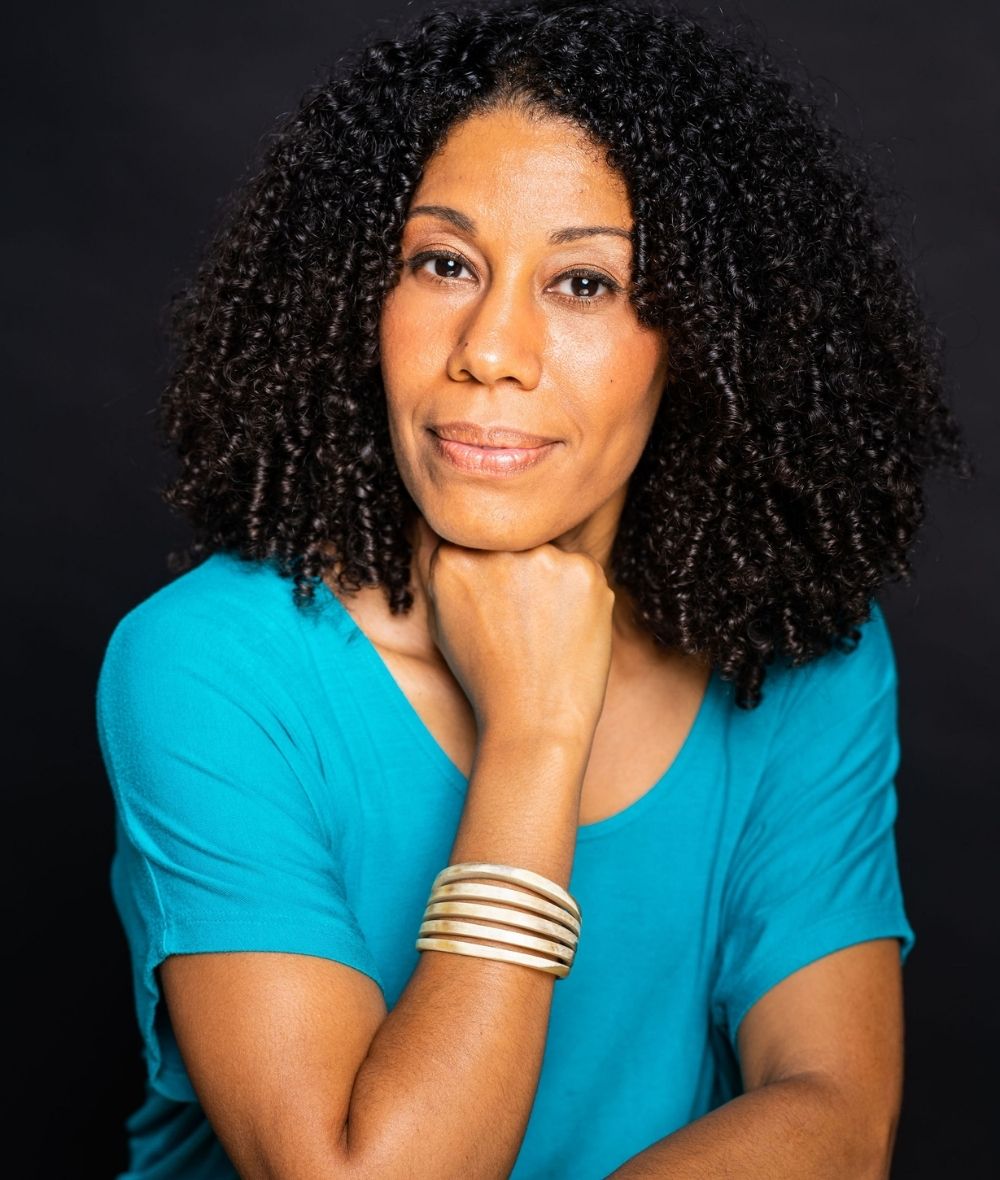
Headshot by Dhalia Katz.
While the pandemic has put a significant strain on performing arts programs, Director of Performance Dance, Vicki St. Denys has taken the opportunity to make curricular changes and to invite new artists to work with our students, such as Lua Shayenne (external link) .
The multi-disciplinary Artistic Director of Lua Shayenne Dance Company (external link) (LSDC) moved from Ghana to Italy when she was twelve years old, and from Italy to Canada when she was nineteen. “I used to watch a lot of Fame,” she reflects, “and I really identified with Coco. I had this naïve notion that if I wanted to get the best chance of becoming a performer, I needed to go to America. My parents agreed to send me to Canada because I have relatives here.”
After graduating from Randolph Academy for the Performing Arts, Lua began an apprenticeship program with COBA (Collective Of Black Artists), where she “reconnected to her African roots” and began studying West African, Caribbean folk, ballet, modern and contemporary dance. Lua’s passion for African dance aesthetics deepened. It was time to travel back to the African continent to study. Thanks to various professional development grants from the arts councils, from 2009 to 2011 Lua travelled to Mali, Guinea, Senegal, and Ghana to explore Mande dances, with a particular focus on dances from Guinea, West Africa.
In 2011, Lua founded her contemporary dance company LSDC (then known as Lua Shayenne & Co.), “rooted in African movement aesthetics.” LSDC commissioned a new dance piece by Guinean choreographer, Fara Tolno. This led Lua to connect with Vicki St.Denys, to offer a workshop in West African dance at the university.
Vicki has long wanted West African dance to be a part of the curriculum, stating that students need “a true understanding that ballet is not the foundation of all dance. Ballet technique is ballet technique, and each dance form has its own foundation. As a jazz teacher and choreographer, including West African dance into the training is also a personal priority - jazz dance is rooted in its African heritage, and this learning provides an opportunity for students to have an embodied knowledge and understanding.”
Despite wanting to make this curricular shift, Vicki points out “you can’t just add hours to a BFA program, they have to come from somewhere. Change takes time and some compromises.” Hosting workshops with Lua seemed like a great solution. “We started hosting these workshops with Lua over some weekends,” Vicki reflects, “and we opened it up so students could take the classes at a reduced rate.” This tradition of hosting Lua’s workshops continued annually, until it was halted in 2020 due to COVID-19.
While the pandemic put a pause on Lua’s workshops at the university, it also opened new doors. Vicki had to work quickly to create a curriculum that suited multiple small groups of dancers, which suddenly allowed for room to hire new instructors.
“I thought of Lua immediately,” Vicki says. “I knew her to be a very good teacher, and someone who is incredibly knowledgeable and experienced. She also knows and understands our program, she has worked with a number of graduates, and has attended our shows.” Vicki is thrilled to have the opportunity to involve Lua in the dance curriculum in a “deeper and ongoing way,” as opposed to the occasional workshop.
At the School of Performance, Lua teaches West African dance to all four years of students. She focuses on a very specific rhythm and its cultural context. First and second year students are currently learning Yankadi, a courting rhythm from the Susu ethnicity that brings together young people from different villages. Third and fourth year students are learning a Malinke rhythm called Sofa, “which celebrates wars and kings; and some steps draw from horseback riding.”
“As a collective, our class can undoubtedly agree that Lua is keen on developing a positive teacher-student relationship,” third year dancer Janeyce Guerrier shares. “While emphasizing the technical aspects of these dances to accurately depict the cultural and historical context, she encourages and motivates us in every single class.”
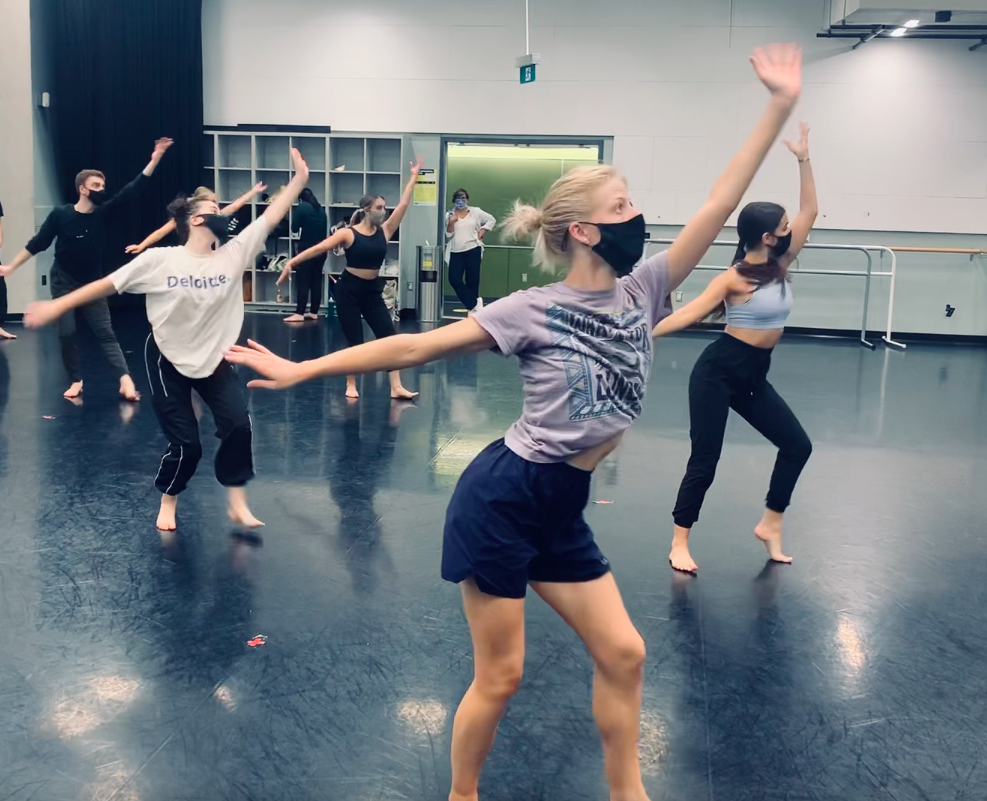
Lua reminds students they’re learning neo-traditional African Dance, which makes use of elements of traditional dance but is taken outside of the context of social ceremonies. “I believe Vicki’s intention is to give students an in-depth foundation to the roots of jazz” Lua reflects. “Because African dance is deeply intertwined with its people’s way of life, I emphasize that it is the spirit that dances and the body responds. I continuously try to find ways so folks who take classes with me can affect their community and/or audience on a spiritual level. This simply means working from the inside out, being aware of those inner sensations, trusting Mother Earth as gravity/Love/the ground of all things, etc. From there, the rest will flow.”
“I found that with this approach, my mind and body were given better tools to produce this particular movement style more organically,” Janeyce reflects. Lua “created an environment where perfectionism didn’t need to exist. That immediately made me trust her as an educator.”
One moment Janeyce and her classmates look forward to at the end of each class is “when we stand in a circle and give appreciation to the sky, our ancestors and our peers. Personally, giving thanks to these bodies feels so humbling and wholesome. I love Lua’s emphasis on acknowledging beings outside of ourselves, because it reminds me of the social aspect of dance.”
While the pandemic has allowed more teachers to come on board, some of those changes are here to stay, even as the pandemic wanes. “I’ve communicated with [Lua] that I hope we can continue this relationship with her,” Vicki shares. “As the program returns to normal it’ll be a bit different, but my hope and my plan is to have Lua continue working with the first and second years.” Vicki is also hopeful that she will be able to bring in Lua as a guest choreographer in the future, “so she can make a work for one of our shows."