Preparing to Evaluate
What's involved in planning your evaluation?
There are two key steps involved in preparing to evaluate your program:
Step 1 - Describe your program: work with your team to create a program plan or logic model that describes what your program does, for whom, and the desired outcomes.
Step 2 - Create an evaluation plan: use the logic model to focus your evaluation questions, measures and approaches.
Step 1: Describe Your Program
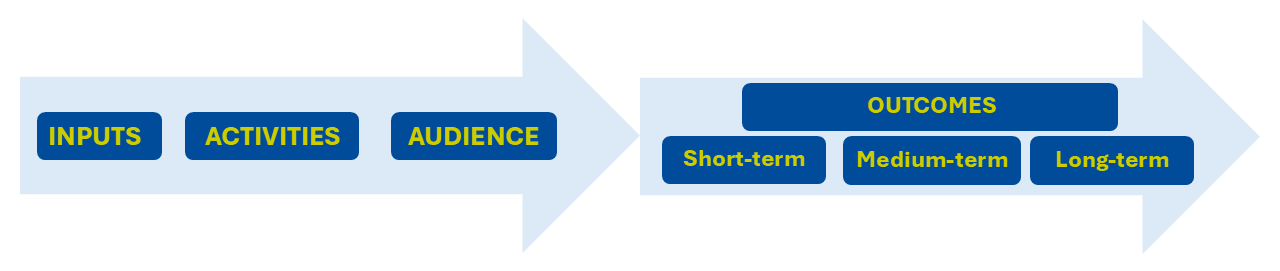
A logic model is a common and effective way of describing a program. A logic model uses a linear framework of ‘if - then’ statements to lay out a program’s processes and outcomes. For example: If we have these resources, then we carry out these activities with this audience, then we’ll achieve these outcomes.
Creating a program logic model does not need to be complicated. In fact, it is advisable to start out with a short (2 – 3 hour) meeting to describe program activities and outcomes at a higher level. This meeting should include anybody involved in program design and delivery, for example front line staff, volunteers, and coordinators/managers. A (PDF file) Tearless Logic Model (opens in new window) is a process that can be used to create a logic model with a team of people in a relatively quick and easy way. This facilitated process, guides a group through a series of questions describing various aspects of the program. At the end of the process, you will have a draft logic model with the following headings:
Step 2: Plan Your Evaluation
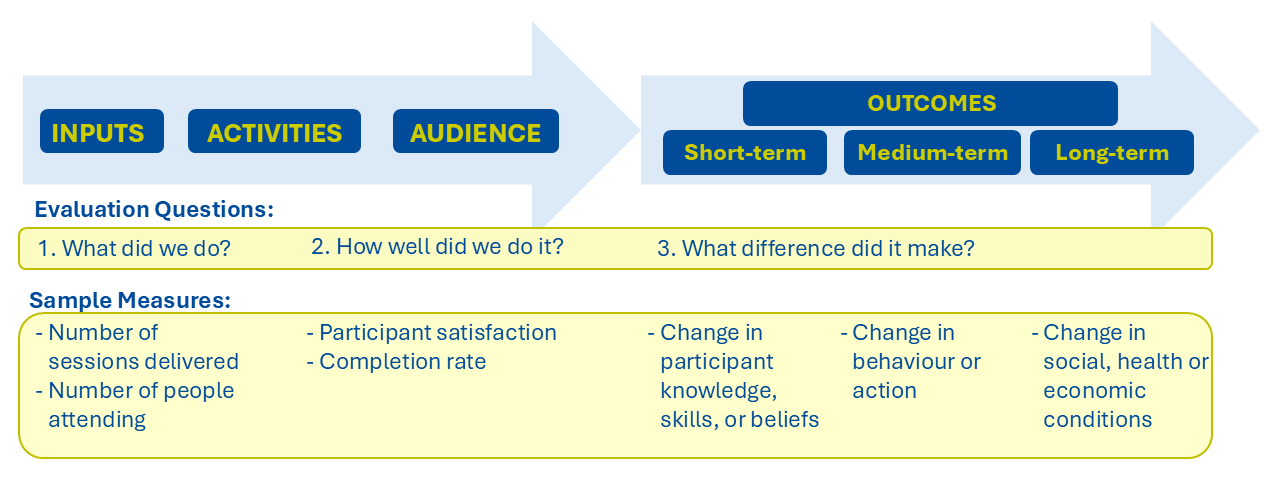
Having a logic model helps focus the evaluation on the key aspects of your program you want to measure and report on. Mark Friedman, author of "Trying Hard is Not Good Enough", proposes a framework for evaluating based on three key questions:
- How much did you do?
- How well did you do it?
- What difference did it make?
Applying these three questions to the logic model provides a simple framework for evaluation planning:
Tools & Resources for Evaluation Planning
Learn More About Evaluation Planning
- Logic Models (3 minute video) (external link, opens in new window)
- (PDF file) Tearless Logic Model Article (external link)
- (PDF file) The Results-Based Accountability Guide (external link)
- (PDF file) Logic Modeling Methods in Program Evaluation, by Joy A. Frechtling. San Francisco, CA: Jossey-Bass, 2007.