TMU alumni shaping Toronto’s FIFA World Cup 2026™ experience

From left to right, top to bottom: Kim Edgar, Stephen Mensah, Ben Steiner and James Sharman.
When the FIFA World Cup 2026™ (external link, opens in new window) comes to Toronto, fans from around the globe will experience far more than the action on the pitch. Behind the scenes, Toronto Metropolitan University (TMU) alumni are helping to shape every aspect of the tournament experience — from planning how millions of visitors will move through the city, to telling the stories that bring the beautiful game to life, and ensuring diverse communities are engaged and represented throughout the celebrations.
In this Q&A series, we spotlight TMU graduates working across transit planning, journalism, media and community engagement, to learn how they are contributing their expertise to one of the world’s largest sporting events.

Kim Edgar
Food and Nutrition ’05
Manager, World Cup Planning, Metrolinx
What excites you most about helping prepare the region to host one of the world’s largest sporting events?
I’m excited for the opportunity to help shape how both residents and visitors will experience the region during this once-in-a-generation event. A strong transit experience shapes the first and last impression of an event by setting a positive tone with a safe, smooth and stress-free journey, or undermining it with a frustrating commute.
While my career has evolved from food and nutrition to project management, my core motivation remains the same: improving people’s everyday lives and supporting healthier, more connected communities. Today, that translates into creating a transportation network that is accessible, efficient and responsive to the diverse needs of the communities we serve.
Why is transportation planning so critical to the success of the FIFA World Cup 2026™ in Toronto?
Planning for an event of this scale is complex and highly coordinated. The global scale of the FIFA World Cup elevates every aspect of planning. There’s an expectation of precision, resilience and reliability because any disruption is amplified on a global stage. This requires extensive scenario planning and inter-agency working groups, clear governance and decision-making, and proactive communication that is designed for a globally diverse audience.
The FIFA World Cup 2026™ in Toronto is a “transit first” event, so from my perspective, the stakes are very high. Host Cities are contractually required to move significant volumes of spectators within specific timeframes, so with Exhibition GO Station located directly next to the stadium and GO Rail able to move the highest volumes of people quickly, Metrolinx is critical to Toronto meeting these requirements.
As a GTA resident and TMU alumna, what does it mean to play a role in helping your region welcome the world during the FIFA World Cup 2026™?
This work is deeply personal. Before joining Metrolinx, I worked in Toronto politics for Councillor Mark Grimes, who in 2014 brought forward the original motion to explore a FIFA World Cup bid — so I’ve been connected to this journey in some way for over a decade! As a GTA resident and TMU alumna, I know firsthand how critical transit is to the livability of our city. I feel a strong sense of pride in now helping deliver transit that ensures residents can move reliably through their daily lives while also showcasing our region’s transit network to hundreds of thousands of visitors.
For students and alumni interested in project management, community services or public-sector leadership, what experiences would you encourage them to seek out early in their careers?
I would encourage them to seek out opportunities that build both technical and leadership skills early on. Work across different teams and disciplines while employing project management techniques like daily scrums, Gantt charts, and stakeholder engagement. Gain experience on complex, real-world issues with community impact by volunteering during election campaigns. Develop strong communication and stakeholder engagement skills by proactively seeking mentorship, asking questions and stepping into stretch opportunities. Most importantly: be adaptable. Large-scale initiatives involve many stakeholders with different priorities and plans will evolve. Being able to navigate change, align diverse perspectives and lead through complexity is critical to success.
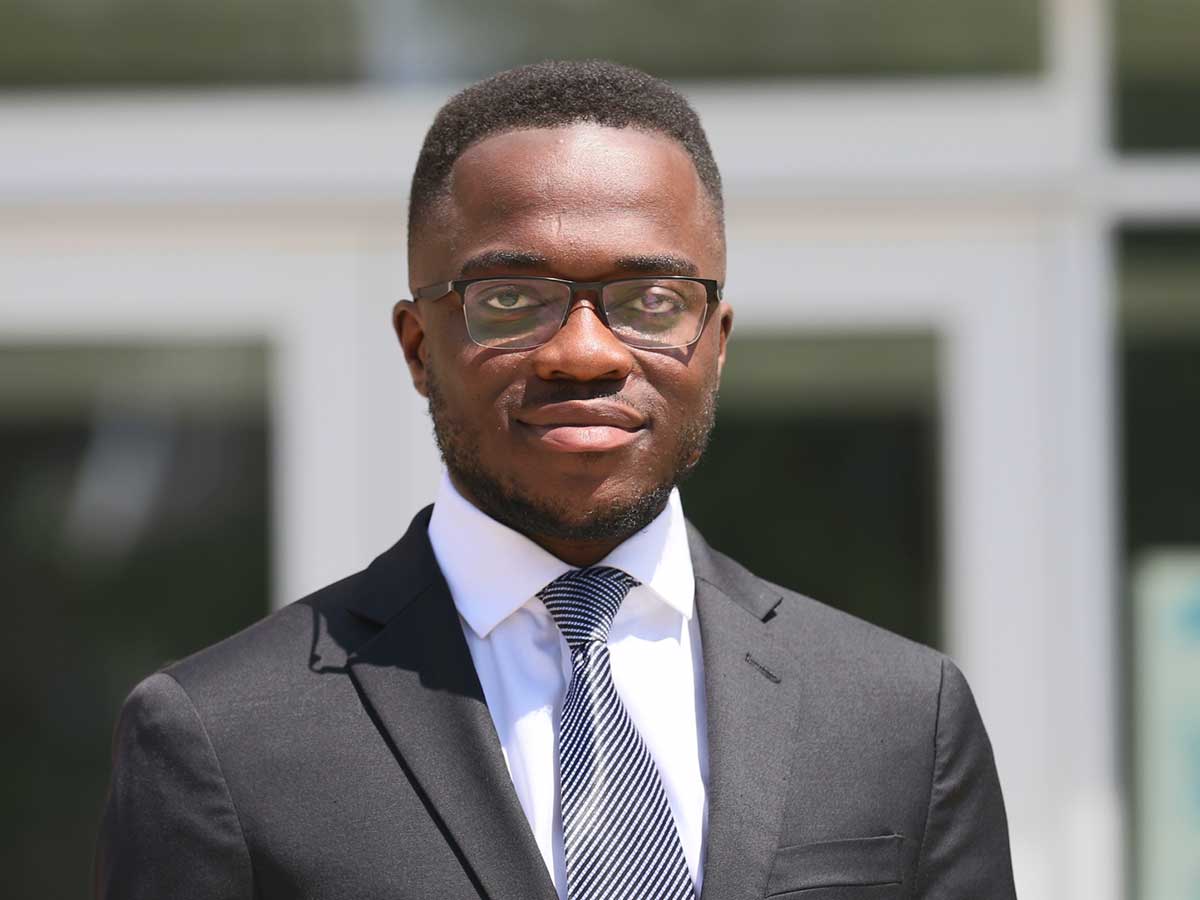
Stephen Mensah
Criminology and Politics & Governance ’25
Community Benefits and Social Procurement Program Advisory Body Member, FIFA World Cup 2026™
As a member of the Community Benefits and Social Procurement Program Advisory Body, what drew you to the opportunity to help shape the FIFA World Cup 2026™ legacy in Toronto?
What drew me to this opportunity was the chance to help ensure that one of the world’s largest sporting events creates meaningful and lasting benefits for Toronto residents, while also ensuring that young people have a meaningful voice in conversations about the tournament’s legacy.
The FIFA World Cup 2026™ will have an impact on young people across Toronto, whether through employment opportunities, volunteer experiences, community programming, civic participation or simply the way they experience the city during such a significant global event. Yet historically, young people are often among the groups most affected by major decisions while being among the least represented in decision-making spaces.
Throughout my work in youth advocacy, I have consistently pushed for the principle that decisions impacting young people should be informed by young people. The opportunity to contribute to the Community Benefits and Social Procurement Program Advisory Body was an opportunity to help ensure that community voices, including youth voices, were reflected in conversations about what lasting legacy the tournament should leave behind.
One of the goals of the advisory body is to create workforce and economic opportunities for Indigenous, Black and equity-deserving communities. What does meaningful community benefit look like to you in the context of a global event like the FIFA World Cup?
Meaningful community benefit means ensuring that opportunities generated by the tournament are accessible to communities that have historically faced barriers to participation.
Throughout my policy work, including leading the city-wide campaign that resulted in a commitment by Toronto City Council to create 10,000 additional youth jobs, I have seen firsthand how access to economic opportunities can transform outcomes for young people and communities. While a major sporting event alone cannot solve youth unemployment, it can help create pathways, partnerships and investments that connect residents to opportunities that may not otherwise have existed.
Success should not only be measured by what happens during the tournament itself, but by whether residents are better positioned to succeed long after it concludes.
Your role includes helping shape policies and programs that maximize community impact. What outcomes or legacies do you hope Toronto residents will see long after the tournament has ended?
I hope the legacy extends far beyond sport and the tournament itself. I would like to see stronger pathways to employment for young people, increased opportunities for local businesses, deeper community partnerships and investments in neighbourhoods that have historically been underserved. This includes investments in community spaces, recreation infrastructure and programs that continue creating opportunities for residents long after the final match has been played. I also hope the tournament inspires a new generation of young people to see themselves as leaders, changemakers and active participants in shaping their communities. Ultimately, success would mean that years from now Toronto residents can point to tangible opportunities, investments and partnerships that exist because of decisions made during the FIFA World Cup 2026™ planning process.
Looking back on your career journey, how has your TMU education prepared you to contribute to a project that sits at the intersection of sport, economic development and social impact?
My time at TMU provided both the academic foundation and practical experiences that continue to shape my work today. Studying Criminology and Politics & Governance gave me a deeper understanding of public policy, institutions, community development, and the factors that influence social outcomes. Equally important were the opportunities to engage with diverse communities, develop leadership skills and apply classroom learning to real-world challenges.
TMU reinforced the importance of collaboration, civic engagement, and finding solutions that are informed by both evidence and lived experience. As a university deeply connected to the City of Toronto, it encouraged students to engage with real-world challenges and think critically about how policy and leadership can drive positive change.
What advice would you offer students and recent graduates who hope to create positive change through their work and leadership?
Don’t wait for a title to start making a difference. Some of the most meaningful opportunities in my journey came from showing up, building relationships, volunteering and being willing to contribute before anyone was expecting me to.
Focus on serving your community, remain curious, and be open to learning from people with different experiences and perspectives. Change is rarely created by one individual acting alone; it happens when people come together around a shared purpose.
Most importantly, remember that your voice matters. The challenges facing our communities need thoughtful, bold, and committed people who are willing to step forward and help build solutions.
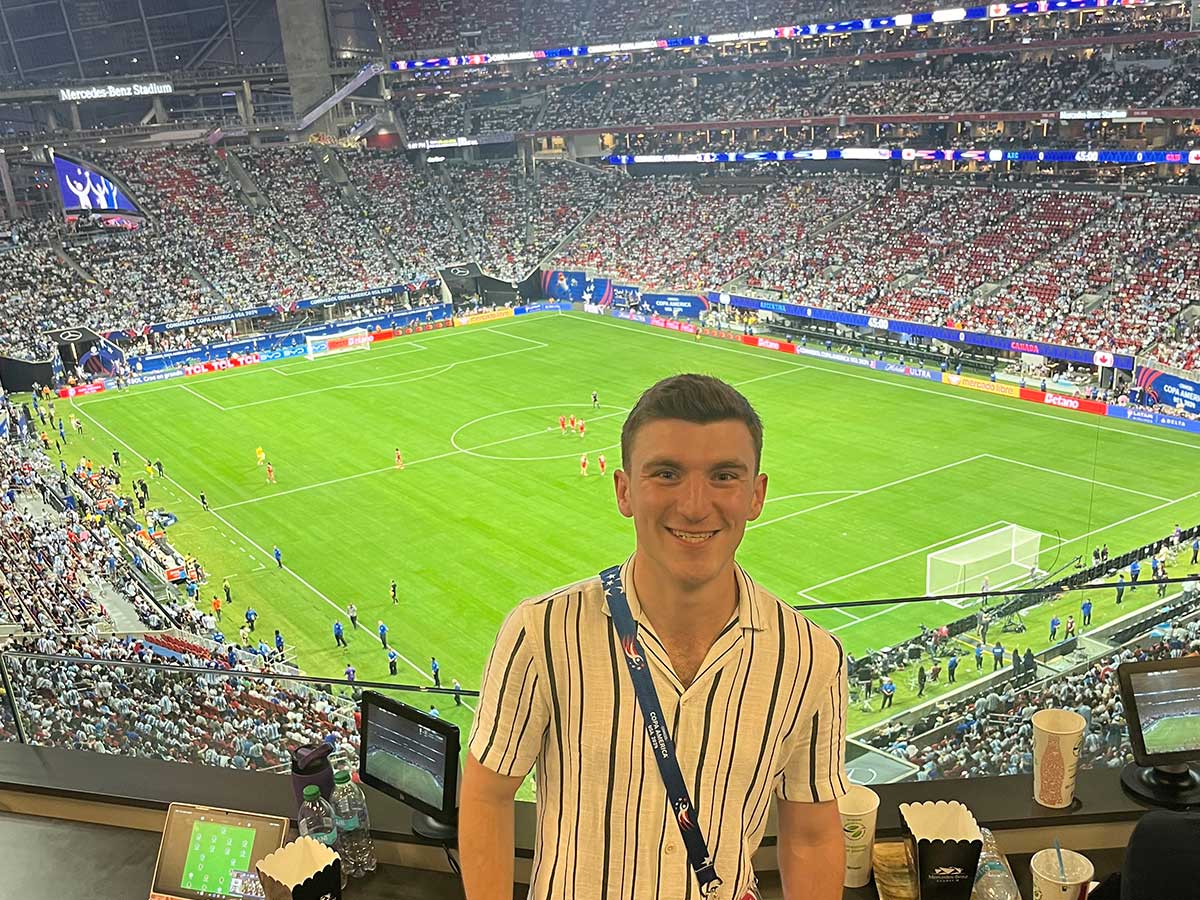
Ben Steiner
Sport Media ’24
North American Soccer Writer and Reporter, Sports Illustrated
You’ll be covering your first FIFA World Cup for Sports Illustrated. What was your reaction when you learned you’d be reporting on one of the biggest sporting events in the world?
It’s not necessarily a full circle moment, because that would say that maybe I’m done with it, but it was as close to a dream come true as I could hope for. When North America secured the World Cup, I knew I wanted to be a part of it in some way, and now to be there telling stories about the game I love from two cities I’ve now called home, it doesn’t get much more surreal than that.
As someone who has spent years covering Canadian soccer and co-hosting the Northern Futbol podcast (external link, opens in new window) , what does it mean to witness the World Cup firsthand at a time when the sport is experiencing growth in Canada?
I think the craziest thing for me will be when that first match kicks off. Any time there’s a big game to cover, I always think of all the preparation that has gone into what, in the end, is just 90 minutes of soccer. For this, it’ll be the last 15 years of my life and the entire dedication of my career to this point, so that’s a little crazy to me, especially when I think of where I was when I fell in love with soccer in 2011 and where the Canadian team was in the FIFA rankings, which was well into the 100s.
As a storyteller, what are you hoping to find and share during the tournament?
The biggest thing for me is how well represented both Canada and the U.S. are through their national teams. Almost everyone is a first- or second-generation immigrant, and the way they’ve embraced one another reflects these countries’ best qualities. Those stories will define it all, as much as any of the action, which is important, too, and I think we need to be more focused on results in every sport, maybe more than we have been in the past.
What are some of the key experiences that helped prepare you for an assignment of this scale?
Getting to focus on the rush of the Olympics across three Games at CBC Sports, both in and after school, really helped me grasp the global lens of sport and how the same events can mean something different to everyone, with the World Cup as the peak of that. In soccer, being with the team in 2024 when they were eliminated in the Copa América semifinals by Lionel Messi’s Argentina in front of a sold-out MetLife Stadium really opened my eyes to the level everything can be at in a World Cup. Although I don’t envy sitting in the press room when Canada or the USA’s journey comes to an end this summer (unless one of them wins it?!).
How did your time at TMU help shape your approach to sports journalism and what advice would you give to current students and alumni who hope to build careers in sports media?
The TMU Sport Media (opens in new window) program really focused on learning so many different aspects of the story, with some classes focusing on the impact of reporting on more delicate topics, the influence of media and understanding sport’s place in society. That understanding and the attention professors and my classmates paid to it offered eye-opening new perspectives and prepared me to tell deeper stories in the industry. I’d also say the energy the school and athletics departments put behind my passion was vital, and without that support, I wouldn’t have been able to develop as I have.
You have to be passionate. Embrace every learning opportunity and connection you can make as a student within and beyond the TMU community. It’s likely the last time you’ll be in a place where learning takes outright priority. Learn to have your own opinions and to argue them in an engaging and concise way. That’s something that can differentiate you from the rest and isn’t that what defines some of the best?
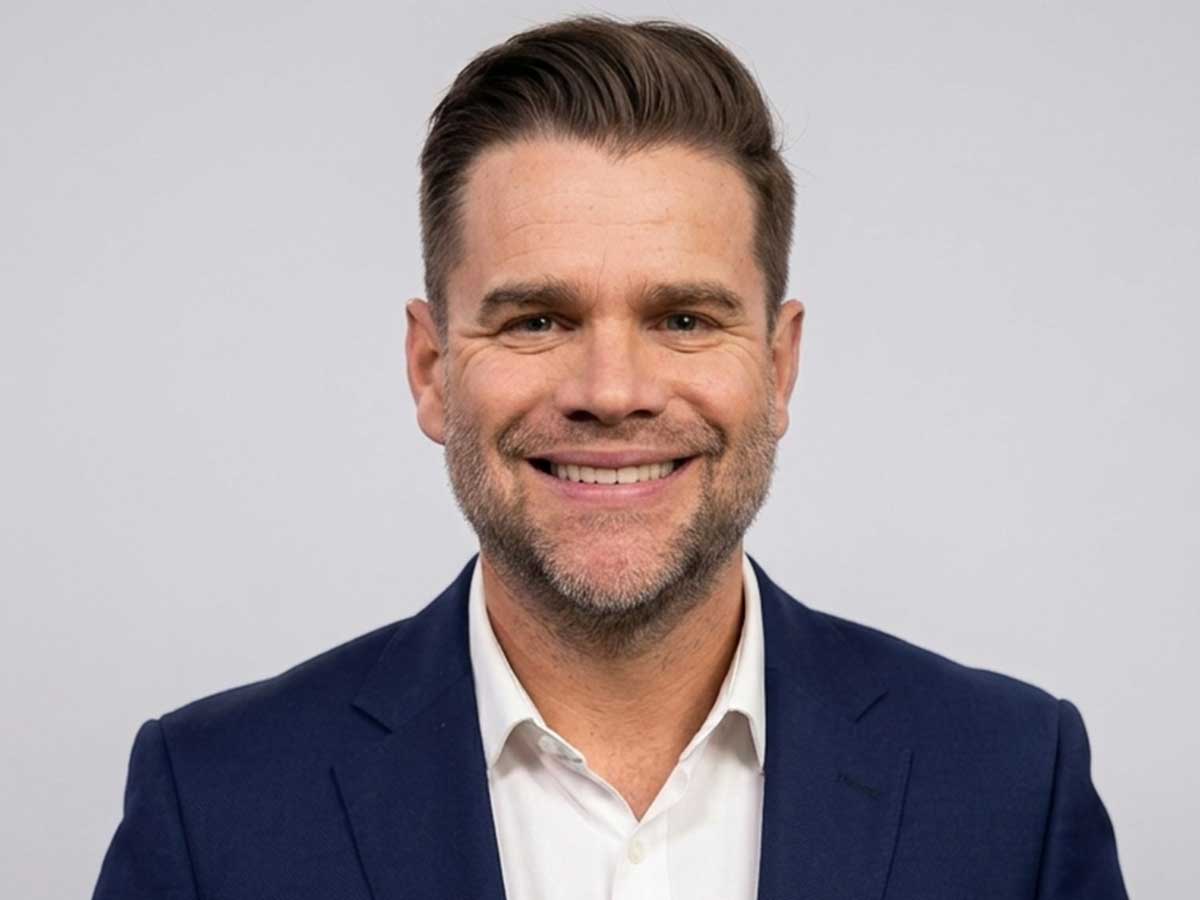
James Sharman
Image Arts ’97
Co-founder and Owner, Footy Prime Inc (external link, opens in new window) .
What does it mean to see Toronto and Canada host FIFA World Cup 2026™ and to be involved in the tournament after spending so much of your career helping grow the game here?
To be honest it is still surreal. I think once I see a ball actually kicked in anger on Friday in Toronto, it will all begin to feel real ... maybe even a little emotional. Ask anyone involved in the game in Canada and they will tell you it’s been tough trying to grow the sport and win respect in a country where soccer is really still in its infancy. The 2015 FIFA Women’s World Cup being hosted in Canada poured the foundation with their success and this year could be building the walls and sticking a roof on them.
What role do you hope media personalities, storytellers and content creators can play in helping fans connect with the tournament and creating a lasting legacy for the sport in Canada?
We have a huge role in this. Long gone are the days where you had to rely on the major networks or publishers to present our sports content. There is some outstanding content being produced, oozing creativity, and not held hostage to any broadcast rights deal or relationships with clubs, athletes or associations. When I think about the legacy of this World Cup, I really hope the media is an area that benefits. Getting more faces and voices into the Canadian soccer world can only be positive, not to mention the shift from conventional coverage to modern short form entertainment. Bring it on!
Footy Prime has become one of Canada’s most recognizable soccer podcasts. What have you learned from building an independent media brand and community around the sport?
Well, it has taken a lot of patience! What became obvious really early is how the Canadian soccer market needed community. We have been incredibly fortunate to build a community of like-minded fans of the sport who wanted a platform to celebrate, commiserate, argue and debate. The people are out there but we just had to find them. We have seen some really positive movement in that regard in recent months, however, and have some brilliant partners who are really helping us grow. I think, quite honestly, because Footy Prime is so authentic and we have such freedom to really speak as we like, we have scared off some companies and networks in the past. This is completely okay, I get it, but I think the tide is shifting as the consumer demands entertainment as well as insight from the sports media today.
As a TMU alumnus, how did your education help prepare you for a career that has spanned broadcasting, digital media and entrepreneurship?
As old as it makes me feel, when I first arrived at TMU, digital media was on the very edge of the media industry. Media Arts was a program that covered the full gamut for us would-be members of the industry. It allowed me each week to learn the essentials such as how to edit video, shoot on film, develop photos in a dark room, while also encouraging us to simply “try stuff.” That was the biggest lesson, this program was certainly not rigid and typical. We were given great freedom to experiment in our assignments and that is something I have always fallen back on. If I’m not sure of what direction a project needs to take, I try to shed the shackles and go with my gut. Sometimes it doesn’t work out, but generally speaking it does, and I think that mindset was first experienced during those school days.
For students and alumni looking to turn a passion — whether for sports, media or another field — into a career, what mindset has helped you the most throughout your journey?
As I just noted, a free mindset is key. Do not be convinced there is only one way to cover a story or create content. “That is just the way it is done” has never been for me. Sure, sometimes there is a correct way, but don’t be a slave to the convention. Push the boundaries and remember that media and content creation should be fun. There is a good reason local newscasts are seeing their audiences drop enormously and it isn’t simply because news is accessible 24/7. Traditional media is old fashioned and society is moving on. So be brave, try stuff, and as I was once told, “[if you] put yourself on the couch at home, would you want to watch it”.
Interested in learning about more alumni involved with FIFA World Cup 2026?
Meet the TMU alumna behind the new Toronto remix for FIFA World Cup 26™
