Health and wellness: Perspectives on care and change
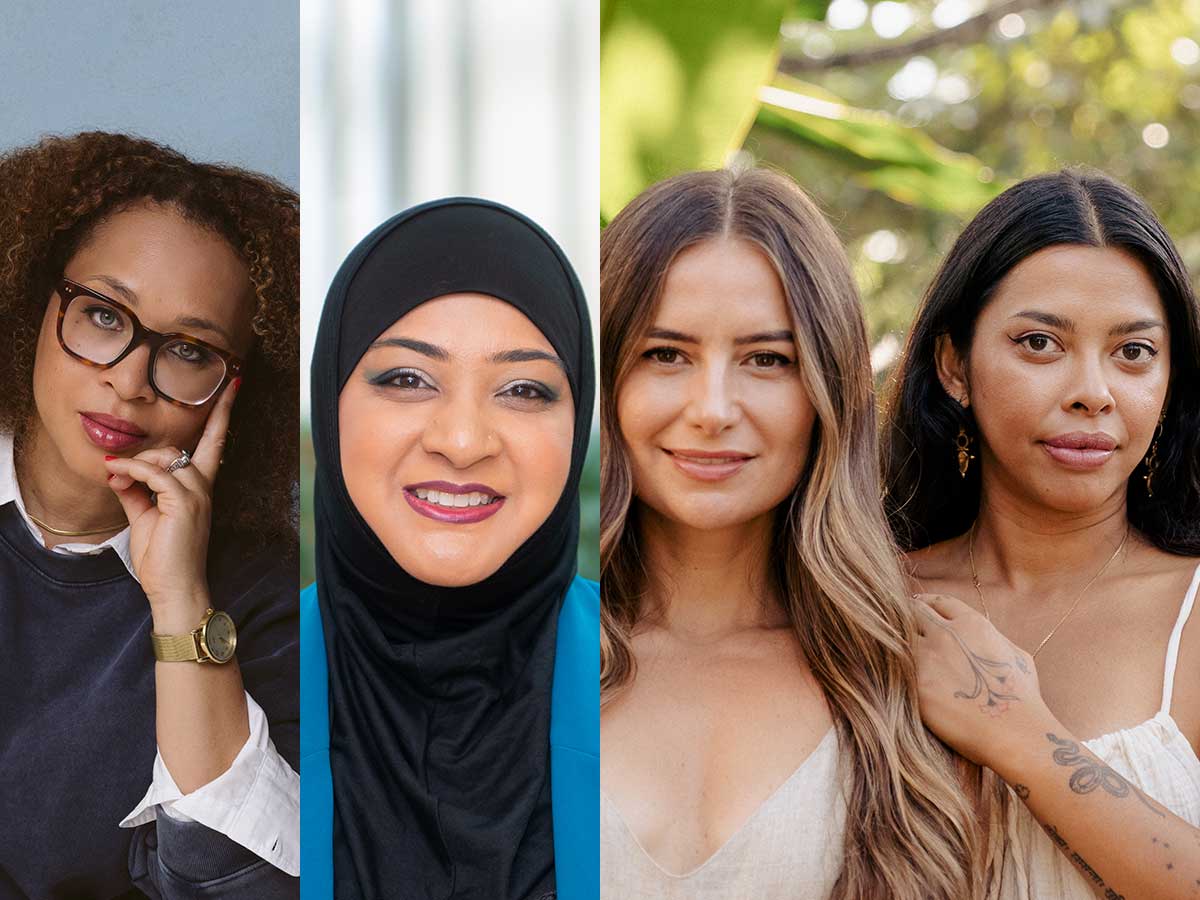
From left: Nam Kiwanuka, Farah Khan, Daniela Barbura and Azma Ousmand on what it takes to support health and wellness.
How inequity affects health outcomes, how care is delivered and experienced, and how we recover and reset can all shape what health and wellness look like in practice. Together, they frame the care people receive, the support available to them, and their ability to heal and thrive. The challenge lies in shifting systems that have long placed that responsibility on individuals, rather than on the institutions and structures meant to support them.
From investigative podcasting and hospital leadership to immersive wellness retreats, Toronto Metropolitan University (TMU) alumni are working across these spaces to make health care more equitable, care more compassionate and well-being more attainable. Meet four alumni approaching this challenge from different angles, each helping to reshape how health and wellness are understood and experienced.

Nam Kiwanuka
Journalism ’99
Host/Producer, (MIS)Treated, TVO
Award-winning journalist Nam Kiwanuka is host and producer of TVO’s (MIS)Treated (external link, opens in new window) , a podcast that explores gaps and inequities in women’s health care. Her career spans broadcast, public affairs and documentary storytelling, including co-hosting The Agenda with Steve Paikin and hosting The Thread with Nam Kiwanuka. She has held groundbreaking roles across Canadian media, including becoming the first Black woman in Canada to host a magazine sports show on Sportsnet, with earlier work at MuchMusic and Focus on Africa for BBC World Service.
Kiwanuka was drawn to women’s health after being diagnosed with fibroids following COVID-19, when she faced a two-year wait for surgery due to system backlogs. That experience led her to question why gynecological surgery wait times are not tracked like other procedures. Through her research, she uncovered gaps in funding, research and diagnosis in women’s health, including how medicine has been built around the male body as the default. Through (MIS)Treated, she examines how these inequities shape women’s health outcomes and care experiences.
(MIS)Treated explores gaps and inequities in women’s healthcare. What drew you to this space, and why did you feel it was important to centre these stories?
The podcast came out of a personal experience that I dealt with and when I was going through it, I realized that what I was experiencing wasn’t unique. In 2022, after I had covid for the first time, my health went sideways. I ended up in and out of hospital, and found out that I had fibroids. I was told that I needed to have surgery but I had to wait 2 years for surgery because of backlogs. And being a curious person, I started to wonder why the backlog was so long and learned that not only does Ontario but Canada [also] not track gynaecology surgery wait times. This was surprising to me because knee surgeries, cataract surgeries and more were tracked. I was also trying to figure out what fibroids were and my doctor didn’t know very much. So I started to research women’s health and learned that it’s underfunded, under researched and women spend many years being misdiagnosed because the medical field built its foundation on the male body as the default. I pitched the podcast a couple of times and after two years, it was greenlit.
Through your conversations on the podcast, what patterns or gaps in women’s health have become most visible to you?
The most visible gap has been that women’s health is not understood because it hasn’t been researched. Consider that it wasn’t mandated by the NIH (the U.S. National Institutes of Health, the primary federal agency for biomedical research) until 1993 for women to be included in clinical trials. That also included so-called “minorities”. So for decades and decades, the male body has been the default in science. It wasn’t until 2016 that the NIH mandated that female mice be used in clinical trials. 2016! I’ve been learning that because of this, women spend 25% more of our time in ill health. Even though we live longer, we spend more of that time in ill health. There is this disbelief that this is what is happening and I realize that people don’t want to seem as if they have bias. But how can you explain that we don’t know why 70% of alzheimers sufferers are women? Or that 80% of those with autoimmune disease are women? Or that although the symptoms of ADHD were first described in the late 1700s, it wasn’t until the 1990s that it was studied in how it presents in girls and women. As the kids say, make it make sense.
How do you approach storytelling in a way that not only informs, but also helps people to feel seen in their own health experiences?
I always tell our guests that their story is their own and not ours. We only talk about what they are comfortable talking about. We have a balance of interviews with experts and those with lived-experience, and sometimes our guests are both. I think it’s important to have a space where people can talk about their experiences without judgment and with understanding. And also to know that it’s not a personal failing but a failing of medicine to not study women’s health. Our experts help to fill in those gaps in what the conditions are, what research is needed and the lack of data that exists.
We also root the podcast in history, like how the father of modern gynecology experimented on enslaved African women, and how do we reconcile the history of the tools we still use today in gynecology with the history of what he did to those young women? We also share research notes with the audience, because in this day of misinformation and disinformation, it’s important to show our work. I hope it helps to build trust.
In your view, what role does media and storytelling play in shaping how we understand health and wellness?
Health and wellness are both spaces that impact our lives in monumental ways, but they are also fields that a lot of people are making a lot of money from by misleading people who are in search of information. We can chastise people for falling for it, or we can help to combat that by offering fact-checked and informative conversations that don’t blame or present health as a personal failing.
What impact do you hope (MIS)Treated has when it comes to building more informed and equitable health systems?
I hope that it brings awareness to what the foundation of medicine is, how that impacts 50 per cent of the population, and why we need to dismantle that and rebuild. Bias is something that we all have, and if we can’t acknowledge that, I don’t know how we move forward in anything. We tell women to “lean in” in order to get ahead in business. We place the onus on women, but how can one lean in when they are living in constant pain with endometriosis? And waiting on average seven to 10 years to get diagnosed. How can one lean in when they are suffering with an autoimmune disease, or if they are in and out of hospital and told to wait two years for a necessary surgery? But because that condition is considered to be “just a period”, there is no urgency or understanding of the dangers of what it’s doing to her body? We’ve normalized women’s pain and suffering, and placed the responsibility on women to figure out and solve.
I hope policymakers understand that this impacts the economy in many ways and puts a strain on already limited resources in the health sector. I hope the podcast brings awareness to these understudied conditions, and that it takes the onus off the individual and places it back onto the system, because it’s the system that has failed women. And now that we know what we know, we can look at solutions, improve funding for women’s health, and research these conditions so that the next generation of young girls and women can actually lean in.
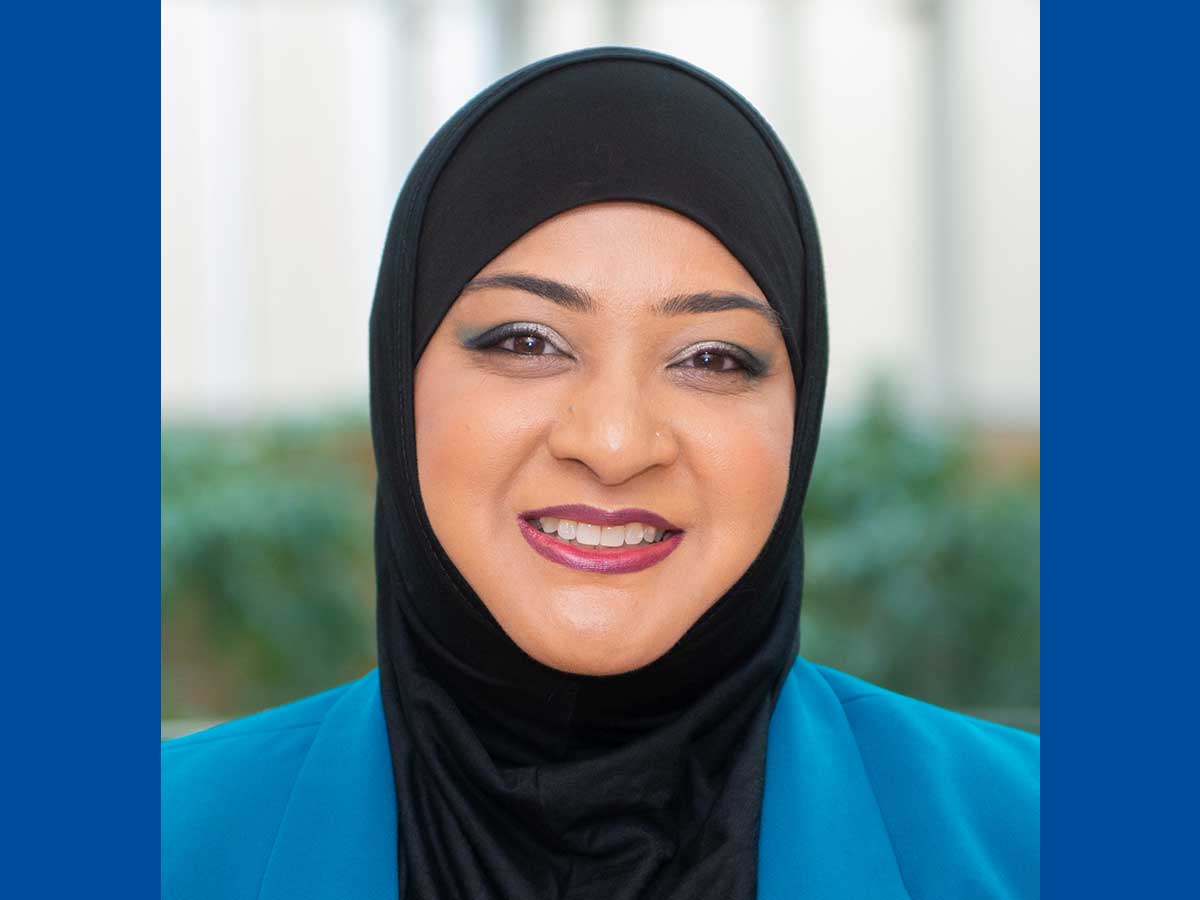
Farah Khan
Nursing ’07
Senior Vice President, Patient Care Services, Trillium Health Partners
Farah Khan is senior vice president, patient care services at Trillium Health Partners, Canada’s largest academic community hospital. She is a registered nurse by training, and has held progressive leadership roles across clinical operations in a number of areas including surgery and cancer care, and regional planning and administration, bringing more than 20 years of experience in health care.
Khan is a recipient of the Registered Nurses Association of Ontario’s President’s Award for Leadership in Clinical Nursing Practice and Mayor Crombie’s City of Mississauga Civic Award for her work during the COVID-19 pandemic. She was the first hijab-wearing member of both the Trillium Health Partners Executive Team and the Board of Directors for the Canadian Nurses Association. In 2025, she was inducted as a Fellow of the Canadian Academy of Nursing in recognition of her leadership, mentorship and contributions to advancing equity, diversity and inclusion in health care.
In your role, how do you define high-quality, patient-centred care — and how does that connect to a broader understanding of health and wellness?
High-quality, patient-centred care is grounded in safety, evidence and compassion, and delivered in partnership with patients, families and the diverse communities we serve. It means seeing patients not just through the lens of a diagnosis, but as whole people with unique values, cultures, strengths and life circumstances. When care is truly patient-centred, patients feel heard, respected and involved in decisions that affect their health.
This approach is inseparable from a broader understanding of health and wellness. Health is influenced not only by clinical interventions, but also by social, emotional, cultural and environmental factors. High-quality care therefore extends beyond treating illness to supporting dignity, equity and continuity across the care journey. By focusing on quality, safety and experience together, we create health-care environments that promote healing, resilience and long-term well-being for individuals and the communities we serve.
How has your work across cancer care, surgery and hospital leadership shaped your perspective on what most directly impacts both patient outcomes and overall well-being?
Working across these sectors reinforced that while nursing and clinical excellence is essential, outcomes and well-being — for both patients and providers — are most powerfully shaped by how care is coordinated, experienced and delivered across the entire journey. In highly specialized areas like cancer and surgery, I see firsthand how coordinated and timely access, clear communication, compassionate teams, and attention to emotional and social needs can significantly influence both recovery and resilience.
As my leadership responsibilities have expanded across the health system, it has become clear that patient outcomes are deeply connected to the environments we create for both patients and care teams. When teams are supported, systems are well-designed, and quality and safety are embedded into everyday practice, patients experience more consistent, respectful and effective care. Ultimately, overall well-being is not driven by any single intervention, but by coordinated, integrated, team-based care that recognizes people as whole individuals and supports them before, during and beyond their time in hospital.
How do equity, diversity and inclusion show up in patient care delivery, particularly when it comes to ensuring patients feel seen, respected and supported?
Equity, diversity and inclusion are deeply personal to me, and they shape how I think about patient care every day, especially given Trillium Health Partners serves one of the most diverse communities in Canada, and one that I grew up in. Throughout my career, I’ve seen and studied how patients’ identities, cultures and life experiences influence how they access care, how safe they feel within the system and whether they feel truly heard. When care does not reflect or respect who people are, it can unintentionally create distance, mistrust or missed opportunities to support healing.
As health-care providers, it’s become important for me to understand that it also requires intentional effort to reduce barriers related to language, bias and access, and to create care environments where people feel welcomed and respected. When patients feel seen for who they are — not just treated for what they have — they are more engaged, more confident in their care and more supported in their overall well-being. For me, embedding equity and inclusion into everyday care delivery is essential to building trust and delivering care that is both compassionate and high quality.
What do you think is most needed to build health-care systems that not only treat illness, but actively support the health and wellness of individuals and communities?
What is most needed is a more integrated and sustainable approach to care — one that strengthens prevention, improves transitions and connects hospital care more closely with community and social supports. In today’s system, hospitals are often caring for people whose needs go far beyond acute illness, and we must better align health care with the broader factors that influence health, such as access to primary care, housing and community services.
When teams are supported and care is better coordinated, patients experience safer, more consistent and more compassionate care. Even within current constraints, focusing on quality, equity and patient experience allows us to move beyond treating illness alone and toward supporting long-term health and well-being for individuals and communities.

Daniela Babura and Azma Ousmand
Hospitality and Tourism Management ’11 and Business Management ’07
Co-founders, ADzenTURE Retreats
Daniela Babura and Azma Ousmand are the co-founders of ADzenTURE Retreats (external link, opens in new window) , a boutique wellness travel company founded in 2016 that curates immersive, experience-led retreats designed to help people reset, reconnect and return to their lives with greater clarity and intention. Since launching, the platform has hosted more than 200 retreats across 20+ destinations worldwide, welcoming over 2,000 guests.
Despite both being TMU alumni, the pair did not meet during their studies, though they shared a friendship circle. They later connected over a shared love of travel and wellness. Ousmand brings a background in hospitality, tourism and community-building, while Babura left a corporate banking career to pursue travel and wellness, later completing her yoga teacher training in Hawaii. Time spent living and travelling abroad deepened both of their understanding of intentional travel and ultimately led to the creation of ADzenTURE.
What led you both to this space, and what did you see missing in how people approach health and wellness?
We both came into this space through our own experiences trying to balance high-pressure environments with taking care of ourselves. What we kept noticing was that wellness was often treated as something separate from real life, like quick fixes or trends that didn’t actually stick. At the same time, people were travelling more than ever, but often coming back feeling just as exhausted. Travel had become fast-paced and not necessarily restorative.
What we felt was missing was the role of environment and community. It’s hard to shift your mindset when you’re in the same routine, but when you change your environment and surround yourself with like-minded people, it creates space for a different kind of reset. That’s why we focused on travel and wellness together. Retreats allow people to step out of their day-to-day, slow down and reconnect — not just with themselves, but with a community that’s there for a similar reason.
What patterns have you noticed when it comes to burnout and the need for reset?
Burnout isn’t just about working too much, it’s more about not having real recovery time. People are constantly on, even when they think they’re resting. We also see that a lot of high-performing people don’t realize how burnt out they are until they step out of their routine. Once they disconnect, even for a few days, there’s usually a moment where they realize how much pressure they’ve been under.
How do experiences like rest, nature and community shift the way people think about well-being?
These experiences help people understand what feeling regulated and present actually feels like. It’s one thing to talk about wellness, but it’s different when you experience it fully. Being in nature, having space to rest, and connecting with others in a meaningful way tend to shift people’s perspective — they often realize how disconnected they are to themselves, their body, loved ones, etc. They start to move away from focusing only on productivity and more toward how they actually feel day to day.
What do you believe people and systems are still getting wrong about health and wellness?
There’s still a tendency to put all the responsibility on the individual. While personal habits matter, the environment people are in plays a huge role too. There’s also a difference between wellness and well-being that doesn’t get talked about enough. Wellness is what you practice; well-being is how you actually feel. One of the biggest drivers of well-being, especially at work, is community and a sense of belonging — feeling like you’re part of something, that people actually know you and that you matter. No gym membership or meditation app is going to give someone that.
Until companies start addressing the gap between what’s expected of people and what’s actually sustainable, and start investing in environments where people genuinely connect, a lot of wellness efforts are just going to stay reactive. They’re just band-aids instead of real change.
Do you want to share your career journey with us?
Submit a class note or email us about your latest milestones or achievements for a chance to be featured in our publications.
