From awareness to action: How TMU alumni are shaping sustainability across systems
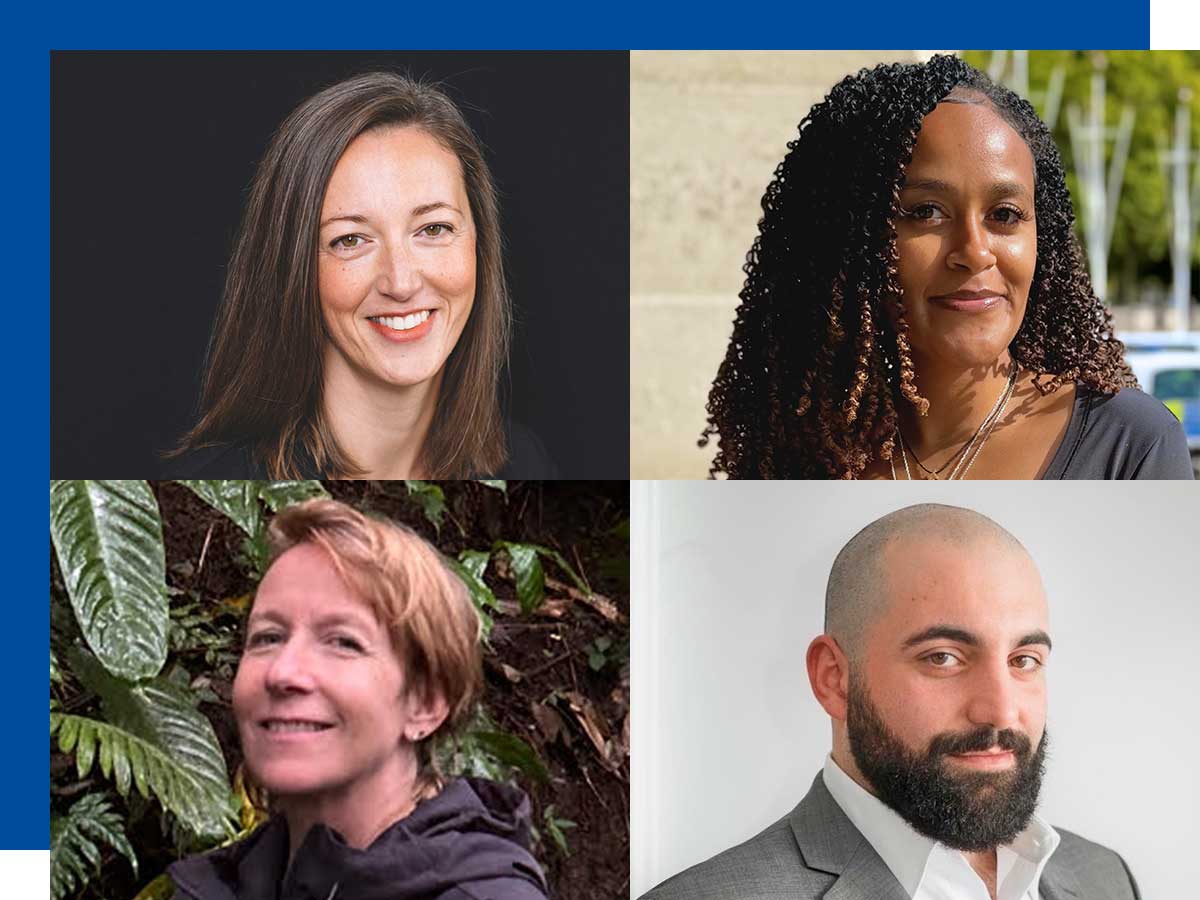
Meet the TMU alumni working across communications, education, food systems and travel, each bringing a different perspective on sustainability in practice. Clockwise from top left: Vanessa Farquharson, Tibebe Biru, Matt Esper, Bree Seeley.
The way we learn, eat, travel and communicate can all play a role in shaping sustainability. These everyday systems influence not only what we understand about environmental issues, but also the choices and behaviours that follow. The challenge lies in how awareness translates into action within the systems we move through every day.
From classrooms and kitchens to global travel networks, and the way sustainability stories are communicated to the public, Toronto Metropolitan University (TMU) alumni are working across these spaces to make sustainability more actionable, practical and embedded in real-world decisions. Meet four alumni approaching this challenge from different angles, each helping to shape how impact is understood and created.

Vanessa Farquharson
Journalism ’04
Director, Communications, International Institute for Sustainable Development
Vanessa Farquharson’s work sits at the intersection of storytelling and sustainability, shaping how complex environmental issues are communicated to broad audiences. An award-winning author and journalist, she spent over a decade reporting on topics ranging from urban development to climate change, before moving into communications and campaign strategy within the environmental sector.
Now Director of Communications at the International Institute for Sustainable Development, Vanessa brings that editorial lens into her work, focusing on how to make sustainability issues clearer, more relevant and more actionable. Her experience across media, public campaigns and environmental organizations has given her a front-row view into one of the biggest challenges in sustainability today: not awareness, but action.
You began your career in journalism before moving into communications and campaign work within the environmental sector. What led you to make that shift?
After a decade in journalism, I had developed a deep appreciation for the responsibility of the media to cover important stories about what matters to people — particularly the climate crisis. At the same time, I’d become a bit cynical. There are incredibly smart, talented reporters doing important work, but they’re often underpaid and undervalued, and the response can be disheartening. When I was preparing to re-enter the workforce, I wanted to support organizations working more directly with those on the ground making change happen. I saw communications as a way to help get the right people to pay attention, which can translate into more funding, more projects and more impact.
What do you think makes sustainability messages actually resonate with people?
Most people care about the environment and believe climate change is real, but the messaging is coming from so many sources, in so many formats, that it becomes overwhelming. That’s when people start to tune out. I think it’s important to do three things: focus on what needs to be done and why, be clear about who you’re speaking to, and explain in plain language who will benefit and how. If people can see a direct impact on their health or finances, it becomes much more tangible.
Where do you see the biggest gap between awareness and action when it comes to sustainability?
Something as complex as the climate crisis can feel insurmountable to the average person. I once spent a year making more than 300 changes to my own life to be more “green,” and even then I questioned the overall impact. Most people want to take action, but there are so many possible actions that it becomes difficult to know where to start, and frustrating when results aren’t immediate. That’s why I think we need to focus less on isolated individual action and more on collective action that drives systemic change, especially through policies and regulations.
What is most important when trying to make sustainability feel relevant in people’s everyday lives?
It’s important to ground content in real-life situations. If we only talk about what should happen “on paper,” it feels abstract. For example, we created content around public procurement by asking a simple question: “Was this bus made in Europe, and does it matter?” That kind of framing draws people in because it connects to something they see in their daily lives. We need more of that kind of storytelling, especially in today’s attention economy.

Tibebe Biru
Environmental Urban Sustainability ’20
Director of Environmental Education, Bee Ambassadors
Tibebe Biru is an environmental educator who works as Director of Environmental Education at Bee Ambassadors. She holds a degree in Environmental and Urban Sustainability from Toronto Metropolitan University and a master’s in Forest Conservation from the University of Toronto. In her role, she designs and delivers programs that help elementary students across Canada build meaningful connections to ecosystems and biodiversity. Through her work in stewardship and community-based education, she has observed that one of the biggest gaps in sustainability is not knowledge, but connection, and that early, hands-on experiences can shape how people understand and relate to the natural world over time.
What do you think is most important for people to understand early when it comes to sustainability?
I think one of the most important things to understand early is that humans are part of ecosystems, not separate from them. When people begin to see themselves as connected to the natural world, sustainability becomes less abstract and more personal. It’s also important to emphasize that small and local systems matter. Sustainability can sometimes feel overwhelming, but helping students understand how their choices, whether related to food, waste or biodiversity, fit into larger systems makes the concept more tangible and empowering.
What approaches have you found most effective in helping people feel connected to environmental issues?
Hands-on and experiential learning has been the most effective approach in my work. Whether it’s planting, simply observing pollinators, or participating in restoration activities, these experiences make environmental concepts more real and memorable. I’ve also found that storytelling and place-based learning are powerful tools. When people can connect what they’re learning to their own community and lived experiences, it strengthens both their understanding and engagement. Creating space for curiosity, questions and discussions is just as important as delivering information.
How do you see early education influencing the way people think about sustainability later in life?
Early education plays a critical role in shaping how people think about sustainability because it helps establish both awareness and mindset. When students are introduced to these ideas early on, they are more likely to carry that awareness into adulthood and apply it in different areas of their lives. It also helps normalize sustainability as part of everyday thinking rather than something separate or optional. Early exposure can influence future career interests, lifestyle choices and how individuals engage with their communities on environmental issues.
What does meaningful environmental stewardship look like in everyday life?
To me, meaningful environmental stewardship is about consistent, thoughtful actions and a sense of responsibility toward the natural world. It doesn’t have to be large-scale. Everyday choices like supporting biodiversity and being mindful of resources all contribute. It also includes staying informed, engaging with your community and advocating for positive change where possible. Importantly, stewardship is not just about individual actions but about fostering a collective mindset where people feel both connected to and responsible for the environment they are part of.
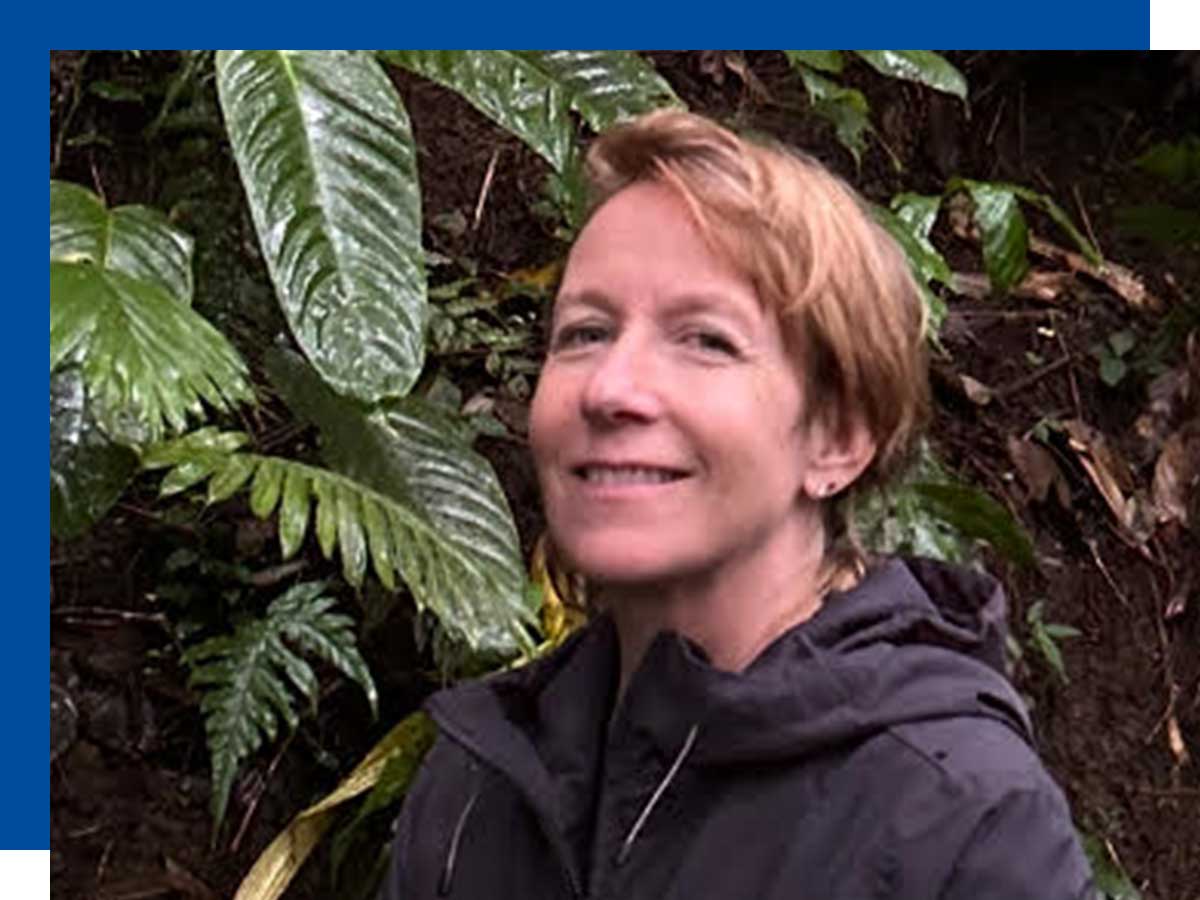
Bree Seeley
Image Arts ’96
Chef, Food Initiatives Specialist & Food Literacy Advocate
Bree Seeley is a chef, food initiatives specialist and food literacy advocate. A seasoned Red Seal chef, the highest level of culinary certification in Canada, and former food entrepreneur, her work spans kitchen operations, community programming and food security, with a focus on developing equitable food systems in the social sector. Working across both hospitality and food access spaces, she has seen firsthand how issues like food waste and food insecurity are not separate challenges, but deeply connected outcomes of how food systems are designed.
What parts of food systems do you think are most misunderstood or invisible?
Waste can keep me up at night and is misunderstood because it’s normalized. We’ve built a food system that overproduces, over-orders and over-portions, and then treats the discard as a logistics problem rather than a moral one. The elephant in the room is the industrial food complex itself. It depends on monocultures that have hollowed out soil health and biodiversity, the pesticide dependency that those same monocultures demand, and the ferocity and ecological cost of industrial livestock production. These are foundational failures baked into the cheapness we’ve come to expect from food. The other invisibility I’d name is labour. The people growing, processing, transporting and serving food are among the most economically precarious in the entire chain, and yet they’re the ones keeping it moving. You can’t claim to care about food equity if the people making the food can’t afford to feed themselves.
What does the tension between food insecurity and food waste reveal about how these systems are designed?
Food insecurity and food waste aren’t separate problems that happen to coexist, rather they’re expressions of the same system, and working across both spaces makes that impossible to ignore. There’s also a disconnect between production and access, where the assumption is often that food insecurity is a supply issue. It isn’t. Food banks and emergency programs are essential, but they exist downstream of systemic failures. Food is plentiful, but the barriers are economic, geographic and structural. I live in a region of abundant harvests happening within kilometres of households that are food insecure. That proximity and those gaps is where the system reveals itself most vividly. It tells me the design has to change at the procurement level, the policy level and the cultural level.
Where do you see the greatest opportunity to create more sustainable and equitable food systems?
The greatest opportunity I see is where people are already gathered, such as schools, hospitals and community centres, where food can aim to be a more regional expression and a shared practice rather than a commercial transaction. The project I’m most energized by right now is a good food intervention idea I’m proposing for my local K-12 school. It’s organized around three ideas that serve one another: a whole-food cafeteria run as a genuine social enterprise, co-created with students; a living kitchen where food literacy, cooking skills and curriculum connections happen side by side; and a pathway toward a rolling schedule of universal free meals for junior students. It puts students inside the system as participants and co-creators. That’s where real food literacy can flourish, with ripple effects that extend to families and communities.
What does a more sustainable food culture look like in everyday life?
More cooking at home. It’s our most important foodway. Rethinking waste at every level. A culture that wastes less food is one that values it more, and that shift touches everything. Relentless food literacy. Localized procurement, shorter supply chains and stronger regional economies. And more plant-forward diets. Industrial agriculture is putting immense pressure on the environment.

Matt Esper
Hospitality and Tourism Management ’15
Director of Sustainability & Social Impact, Direct Travel
Matt Esper is Director of Sustainability and Social Impact at Direct Travel, a global travel management company supporting clients across more than 100 countries. With over 15 years of experience in hospitality and tourism, his work focuses on embedding sustainability into how travel programs operate. Positioned between clients, suppliers and booking systems, he works to integrate environmental considerations into the decisions that shape travel, recognizing that impact is largely driven by choices made across a complex, interconnected system.
What does sustainability look like in practice inside a travel business?
Travel looks very different depending on where you sit. You have airlines, hotels and tour operators delivering the experience, and travel management companies like Direct Travel sitting in the middle, connecting clients, suppliers and technology. Most of the environmental impact in travel, particularly greenhouse gas emissions, is tied to choices made across flights, hotels and ground transportation, largely outside of our direct operations. Those choices are shaped by corporate policies, supplier options and the systems used to book and manage travel. My role is about integrating sustainability into how those decisions are made, embedding it into booking, reporting and supplier engagement so it fits how travel programs actually operate. Because if sustainability doesn’t show up in the moment decisions are made, it doesn’t change outcomes.
Where do you see the biggest opportunities to improve the way travel decisions are made?
The biggest opportunity is at the point where decisions actually happen. Today, most travel decisions are driven by cost, schedule and convenience, with sustainability often reviewed after the fact. The shift is bringing sustainability into the booking experience in a way that is visible, intuitive and frictionless. When travellers and organizations can see the impact of different options in real time, better decisions become easier. There’s also opportunity in how travel policies are designed and in supplier transparency, making differences between airlines, hotels and providers clearer to drive better choices.
Why is visibility into environmental impact so important in changing how decisions get made?
Because without it, sustainability stays abstract. For a long time, travel emissions were estimated at a high level and reviewed after the fact, which limits their usefulness. When you move toward more precise measurement, you start to see where impact is actually coming from, which routes are most carbon intensive, which suppliers are performing better and where there are opportunities to reduce impact. That level of visibility shifts sustainability from something you report on to something you manage.
What are some of the biggest challenges in getting so many moving parts aligned?
The biggest challenge is that everyone in the system is optimizing for something different. Suppliers focus on delivery, clients focus on cost and service, and internal teams balance competing priorities. Sustainability has to fit within all of that. There’s also inconsistency in how impact is measured and communicated, and many existing systems weren’t built with sustainability in mind. Beyond the technical side, alignment requires changing established behaviours, which takes time, trust and clear communication.
Do you want to be featured in an upcoming issue of Toronto Met Connect?
Share your journey — email us!