Faculty from The Creative School secure over $3.5 million in research funding
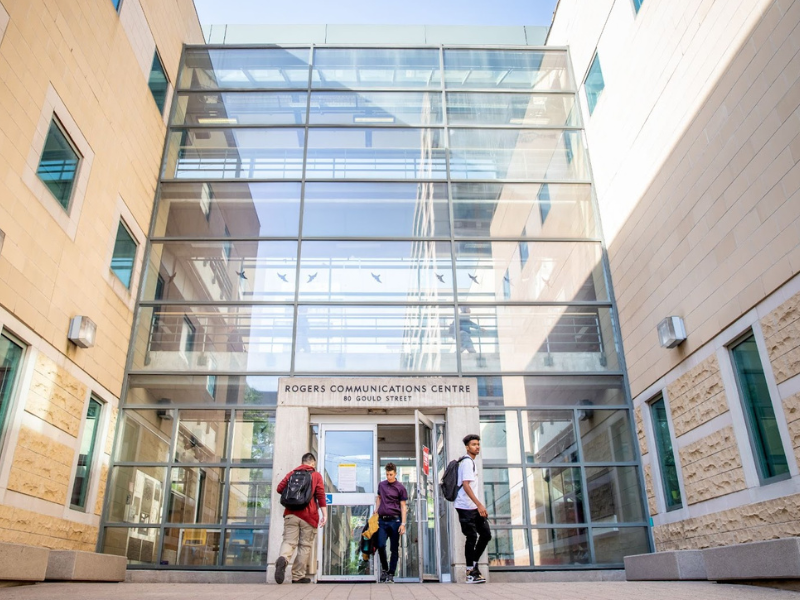
Over 10 faculty members from The Creative School have been awarded funding from the Social Sciences and Humanities Research Council of Canada (external link, opens in new window) (SSHRC) to lead innovative research projects across creative, cultural, and communication fields. Their work addresses significant societal topics—from climate misinformation to equity in healthcare design—and strengthens The Creative School’s leadership in scholarly, research, and creative activity.
SSHRC grants support academics in the fields of social sciences and humanities and provide funding for their respective research projects. The grants also enable researchers to hire university students to participate in their research projects.
2025 Insight Development Grants
Nicole Blanchett, Associate Professor, School of Journalism
Innovation, Ideals, and Practice: Examining journalistic roles in Canadian media
The principal investigator of the Canadian branch of the Journalistic Role Performance project, Nicole Blanchett, will lead a team that will perform a comprehensive analysis of Canadian news, compare the content being produced by journalists to their self-narrated ideals and, during the process, endeavour to develop artificial intelligence methods using available tools that ease the burden of such resource-intensive research. Findings from this study will allow industry professionals in Canada, in both English and French markets, to better understand how the journalism they create is serving/could better serve their audiences in a media landscape where innovation is key, but resources are scarce, and journalists and journalism are facing unprecedented issues of trust and news avoidance.
Jane Griffith, Associate Professor, School of Professional Communication
Narratives for Coexisting: Supervised Consumption Sites, Parenting, and the Settler Colonialism of Public Safety
In partnership with Dr. Gillian Kolla, a leading drug policy and community researcher in the Faculty of Medicine at Memorial University, this project examines the invocation of narratives about child safety, parenting, and the family unit in the justification of closing essential health services provided by supervised consumption sites in Ontario during our current drug toxicity crisis. This project seeks to analyze the role of gentrification, NIMBYism, colonialism, and history in narratives about neighbourhood safety and children.
Louis Laberge-Côté, Associate Professor, School of Performance
Enhancing Kinesthetic Empathy in Dance Audiences through XR Technology
This proposed practice-as-research project aims to investigate how XR technology and dance practice might work symbiotically to foster optimal conditions for kinesthetic empathy, thereby deepening audiences’ engagement and experience. The project will conduct residencies in multiple Toronto and London (UK) institutions over 2026/27. It will employ an integrated set of data collection strategies to explore the complex dynamics between physical presence and immersive technologies within the immediacy of live performance. This data collection will be part of an effort to address a gap in the literature and practice within the Canadian live performance sector, aiming to make dance more accessible and transformative within Canadian society. In addition to both scholarly and professional publications and presentations, the research will result in creating and presenting a choreographic work using XR at Chrysalis.
Richard W. Lachman, Professor, RTA School of Media
Adaptive Narratives: AI-Driven Systems for Multi-Perspective Documentary Storytelling
This research project explores how artificial intelligence can transform documentary storytelling. Building on Lachman and collaborator David Oppenheim's earlier interactive work about the global diamond trade (in partnership with documentary production company Kensington Communications (external link) ), the project will develop AI-driven tools that co-create personalized, multi-perspective viewing experiences while preserving the filmmakers’ creative vision, voice and intent. The research combines the primary and defining role of human creators with machine learning and narrative design, prototyping new ways for audiences to engage deeply with complex stories.
Shari Okeke, Assistant Professor, School of Journalism
On the record, off the mark: the effects journalists have on Black interviewees
This research project is a direct extension of the work I have done as a journalist in the industry for more than 25 years, with extensive experience covering underrepresented and misrepresented communities. Often industry colleagues have asked me “how do you get [underrepresented] people to talk to you?” I can describe my own practice however the only way to find out why interviewees choose to speak – or not speak – to journalists is by asking them. Exploring the experiences of Black interviewees in journalism interviews is critical to addressing the systemic barriers to adequate and accurate coverage of Black communities and the issues that affect them.
Layal Shuman, Assistant Professor, School of Graphic Communications Management
Re-imagining Universities for Justice-Oriented and Sustainable Futures
In this study, we ask questions such as, what are the public's aspirations for universities that serve the public? And, how can anti-oppression educational philosophies guide universities toward more justice-oriented and sustainable futures? Using creative methods such as critical speculative design, we invite different community members in Toronto and Montreal to imagine alternative models of universities as critical spaces for advancing the public good, intellectual and personal freedom, and fostering meaningful and collective ways of existing together and with nature. Our goals are to challenge the current state of the corporatization of universities, to mobilize the public to advocate for universities that serve the public good, and to build bridges between decision-makers and the public to influence education policies.
Charlie Wall-Andrews, Assistant Professor, School of Creative Industries
Equity and Entrepreneurship in Canada's Music Ecosystem
This two-year study examines how inequities impact entrepreneurial pathways for artists in the Canadian music industry through a gender and diversity lens.
2024 Insight Grants
Sibo Chen, Associate Professor, School of Professional Communication
Decoding Wildfires: A Study on Media Coverage, Conspiracy Theories, and Public Engagement
This three-year research project investigates how the significant increase of wildfires across North America in recent years has shifted public narratives about the climate emergency. As found in previous research, media mentions of the connections between extreme weather events and climate change tend to be tokenistic, decontextualized, and normalizing. Notably absent from these mentions are more provocative narratives emphasizing what economic and political solutions are needed for addressing the climate crisis.
David Gauntlett, Professor, School of Creative Industries
Practices of Knowing: Research-Creation Beyond Academia
This three-year study explores potential connections between research-creation academics and artists and creators in the wider world, focusing on four areas of discovery where research-creation methodologies could offer practical insights to the wider artistic, creative and innovation communities: (1) Discovery from making; (2) Decolonization of knowledge; (3) Impact of AI; and (4) Documented processes of innovation and imagination.
2024 SSHRC Partnership Grant
Natalie Alvarez, Associate Dean, Scholarly, Research, and Creative Activities
The Arts Impact Partnership (TAIP): Understanding the Arts’ Civic Impact in the Data-Driven Economy
Anchored at The Creative School of Toronto Metropolitan University, with principal national partner Mass Culture, The Arts Impact Partnership (TAIP): Understanding the Arts’ Civic Impact in the Data-Driven Economy brings together 68 researchers, 25 Canadian partner organizations, two nation-wide consortia across Canada and the US, and seven international satellite partners to achieve four specific objectives to: 1) establish a pan-Canadian and transnational collaborative network to reconstruct current “metrics” and discoverability for more inclusive recognition of the arts’ civic impacts; 2) co-create impact frameworks that allow artists, artistic researchers, and organizations to better analyze and communicate the transformative action of the arts in four key challenge areas: Equity, Migration and Integration, Environmental Resilience, and Health & Well-Being; 3) create FAIR metadata, upholding the CARE principles of Indigenous data sovereignty, that make the civic impacts of the arts publicly discoverable and shareable; and 4) foster relationships between researchers, students, artists, arts organizations, and post-secondary institutions as they create a sustainable data ecosystem.
New Frontiers in Research Fund: 2024 Exploration Competition
Jessica Mudry, Professor and Chair, School of Professional Communication
MEDS (Modular Emergency Department Seating)
Facing a critical "hallway healthcare" crisis where thousands of Canadian emergency patients wait for days in overcrowded corridors on uncomfortable chairs or wheelchairs, a new initiative offers an innovative solution. The MEDS (Modular Emergency Department Seating) project, being developed in partnership with Brampton Civic Hospital, reimagines these stressful hallways as dignified, clinical spaces. Instead of building new hospitals—a slow and costly process—MEDS transforms existing hallways using wall-mounted, modular seating pods inspired by adaptable designs like Lego and airplane seating. These clinic-ready hallway pods prioritize patient comfort with ergonomic supports (like gaming chairs) and privacy features while integrating essential medical equipment like IV poles and vital sign monitors.
To see a complete list of all SSHRC grant announcements, visit the SSHRC website (external link) .

The Creative School at Toronto Metropolitan University
The Creative School is a dynamic faculty that is making a difference in new, unexplored ways. Made up of Canada’s top professional schools and transdisciplinary hubs in media, communication, design and cultural industries, The Creative School offers students an unparalleled global experience in the heart of downtown Toronto.