The Creative School showcases 29 projects at CREATECH International Conference
The CREATECH ‘23 (external link) international conference at the University of Westminster, co-hosted by Jonathon Anderson, Director of the Design + Technology LAB at The Creative School, and Dr. David Scott, Director of the Fabrication Lab at the University of Westminster, brought together researchers, students, practitioners and industry professionals to showcase innovative projects and share ideas on the creative possibilities unlocked by emerging technologies. 29 of the projects showcased at P3 Ambika, a prominent London art gallery, were by faculty, staff, and students from programs across The Creative School — including Fashion, Interior Design, Photography, Film, New Media, and Graphic Communications Management.
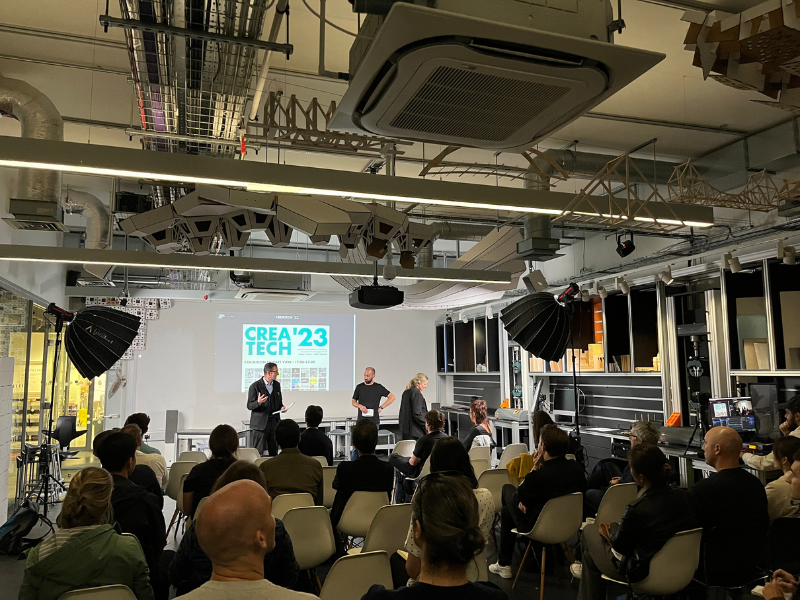
CREATECH '23 at the Fabrication Lab and Ambika P3, University of Westminster
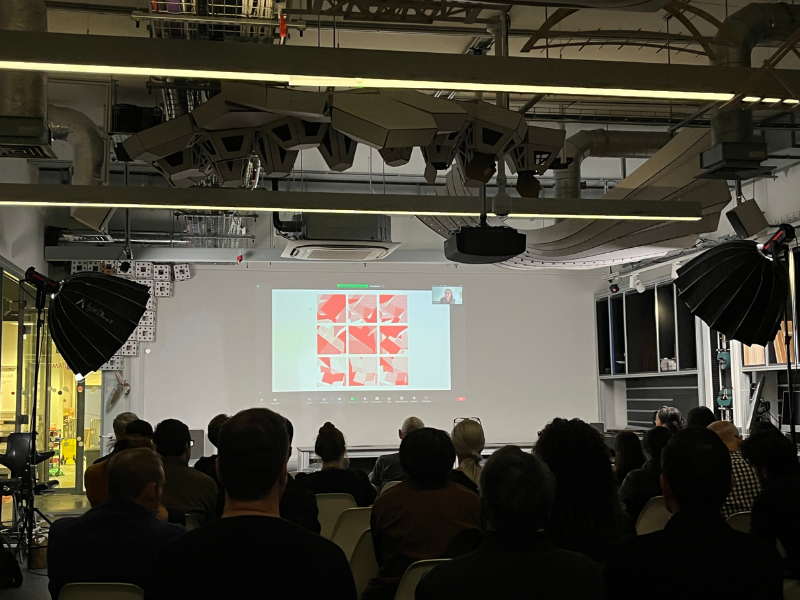
“CREATECH ‘23 was a convergence of different perspectives offered by many disciplines that typically do not share a common platform,” said Anderson. “We found this to be a crucial aspect of the conference and one that will continue to be at the forefront of how we grow this conference.”
The projects showcased ranged from full-scale installations to posters. In addition to the projects, two TMU faculty members presented at the conference: Professor Viola Ago from Interior Design and Professor Vincent Hui from Architectural Science (FEAS).
Fashion Professor Tanya White featured her project “Veiling Veronicas” which brings together various technologies including digital knitting and laser cutting. Drawing inspiration from the sainted or angelic, the knitted structures and silhouettes seek to embody the transcendent and otherworldly essence of religious iconography. The use of fluorescent yellow engages with the uncanny, strange, and ephemeral quality of sainted bodies and the frailty of iconic fashion figures.
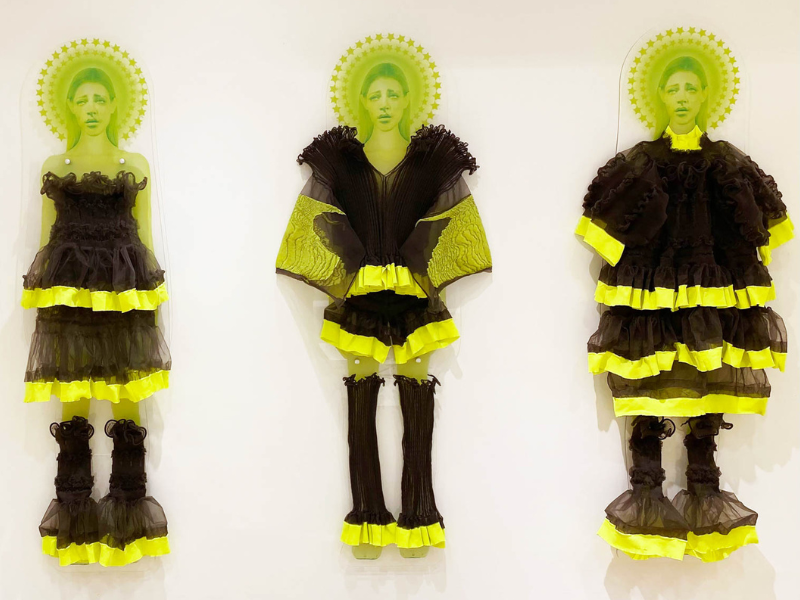
“Veiling Veronicas” by Tanya White
Photo Credit: Christie Xu
Beyond traditional education
Alongside public exhibitions, the conference also held interactive workshops offering hands-on experience of the technologies and practices being discussed.
“The significance of CREATECH ‘23 revolves around teaching and research through making and provides a platform for open dialogue and exchange,” remarked Anderson. “This approach transcends the boundaries of traditional education and empowers individuals to explore, learn, and innovate in a tangible and experiential manner.”
Active participation in hands-on activities promotes a more profound comprehension of intricate ideas as it involves various senses. It serves as a bridge between theoretical knowledge and practical application.
Interior Design alum Max Zandboer poster explored the gaps between digital representation and the physical world in “Scanned N14 Chair.” He accomplished this by scanning and 3D printing a Thonet N14 chair, revealing how the chair's original design language was inevitably transformed in the process.
“Through making, students, and faculty, not only gain knowledge but also develop a profound connection with the subject matter, fosters creativity, and interdisciplinary collaboration,” added Anderson.
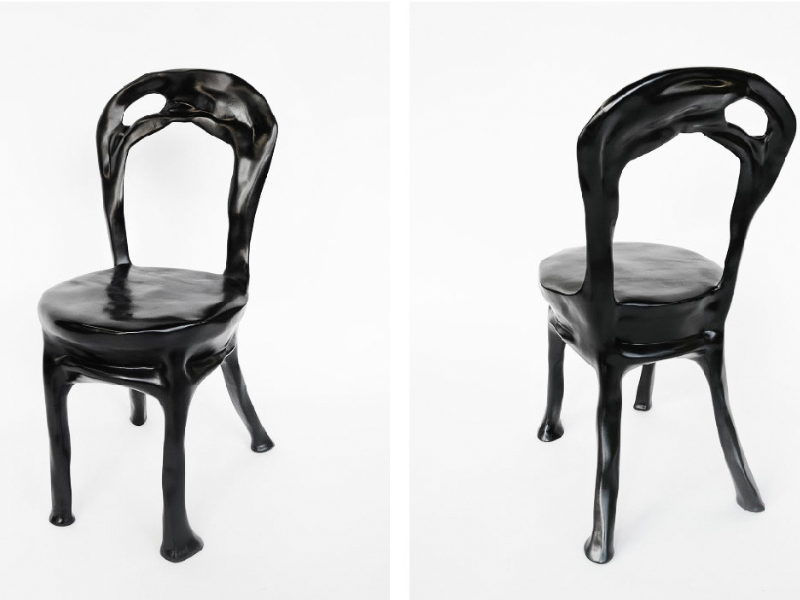
“Scanned N14 Chair” by Max Zandboer
Photo Credit: Tram Anh Nguyen
Building bridges: ongoing collaborations
The CREATECH ‘23 conference was part of the 10-year anniversary celebration of the Fabrication Lab at the University of Westminster. There has been an ongoing partnership between The Creative School, TMU and the University of Westminster that encompasses student exchanges, faculty residencies, research and exhibitions and more.
The Design + Technology LAB at The Creative School and the Fabrication Lab share the common goal of fostering innovation and creativity by putting the technology into the hands of the creatives. This challenges conventional norms that might not be attainable through theoretical exploration alone.
“David and I have worked together since 2019 and always talked about parallels between our two labs,” shared Anderson. “Our conversations have revolved around how to ensure making facilities are at the core of teaching and research. Further, The Creative School has started a strategic partnership with the University of Westminster, thus, it was clear to David and I that we should partner in an effort to create a platform for conversations around creative technology, research and through making.”
The Creative School actively seeks dynamic collaborations, through its transdisciplinary hubs like the Design + Technology LAB. These initiatives aim to cultivate an environment that encourages bold experimentation, taking risks, and pushing boundaries in pursuit of a more innovative and creative future.

The Creative School at Toronto Metropolitan University
The Creative School is a dynamic faculty that is making a difference in new, unexplored ways. Made up of Canada’s top professional schools and transdisciplinary hubs in media, communication, design and cultural industries, The Creative School offers students an unparalleled global experience in the heart of downtown Toronto.