Two Master of Digital Media students break new ground in collaborative game design
Two students from the Master of Digital Media (MDM) program joined forces for their final research project to transform the experience of gaming through collaborative game design. Zain Alqudah and Marcus Vine have delved into the quickly evolving discipline of video game design, shedding light on key insights and challenges. For their Major Research Project (MRP), the goal was to revolutionize game design and help future developers create better player experiences.
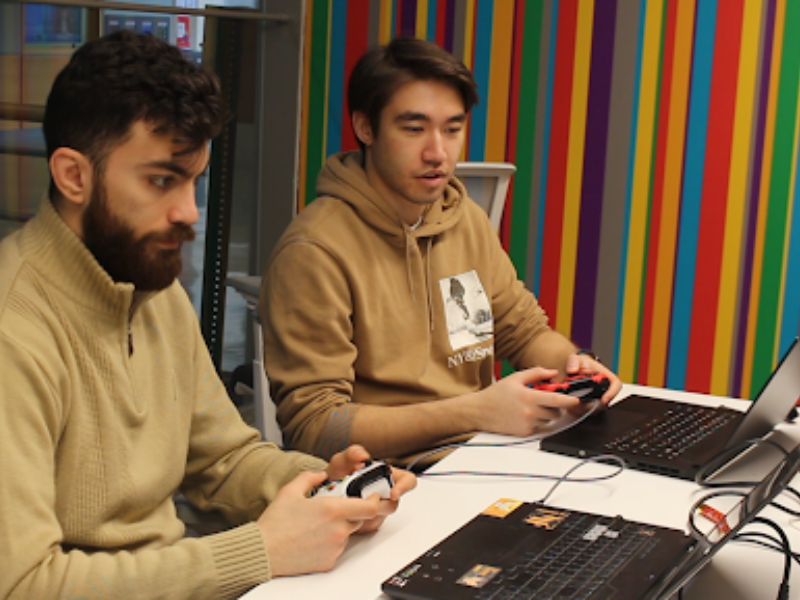
Zain Alqudah and Marcus Vine working on developing their game SpaceBuds.
Unpacking the world of collaborative game design
Coming from a background in game design and sharing a passion for it, both Alqudah and Vine chose the Master of Digital Media program to gain access to transdisciplinary learning opportunities and create a unique practice-based thesis project that pushes the boundaries of their understanding of game design.
“I first became interested in this topic when we were discussing games like It Takes Two and Overcooked, and how they can help people learn complicated mechanics while also working together in high-pressure situations,” said Alqudah.
During the initial phases of the gaming industry, it was common for the game development teams to consist of just one or a few individuals. However, with the rise in popularity and complexity of video games, responsibilities are now shared among a wider group of team members specializing in different areas of game development and publishing. While the benefits of collaboration are clear, it also brings along its set of challenges. For Alqudah and Vine, it quickly became evident that there aren’t enough resources in collaborative game design that offer clear work processes and help developers to successfully collaborate with one another.
“Upon further research, we found there was a pretty big gap in knowledge on the subject and were inspired to research it ourselves,” explained Vine.
Taking it upon themselves, the duo started delving into the intricacies of the discipline through research, prototyping and trial and error.
“Successful gaming collaboration relies on intrinsic motivators,” Alqudah said. “Game designers use these to encourage players, creating mechanics for shared objectives. This creates a seamless experience for all involved parties.”
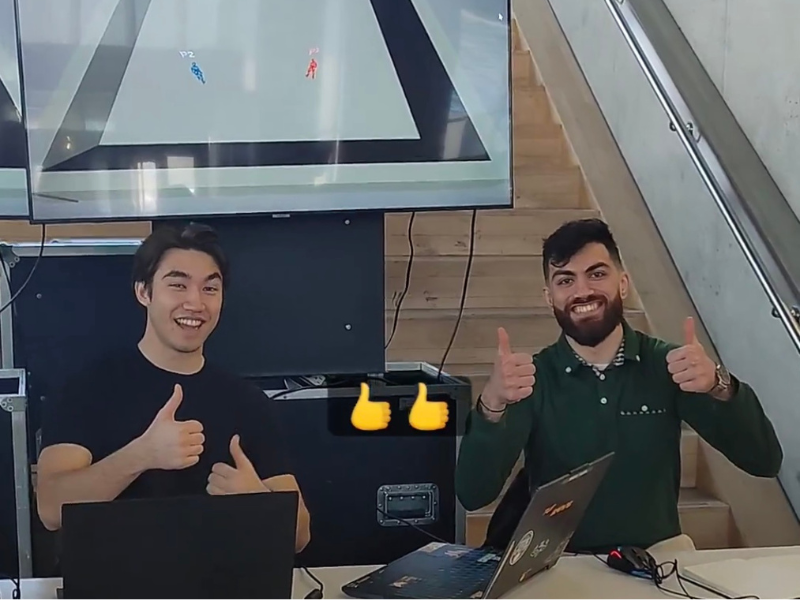
Zain Alqudah and Marcus Vine testing out their game for the first time at the Studnet Learning Centre, TMU.
Unlocking design potential through peer collaboration
Similar to gaming, Alqudah and Vine found that utilizing each other’s points of strength and expertise made for synchronized and efficient teamwork.
“I appreciated that Marcus had a keen eye for detail and was always looking for ways to refine and improve our work,” Alqudah remarked. “Together, we were able to push each other's creative and intellectual limits.”
Collaboration was a major component of their MRP, Vine explained. Both students had individual skill sets and strengths and were able to use their respective areas of expertise to achieve their research objectives.
“He and I filled each other's gaps in knowledge incredibly well, which set us up for success from the start,” Vine said. “I couldn’t imagine doing a project on collaboration without having someone to actively work through design theories with!”
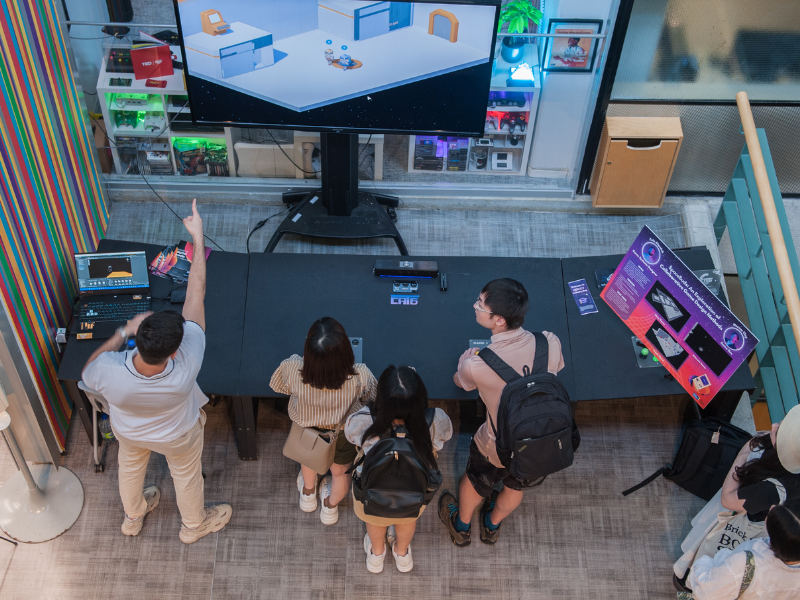
Crowds gather to try out SpaceBuds at the MDM 11.0 showcase.
Leveraging The Creative School’s supportive ecosystem for innovation
Alqudah and Vine maximized the use of available resources at The Creative School, including facilities such as The Catalyst, an interdisciplinary research and innovation space at The Creative School, and the knowledge shared by MDM peers and faculty.
“The MDM program gave us the flexibility and tools we needed to work freely on our project,” Vine emphasized. “They understood that every student's needs differed and supported us from the start by allowing us to shape our own research. This helped us stay motivated throughout the year.”
Alqudah echoed this sentiment, adding that the diversity of the cohort was inspiring and contributed to his personal and professional growth.
“It was extremely valuable to share the classroom with colleagues from all different educational and cultural backgrounds,” he said. “Talking to everyone really broadened my horizons and allowed me to grow as a person and a professional.”
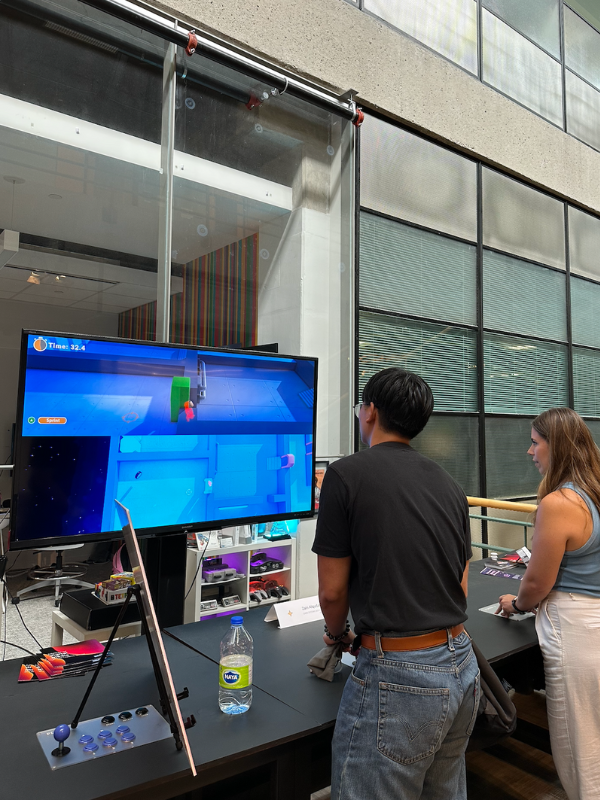
The CAT6 table where the duo showcased their finished game to the public.
During the MDM end-of-year showcase, Alqudah and Vine presented their project on the CAT6 table (Community Arcade Table), which was co-created by RTA Professor Dr. Kris Alexander and students from New Media and Computer Science. The showcase provided an opportunity for peers, students, and industry professionals to experience the game firsthand.
“It was truly a joy for us to share our progress with others. Witnessing players enjoy our games and working together to create meaningful experiences was a highlight of our journey,” Alqudah remarked.
The duo expressed their heartfelt gratitude for the opportunity to collaborate, emphasizing their appreciation for the unwavering support of Dr. Kristopher Alexander, Assistant Professor in Video Games and Director of the Red Bull Gaming hub and Dr. Mirza-Babei, Associate Professor in Game Development at Ontario Tech University.
“This experience will shape our lives for years to come,” Vine said.
To see their collaborative game in action, visit this link (external link) .

The Creative School at Toronto Metropolitan University
The Creative School is a dynamic faculty that is making a difference in new, unexplored ways. Made up of Canada’s top professional schools and transdisciplinary hubs in media, communication, design and cultural industries, The Creative School offers students an unparalleled global experience in the heart of downtown Toronto.