Barbie Doll re-envisioned by former Fashion student’s Inuit Heritage
Pop culture icon Barbie has embraced a variety of styles and outfits over the decades, from the original doll’s striped swimsuit in 1959 to the gingham two-piece she adorns in the brand-new Barbie film. In 2005, the renowned fashion doll debuted its first ever Inuit-art-inspired gown. The Canadian exclusive “Inuit Legend” Barbie was designed by former Fashion student Christy Marcus, inspired by her Inuit heritage.
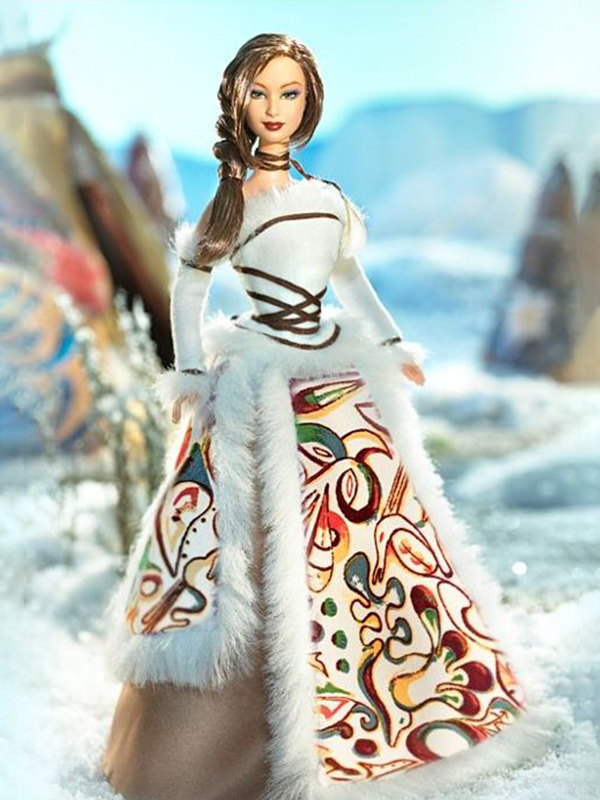
“Inuit Legend” Barbie designed by Christy Marcus
Living in a Barbie World the Indigenous Way
For Barbie’s 45th anniversary, parent company Mattel collaborated with the School of Fashion at The Creative School on a Barbie design contest; “What will Barbie wear in 2005?” Students were challenged to create an original design for the iconic doll; the first-place winner’s doll was produced and sold in Canadian stores, while the top three contenders received financial awards on behalf of Mattel Canada.
Along with her illustration, Marcus submitted a paragraph explaining the inspiration behind her design. Drawing from her own background and researching Inuit culture, Marcus innovated “The Kenojuak Gown,” an off-white suede-like gown covered in Inuit art, illustrated birds, and faux-fur trimming. A feathered choker and long brown hair styled in a braided ponytail complete the doll’s look. Her design captured the essence of Barbie’s glamorous style while also representing Inuit heritage and culture.
“Creating, producing, and marketing an Inuit Barbie has a great potential for positively impacting how mainstream society as well as Indigenous and Inuit peoples perceive themselves. For non-racialized audiences, this inclusion of an Indigenous character in such a recognized popular culture cannon can contribute to educating and sensitizing them about other people and their experiences,” said Fashion Professor Henry Navarro. “For racialized and Indigenous audiences in particular, the existence of an Inuit Barbie can positively contribute to their sense of social belonging and self-acceptance. Being so visibly embraced by mainstream culture can be interpreted as tangible proof of their existence and their social worth.”
Sold exclusively in Canada, the “Inuit Legend” Barbie hit store shelves in 2005, where the original illustration and a profile of Christy Marcus were featured on the box. Currently, the beautiful doll is a rare collectible and hard to come by.
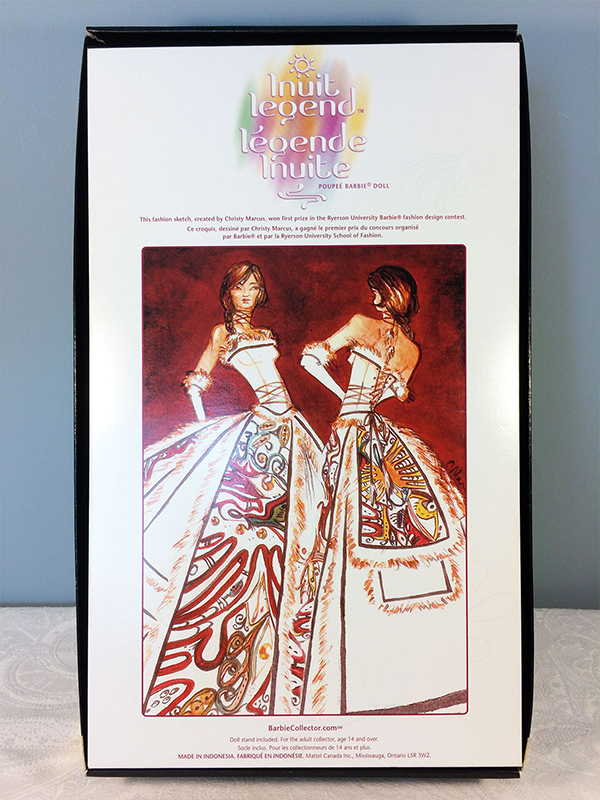
Christy Marcus' sketch of "Inuit Legend" Barbie
Come on Barbie, let's go party!
Fast forward to 2023, the long-awaited Barbie movie hit theatres across the globe on July 21 and sparked a social media frenzy. Since then, theatres have been filled with pink-clad audiences dressed to impress in their Barbie best. Mattel’s iconic Barbie doll is played by Margot Robbie alongside Canadian actor Ryan Gosling as ‘Ken.’
Though the film is a comedy, it touches on themes of sexism, patriarchy, and feminism. Aside from Robbie and Gosling’s “stereotypical Barbie and Ken,” the characters include diverse Barbies and Kens of various races, ethnicities, and abilities. Like Marcus’s “Inuit Legend” Barbie, the movie uses the power of representation to showcase Barbies of multiple appearances in career professions ranging from doctors to construction workers.
However, the film falls short of Indigenous characters and representation. Mattel has been criticized for Barbie’s lack of diverse representation over the years, and the diverse cast and feminist topics of the Barbie movie have proven there’s more to the fashionista than what meets the eye. The Barbie collection has expanded to represent many races, cultures, ethnicities, and abilities. With additions such as Marcus’s “Inuit Legend” doll, Barbie continues to inspire and represent generations to come.
“Having not only Indigenous representation in mainstream media and popular culture but authentic depictions of Indigenous people and culture is critical. Some of the ramifications of colonialism are the persistent cultural violence against colonized people in the form of invisibilization as well as inaccurate or offensive representations,” Navarro said. “These colonial-biased representations influence not only how non-racialized groups and individuals see Indigenous and other racialized peoples, but also how they (racialized peoples) see themselves.”
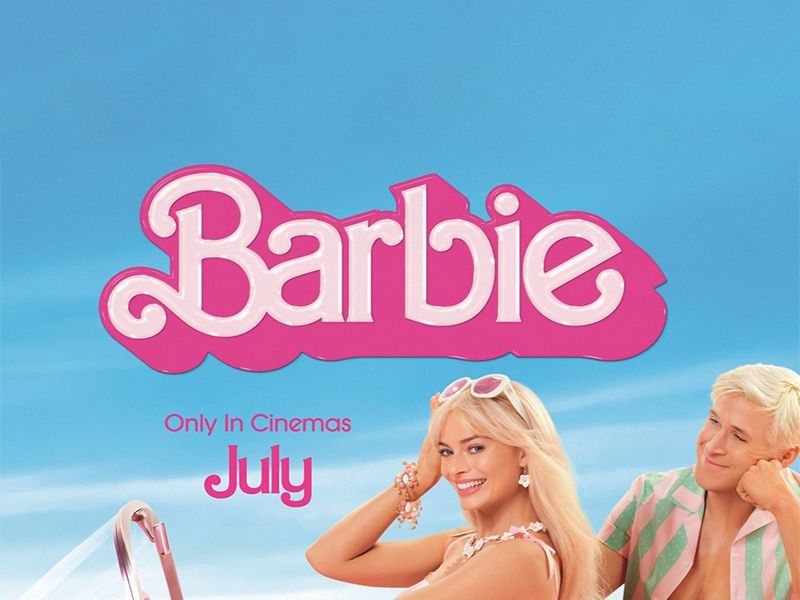
The long-awaited Barbie movie hit theatres across the globe on July 21

The Creative School at Toronto Metropolitan University
The Creative School is a dynamic faculty that is making a difference in new, unexplored ways. Made up of Canada’s top professional schools and transdisciplinary hubs in media, communication, design and cultural industries, The Creative School offers students an unparalleled global experience in the heart of downtown Toronto.