MFA in Scriptwriting & Story Design student nominated for Sony Future Filmmaker Award
MFA Scriptwriting and Story Design student and alumni of the Image Arts Film program Joy Webster (external link, opens in new window) ’s latest film Menace is one of 30 films nominated for the Sony Future Filmmaker Awards (external link, opens in new window) . The Sony Future Filmmaker Awards aim to elevate original voices from around the globe with a fresh perspective on storytelling. Menace was selected out of more than 4,000 films from 3,000 filmmakers in 140 countries, and is one of five films competing in the filmmaker Fiction category.
Menace is a short film about twenty-something Addy, who is out to get revenge against her ex-boyfriend, a well-known TV host. When she breaks into his apartment one night and things don’t go as planned, Addy begins to spiral into a self-destructive pattern of behaviour that threatens her new relationship, the one thing she sought to protect.
The team behind Menace also includes many alumni of The Creative School, including actors Michaela Kurimsky, a graduate of the IMA Film program and Dan Mousseau, a graduate of the Performance Acting program. Film studies alumnus Nikolay Michaylov and Matthew Kinahan were involved with cinematography and original music production, and José Rosales, a Master in Media Production alumni, served as Executive Producer on the film.

Headshot of Joy Webster, a student in The Creative School and nominee for the short film Menace. Courtesy of Joy Webster.
The inspiration behind Menace
Joy Webster was inspired to write the story of Menace after reading real-life experiences of women whose lives were impacted by revenge pornography. Revenge pornography, or non-consensual pornography, describes the act of taking or receiving an intimate image or video from someone and then distributing it without their consent. The short film documents a victim of revenge porn who has not healed from the trauma that resulted from the violation caused by the perpetrator and thus decides to take matters into her own hands.
As recalled by Webster, “in my work, I strive to write female characters who are strong, yet flawed. All too often we see female characters in film and media who are one-dimensional, drawn from traditional female archetypes such as “The Virgin” or “The Lover.” In Menace, Addy is not the heroine.”
Webster describes that perhaps Addy is the villain of her own story, as she struggles to navigate deep and conflicting emotions that don’t always lead her to make the right choices.
“It’s my hope as the filmmaker, that despite these flaws, the audience is able to empathize with her and understand that some of her choices are rooted in trauma that she has yet to recover from,” she explains.
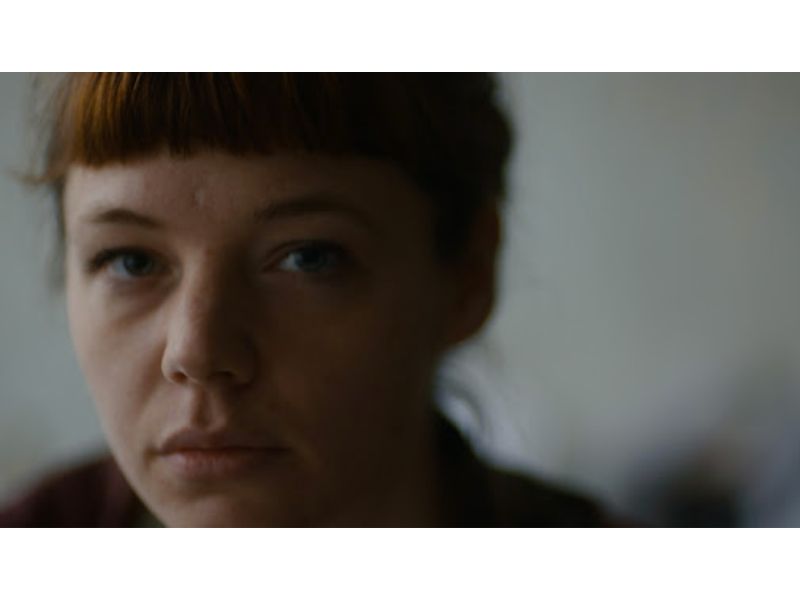
An image of a woman looking into the camera lens. Courtesy of Joy Webster.
How academia helped pave the pathway to short films
IMA Film at The Creative School is a program that teaches students the technical and storytelling skills needed to produce short and long films and gains experience in all areas of filmmaking including writing, directing, producing, cinematography, sound, art direction and editing, combined with film history and critical theory. Webster says the Film program helped her find her personal voice as an artist and creator.
“My thesis film, In The Weeds, was the first time I felt I was able to convey something to an audience that was both deeply personal, and at the same time touched upon an experience relatable to many,” said Webster. “I received so much support from the faculty at IMA while creating that film, which went on to screen at a few film festivals and subsequently launched my career as a filmmaker.”
Joy Webster has returned to The Creative School to pursue her Master's in Scriptwriting and Story Design, an interdisciplinary program that nurtures emerging, storytelling voices in the art of script-based creative writing for stage, screen and cutting-edge media platforms. After completing the Film program, Webster explains that her skillset has expanded out of short film format and into the world of long-form feature filmmaking.
“I’m so grateful to have spent the past couple of years in the program surrounded by an intimate group of incredibly talented writers while we grow together as creatives and people trying to navigate this daunting industry,” she said. “I’ve also had the opportunity to work with film producer and IMA professor Karen Harnisch as my thesis supervisor, who has encouraged me to pursue this story as my first feature film. My hope is to continue to tell stories that portray complex characters and dysfunctional relationships while inspiring empathy in the audience.”
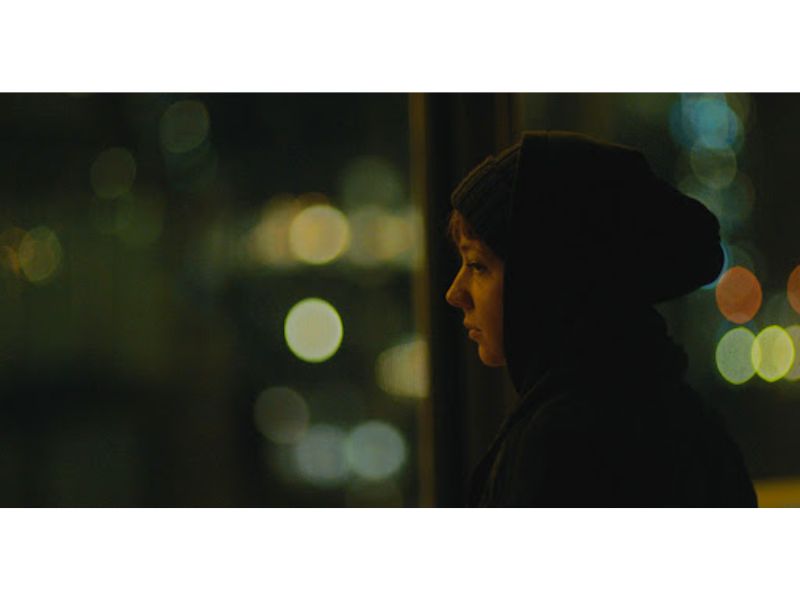
A side profile image of a woman looking into the distance. Courtesy of Joy Webster.
Learn more about the short film Menace (external link, opens in new window) on the Variety website.

The Creative School at Toronto Metropolitan University
The Creative School is a dynamic faculty that is making a difference in new, unexplored ways. Made up of Canada’s top professional schools and transdisciplinary hubs in media, communication, design and cultural industries, The Creative School offers students an unparalleled global experience in the heart of downtown Toronto.