Fashion students collaborate with Urban Farm to create ‘A Garden of Colour’
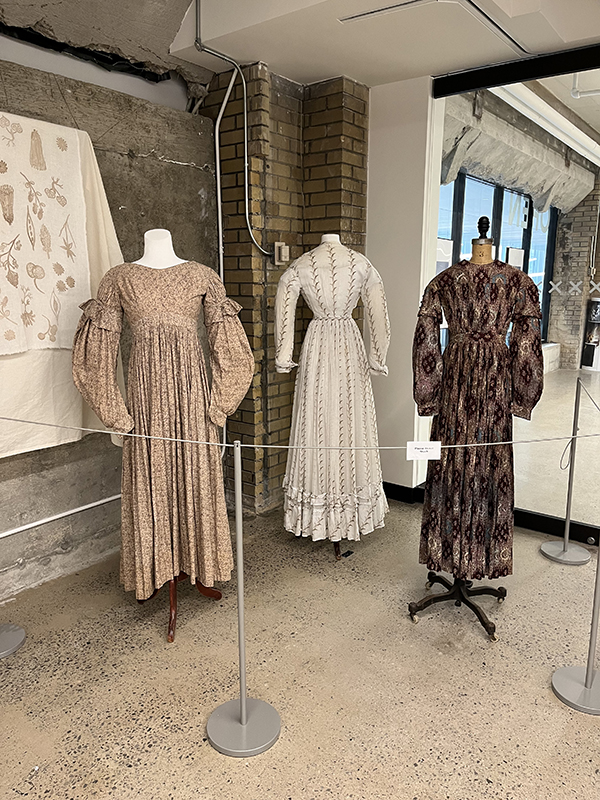
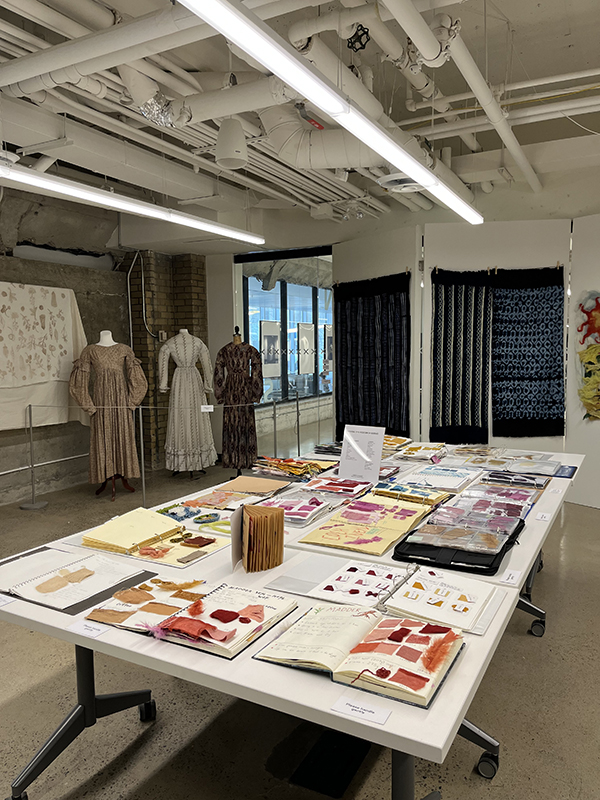
Fashion students put their fabrics and designs on display at the Assembly Gallery with an exhibit called A Garden of Colour: Natural Dyes Past and Present. The exhibit showcased student work as well as three historic garments printed with natural dyes that date back to the mid-1800s, contributed by the Fashion Research Collection (FRC).
As part of a Special Topics course in the Fashion program, students learned the methodology and context of natural dyeing through independent investigation and hands-on studio-based learning. It also pilots a unique collaboration with the on-campus rooftop Urban Farm, which supported student research through the development of a small-scale experiential dye garden.
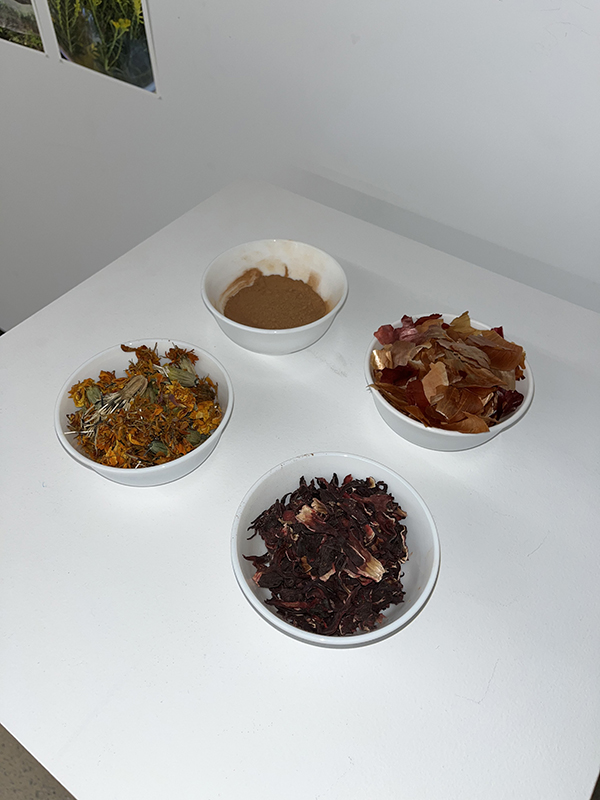
As part of the collaboration with the Urban Farm, coordinated by Fashion Chair Joseph Medaglia, the first class took place in the rooftop garden so the students could learn about the plants and then harvest them and prepare them to use as dyes. Solar dyes were then set up on the rooftop, allowing the fabrics to dye using passive solar energy over the course of a week. All the waste materials (plants and water) were then used in the composting process as valuable resources to help nourish the next generation of plants.
Bridging theory and practice
The Natural Dye Workshop allows fashion students to dive deep into traditional techniques of dyeing fabrics and with the Urban Farm, they were able to harvest different types of plants and eventually use their dyes in their designs. Rachel MacHenry, the instructor for the course, says the process of using natural dyes dates back far in history and is still an important skill for fashion students to learn today.
“Today, there is a revival of interest in natural dyes globally as we look for more sustainable methods to produce textiles and clothing,” she said. “Natural dyeing is part art and part science - the best part of teaching the class has been seeing students take on skills in both of these areas, and carry out independent research and investigations as they develop their own creativity and abilities.”
Taking classroom learning to the next level
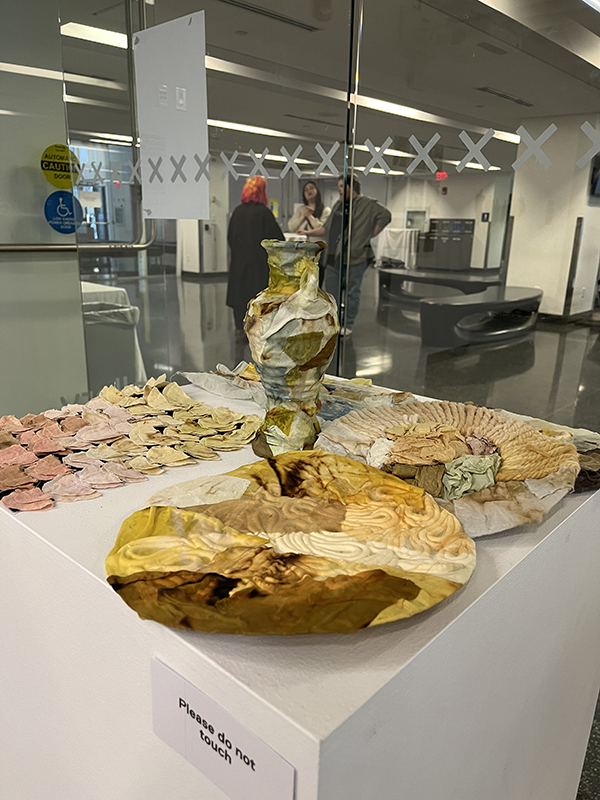
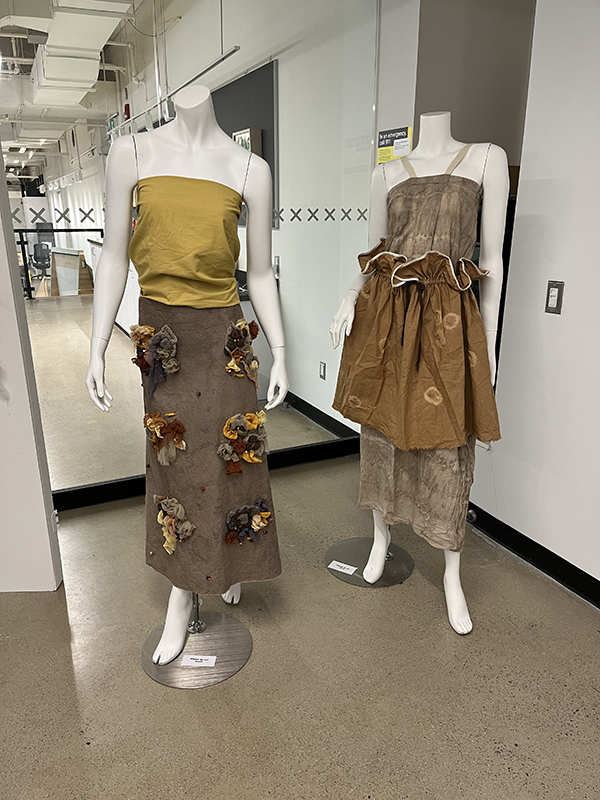
Fashion student Isabel Powers describes her experience in the dye class as one full of hands-on learning and material discovery. For A Garden of Colour, she showcased four separate projects at the exhibit, including a naturally dyed skirt, a dye sample book, a walnut exploration sample book and a colour palette and texture exploration book. Her skirt textile, titled Flora and Fungi, draws inspiration from plant life and was created using natural dyes.
“For the Flora and Fungi piece, my inspiration primarily spurred from my own experiences growing up in a rural area in the middle of a cedar forest. The textures of the plant life growing around me have always been a key backdrop for my imagination as a child,” she explained. “Through my texture exploration in the colour palette and texture book I discovered a material way of transplanting and communicating these textures from my childhood.”
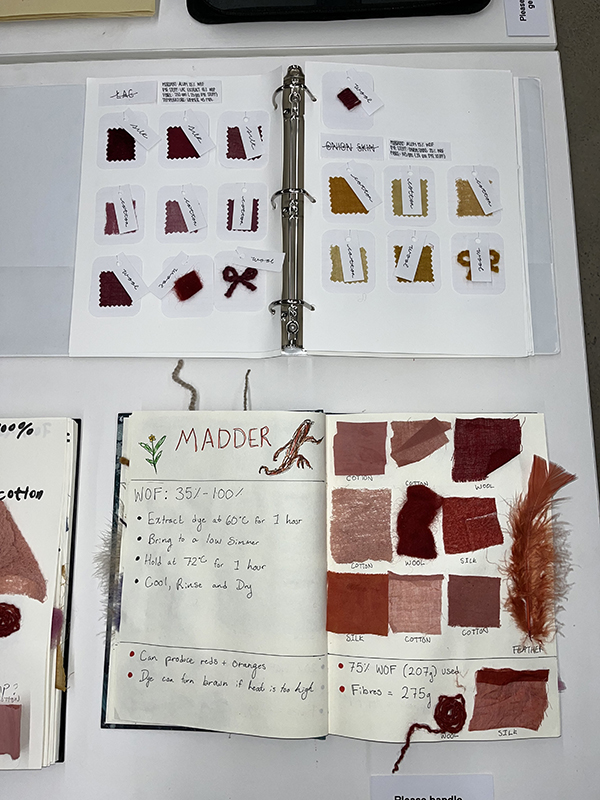
Fashion student Ashwini Thayaparan produced a natural dye sample book, which included a small sample of fabric from every dye experiment she produced in class throughout the semester. She says prior to enrolling the class, she wasn’t familiar with the process but with the assistance of MacHenry, she was able to make her ideas come to life.
“Foraged and Found was a small booklet I created showing the effects of solar dying using different scraps found in the kitchen could have on a protein fiber (wool) versus a cellulose fiber (cotton),” Thayaparan said. “I also did a Natural Colour Palette Design Investigation where I focused on lac and turmeric as my two main colours and created swatches to show different dye techniques and how time and amount of dye stuff can affect the final colour.”
Fashion history from the 1800s
To demonstrate the ways in which natural dyes have been used throughout history, the Fashion Research Collection (FRC) contributed garments to put on display in The Garden of Colour exhibit. The FRC holds approximately 3500 garments, accessories and other fashion-related objects dating from 1815 to present day, explains Eve Townsend, Collection Coordinatorat the FRC.
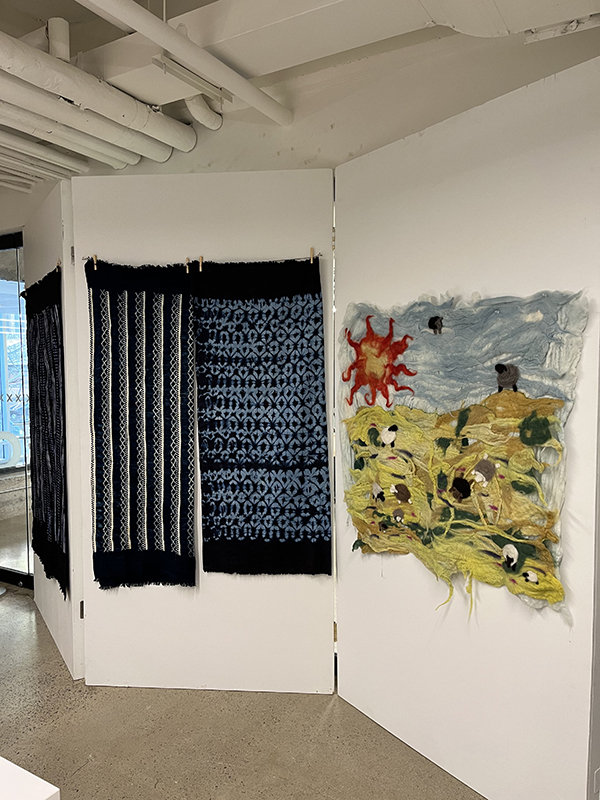
“A Garden of Colour features some of our earliest dress artifacts, two of which predate the invention of synthetic dyes as well as some late twentieth-century natural indigo textiles from Conakry, Guinea in West Africa,” Townsend said. “By visually pushing the past up against the present, we hope to communicate knowledge about sustainable methods of producing colour that can positively impact our present and future. I hope visitors recognize the unique collaboration between the School of Fashion’s Natural Dye Workshop, the Urban Farm at TMU and the Fashion Research Collection." 
The Creative School at Toronto Metropolitan University
The Creative School is a dynamic faculty that is making a difference in new, unexplored ways. Made up of Canada’s top professional schools and transdisciplinary hubs in media, communication, design and cultural industries, The Creative School offers students an unparalleled global experience in the heart of downtown Toronto.