Egyptian craftship guides sustainability in fashion at The Creative School Cairo
Fashion students at The Creative School Cairo (external link, opens in new window) are challenging the fashion industry to be more sustainably inventive. In collaboration with the Egyptian Clothing Bank (external link, opens in new window) and clothing brand, ALMAH, (external link, opens in new window) fashion, media production and sport media students in Cairo participated in an upcycling workshop. The workshop provided the opportunity for students to explore upcycling and sustainability through an Egyptian heritage and craftship lens.
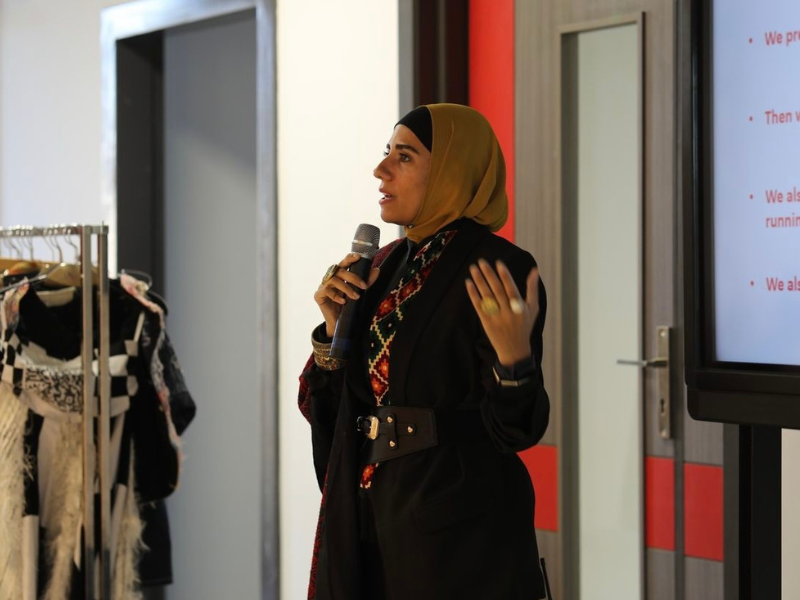
Egyptian Clothing bank and ALMAH talking over the upcycling process within the organization.
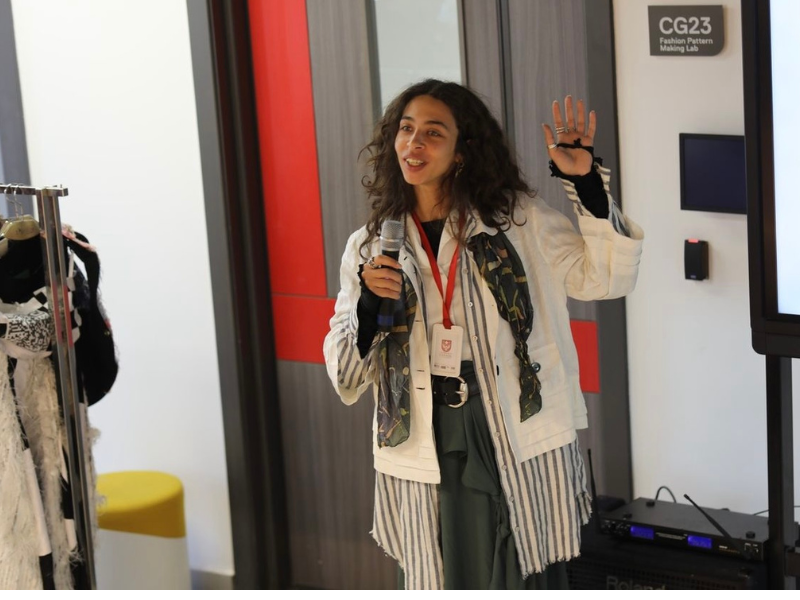
Egyptian Clothing bank and ALMAH discussing the history of quilting in Egypt.
The history of quilting dates back to ancient Egypt, through the middle ages and up until the present day, and repurposing or upcycling clothes has long been embedded in Egyptian households and heritage. The workshop highlighted its symbolism, functionality and how it feeds into traditional identities. Exploring traditional techniques through an experimental framework is a great tool to celebrate cultural heritage.
“It's not just about upcycling and sustainability,” says Robert Ott, The Creative School Cairo Vice Dean. “We should identify that there's lots of great work happening here and instilling confidence to reclaim what might have been marginalized by Western influences.”
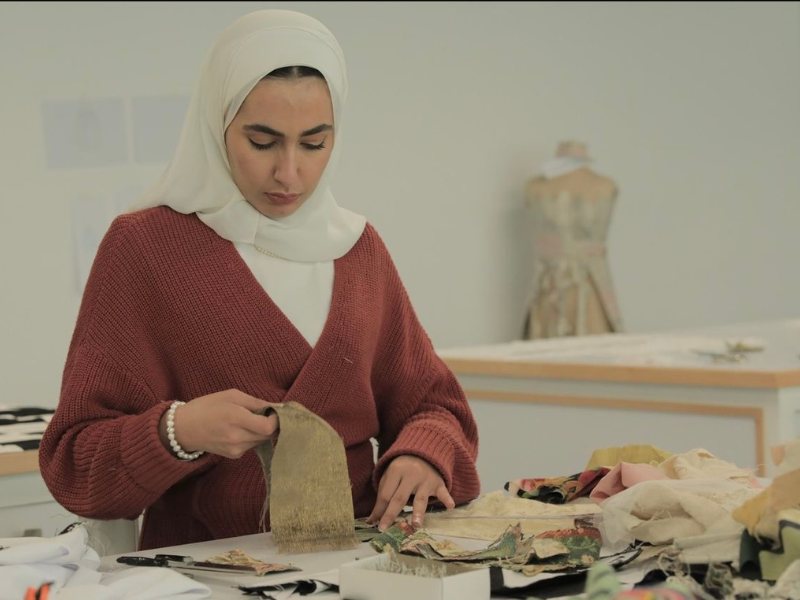
Fashion students selected their fabrics of choice for the workshop.
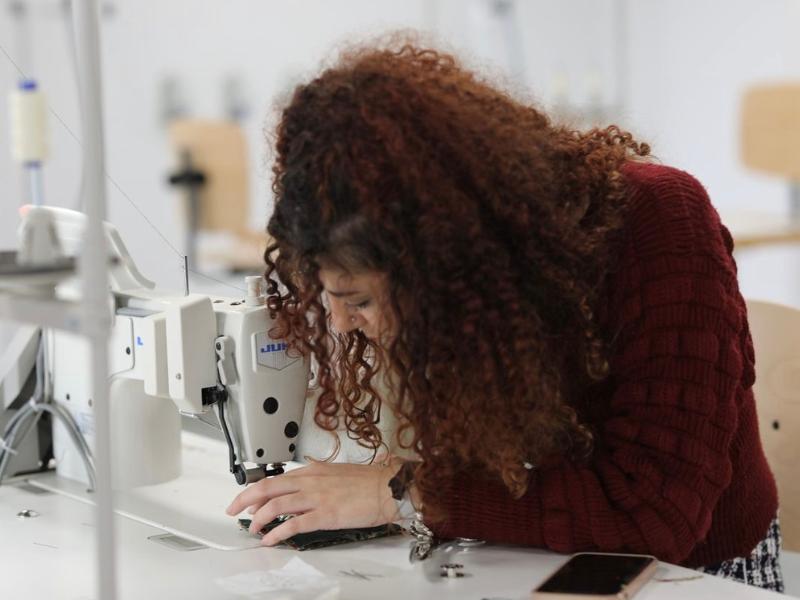
Student sew together an item using the newly learned patchwork techniques.
Fashion Teaching Assistant Mariam Hamed says, “Upcycling textiles is in our culture. We are now trying to rethink this by including a full design process.”
While some may think of upcycling as a new notion, Fashion Lecturer Heidi Rashad explains that sustainability has been part of Egyptian practices for years.
“In all these different areas in Egypt, we are already very sustainable in every way we do things, and we have techniques that are going international now,” she says.
Bridging values with visions
Fashion at The Creative School Cairo centres inclusive, decolonized and sustainable approaches to fashion through their teaching, research and industry partnerships.
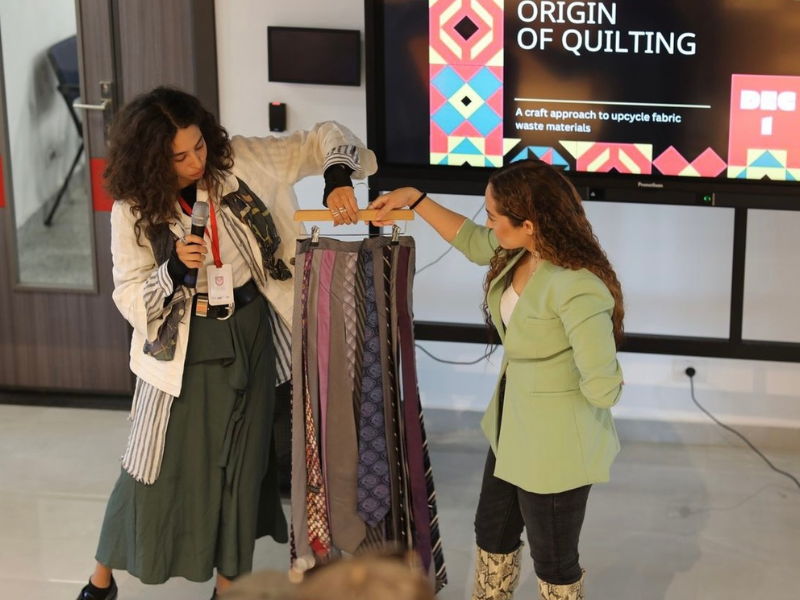
Egyptian Clothing Bank and ALMAH (left), accompanied by Fashion Lecturer (right), showing examples of garments used in upcycling.
“Everything that the Egyptian Clothing Bank and ALMAH are doing is very in line with our values and vision,” says Rashad. “Students were very excited to learn all these traditional techniques for non-traditional application and design. They created something tangible at the end of the workshop, understanding what they are capable of doing even in a short period of time,”
Establishing industry partnerships with institutions like the Egyptian Clothing Bank enables the exchange of knowledge and bridging the gaps between research, academia, and industry in Egypt and the Middle East and North Africa (MENA) region.
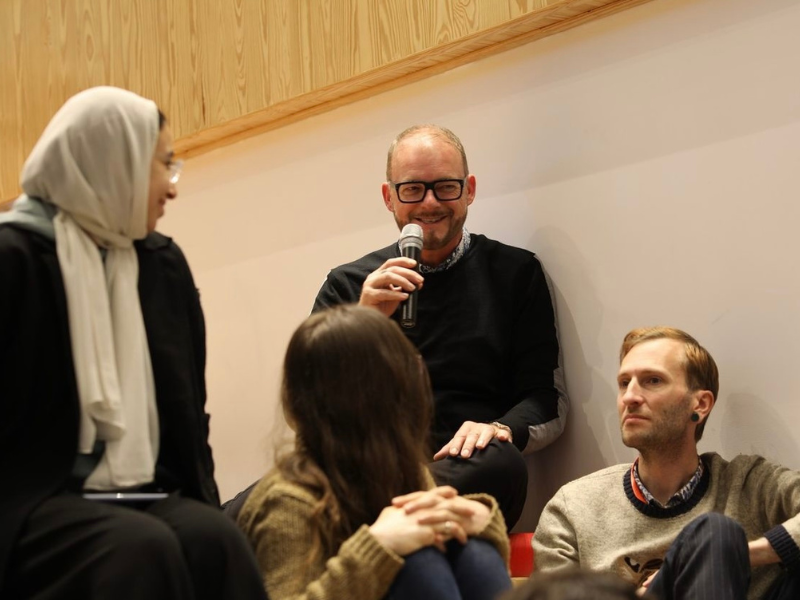
Robert Ott, Vice Dean of The Creative School Cairo, engaging in the sustainability and upcycling discussion.
“We're just beginning to delve into what we can learn from each other. I actually asked the question of whether other NGOs are coming to the Egyptian Clothing Bank to learn from them. And if not, what are their plans to go on a global educational campaign on how they're doing it here?” says Ott. “It is so incredibly impressive how every little detail is being thought about and acted on. They have a very, very extensive plan, and all those similar organizations that are striving to do the same could learn a lot from what a fantastic contribution Egypt could make to the global sustainability and upcycling conversation.”