Creative industries professor teaches online course entirely through virtual reality
Creative industries professor Louis-Etienne Dubois took a different approach to teaching the virtual (PDF file) CRI800 (opens in new window) course this summer semester. With the increase of remote learning and Zoom fatigue affecting students and professors alike, Dubois opted to try a new method of instruction for the course. On the production side, Daniel Hawes, a Campus VR (external link, opens in new window) producer, built the virtual classroom that students accessed throughout the semester.
CRI800, an upper-year management course for students in the Creative Industries program, is designed as an opportunity to engage with a range of issues that entry-level managers or leaders in creative organizations are meant to face. To ensure discussion and participation, the course has small sections with fewer students.
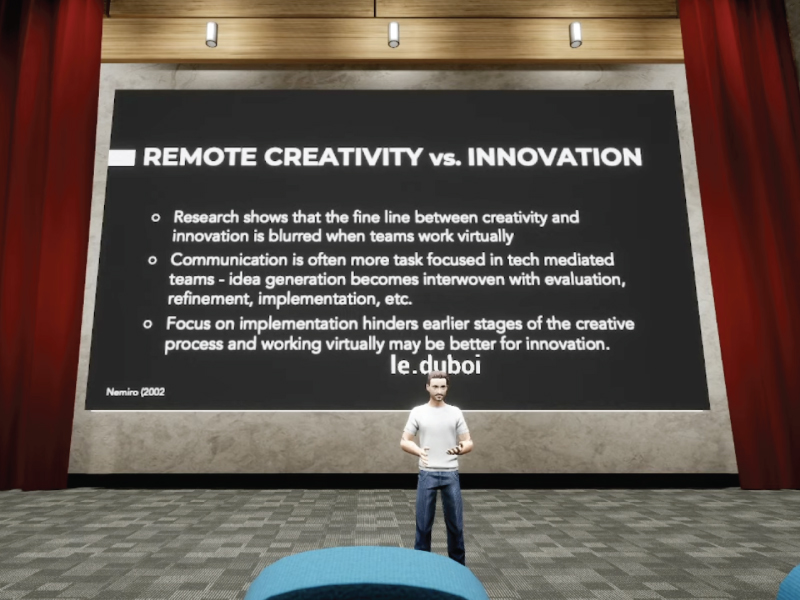
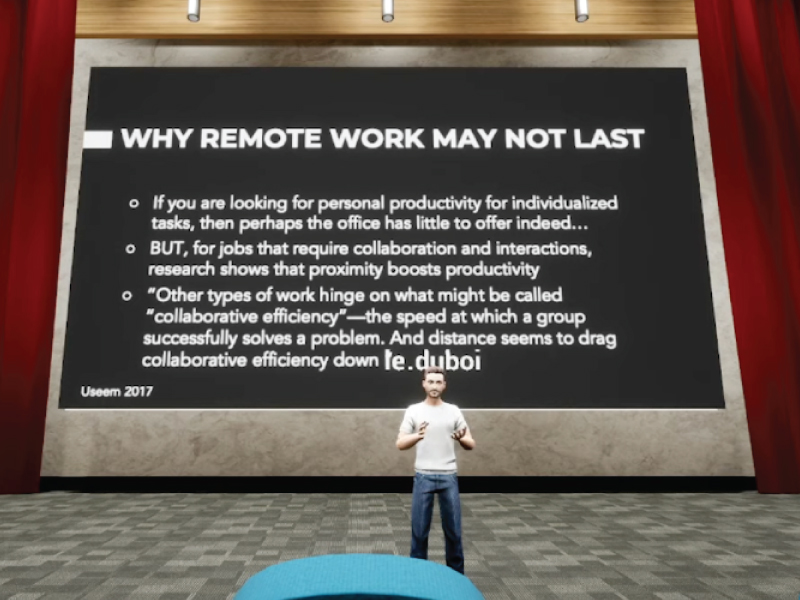
The Virtual Reality (VR) element of the course was the use of Oculus headsets that were made available to all students in the class. Each student also made their own customized avatars. Classes were held twice a week for six weeks, and each class was made available through the Oculus headset, a desktop app or Youtube.
Technological application in the classroom
Teaching remotely for over two years greatly had an effect on classroom engagement, participation and attendance. Inspired by the latest developments in VR and the various tech giants’ massive investments in the Metaverse, Dubois decided to experiment with technology’s affordances and applicability in higher education.
“I invited my students to approach this pedagogical experiment with an open mind,” Dubois said. “The goal here was for the students to get a better sense of what the technology could or couldn't do, as well as of its potential to impact collaboration in the workplace after they graduate.”
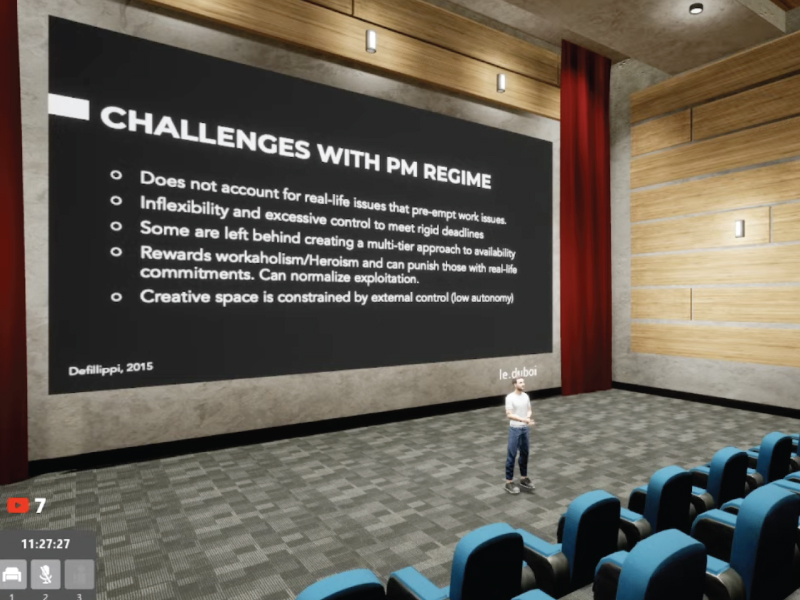
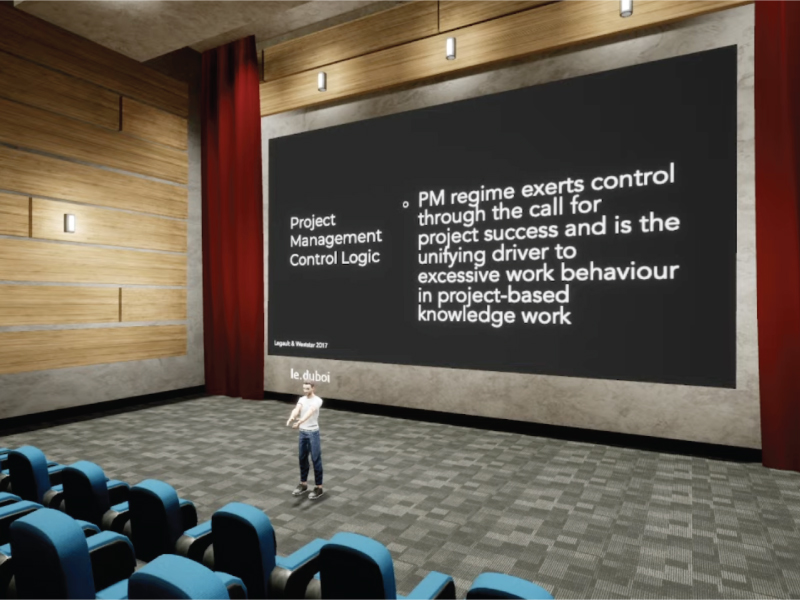
Danielle Dueck, a Creative Industries student, described using VR for the course as a “novel immersive experience.” Similar to Dubois, she was excited to try something new after taking classes solely on Zoom for multiple semesters.
“From the comfort of our homes across the world/country, we were transported to aesthetically pleasing virtual classrooms and lecture halls that allowed students to interact with course material in a new and exciting way,” she said. “We were told each week what virtual room to enter, and professor Louis-Etienne was there waiting to teach us as if it were a real-life classroom. Overall, it was an unconventional but stimulating way to learn.”
Despite the VR classroom being a new innovation in teaching and learning, Dubois explained that using the headsets added a whole new level of interaction that can’t be replicated on Zoom.
“The whole thing felt oddly familiar and very intuitive, and certainly much more lively than Zoom,” he said. “Subtle things like seeing a bunch of students moving on their chairs, looking left and right, or raising their hands really gave me the impression that I was in an actual classroom with them.”
Adjustments to VR
With every technological implementation comes a period of adjustment, especially when working with students who have different needs and comfort levels. Considering this, Dubois created a few different ways for students to access the course lectures.
“We knew that not everyone would be comfortable with the headset, and that's why students could also access the course via a desktop version, or simply follow along on YouTube,” he said. “Everybody's learning curve was also a little different, and some students did take a few weeks to finally come around, but many spoke afterwards about how wearing a VR headset created a sort of distraction-free bubble around them that made for a more focused and productive experience.”
Looking back on the course, Dueck says this course opened her mind up to the possibilities of VR, as it created a virtual atmosphere that was fully immersive and gave the illusion of being in a real classroom after years of learning at home.
“I would definitely take another VR-based class in the future, especially now that I am comfortable with the technology,” she said. “Learning how to use VR technology for CRI800 lectures made me curious about what other professional and educational collaborative group meetings this technology might facilitate well in the future.”
The use of VR, although a new concept, is an innovative and engaging method that adds a twist to the traditional remote learning experience. 
The Creative School at Toronto Metropolitan University
The Creative School is a dynamic faculty that is making a difference in new, unexplored ways. Made up of Canada’s top professional schools and transdisciplinary hubs in media, communication, design and cultural industries, The Creative School offers students an unparalleled global experience in the heart of downtown Toronto.