Performance alum Jennifer Fawcett publishes debut novel Beneath the Stairs
Performance alum, playwright and author Jennifer Fawcett (external link, opens in new window) recently debuted her first novel, a horror story titled Beneath the Stairs. The story follows protagonist Clare’s journey through a haunted house, where she discovers old time secrets and uncovers hidden history. From past to present, Fawcett discusses her journey writing the novel, shares insight into her transition from writing plays to novels, and offers advice to students looking to write their own stories one day.
I often write with multiple timelines because I love exploring how the past impacts the present
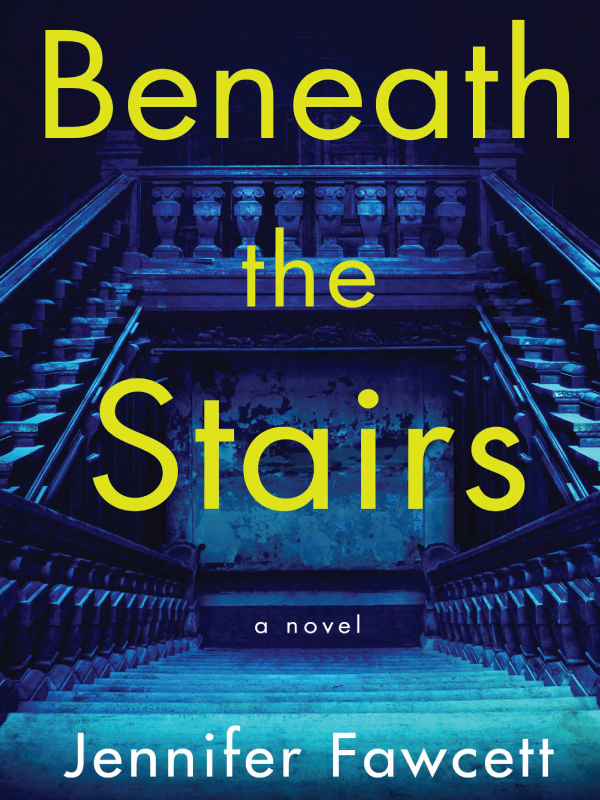
Horry story Beneath the Stairs is author Jennifer Fawcett's debut novel
Beneath the Stairs has a multifaceted storyline with characters that come from complex backgrounds. What inspired you to tell this story?
When I started writing this book, the image that came to me was of four girls standing in front of a haunted house trying to decide if they could be brave enough to go in. I knew that mix of childish bravado and the dread of being made fun of would get them over that threshold because the summer I was thirteen, I had done it too. My friends and I had found out about an abandoned house in the shape of an octagon. It was supposedly haunted, so of course, we dared each other to go in. I’ve never forgotten the way I felt when I stood in that house, like I was standing in a long-lost story. I often write with multiple timelines because I love exploring how the past impacts the present. I see it like rings on a tree; each story contains the ones that came before.
The themes of childhood trauma and hidden secrets are prevalent in Beneath the Stairs. What drew you to focus on them in your book?
I tend to write about characters who have a longing, an absence that is driving them. In writing this, I’ve thought a lot about what it is to be haunted, and I believe it is connected to that absence. Clare, my protagonist, calls it her hollow place.
The setting of an eerie house adds a lot of texture and depth to the story. Why did you choose to set the story there?
The writing started with the house. All characters need a crucible, which will put immense pressure on them and cause them to respond and change. That crucible can take many forms, but in this story, it is the house. First, there is a literal threshold to cross, and then for Abby and Clare, there is an unknown space they have to descend into and get themselves out of. That, and the house was the best part to write! It’s like being the one who’s telling the creepy story around the campfire, making everyone else jump.

Playwright and published author Jennifer Fawcett is also an alum of the School of Performance
What character do you feel most connected to, and why?
I feel the most connected to my protagonist, Clare. I’m not sure how I could write her—to spend this much time with her-—if I didn’t feel that way. She’s not autobiographical, but I recognize parts of myself in her. Maybe that’s typical in a debut. You start close to yourself, and as you keep writing, you can move farther out.
How did your background in performance inform your process of writing a novel?
When you’re an actor, you inhabit a very particular point of view within a story, and you are mining the script for clues to understand what the character wants because that is what drives their choices. One of the biggest problems I’ve struggled with is having an inactive protagonist: a central character to whom things just happen. That can work for a while, but eventually, they have to do more than just react; they have to make choices and find agency. We need them to take risks.
Your work has been produced in theaters across the country. How do you transition from writing plays to full-length novels?
The most significant change for me has been learning how to write interiority. I would write a whole scene and realize that I’d just written pages and pages of dialogue! That’s how I think from years of writing plays. Subtext runs under the dialogue of a play, but in a novel, I get to make choices about point of view, and then some of that subtext becomes interiority. A novel is also much larger than a play in terms of words, pages, and scenes.
What advice do you have for students at The Creative School who are interested in pursuing a writing career?
Expose yourself to stories and ideas as widely as you can. Sometimes the writing unlocks for me because of a piece of visual art or a news story or another book that is stylistically very different from what I’m working on. I also find myself re-reading certain books to deconstruct what the writer is doing. That’s hard to get on the first pass, so if you love the writing, no matter what form it is in, it is worth reading again. Writing a novel is a process of accumulation. I believe in writing for information; a lot of what I write may not make it directly onto the page, but it will inform something that does. Sometimes the best path is the indirect one.
Beneath the Stairs is now available for purchase through Amazon (external link, opens in new window) or Indigo (external link, opens in new window) .
The Creative School at Ryerson University
The Creative School is a dynamic faculty that is making a difference in new, unexplored ways. Made up of Canada’s top professional schools and transdisciplinary hubs in media, communication, design and cultural industries, The Creative School offers students an unparalleled global experience in the heart of downtown Toronto.