How I got here: TMU alumni share how they built careers with purpose
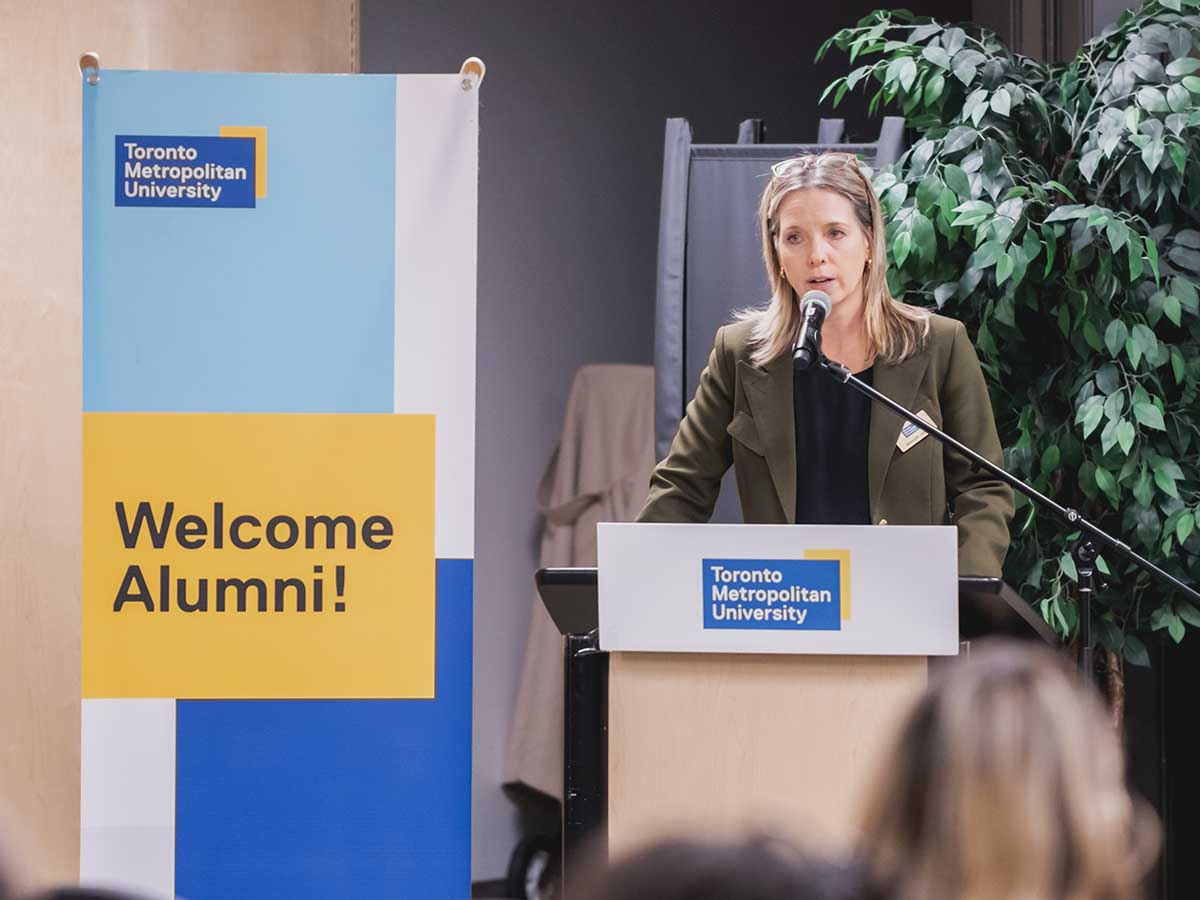
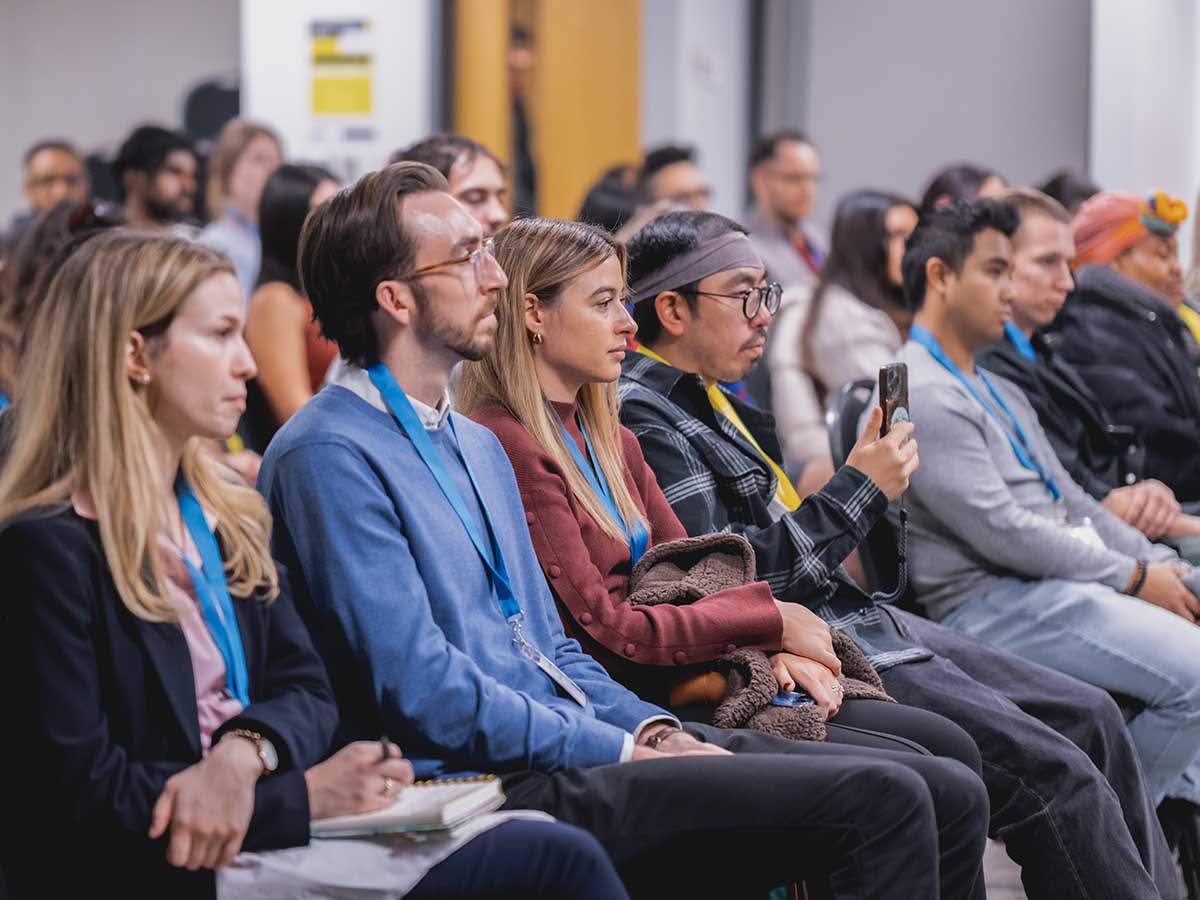
On November 19, alumni professionals from across industries came together at Toronto Metropolitan University (TMU) for “How I Got Here: Advancing Your Career with Purpose”. The conversation offered TMU students and alumni practical advice on navigating career transitions, building networks and creating opportunities with intention.
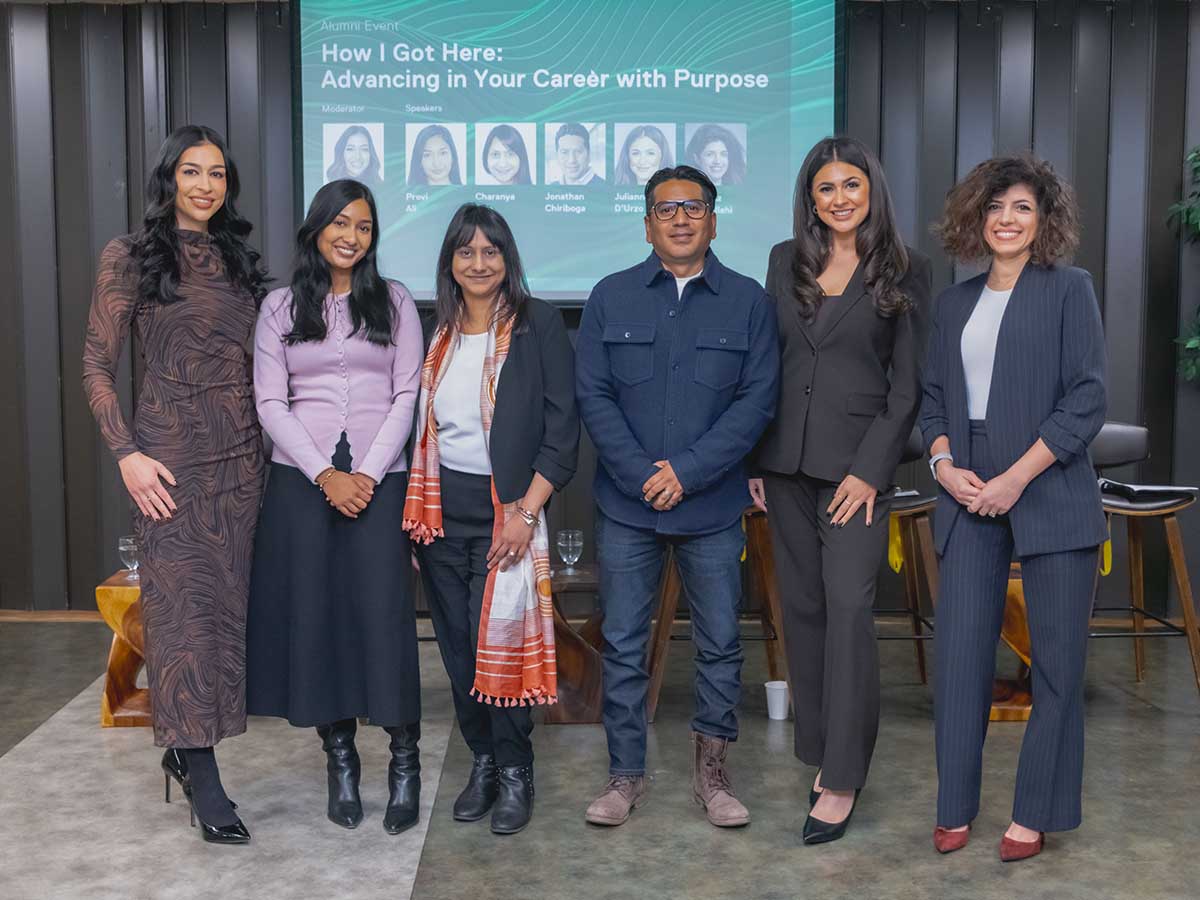
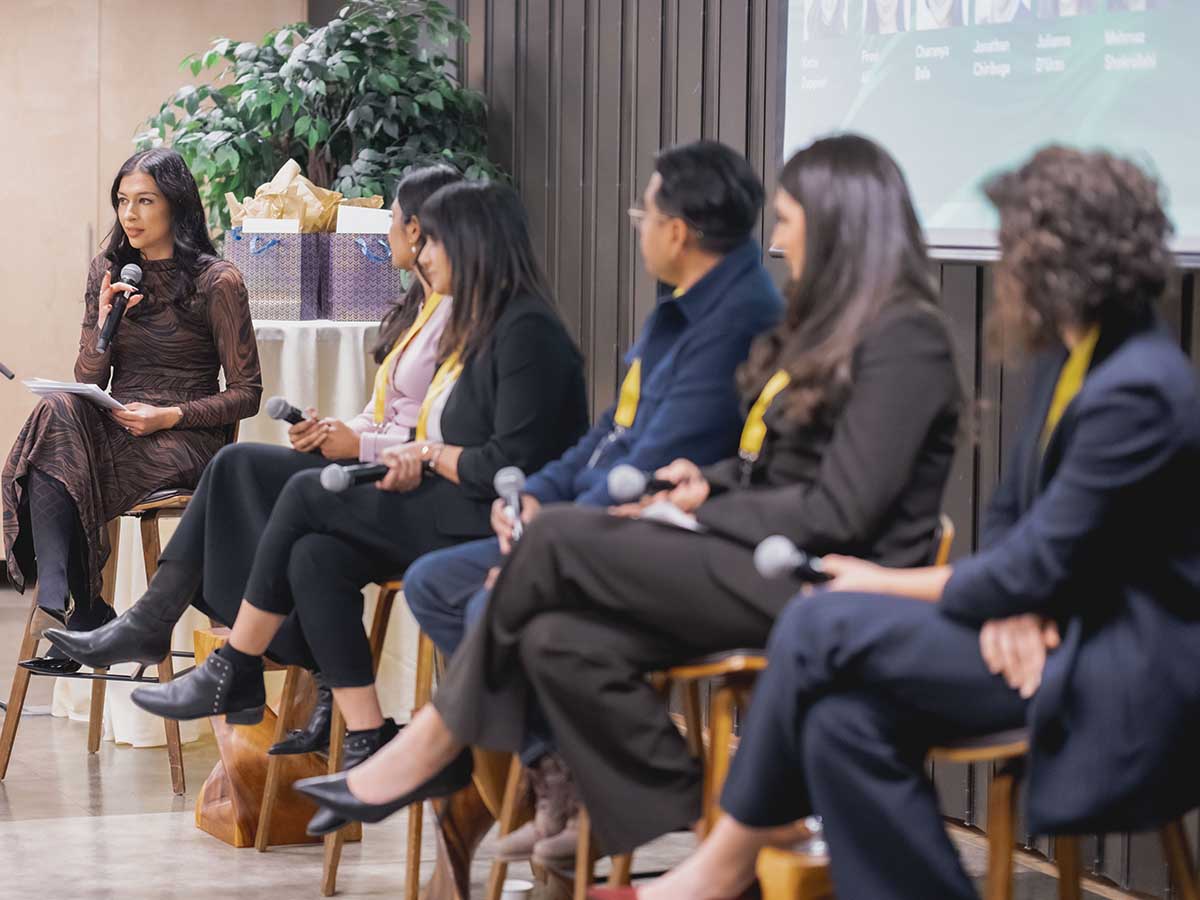
The panel featured Provi Ali, talent acquisition sourcing partnerships at BMO; Charanya Bala, director of strategic partnerships at The Beer Store; Jonathan Chiriboga, director of marketing innovation and digital excellence at AstraZeneca; Julianna D’Urzo, creative producer at NewsNation; and Mehrnaz Shokrollahi, director of data science and advanced analytics at RBC Global Asset Management. Katie Zeppieri, founder of the MicDrop Agency, was the panel moderator.
Here are some of the panel highlights.
Interview preparation
The panellists shared their approaches to successful interviews, each offering unique perspectives on what makes candidates stand out.
Charanya Bala, Fashion Communication ’09, introduced the head, heart and hand framework for reading interviewers and tailoring responses accordingly. “If they’re a ‘head,’ they want to be talking about business objectives. They want to know numbers, profit, deliverables,” Bala explained. “If they’re a ‘heart’ person, they’re very passionate about the company or a product. And if they’re a ‘hand’ person, they’re going to be looking at processes you’ve done.” She emphasized that perception is within your control: once you understand your audience, you can strategically position your skills to resonate with their priorities.
Mehrnaz Shokrollahi, Electrical & Computer Engineering (PhD) ’15, prioritized authenticity over rehearsed presentations. “I look for genuineness,” she said. “Sometimes I see people are very prescriptive. They memorize, they want to go through achievements, which is great — but I want to see if I can work with this person or not more than the skill that the person has.” She encouraged candidates to be themselves: “Once you are in the interview room, being yourself is probably your best bet.”
Navigating career growth and opportunities
Jonathan Chiriboga, Business Administration (MBA) ’09, emphasized strategic planning over leaving advancement to chance. “If there’s a job that you want, there is already a queue for that job,” he explained. “Your job is to form a 12-month plan of how you’re going to gain the skills and meet the right people and have the right conversations so when that job opens up, you’re primed and ready to be a top candidate.” He shared his three Es framework — experience, exposure and education — as a tool for mapping career development goals.
Provi Ali, Business Management ’20, shared her journey from banking to HR as an example of strategic pivoting. “I think something I hear often is, ‘I want a job,’ right? Everyone wants a job. And the reality is, what are we doing about it?” she said. After starting part-time at CIBC while studying HR, she attended networking events, had coffee chats and worked to prove her capabilities — eventually transitioning successfully into talent acquisition. “A lot of times, it’s not about what role you’re starting into,” Ali reflected. “Think about where you’re looking to grow. How can this role help pivot you to where you want to be?”
Upward mobility through internal moves
D’Urzo encouraged the audience to consider internal opportunities as strategic stepping stones. “If you can’t move externally, try to move internally,” she advised. “Even if you’re nervous about the change, something new and upward mobility is just so important, even if it’s adjacent — you are still getting a new skill set and exposure to an entirely new team, which then may lead you to another opportunity.”
She shared her own experience transitioning from anchor producer for Elizabeth Vargas to creative marketing at NewsNation. Working closely with Vargas, who had come from ABC World News Tonight, D’Urzo essentially became her chief of staff and point person. When D’Urzo traveled with Vargas to cover the GOP Republican debate in Alabama, a situation that pushed her far outside her comfort zone, the exposure to cross-functional teams proved invaluable. Six months later, when a marketing role opened up, the team remembered D’Urzo’s work and saw how her experience translated to the new position. “If I never said yes to that initial opportunity, I would have not been in the position now,” D’Urzo said.
Improving communication skills
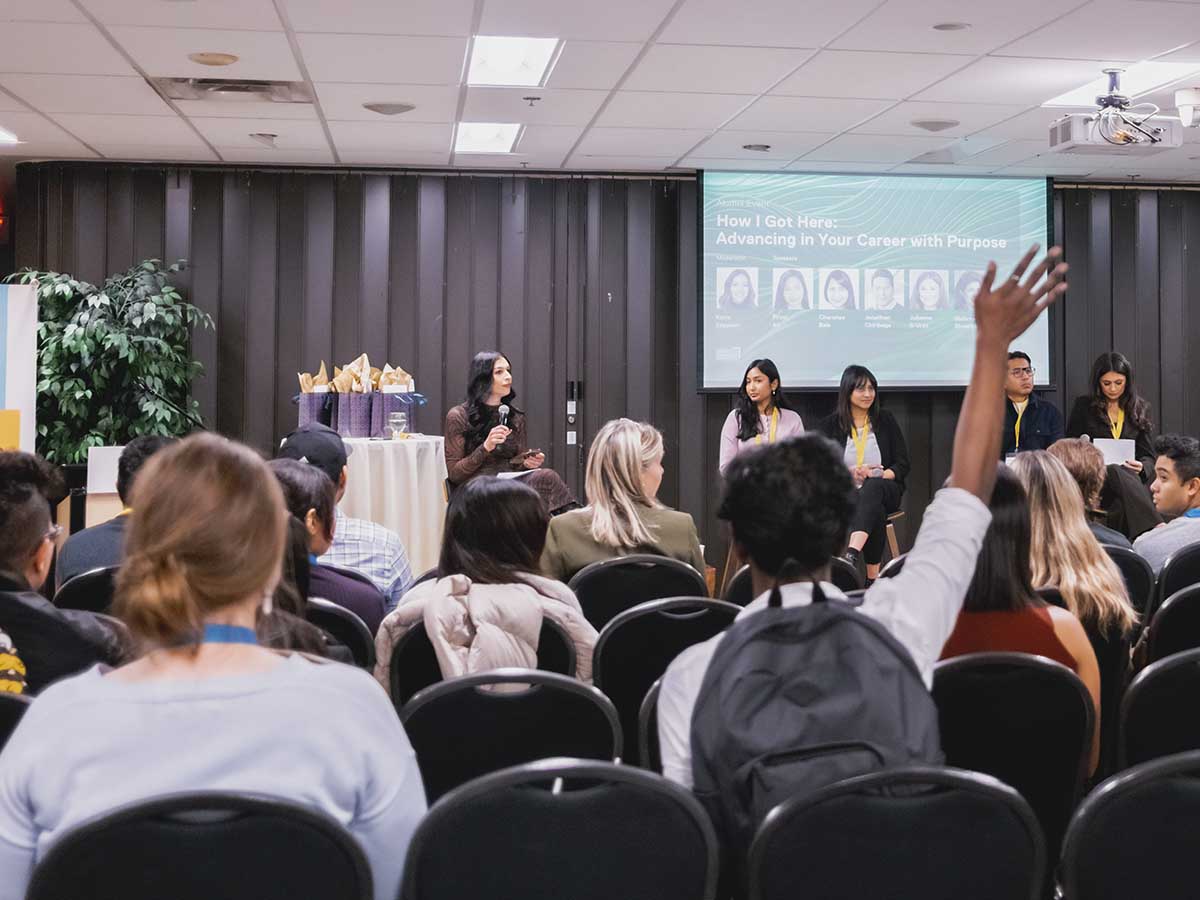
Upon Zeppieri opening the floor to a Q&A, one audience member asked how introverts can improve workplace communication. Chiriboga emphasized mastering concise, impactful messaging. “They have the attention span of a squirrel, so you have to figure out how you’re going to say what you want to say with the most impactful stats and data in like one minute, and if you can practice that, you’re going to be gold,” he said, referring to communicating with executives.
D’Urzo offered practical advice for building communication skills gradually. She encouraged starting with one-on-one conversations, especially in remote environments. When she moved to a new role in New York while her entire department remained in Chicago, she proactively scheduled informal coffee chats. “You get to pick up common interests and things — who has children and what they are interested in,” D’Urzo said. “Sometimes you just start getting these little nuances, you build relationships and you never know where those relationships will go.” She emphasized that these seemingly small interactions create opportunities for meaningful relationship building and the practice becomes easier over time.
AI in the workplace
The panel dedicated significant time to discussing AI’s role in modern careers, with all panellists encouraging proactive adoption.
Shokrollahi encouraged viewing AI as a productivity multiplier. “The way I see AI is like you have multiple assistants throughout the day, walking, working with you, along with you and doing your job with you,” she explained. “Just imagine how impactful and how productive you can be when you use them.” As someone who develops AI at RBC, she shared using RBC Assist to help write emails — a task she finds challenging as a non-native English speaker. “I just use it to rewrite what I want and it just does it perfectly,” she said, urging the audience: “If you don’t use it, you lose it.”
D’Urzo emphasized staying ahead of technological advancements. “I don’t think you’ll lose a job to AI, but you’ll lose a job to someone who knows how to use AI,” she said. At NewsNation, she’s become the point person for integrating AI capabilities within Adobe Premiere and the broader Adobe suite. “That’s another thing I can now lead with for future employers, saying that I am the point person who's running this rollout,” she noted, highlighting how embracing new technology can become a valuable differentiator.
Chiriboga echoed this, encouraging attendees to become AI experts within their organizations. “Be the AI person in your company. Be the person who is known for AI,” he urged. He shared that AstraZeneca has an internal program called “Thriving in the Age of AI,” which he has successfully taken part in. “You need to throw yourself into it, because if you don’t, you're going to be left behind.“
Bala succinctly added: “Don’t be scared of AI. AI is your superpower. Figure out how you want to use it to be the best version of yourself.”
However, Ali offered an important caution from a talent acquisition perspective. While acknowledging AI as helpful for sharpening resumes, she warned about over-reliance. “I’ve seen a lot of resumes through ChatGPT and they’re really noticeable,” Ali said. “Sometimes even the asterisks alone are still there and that’s a dead giveaway.” She emphasized that authenticity remains crucial: “At the end of the day, you’re working with a team. You’re working with real people. You’re not working with robots. What we still want is your authenticity to showcase through yourself.”

A special thank you to panellist Julianna D’Urzo, Radio and Television Arts ’19, Creative Producer at NewsNation, for providing this summary of the event.
“How I Got Here: Advancing in Your Career with Purpose” was hosted by TMU’s Alumni Relations office in partnership with the Career, Co-op and Student Success Centre. The panel was part of an ongoing career and networking series designed to connect TMU alumni and students with industry professionals offering practical insights.
To learn about upcoming events, visit the TMU alumni website.