AfterTMU — Julianna D’Urzo
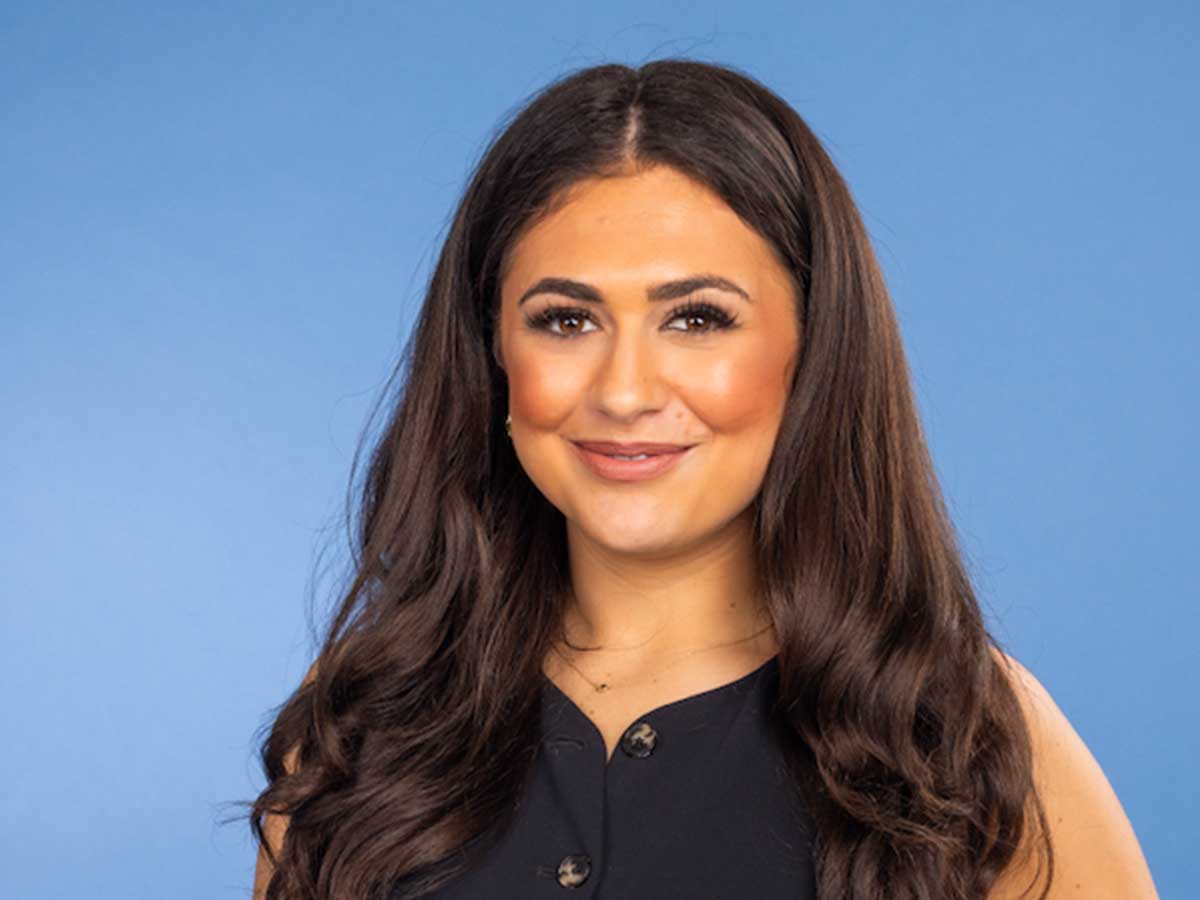
Julianna D’Urzo
Radio and Television Arts ’19
Producer, NewsNation
From studying at Toronto Metropolitan University (TMU)’s RTA School of Media to covering global events like the Cannes Film Festival, Julianna D’Urzo has built a career at the intersection of storytelling and strategy. Now a producer at NewsNation (external link, opens in new window) , she draws on the hands-on training and networking skills she honed at TMU to navigate breaking news, digital campaigns, and high-profile productions with precision and creativity.
What drew you to choose TMU for your studies?
The RTA School of Media immediately stood out for its hands-on approach and reputation for producing some of Canada’s top media professionals. Being in Toronto’s biggest media market meant endless opportunities to learn by doing—producing live broadcasts and creating digital content that felt like real newsroom work.
The LA Summer Program was another major draw. Learning from Hollywood producers and studio executives offered a firsthand understanding of global media. That experience ignited my passion for international storytelling and opened the door to producing campaigns for brands like Pepsi and Sephora and covering landmark events such as the Cannes Film Festival. Interning with Variety deepened my interest in entertainment journalism, and visiting their Santa Monica office was a pinch-me moment that showed how far TMU could take me.
Which skills you gained at TMU have had the biggest impact on your career so far?
TMU taught me how to juggle competing priorities under pressure. Time management, multitasking, and meeting tight deadlines quickly became second nature. I also learned the value of strategic networking. At a live taping of CBC’s The Goods, I introduced myself to a producer and pitched myself for an internship—one they created for me. That experience reinforced how taking initiative opens doors and it’s a lesson I have carried with me. Today, leading digital strategy and producing network-wide projects, I rely on those same skills daily. TMU prepared me to think fast, stay organized, and create opportunities rather than wait for them.
What skills and qualities are essential to thrive as a storyteller in social media and today’s news environment?
Time management and multitasking are essential. In a breaking news environment, everything can change instantly, so anticipating what comes next and staying ahead of deadlines allows you to pivot quickly.
When I worked as an anchor producer for Elizabeth Vargas Reports, those skills became second nature. At one point, I accompanied Elizabeth to a Republican debate in Alabama, where I served as her point of contact for every team on site. Midway through the event, I was asked to produce a news package to air that same night in New York. Because I had already prepped materials and anticipated possible scenarios, I was able to deliver exactly what the executive producer needed. Maintaining composure while under pressure is often the difference between good and great storytelling.
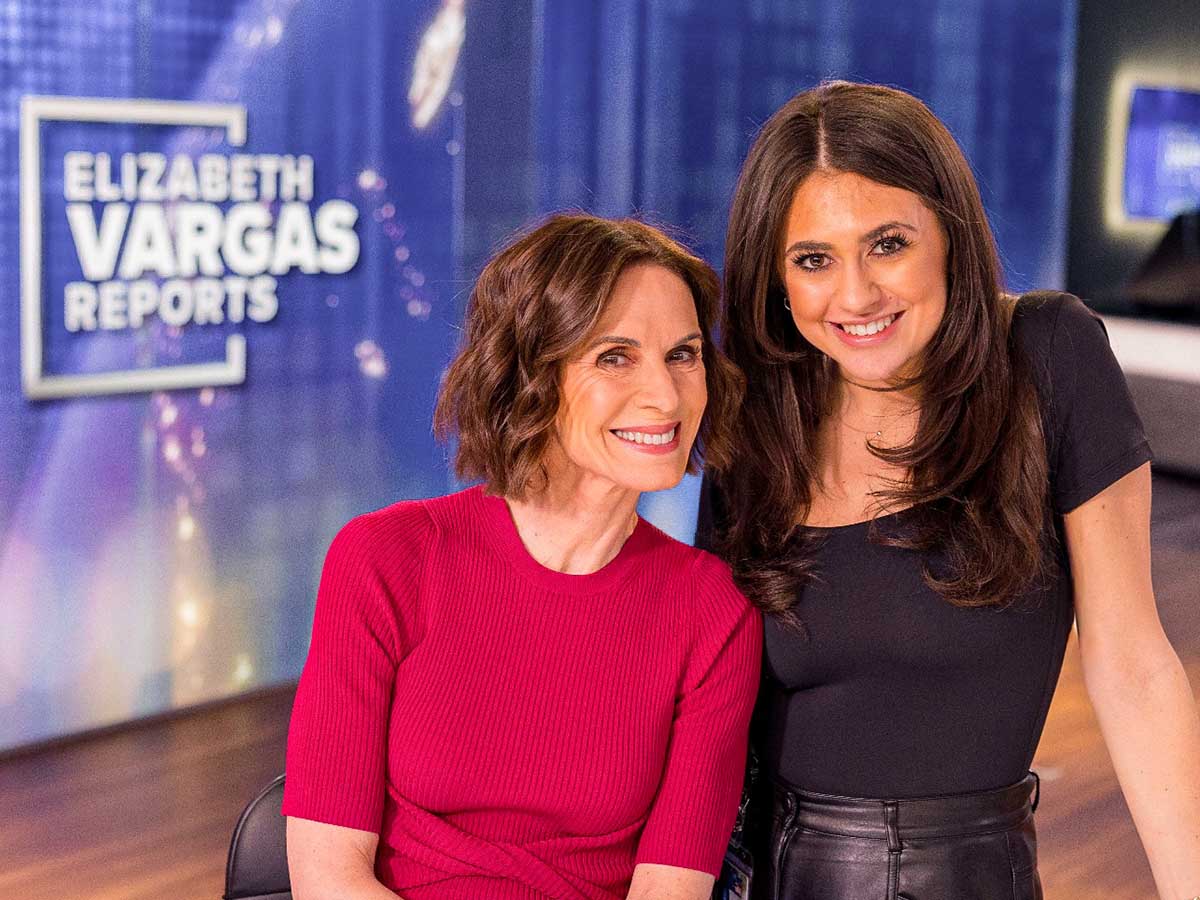
Julianna and Elizabeth Vargas on the set of Elizabeth Vargas Reports.
What advice would you share with students or recent graduates who want to build a media career in the U.S.?
Start networking early and seek out opportunities that align with your long-term goals. My internship at Variety opened doors to producing events around the world. One introduction can lead to opportunities you never expected, so show up, connect with others, and be open to saying yes when opportunity knocks.
Take time to understand the U.S. visa system and the requirements that apply to you, including the financial and logistical steps involved. Being informed and prepared will make your transition smoother and allow you to focus on what truly matters: building relationships and growing your career.
Leadership has been a key part of your work. Which qualities do you value most in a leader, and how have you developed those qualities?
I value feedback and strong communication above all. Good leaders create space for open dialogue, reflect on how they can improve and stay organized so their teams feel supported while tasked with delivering high-impact results. I’ve learned the importance of advocating for myself, using my voice, and balancing collaboration with confidence. Leadership is as much about listening and learning as it is about guiding others.
Looking back, what’s been the most rewarding part of your career? And the most challenging?
One of the hardest moments came after I moved to New York to help launch a streaming service. Two weeks after launch, the company was acquired and my team was laid off. I had been working on that team for eight months and was devastated, especially after feeling like I had finally received my break.
But it reinforced how demanding the media industry can be—and how important it is to stay versatile and continuously update your skills. Sometimes the most rewarding moments come from the most challenging situations. Looking back, the challenges have been as instructive as the successes.
Can you walk us through a typical day in your professional life?
Every morning starts with an editorial meeting to set priorities for the day and review network-wide initiatives. Plans can change instantly, so flexibility is key. We might be preparing election coverage or a Veterans Day special and then have to pivot to produce promotional content for a last-minute prime-time segment on Cuomo.
The afternoon will often bring new priorities. Whether producing digital strategy for a network-wide campaign, collaborating with A-list talent for a live event, or managing social media assets for a high-profile segment, quick decision-making, organization, and clear communication keep everything on track.
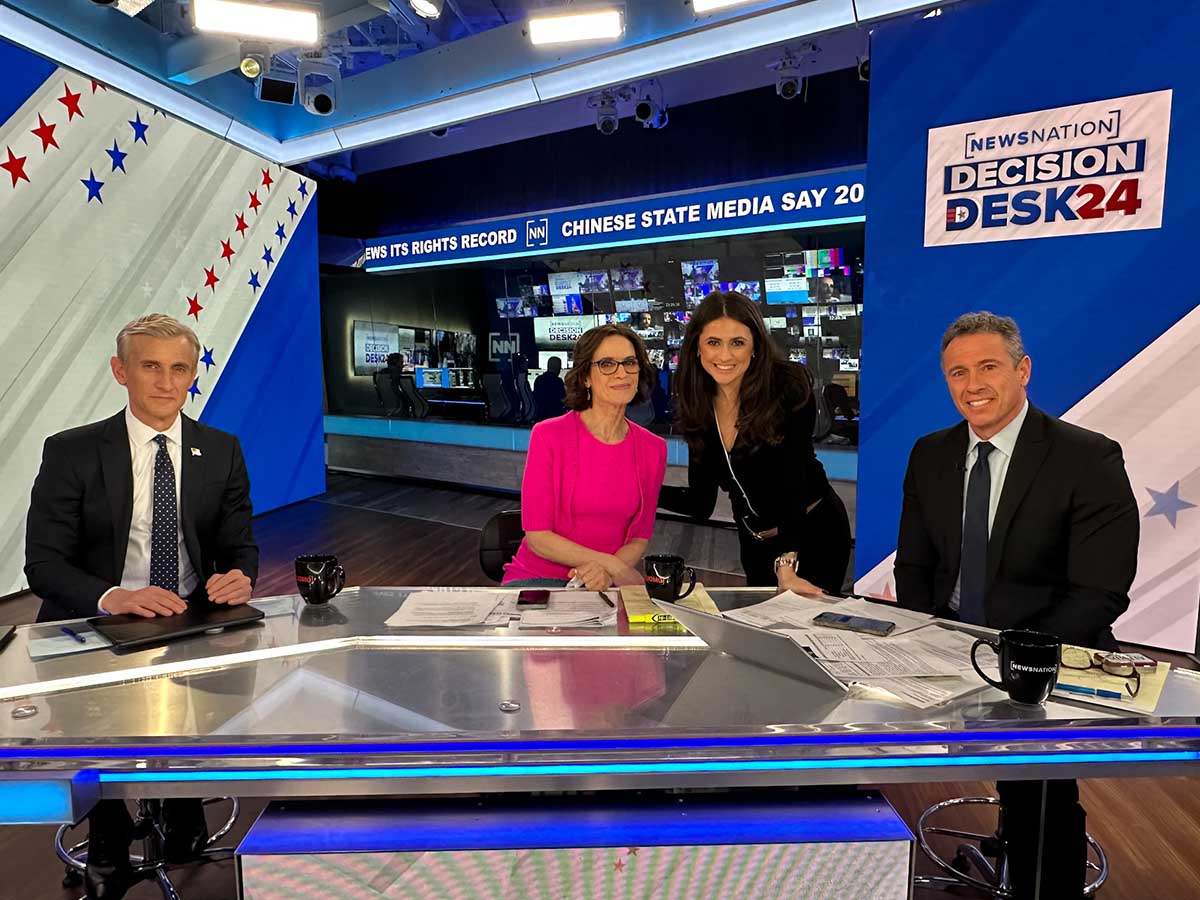
Julianna on set with NewsNation Decision Desk 2024 co-anchors Dan Abrams, Elizabeth Vargas and Chris Cuomo.
How has mentorship shaped your journey, and what guidance would you give someone looking for a mentor?
Mentorship is equally rewarding whether you are the mentor or the mentee. Early in your career, having someone in your corner to answer your questions and act as a resource is incredibly valuable. A mentor can emerge naturally as a colleague or a friend, and many of the mentors I had early in my career are still guiding me today. Don’t be afraid to look beyond your industry—many questions and lessons are universal and can provide valuable perspectives.
If you could give one piece of advice to your first-year self, what would it be?
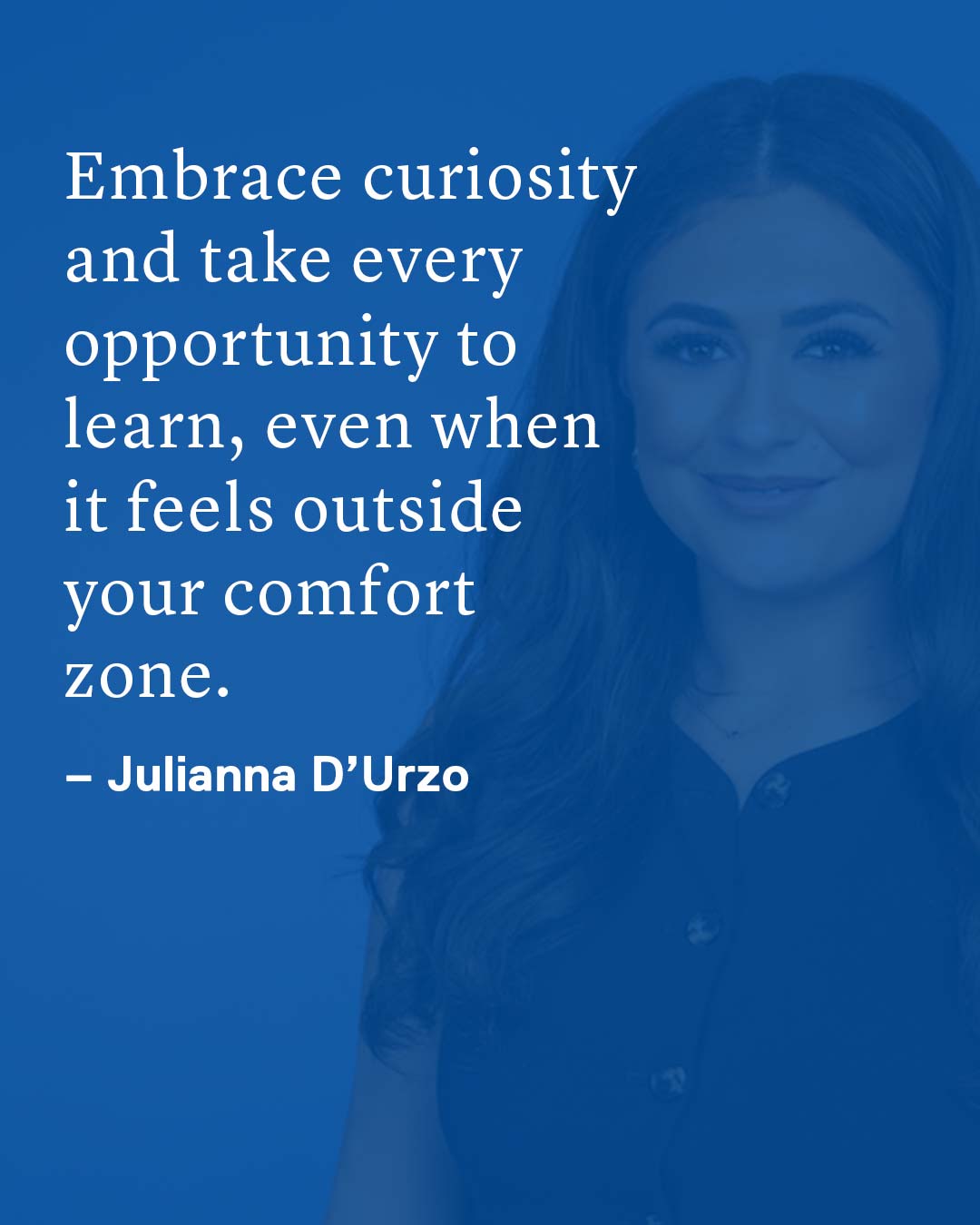
Embrace curiosity and take every opportunity to learn, even when it feels outside your comfort zone. Build relationships early, stay adaptable, and remember that creating your own opportunities is just as important as seizing the ones presented to you. One of my professors once told me to say "yes" because early in your career, you cannot afford to say "no"—and I still carry that mindset today. You never know where that one "yes" might take you.