Family ties: novelist explores the Dotted Lines
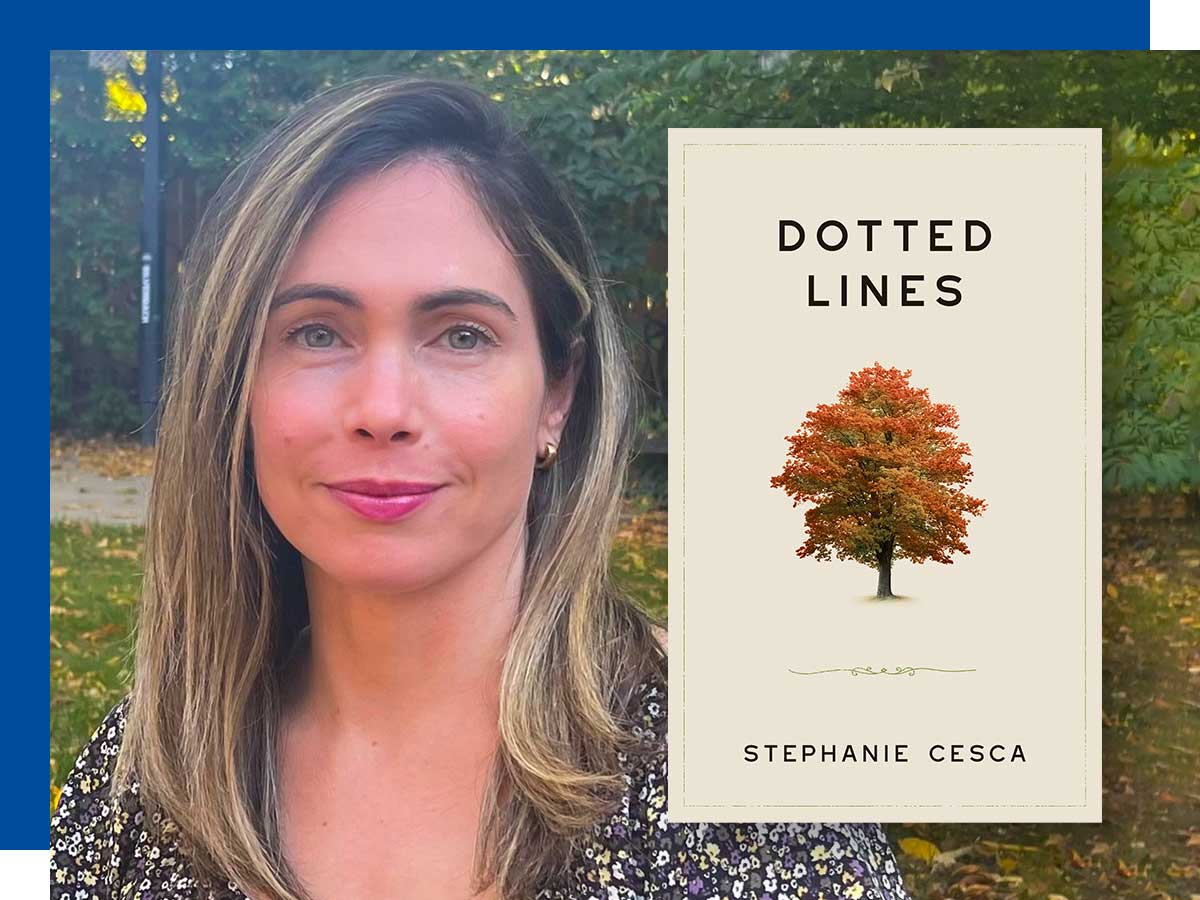
Stephanie Cesca
Journalism ’02
Author
In her debut novel Dotted Lines, Stephanie Cesca tells a story about the meaning of family and how who gives you love can be more transformative than who gives you life. For this edition of Rising Stars, Toronto Met Connect caught up with Cesca and asked her a few questions about her acclaimed novel and finding creative space.
The book begins in Richmond Hill in the 1980s and is seen through the eyes of Melanie Forsythe, who is 7 years old when we first meet her and living with single mom, Abby. You evoke real places like Bargain Harold’s on Yonge Street and musical act Sharon, Lois and Bram. How did you come to choose this particular time and place?
I grew up in Richmond Hill, Ont. during the 1980s and ’90s, so I have a strong connection to this time and place. When I started writing, this became the setting right off the bat because it was working class, family-friendly and highly relatable to many readers. But I tried fighting it at first – maybe because it was so familiar to me, it didn’t feel new or exciting. But after a while I realized that this was where Dotted Lines needed to occur. Not only was it more authentic, but it was also right for the story.
Stepparents in fiction, going as far back as Grimm’s fairy tales, are usually the villains in the story. Yet it could be said that the hero of Dotted Lines is Dave, a blue collar guy who works for an airline parts company but has never flown anywhere. With Father’s Day right around the corner on June 15, could you speak a bit about what inspired you to create Dave?
It’s so true: stepparents are often portrayed as the bad guys, but there are so many amazing stepparents out there that should be celebrated. When I set out to write Dotted Lines, I knew I wanted the story to examine the many ways parenting is difficult, and that’s when I came up with the character of Dave. He is not only a single dad but a single stepdad. That’s an incredibly tough job. Everyone at the beginning of the book expects him to be a creep or a villain, but he’s actually a great guy who excels in every way possible. I just love that he embodies the very best of fatherhood even though he’s got an exceptionally tough role. He’s the one who teaches Melanie the most valuable lessons in her life.
At an early age, Melanie has an idea of “normal family,” and aspires to one day have a perfect family. As she gains in lived experience, does Melanie’s definition of normalcy change?
Melanie’s understanding and appreciation of what it means to be family evolves throughout the story. At first, she believes she’s a victim — she doesn’t know who her biological father is, her mother abandons her and she’s left to live with a man who’s nearly a stranger. But as she grows up — particularly after facing a series of devastating events — she learns she’s not a victim at all but the recipient of a wonderful gift. Through some hard lessons, she sees what it truly means to be family.
You worked for a number of years at major newspapers like the International Herald Tribune and the Toronto Star. Do you feel there are shared — or separate — skill sets in non-fiction versus fiction?
My journalism background has always served me well by giving me clean and clear writing skills and helping me learn how to conduct an interview and shape a story. But while there are shared skill sets with creative writing, there are also separate ones. In fiction, I believe you need to be true to the story and not to the truth. Not only that, but fiction requires you to sometimes throw the rule book out. Having said that, some of the stuff you read in newspapers these days can be more out there than what you read in books!
How do you balance all your responsibilities — career, family — and find time to write?
Finding time is hands-down my biggest challenge. I’ve got a job, a family, a dog, a life. But I love to write so much, so I do it — not every single day, but close to it. Being tethered to my laptop, though, isn’t always a great feeling, so I spend a lot of time with my story and my characters away from my desk. Whether I’m driving, walking, listening to music, cooking or whatever, I’m thinking about the story I’m currently working on.
Any advice for TMU alumni who aspire to be writers?
There are a few pieces of advice that I’ve received from other writers that have stuck with me through the years. The first is to just write, even if you’re worried it won’t be any good. It’s important to keep going to see where it can take you. Also, remember that your story is worth telling. There can be a lot of rejection in this industry, so if you’ve done the work and put in the time, continue to believe in your project. Finally, I know it sounds obvious, but I still need to remind myself on a daily basis not to let distractions like Netflix and social media steal my energy. Too much of it not only wastes my time but also kills my creativity.
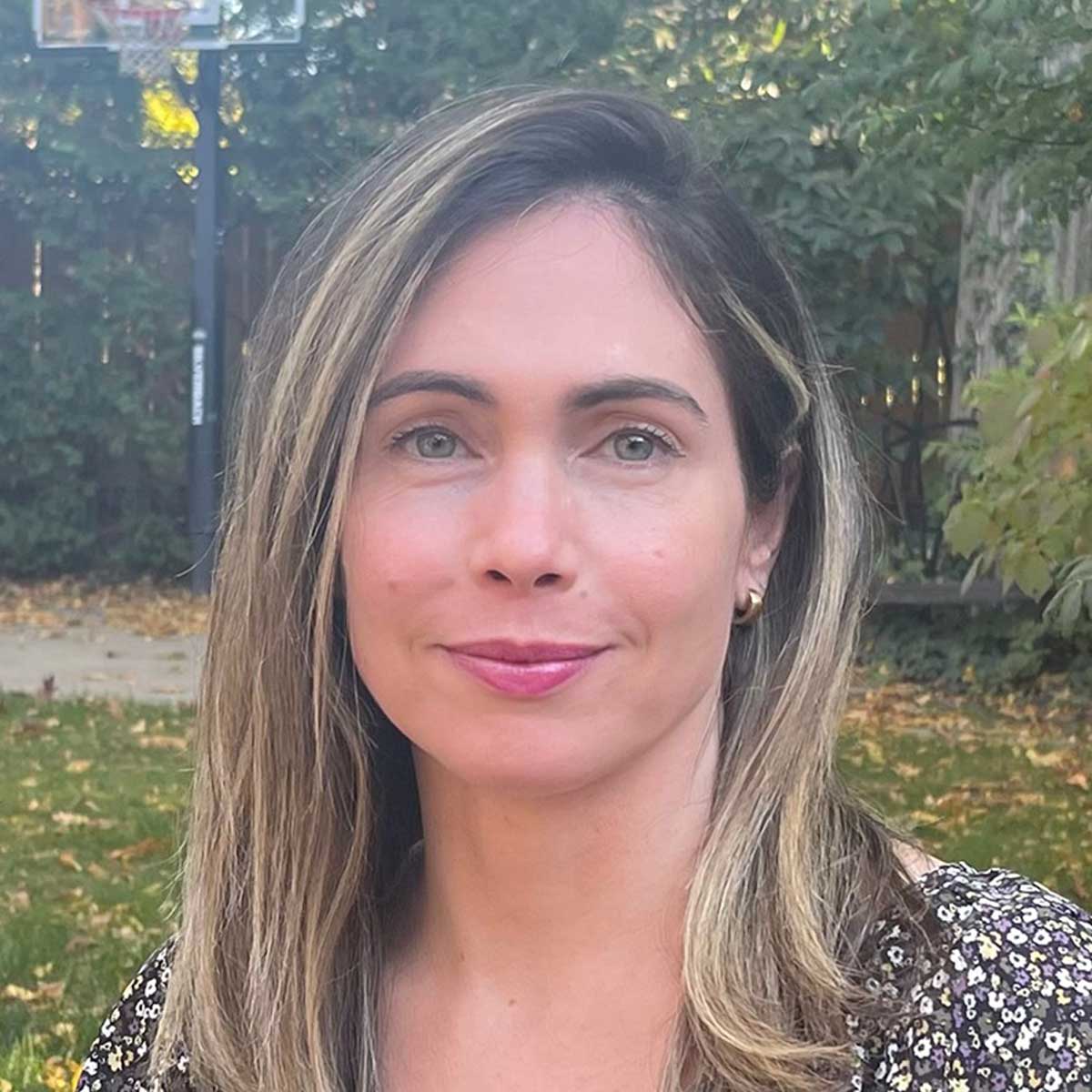
Stephanie Cesca was born and raised in Toronto, where she lives with her husband and three children. A former newspaper editor in both Canada and Europe, she holds an English degree from Western University, a journalism degree from Toronto Metropolitan University and a Certificate of Creative Writing from the University of Toronto School of Continuing Studies. Dotted Lines is her first novel and was named a 2025 finalist for the Rakuten Kobo Emerging Writer Prize in the category of Literary Fiction.