Lottery winner and TMU hon doc Charles Coffey on engaged living and learning
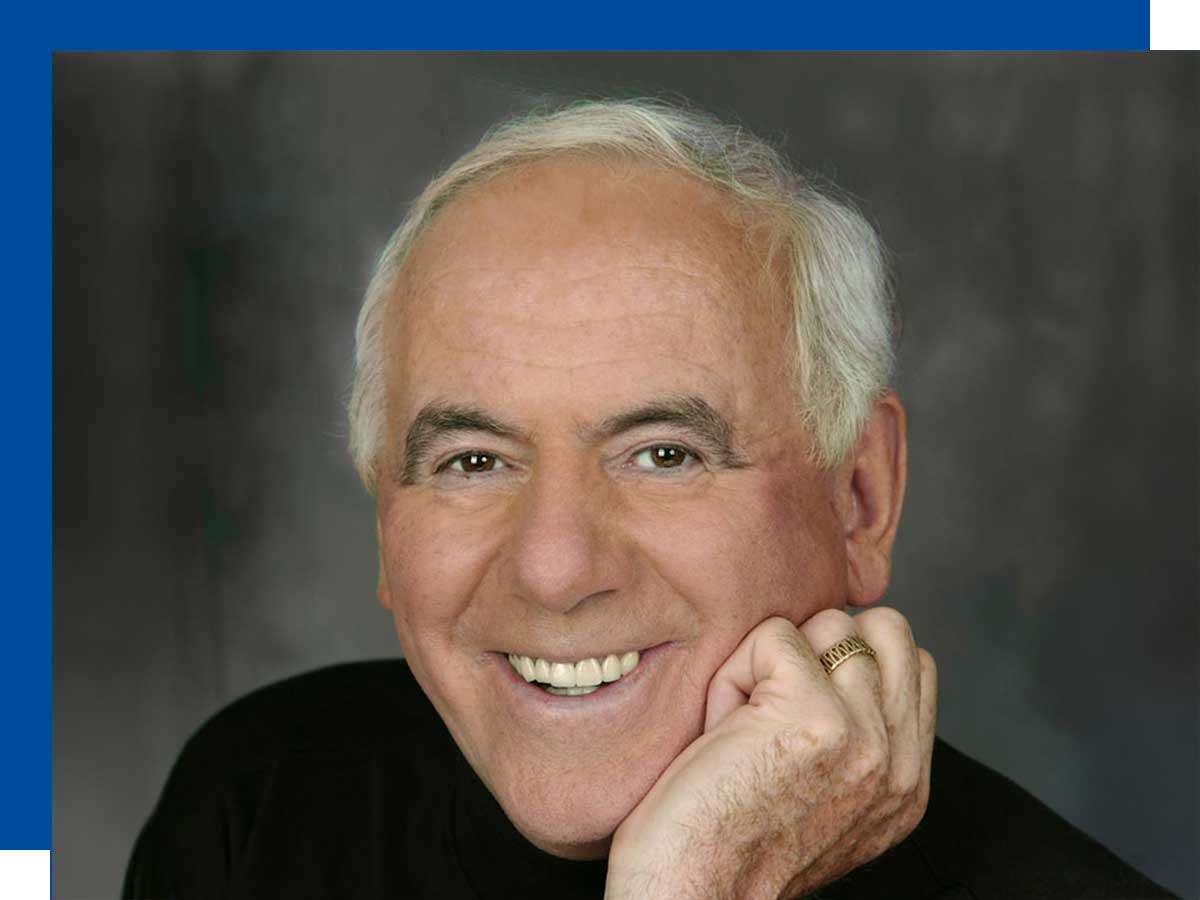
Charles Coffey
Charles Coffey enjoyed a distinguished career with RBC for more than 44 years. Born in Woodstock, N.B., and now living in Toronto, Coffey has been a champion of education, Indigenous Peoples, women entrepreneurs and more. In 1997, Coffey was named an Honorary Chief by the Assembly of Manitoba Chiefs for his support of First Nations and their goals of economic development and self-sufficiency. Among many other recognitions, Coffey was also named an Officer of the Order of Canada in 2004 and, in 2011, received an honorary doctorate from TMU. Coffey made headlines this past March when he won a Lotto Max worth $25 million. Toronto Met Connect (TMC) recently caught up with Coffey to talk about reconciliation, education and his windfall lottery win.
TMC: You spent a good deal of your career working with and for Indigenous Peoples in Canada. The Truth and Reconciliation Commission report came out after you retired, and there was a real upswing in the public consciousness around these issues. Do you think we’ve seen some progress on this front in the last few years? And are you concerned about sustained momentum?
Coffey: Decades ago, I accepted an invitation from Phil Fontaine, then National Chief of the Assembly of First Nations, to visit his home community on the Sagkeeng First Nations near Pine Falls, Manitoba. When I saw firsthand — there and in the other communities I visited subsequently — the complex and varied socio-economic issues impacting Indigenous Peoples, I decided to speak up and out. I did a lot of outreach and tried to learn, engage and understand the issues. And then set to work — first with my own bank. I worked to remove barriers — in terms of both serving the communities and employing Indigenous Peoples. This work illustrated to me that reconciliation was not something you do to somebody but something you do with them.
So I was optimistic when Murray Sinclair released the Truth and Reconciliation Commission’s Report with its 94 Calls to Action. I am less so now. I think Murray Sinclair’s passing was a blow to the movement because he was a very vocal and effective advocate. I think that the onus is on non-Indigenous folks to reach out to First Nations, Inuit and Métis communities: get to know them, attend cultural events — work to understand, for instance, the backgrounds to comprehensive land claims like the one that resulted in Nunavut coming into existence.
TMC: At TMU, we often say that post-secondary education can transform lives. What role do you think education can play in reconciliation?
Coffey: Education is a key driver in this. Institutions like TMU, McMaster or University of Victoria have strong Indigenous programming. They need to teach the true history — the good, the bad and the ugly. The true history of the residential school system, the true history of how Indigenous communities were impacted by colonization and the arrival of European settlers and explorers, and some recognition and understanding of the role that Indigenous leaders played, for example, in protecting the British forces from the Americans. Everyone should know who Tecumseh was and what he did; understand Louis Riel’s role as the true founder of Manitoba. Education can ensure a better understanding of the significant role that Indigenous Peoples played in the development of Canada as a nation.
[Editor: a rich source of this kind of learning and understanding can be found on the website of the Indigenous-led Yellowhead Institute (external link, opens in new window) .]
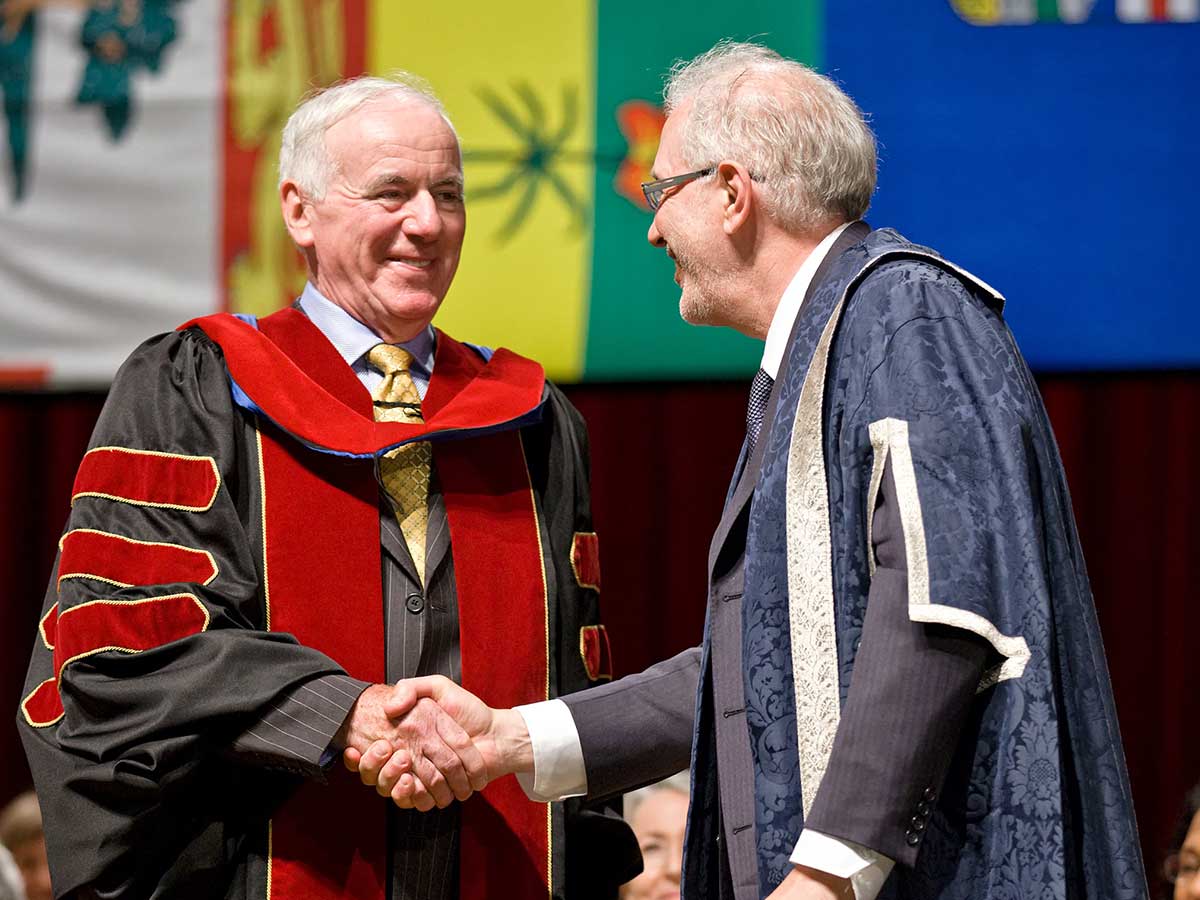
Charles Coffey at 2011 honorary doctorate ceremony with then TMU President Sheldon Levy. Photo by Clifton Li.
TMC: Corporate Canada is market driven and can often be risk averse. “Elbows up” aside, given all that’s going on in the U.S. around Equity, Diversity and Inclusion (EDI), are you concerned that Canadian institutions will follow suit?
Coffey: I am somewhat concerned, yes. But I think most corporate folks that I know understand the importance of diversity. That the workforce at all levels must and should reflect the marketplace. There’s a very strong business case. I have often said that diversity is a fact, but inclusion is a choice, and one of the things that I was working for was to always include people from all walks of life around the management table. And I think, by and large, Canadian business executives recognize that diversity is our core strength and there is tremendous benefit to include a wide variety of perspectives on any issue.
TMC: Coming back to that idea of corporations and your optimism, what role do you think corporations should play in the communities in which they operate?
Coffey: I have been criticized as naive for saying this, but I think that if you focus on the communities in which you operate, your business improves. I firmly believe that if employees are engaged in community activities, the community will improve. There are 1,000 things people could be doing, from volunteering with a food bank to the local school or library. This engagement creates a better business climate. As a senior executive at the bank, I understood the importance of focusing on employees and customers and investing in the communities in which we operated. If you do those three things, everything improves and the shareholder wins every time.
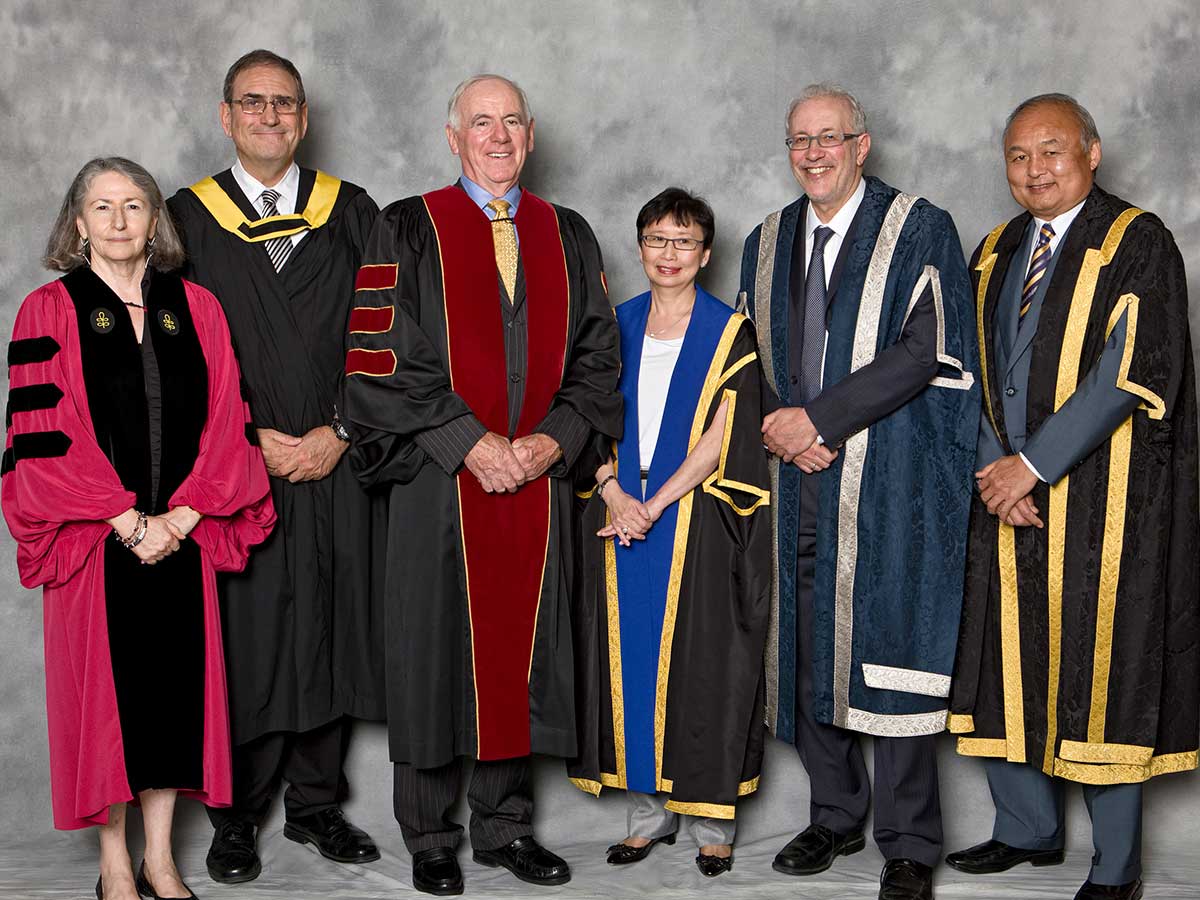
From left to right: Rena Mendelson, Adam Kahan, Charles Coffey, Janice Fukakusa, Sheldon Levy and G. Raymond Chang from 2011 hon doc proceedings. Photo by Clifton Li.
TMC: Do you have any advice to recent alumni and students at the dawn of their careers?
Coffey: Get outside your comfort zone. Sometimes you have to be brave. Delegate up, not down; take an active role within the organization, whether it be a business or not-for-profit. Understand who their stakeholders are (beyond shareholders). Take every opportunity to get involved and, if too few exist, try to create those opportunities. You’d be surprised how many people will be receptive on the other side.
TMC: We didn’t touch on your $25 million lottery win which, of course, is incredibly remarkable.
Coffey: When I checked my tickets on the scanner at the gas-station kiosk, one wasn’t a winner, but the other was. I thought I saw $25,000 and said to myself, “That’s interesting!” But I didn’t have my glasses on, so I got them out, went back to check, and saw $25 million! I rushed home, asked a family member to help me confirm the numbers. When we finally accepted the fact that the ticket was worth $25 million, someone suggested they take my pulse.
Now we’re meeting as a family to determine how we can best get the winnings out to those causes I’ve supported over the years, whether it be women in business, women in politics or Indigenous communities. We are thinking very seriously about scholarships for Indigenous students, whether it be through TMU, McMaster or other universities. It was an incredible surprise and the money will be put to good use.
TMC: It’s very generous of you to think that way about the win, and I guess that is sort of in keeping with the way you’ve thought your entire career.
Coffey: I’m a product of small-town New Brunswick, seventh of nine kids. Humility was the one thing that my mother and father drilled into me and my eight siblings. I never forgot where I came from, starting as a teller and retiring at a very senior level within RBC. Where I came from was part of my success.