Three women challenge the status quo in their industries
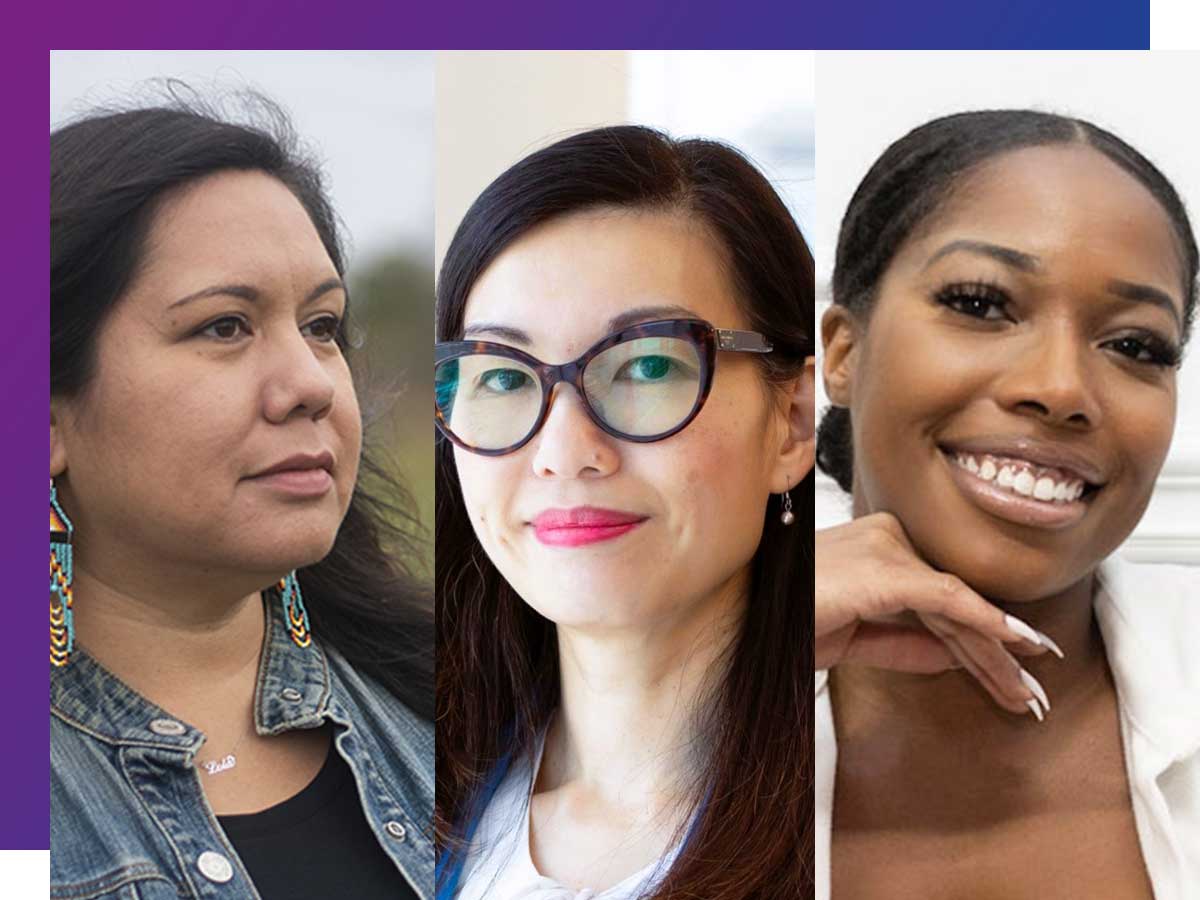
Zoe Hopkins, Image Arts ’97, Siu Mee Cheng, Policy Studies (PhD) ’22, Tasha Riley, Social Work (MSW) ’19
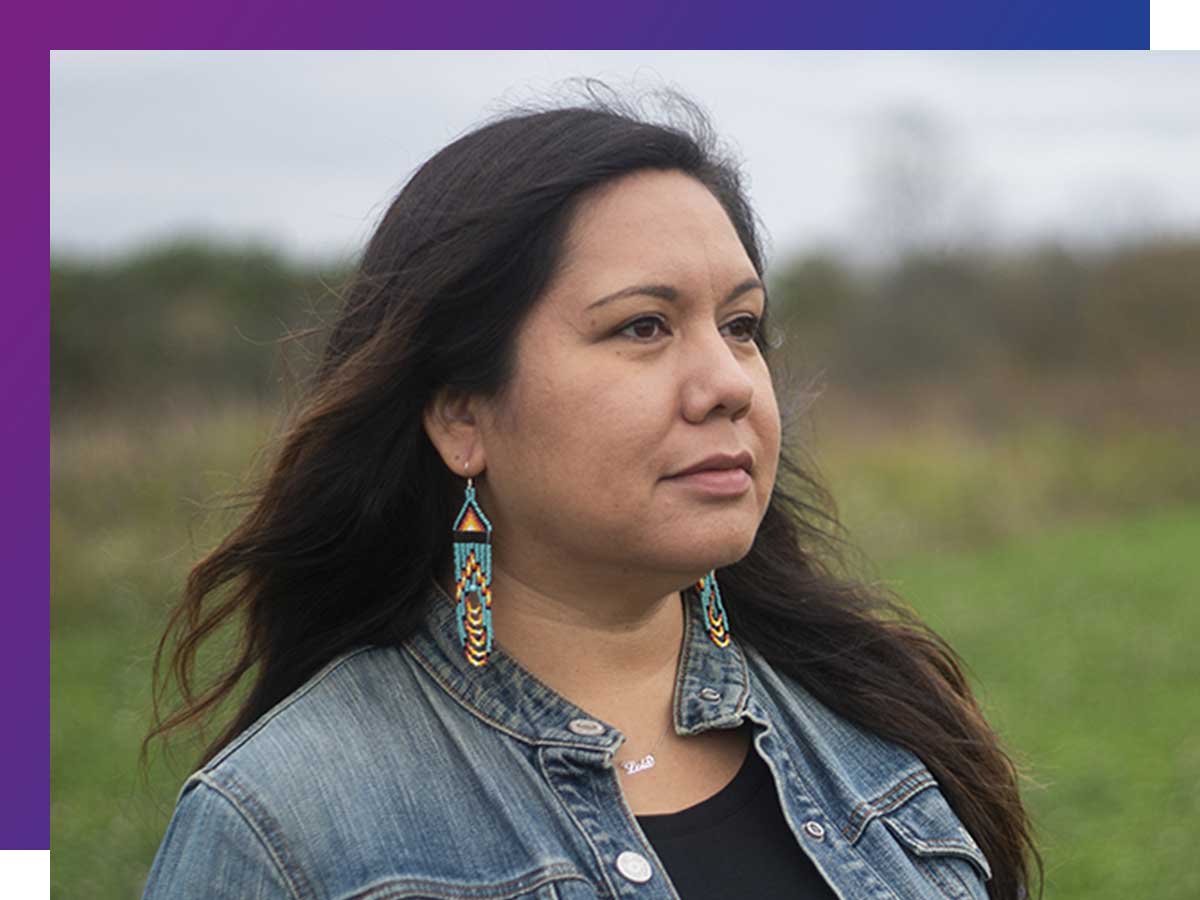
Zoe Hopkins
Image Arts ’97
Award-Winning Writer and Director
Zoe Hopkins is a Heiltsuk and Mohawk woman, born in her mother’s community of Bella Bella, a fishing village on the coast of B.C. In 2023, she was named in The Kit’s 2023 Power List of Canadian Women in Film (external link, opens in new window) . Hopkins holds a bachelor’s degree from Toronto Metropolitan University’s (TMU) Image Arts program and is also an alumna of the Sundance Institute Feature Film Program. Her films have won multiple awards and have been screened internationally at festivals, including Sundance, Berlinale, TIFF Kids and Edinburgh. Run Woman Run (external link, opens in new window) , Hopkins’ second feature film, was nominated for an award by the Director’s Guild of Canada in 2022. She has also written and directed three episodes of the award-winning limited series Little Bird (external link, opens in new window) . Most recently, Hopkins directed Don’t Even (external link, opens in new window) , a half-hour comedy series for CRAVE and APTN that will air in 2024.
What inspired you to pursue a career in film?
I fell in love with being on set when I worked as a young actor. I loved everything about the process of creation for the screen — from the moment of inspiration to the final dissemination of the work. I love the whole journey. On set, I’m there for the hangout, the creative problem-solving and the collaborative spirit of making something on the page come to life. I love being a cog in a big machine where all departments work together to create one thing.
You’ve been nominated for a Directors Guild of Canada award for your work on Little Bird. Why was it important for you to tell this story? And why was it important for the world to hear this story?
Little Bird is a story depicting the Sixties Scoop on a platform and level that hadn’t been done before. It was a huge honour and an even bigger responsibility to take on the role of telling this truth to this country, which has been left in the dark about its colonial history as a means of further oppression. If people don’t know what happened on this ground, then people can remain complacent as to what is happening, what has happened and how this history impacts us today. Working with Jennifer Podemski and Hannah Moscovitch, the show’s co-creators, was a dream. We worked with Sixties Scoop Survivors Raven Sinclair and Nakuset to help guide us through our fictional story through their lived experience to tell a story that is maybe the most important I’ll ever make. My biggest hope was that other Sixties Scoop Survivors and their families would feel seen.
Many of your films centre on the stories of Indigenous women. Can you share the intentionality behind this?
On one hand, there’s the importance of representation and seeing people like me on screen. We have seen one homogenous culture and whiteness prevail on screen since the dawn of film and TV. This narrowness has real impacts on society in terms of attitudes, policing, funding, hiring, housing, education and so on. Whose stories get told is essential to change how society works. On the other hand, it’s simple — I write what I know.
We are finally seeing more Indigenous representation in film and the media. What is your hope for the future of the film industry?
As an Indigenous filmmaker, I’d say we tend to get interviewed to speak to this window opening or about representation, diversity and our otherness. I hope we move past the fact that Indigenous people are making TV and film and hear more about the craft involved in creating the work. I want to hear from my peers about the cinematography, process, writing, directing and the specificity of working within their community or with certain actors or stories. I hope to see Lily Gladstone take home the Oscar for Best Actress this year. And I’m hoping even more that someone like her will one day win for their performance in a film written and directed by an Indigenous filmmaker.
Why do you think it’s important to celebrate International Women’s Day and Women’s History Month?
Recently, I read that we won’t close the gender gap in film for 200 years in Canada if we don’t make changes. We need to do better when it comes to representing women and non-binary folks on and off-screen. I’m conflicted about having a day or a month to promote women’s stories. I’m also conflicted about the binary model. While I think it’s important to uplift women and raise awareness of things like gaps and violence, or sharing stories of every day and superheroism, I always feel this pang of “what about the other 364 days or 11 months of the year?” I wonder if we’ll ever get to a post-women’s month world. Where women feel safe, and we can walk onto a set and feel equity. And where we can turn on the TV or go to the cinema and not see that our bodies and deaths are used as forms of entertainment. I hope that celebrating Women’s Month and Day is just one part of what we do as a society to bring bigger and faster change for the safety and respect of all the people who are vulnerable in ways that men are not.
This interview has been edited and condensed for clarity and length.
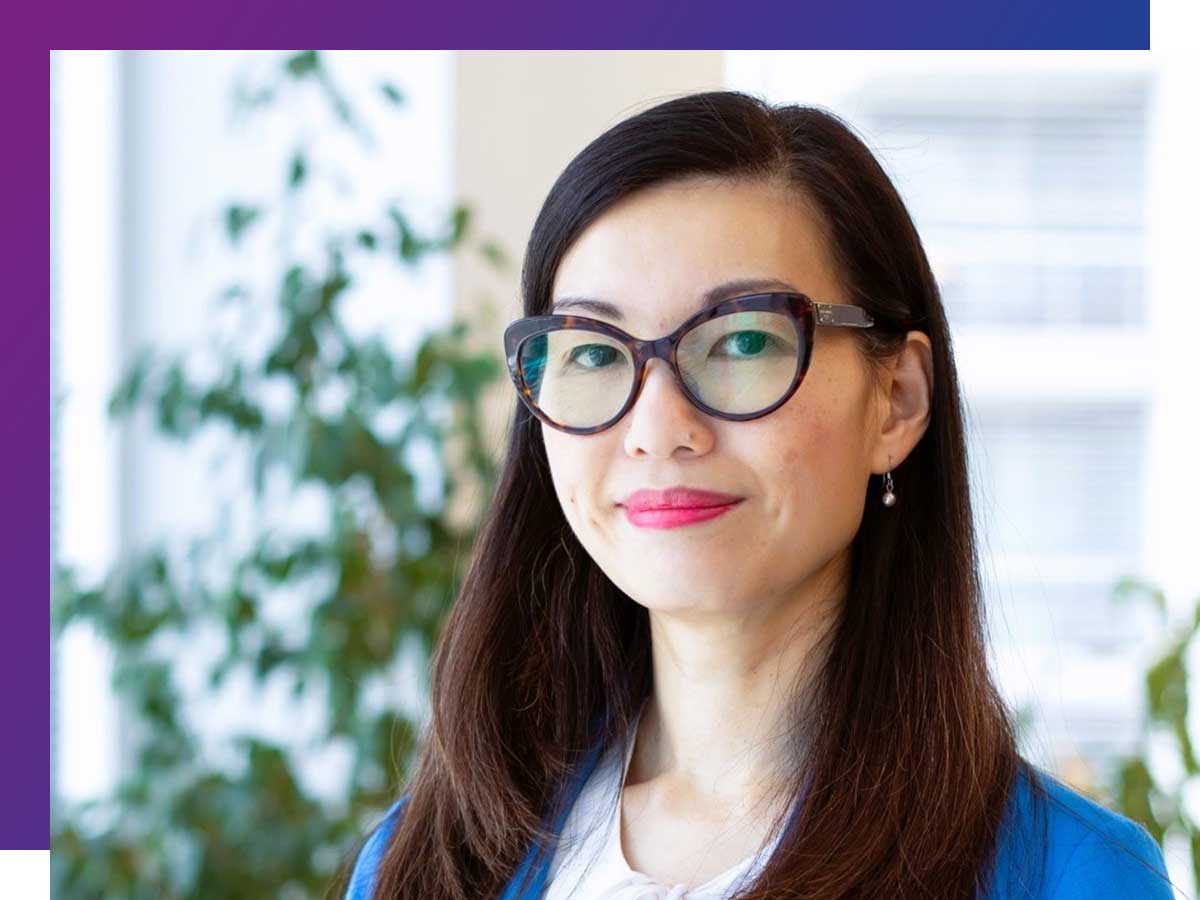
Siu Mee Cheng
Policy Studies (PhD) ’22
Executive Director, Street Haven at the Crossroads
Siu Mee Cheng has more than 28 years of leadership experience in the health and social services sectors and governments at Canada’s local, provincial and national levels. She is the Executive Director of Street Haven at the Crossroads, an organization that offers pathways for women experiencing or at risk of homelessness. Cheng has a PhD in policy studies from TMU and additional training in public and community health. In 2023, she was named one of Canada’s Top 100 Most Powerful Women by the Women’s Executive Network (WXN). Cheng is also a sessional instructor in the Faculty of Arts, Ted Rogers School of Management and The G. Raymond Chang School of Continuing Education at TMU.
What inspired you to pursue a career in advocacy and research?
In almost 30 years of working, I’ve had an opportunity to work alongside people who care about the issues that matter. You can’t help but be infused by the passion they show and the level of commitment and hard work. Another source of inspiration is my social location. I am a racialized immigrant, and I came from a single-parent family headed by my mother, and we didn’t grow up very privileged. This has given me my own strong David and Goliath mentality. Advocacy is important because if you can help others who don’t have similar opportunities, privileges or benefits, then you should do it. It’s an obligation.
At a time when need is increasing, but funding and capacity are decreasing, what are some challenges Street Haven is currently facing in the effort to provide support for our vulnerable populations?
Inequity exists regarding investments and policy commitments towards women’s services. The funding for men’s services is twice the amount for women. For some of society’s most vulnerable and marginalized, there are things stacked against them, and advocacy is going to be very important for advancing and trying to keep closing the gaps to prevent these women from being further marginalized. We know that structural discrimination, racism and gender inequity exist, so we need to think outside the box to determine how we can disrupt existing structures, policies and mindsets.
You’re an instructor here at TMU. What is your hope for the next generation of your field?
I hope that they will always be optimistic. Despite how serious and challenging the issues they’re going to face are, I hope the next generation will feel like they will make a difference. I hope they will always be hungry to learn. These social and policy issues are ever-evolving, and our knowledge today will change tomorrow. Being a lifelong learner is something this next cohort should commit to. This will give them a good start in staying the course on whatever it is they want to accomplish.
Why do you think it’s important to celebrate International Women’s Day and Women’s History Month?
There are several reasons, but the first is the gender equity gap. We need governments to account for why there is such an underinvestment in women’s services. Women’s History Month and International Women’s Day are crucial for raising awareness of the need to continue to advocate for more investments and support for vulnerable women. I think it is also a celebration because we need to recognize that women do pretty amazing things. Recognizing women’s important work is also a great way to inspire the upcoming generation, who will be bold, imaginative and creative leaders. Lastly, it’s about solidarity — women supporting women — because we understand our challenges in many areas. It’s a great time to revel in the joy of being part of the sisterhood.
This interview has been edited and condensed for clarity and length.

Tasha Riley
Social Work (MSW) ’19
Founder, BlackExecs
Tasha Riley’s academic journey ignited a passion for Black-led initiatives and community engagement. Pursuing a Master of Social Work at TMU, she focused on Black Wealth Mobility, culminating in her leadership of BlackExecs (external link, opens in new window) — a tech and production company supporting Black-owned businesses. BlackExecs has been recognized by media outlets such as the Globe and Mail, Cision and Yahoo Finance for its role in filming Le Code Switch: Perspectives of a Black Woman. Riley’s dedication to empowering Black entrepreneurs and driving positive change has earned her recognition, including a feature in Shifter’s 2023 Most Outstanding Black Women (external link, opens in new window) . She remains committed to creating opportunities for underrepresented communities and continuing her impactful work in the future.
While studying for your master’s, you explored the concept of Black Wealth Mobility. How has this research inspired you with the work you do with BlackExecs?
After completing my undergraduate degree in women and gender studies and social work, I became passionate about educating myself and engaging in Black-led initiatives, and I was determined to find a way to infuse my profession with my passion: how can one serve Black communities profitably, in a transformative way?
As I pursued my Master of Social Work at TMU, I was able to access research documents. I noticed common trends that dispelled myths about Black people being “lazy” or unproductive. In fact, Black communities have thrived and continue to thrive when provided even the most basic of resources. When looking at both the Canadian and American contexts (i.e., Africville, Nova Scotia vs. Black Wall Street, Tulsa, Oklahoma), history shows it was environmental racism and systemic isolation that led to the demise of Black communities — not the work ethic of the people within the community. At the time of their destruction, these communities either reached or were close to the peak of their sustainability and profitability. To date, we have never been able to circulate the Black dollar within our community in the same capacity.
What is your hope for the future of BlackExecs?
I hope BlackExecs will be a space for entrepreneurs and business owners to begin the groundwork of developing their own wealth mobility for their immediate families and the broader Black community.
In your experience, what are some unique challenges Black women entrepreneurs face? What can be done to resolve them?
Black women entrepreneurs face a myriad of unique challenges that stem from systemic inequalities and intersecting forms of discrimination. Despite their remarkable resilience and innovation, they encounter barriers that hinder their entrepreneurial endeavours. Studies have shown that Black women receive disproportionately less funding compared to their counterparts, making it difficult to start or grow their businesses. Additionally, Black women often confront biases and stereotypes in the business world, facing skepticism about their abilities and expertise, navigating through institutionalized racism and sexism which affect their access to markets, resources and opportunities.
To address these challenges, there needs to be increased investment in programs and initiatives that provide financial assistance and mentorship specifically tailored to Black women entrepreneurs. Furthermore, raising awareness about the unique struggles faced by Black women entrepreneurs is essential. By challenging stereotypes and biases in the business community, we can create a more inclusive and supportive environment where their talents and contributions are valued and recognized.
Why do you think it’s important to celebrate International Women’s Day and Women’s History Month?
International Women’s Day and Women’s History Month serve as vital reminders of the ongoing struggle for gender equality and women’s rights. These occasions provide an opportunity to celebrate the achievements and contributions of women throughout history and across the globe. By celebrating women’s achievements and highlighting their stories, we inspire future generations to dream big and break barriers. Furthermore, these occasions provide a platform for solidarity and collective action. They bring together individuals and communities across borders to stand in solidarity with women and girls, advocating for a more just and inclusive world.
This interview has been edited and condensed for clarity and length.