Adventures in radio with Joe Mahoney
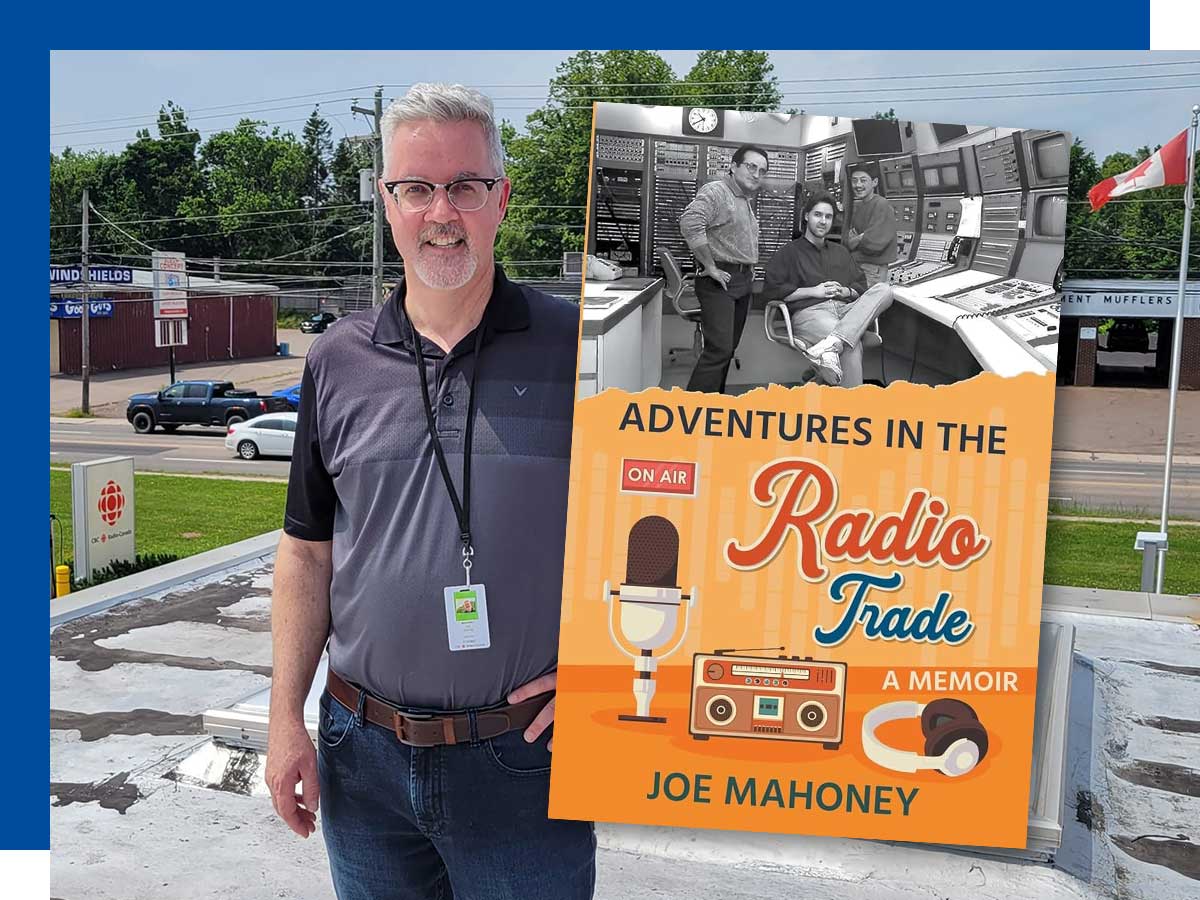
Joe Mahoney, RTA School of Media ’87 and founder of Donovan Street Press Inc. (external link, opens in new window) , spent 35 years working in the radio industry, making radio plays, and working with some of the finest actors, directors and writers in Canada.
A recent retiree now living in New Brunswick, Mahoney is the author of a new memoir, Adventures in the Radio Trade: A Memoir, providing a behind-the-scenes glimpse of working at CBC Radio. In recognition of World Radio Day (external link, opens in new window) , we talked to Mahoney about his new book, what he’s listening to and his advice for those entering careers in radio.

What inspired you to write your book, Adventures in the Radio Trade
I’ve pretty much always been a writer, so it’s been natural for me to write down anything interesting that happens to me. When I started working at CBC Radio, interesting stuff happened all the time, and I would go home and write about it while it was fresh in my mind. Whether it was an interesting studio booking, or something about a radio play I was working on, or being stuck in the middle of a labour dispute. When blogs became a thing, I blogged about a lot of it. Eventually, I accumulated a lot of material that I thought was interesting about working in public and private radio. When a friend of mine, Karina Bates, suggested I turn it into a book, I realized I had enough material to cover at least the first two and a half decades of my career in radio (my time in management would be a whole different story). Then it was just a question of fleshing it out, structuring it and shaping it.
I thought the project had merit because it’s not so much about me as it is about radio, CBC Radio in particular. I’m not the important part. Radio is, especially CBC Radio. It’s an historical document. It’s everything I know about how we made radio back then, which, although it isn’t that long ago, is already quite a bit different in some ways to how it’s done now. They’re no longer editing using tape and razor blades, for instance. And although Adventures in the Radio Trade is essentially a love letter to CBC Radio, it’s not all sunshine and lollipops. It’s not hagiography. It’s a kind, but truthful, account of my experiences.
What are your favourite radio stations to listen to right now?
It’s tough to narrow down my favourite radio stations to one. CBC Radio (external link, opens in new window) is always going to be number one with me because I was a fan long before I ever worked there and I remain a fan now that I’m retired from the CBC. These days I wake up listening to Jonna Brewer on CBC Radio 106.1 FM in Moncton (external link, opens in new window) because I live in Riverview, NB, right across the Petitcodiac River from Moncton. Also, I started at CBC Radio in Toronto the same year as Jonna — 1988 — though I don’t think we’ve ever met. Later in the day, I’ll often stream 90.5 CBC Radio One out of Halifax (external link, opens in new window) to listen to Jeff Douglas and the gang, with whom I worked the final year of my career. But sometimes I’ll go private and stream CKDO 107.7 FM out of Oshawa (external link, opens in new window) , because I lived in the Durham, Ontario region for a long time and got to like those guys.
What did you love most about working in the radio industry?
I loved working in radio so much. I loved the challenge and adrenaline of live radio. I loved the people I worked with (radio people are a special breed). I loved meeting the guests we’d have on our shows. I loved the challenge of setting up and broadcasting from remote locations, sometimes far away from our home base. I got a kick out of driving around in CBC-branded vehicles. When I was recording and producing radio dramas (a form that really needs to come back in this era of podcasting), I enjoyed manipulating sound, creating rich and varied soundscapes, and working with so many talented actors and directors. Later in my career, I enjoyed helping build radio studios and maintain facilities. An easier question would be what I didn’t like about radio. I’m sure there was something, but if so, I can’t think of it now.
What advice would you give to students and alumni entering into radio careers?
This is a challenging time with so many layoffs in the industry. I’m optimistic that will pass and the industry will stabilize. There will always be some form of radio. We’ll always want something to listen to when we’re performing an activity that leaves our ears and at least part of our brains free to listen. My advice would be to pick up as many radio skills as possible, not only to make yourself as employable as possible, but also because it’s all so interesting and challenging and takes a while to become good at.
There’s much more to radio than people realize, I think. There’s all the technical skills, such as operating consoles, working with microphones, recording and mixing radio plays and music, live music pickups, manipulating sound, and producing and hosting jobs such as interviewing, editing, hosting and so on, and that’s just the obvious stuff. There’s even more behind the scenes, such as leadership and support roles. So much of it you can learn on your own at home these days too, just by experimenting on your own with some simple gear, recording music or doing a podcast. Above all, approach it all with a sense of fun. I got into radio to have fun, and mostly I did.
Let us know what you’ve been up to since graduation!
Submit a Class Note for the June edition of Toronto Metropolitan University Magazine.