Rosh Hashanah evokes precious memories for TMU alumna
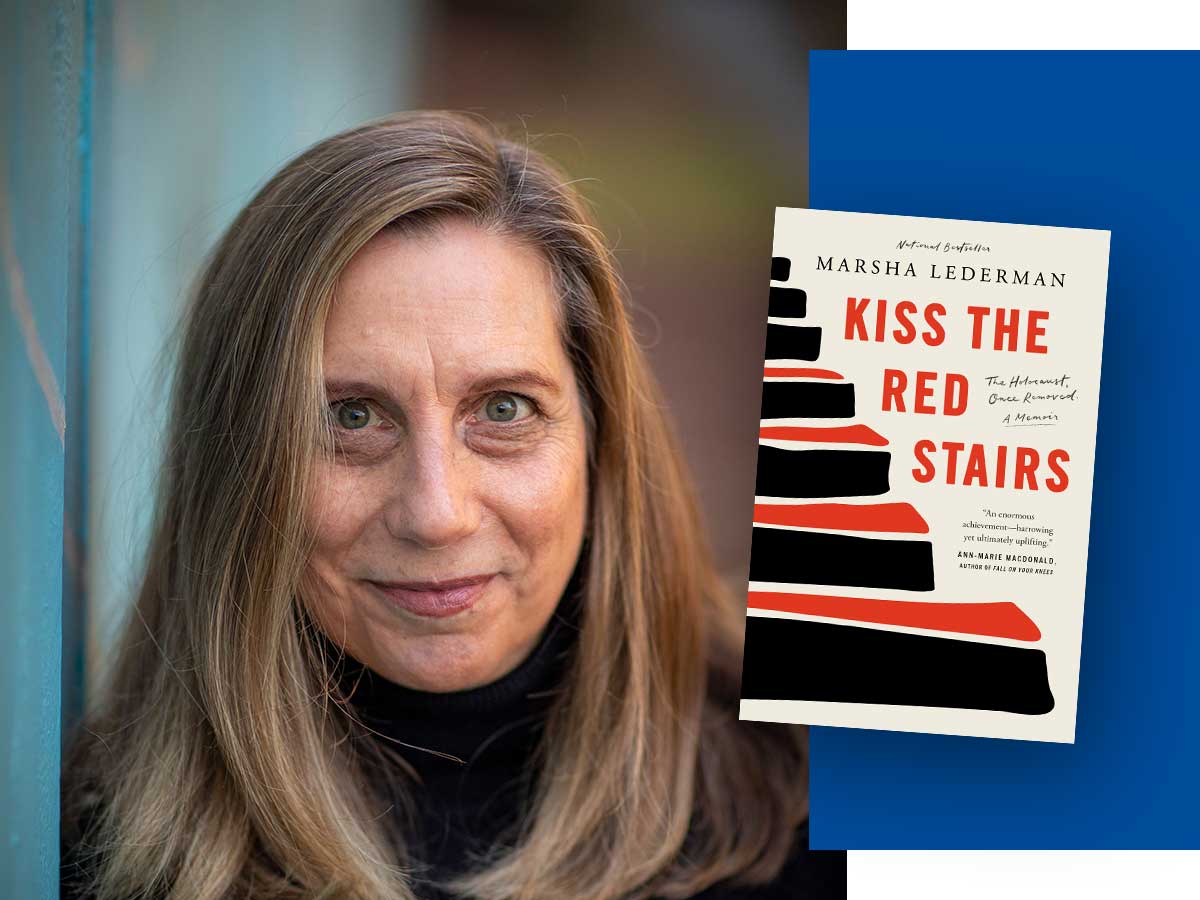
Marsha Lederman is an award-winning journalist and author. A graduate of the Radio and Television Arts program, she is a columnist for The Globe and Mail. Her memoir Kiss the Red Stairs: The Holocaust, Once Removed was published by McClelland & Stewart in 2022 and recently came out in paperback. Born and raised in Toronto, Marsha now lives in Vancouver.
This year, Rosh Hashanah — the beginning of the Jewish New Year — takes place from sundown on Friday, September 15 to sundown on Sunday, September 17. Many in the Jewish community will celebrate by gathering with loved ones for meals featuring foods that symbolize sweetness, such as apples and honey. For those attending synagogue, the sounding of the shofar, a ram’s horn, heralds the first of the Jewish High Holidays — a ten-day period that ends with Yom Kippur, the holiest day of the Jewish year.
Rosh Hashanah is also a time of personal reflection and looking back, as Marsha Lederman shares in this poignant homage to her late mother, Gitla.
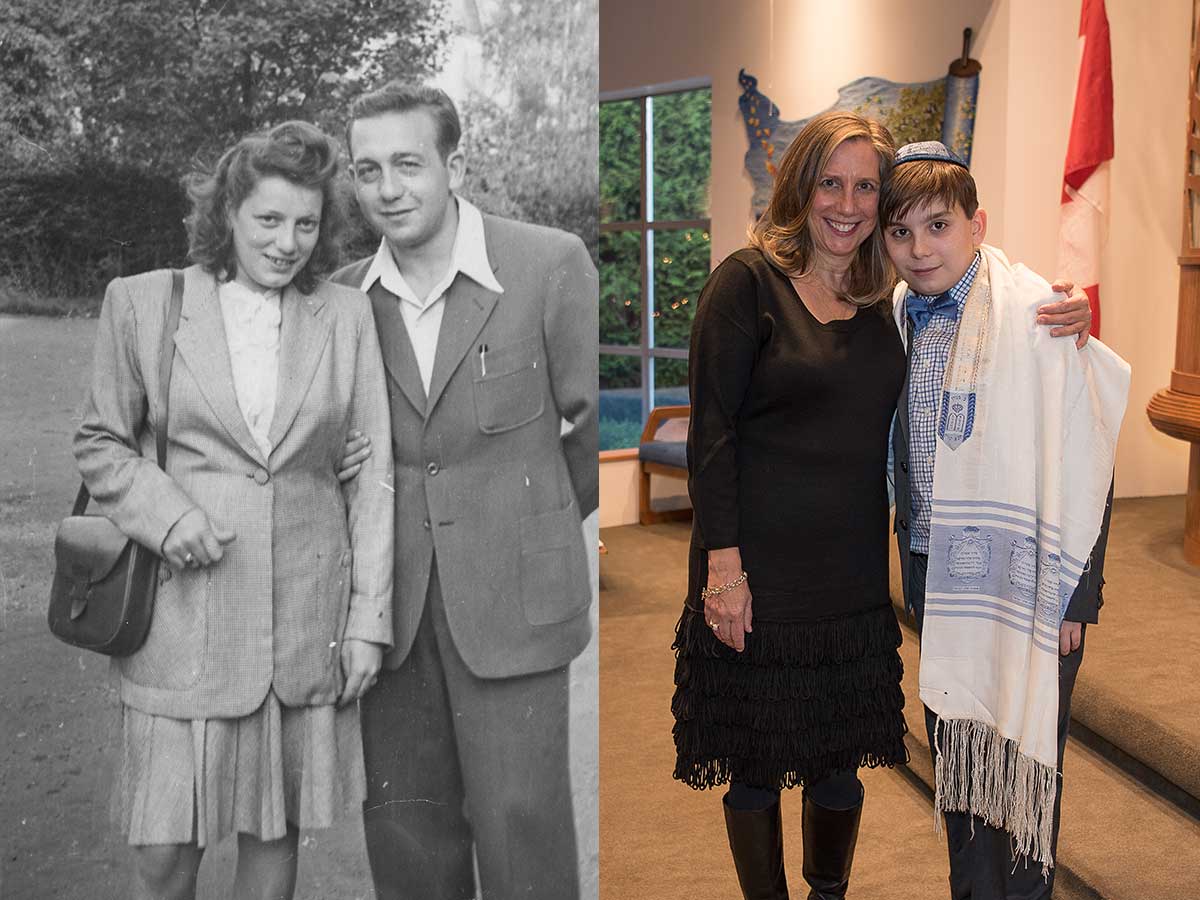
Left: Marsha Lederman’s parents, Gitla (left) and Jacob (right), after they met in post-war Germany. Photo courtesy of Marsha Lederman.
Right: Marsha (left) and her son Jacob (right) at Jacob’s Bar Mitzvah in 2021. Photo courtesy of Adele Lewin.
In Marsha’s words
Childhood Septembers meant the nervous excitement of new beginnings. Along with the new school year, if you are Jewish, this time of the calendar marks the new year, period. The High Holidays, including Rosh Hashanah (literally “head of the year”) generally fall in September or October.
Back-to-school shopping with my mother targeted school supplies — fresh binders, reams of lined notebook paper, Laurentian coloured pencils — and fall clothing to replace whatever I had grown out of.
But there was always an extra item on our list. Each year, my mother — Gitla “Gucia” (and in Canada, “Jean”) Lederman — would buy me a new outfit to wear to synagogue for the High Holidays. And a pair of fancy shoes to go with it.
My mother envied my healthy feet. Hers had been ruined by the Nazis when she was in Auschwitz and later, when she was forced on a death march through Germany in painfully inadequate footwear.
This particular shopping excursion always came with stories like that. But as we schlepped our way through Yorkdale or the Eaton Centre, she also shared memories from before the war, of spending the holidays with her own family. Those were precious; they were happy recollections — unlike the tragic ones of her wartime experiences, which I heard much more frequently.
Hearing those old stories about my mom as we shopped for something new for me helped me imagine Gucia as she was before the trauma of the Holocaust, when she lost so much, including most of her family. When she was just a girl, like me.
Long after I finished my formal education — public school, then what is now Toronto Metropolitan University, and finally York University — my mother continued buying me a special outfit every fall. It would make its debut at synagogue, followed by the holiday family meal. Dessert always included her famous apple cake. At the Jewish New Year, we eat apples and honey, for a sweet year ahead.
My mother continued buying me those outfits until her final Rosh Hashanah in 2005; she died a few months later, one week after her 81st birthday.
I miss her every day. But especially during the holidays.
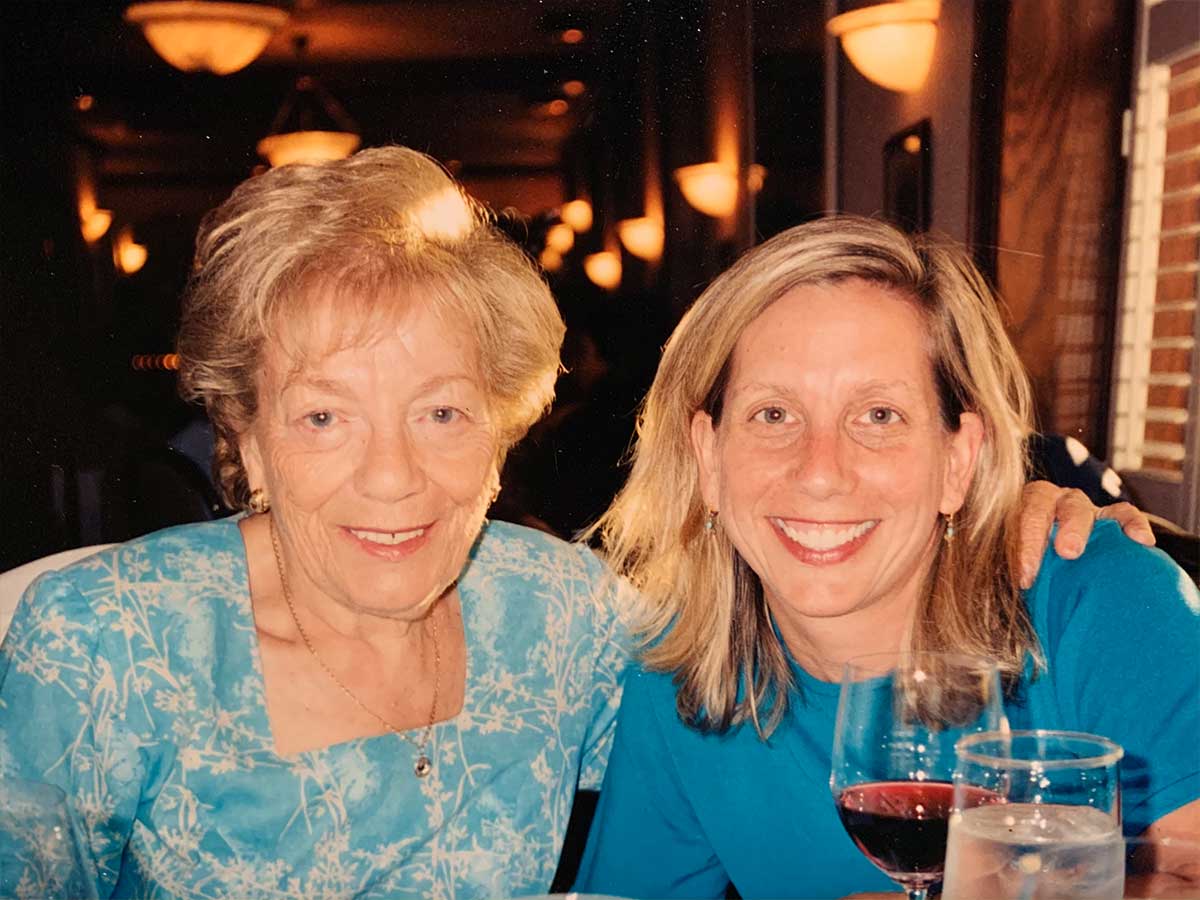
Gitla (left) and Marsha (right) at a past birthday celebration for Marsha at a Toronto restaurant. Photo courtesy of Marsha Lederman.