Four social justice champions pushing for change
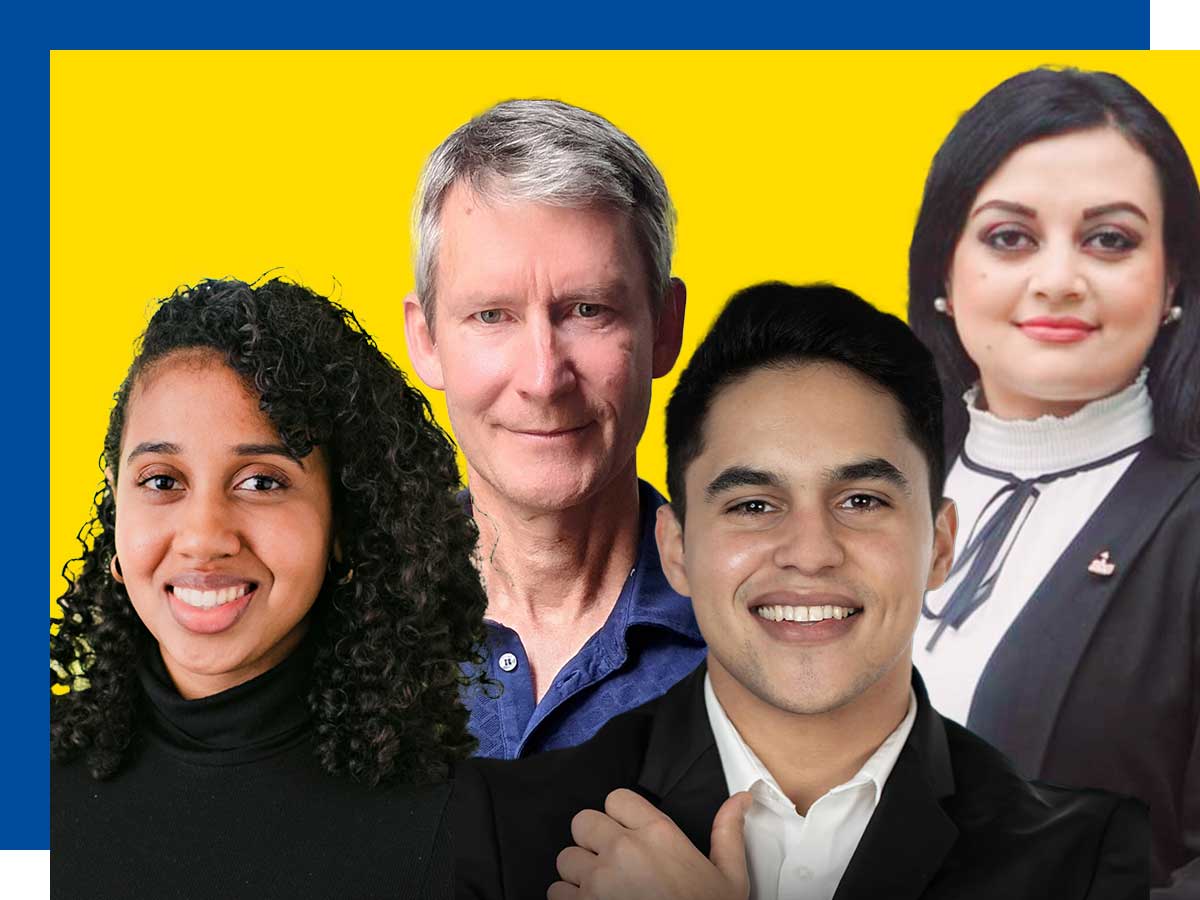
From left to right: Angelique Paul, Nick Saul, Ally Salama, Alina Haidary
In honour of Social Justice Week at Toronto Metropolitan University, we’ll be highlighting alumni and friends who have dedicated their careers to tackling issues affecting the wider community. From increasing access to healthy food and education to tackling the stigma associated with mental health — positive change comes in many forms. We’re proud to share their stories with you.
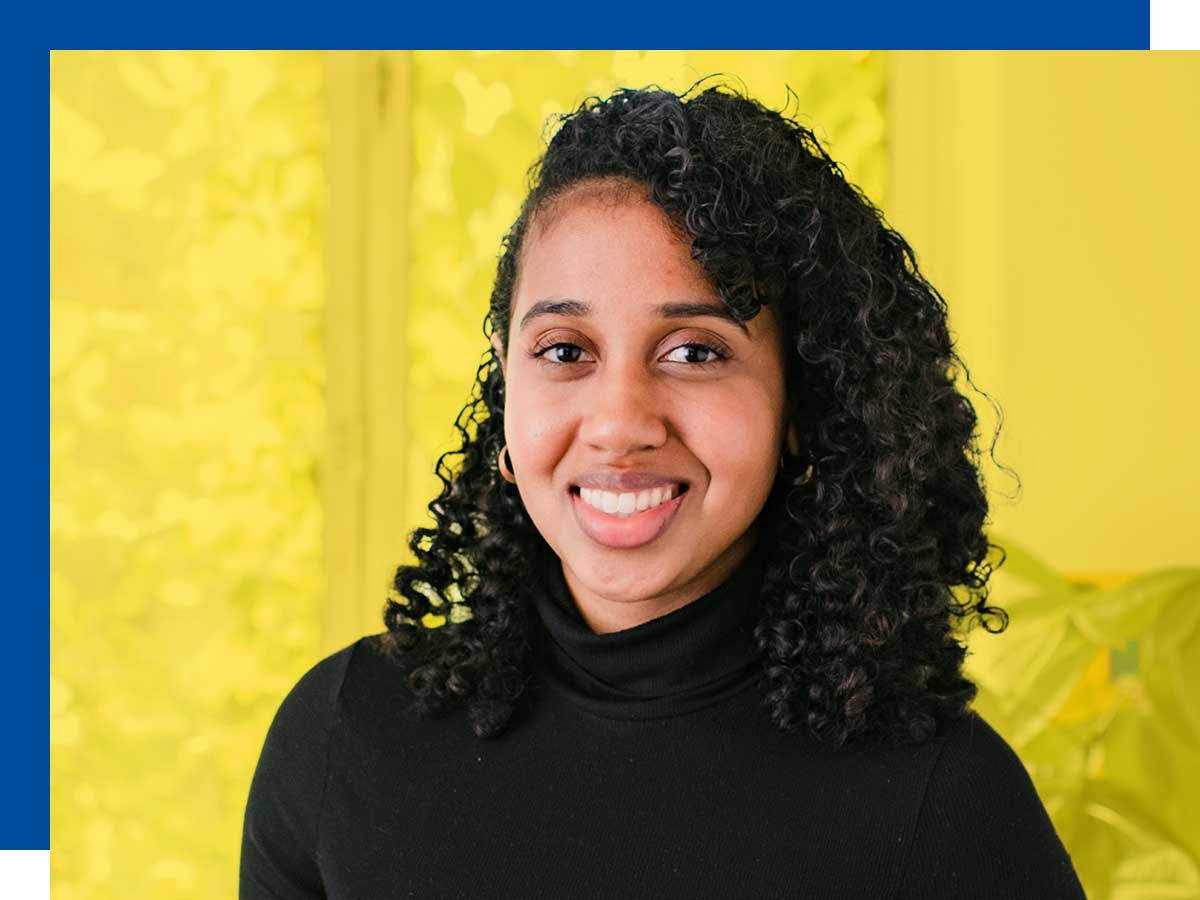
CEO and founder of Fingerprints Inc. (external link)
Digital Arts (MDM) ’17
Angelique Paul is the Founder and CEO of Fingerprints Inc, an education company dedicated to creating equal learning opportunities for students with different learning styles. After experiencing her own struggles with traditional learning methods in elementary school, Angelique was inspired to create an inclusive digital platform that catered to all children. In 2015, while pursuing her undergraduate degree, Fingerprints Inc., was born. After graduating in 2016, Angelique was accepted into Toronto Metropolitan University’s Master of Digital Media program where she developed ideas and research for different avenues of learning as well as the use of technology for both education and accessibility. This is when she developed the plan for In-Touch (external link) — an educational program that pairs unconventional learners with mentors and provides them with the resources they need to track their progress.
After completing the program, she was awarded a grant through the Chang School’s Accessibility Project which provided her with the opportunity to test and pilot a digital platform with students in elementary school in both the public and private sector. In 2019, Angelique enrolled in Toronto Metropolitan University’s Social Ventures Zone, where the current virtual format of the program was established. Today, she works with mentors from universities all over Ontario and mentees in both Toronto and Montreal.
Can you share how Fingerprints Inc. came to be?
Learning did not come easy for me. I excelled in certain courses but in others I couldn’t grasp the concept of what I was learning. Hurtful and dismissive comments about my intelligence affected my confidence in the classroom setting for years. In my final years of high school, my uncle (who was also my math tutor) noticed that I was both an auditory and visual learner. He worked with me one-on-one, listened to my worries, my thoughts, and shared in my excitement and joy. He was so much more than a math tutor. I realized that if I could create a platform of mentors that were dedicated to both academic success while genuinely investing into the lives of their mentees, I could create a new approach to learning. Learning that was based on trust, care and academic success that was fostered through relationships. The Social Ventures Zone has been an incredible asset to me. They have provided me with resources, workshops, the opportunity to hire an amazing and dedicated staff, but most importantly, a community. The journey of building a start-up can be lonely, and there is no better feeling than confiding in those that understand.
The pandemic highlighted an undeniable need to move beyond “traditional learning methods” to accommodate different learning styles. What do you think this means for the future of learning for kids?
When I first imagined Fingerprints, I envisioned a physical after-school program; however as time progressed, I thought a digital platform would be the answer to accessibility. Now having worked with the families of our mentees I have realized that an excellent solution would be a mix of both. Technology opens many new doors for learning and accessibility. However, it’s important to remember that a digital device can never replace an in-person relationship, and in some cases, digital learning is not an effective tool for all learners. When we move back to face-to-face interactions, I would love to have Fingerprints models both in-person and digital learning methods. I don’t believe that students can learn everything from sitting in front of a screen, the human connection is vital, and that needs to be considered as we continue to develop the future of learning.
Do you have any advice for aspiring changemakers?
Surround yourself with a supportive community. Learn from your “No’s” and remember that things will be challenging sometimes. If creating change was easy, everyone would do it. Lastly, remember those who supported you along the way and be willing to help and uplift those asking for your encouragement and guidance.

Co-founder and CEO of Community Food Centres Canada (external link)
Toronto Metropolitan University honorary doctorate, 2016
Nick Saul is co-founder and CEO of Community Food Centres Canada, a national organization that builds and supports vibrant, food-focused community centres in low-income neighbourhoods across the country. These centres are based on the idea that good food is a basic human right and a powerful force for greater health, belonging and justice.
Nick is a member of the Order of Canada, a recipient of the prestigious Jane Jacobs Prize, as well as the Queen’s Jubilee Medal and has an honorary doctorate from Toronto Metropolitan University. Nick is also the Chancellor of Victoria University in the University of Toronto. Born in Tanzania and raised in Canada, Nick studied at University of Toronto (Vic) and Warwick University in the UK as a Commonwealth Scholar. His bestselling book, The Stop: How the Fight for Good Food Transformed a Community and Inspired a Movement, written with his wife, Andrea Curtis, was nominated for the Toronto Book Award and won several other awards. It is published in Canada, the US and U.K.
Can you provide some background about how you became involved in food activism?
I did a variety of anti-poverty organizing before I got involved with food – including strengthening labour legislation, tenant’s rights and affordable housing. So when I arrived to take a job at a food bank in 1998, I came with a focus on justice and the right that everyone has to live with dignity. I’ll never forget my first day: people stood in long lines, kept their eyes on the floor, were asked invasive personal questions and then—adding insult to injury—were given unhealthy food and sent on their way. Plus, all this took place in a run-down, cockroach-infested building. It wasn’t surprising that many people never returned, even though they probably needed the food. Things had to change. It took time, but by listening to community members we created a vibrant, welcoming place that used food – growing, cooking and sharing it – to help forge health, belonging and justice. When good food is prepared with love and eaten with others in an environment that reinforces that people matter, and social change is possible, incredible things can happen.
What sort of transformational changes do you hope to see in Canada?
First and foremost, we want to see a country where no one worries about when they’ll eat next, compromises on the quality or quantity of their food or goes days without a meal. That’s our current situation with over 4.5 million of our neighbours struggling with food insecurity. The poverty that underpins this disturbing number is exponentially worse in Black, Indigenous and People of Colour communities as a result of systemic racism and our long history of colonialism. CFCC and its many partners will continue to call for racial justice and advocate for income and social supports that enable people to live with health and hope. It’s the only way we’ll ever win the right to food in Canada. And as we push for progressive policy change, we’re equally focused on transforming the community food sector by nurturing conversations and providing funding to create organizations that are full of good food, belonging and activism. It’s by community building for health in tandem with advocacy for justice that we can help foster a culture and politics that emphasizes respect, dignity and equity for all.
Do you have any advice for aspiring changemakers?
Jump in with both feet! While the issues our world faces are big and daunting – inequality, racism, hunger, climate change – never forget that change is possible and, in fact, happens all the time. Think minimum wage, women’s right to vote, public healthcare and same-sex marriage. These advances weren’t just handed to us as a society. They were fought for and hard won. It took people coming together to articulate a new path and then to mobilize in the street and in the corridors of power to secure this new direction. It’s no different today. When you figure out what matters to you, I guarantee you there will be others working on the same issue who will welcome your smarts and commitment. Be relentless, of course, but also know that progress takes time and it’s never linear. There will be setbacks. Know, too, that you can contribute in many ways. Not everyone has to be a leader. You might design a newsletter, march in a demonstration, donate, vote (always vote!) or write a deputation for a government hearing. It all adds up. What are you waiting for?

Founder, EMPWR Magazine (external link)
Business Management ’19
Ally Salama, known as the Middle East’s mental health ambassador, is an Egyptian-Canadian entrepreneur, podcaster, mental health advocate and the founder and CEO of EMPWR Mag, the first mental health focused magazine in the Middle East. He discovered his passion for the topic after his own struggles with mental health.
In 2020, Ally launched a podcast called “Empathy Always Wins (external link) .” His mission to break the stigma surrounding mental health has led him to speak about the topic for the United Nations, the World Health Organization, and has earned EMPWR recognition from Harvard University among their Top 7 Most Impactful Social Initiatives in 2019. He has also been recognized in the impact category for this year’s Forbes’ Middle East 30 under 30 (external link) .
Tell us the story behind EMPWR magazine. What motivated you to start it?
It started as one of my capstone projects in my final year. I was inspired to pursue the concept after my struggles with mental health led me to put out an anonymous submission form on social media called “Break the Silence Egypt.” The goal was to challenge the stigma associated with mental health in the region by allowing youth who were struggling to speak openly about the topic. The response showed me a clear need was not being addressed.
I felt a deep calling to be vocal and share relatable content, touching on our cultural nuances around topics such as parenting, bullying, suicide, and mental health challenges among Arab youth — that’s when I launched EMPWR Mag. Within a few months, it was nominated by Harvard as Top 7 Most Impactful Social Initiatives in the Arab World, and we were asked to speak at a World Health Organization workshop for Arab journalists. The aim was to encourage them to be mindful of their use of terms while covering mental health to reduce the harmful connotations.
Why is it important for you to promote open conversations about mental health in the Middle East?
Young adults must have safe spaces where they feel comfortable sharing their struggles. The stigma surrounding mental health is not unique to the Middle East. Many communities have similar challenges; however, I chose to focus on the region because during my healing journey as a young Arab man, one of the things that I struggled with the most was the lack of role models in my culture who overcame their illness publicly. The stigma associated with the topic only led to shame, loneliness and darkness.
Do you have any advice for aspiring changemakers?
My only advice would be to keep following where the action is happening in your community. Nothing replaces human interaction and networking. Getting out of a comfort zone can be scary but it's where I found my breakthrough. Thanks to my favourite professor at Toronto Metropolitan University, Dr. Steve Gideon, I have outgrown believing in luck. Instead, I follow the design thinking process he taught me to find solutions. Finally, to future changemakers, I'd say that we really need to be proactive and leverage every opportunity to take action.

Integration Program Officer, Immigration, Refugees and Citizenship Canada
Immigration and Settlement Studies (MA), ’17
Alina Haidary is an Afghan-Canadian immigration and settlement services worker who has journeyed through 11 countries as a refugee and immigrant. Currently working as an Integration Program Officer at Immigration, Refugees and Citizenship Canada (IRCC), it’s no surprise that she has chosen to dedicate her career to helping positively shape the experiences of newcomers in Canada. Prior to joining IRCC, Alina worked with immigration lawyers and settlement agencies, focusing on helping women and increasing their access to education and services.
In addition to her work with IRCC, Alina volunteers with numerous organizations including Women for Afghan Women, Nisa Homes (a shelter for Muslim women), ZONTA International, and the Afghan Women’s Organization. She has been recognized for her achievements through numerous awards, including the Afghan Canadian Islamic Community’s Best Achievement Award, The Canadian Council of Muslim Women’s ‘Women Who Inspire’ Award and the Community Service Award from ZONTA International.
You volunteer with many different organizations which support women’s equality and access to education. Why is it important for you to be involved in these causes?
I was born in Afghanistan, a war-torn country. I experienced a lack of access to education for five years when it was prohibited for Afghan girls to attend school. As a refugee and immigrant, I faced a lack of access to services, education and legal residency status. These experiences led me to want to help disadvantaged people, newcomers and women gain access to services. I have been working to achieve this through my work, community engagement and volunteer service. For me nothing is as rewarding as seeing the positive outcomes of my service, and witnessing the impact that my work and support has had on someone’s life.
What kind of positive change do you hope your work will inspire in the future?
I would like to set an example in the community through my courage, ambition, commitment and confidence. I would like my work to encourage and inspire newcomers and fellow Muslim women to dream big, work hard to achieve their dreams, share their time and talents, and help to pave the way for others to achieve the same. I believe that we rise and become stronger only by lifting each other up.
Do you have any advice for aspiring changemakers?
Dream big, start small and grow great. I started by helping one student, one woman facing domestic violence, and one newcomer family who needed settlement assistance, and soon it expanded and I have since been able to help dozens. Changemakers will face challenges throughout their journey, but they should not give up. They can use their strengths, talents, creativity, voice, and support system to overcome the challenges, and constantly remind themselves that what they are doing is a driving force to assist people in creating a better future.