After TMU — Ridzki Samsulhadi
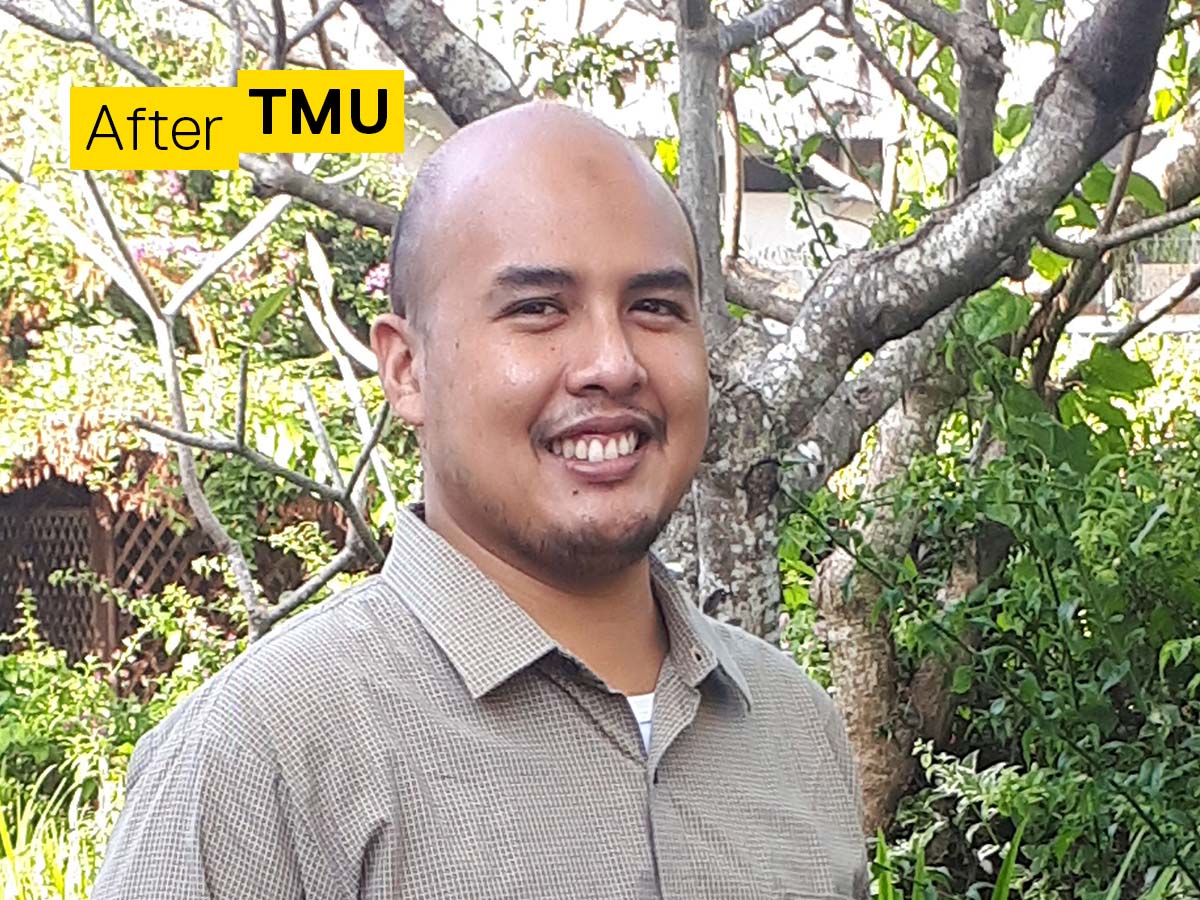
Ridzki Samsulhadi
Social Work ’16
School Counsellor, Dyatmika School
Why did you choose to study at Ryerson University?
TMU's Social Work program matched what I was looking for. After graduating from my high school in Indonesia, I spent a few years channeling my passion as a volunteer teacher in an open high school for local youths in West Java who could not afford to attend formal school. Those few years were the foundation of how I realized what my passion is in life. Along the way I found out about the field of social work which instantly felt like the right university path for me. After doing some research, TMU was a clear choice for me to pursue my education.
What skills developed through university have helped most in your career?
I would say the resilience to constantly challenge my own comfort zone has been one of the most important skills in shaping my career. TMU opened my eyes to the endless possibilities of how I could help people as a professional social worker without being stuck to just a society and method that I was already familiar with. I learned that determining an approach should start with understanding what kind of struggle someone was experiencing first. To build an understanding, I needed to build a trust-based relationship by listening to their stories without judging prematurely and by patiently giving them as much time and space as required to open up.
Another skill I honed in TMU that has proven to be very useful to my career is my capability and willingness to adapt to diversity. My time in TMU and Toronto generally, either when I interacted, studied or worked with people of various cultural backgrounds, opened my mind to better appreciate anyone regardless of their differences. TMU taught me to see everyone as human beings first and foremost. My work right now, in an international school where most of my students come from families of mixed cultural backgrounds, has made me truly appreciate my time living in the multicultural environment of TMU.
What are the biggest challenges you've faced in your career and how have you overcome them?
The biggest challenges I have faced, and am still facing, in my career come from people who still do not know how to tolerate certain differences. Unfortunately, some of these people could be either my own students, parents or local adults around where I live. When it comes to my students, I work collaboratively with staff in my school to improve our curriculum and to ensure students develop not only academically, but also from a social and well-being perspective. In my capacity as a school counsellor, I personally have been involved heavily in challenging our rigid curriculum by providing a compulsory non-academic learning subject called Personal Social, Heath and Economic education, for all of our middle and high school students.
Compared to educating students however, the bigger challenge is actually in our effort to educate some of the not-so-tolerant parents or adults. I have occasionally managed to collaborate with the Parents Teacher and Friends Association (PTFA) of my school to organize workshops on topics that we felt could be educational for parents and adults. Unfortunately, the ones who often attend these workshops are the ones who usually are already more open-minded.
A strategy I have used to reach out to the rest of the parents is by getting our student council to actively spread awareness on various social issues locally and globally as well. Charity-based initiatives and awareness campaigns through social media are pushed to be part of the annual events organized by students. When such initiatives are organized by their own children, hopefully parents will be more supportive toward the cause. Having their own children setting the example should be a good first step.
How did volunteering and getting involved on campus benefit you while studying and after graduation?
During my time at TMU, almost every year I worked part-time and simultaneously was a part of at least one youth organization on or off campus. I also did the mandatory placement internships for Social Work students in my 3rd and 4th year. All these involvements provided me the necessary experiences and skills enriching my overall university life as a student. While maintaining my academic performance was still my priority, I knew I would need to do so much more to realize my future goals career-wise and personally.
When I had just arrived in Canada, my English was poor and I definitely was not the most sociable person. The changes were very drastic when comparing it to how I was in my final 2 years at TMU. I assumed multiple leadership roles in my work on campus, in my internship and in the organizations I was involved in. In all these different roles, I worked with different kinds of people. In my final year of study, I did my internship in TMU ESL Foundation Program leading a team of mentors for new International students. At the same time, I was the president of TMU’s chapter of the World University Service Canada (WUSC) organization to support refugee youths who are studying in the university. I was also heavily involved with the Indonesian Consulate General of Toronto as an advisor to the Indonesia Student Association of Toronto.
I learned to listen actively to the many voices and opinions and how to appreciate all different ideas and feedback constantly. All these opportunities were a big factor in shaping myself to be flexible with various responsibilities in my current job.
What advice would you offer to international students studying at TMU?
Challenge yourself and be courageous! Even more importantly, if this is your first time living abroad as an international student, do not wait until someone reaches out to you. You need to motivate yourself proactively to get involved and interact with various people. The first time is always uncomfortable but it will be an eye-opening experience.
Being a university student means so much more than just attending classes, completing assignments and doing well on tests. It also means taking those courageous steps to becoming a full-fledged adult ready to change the world for the better.
How have you remained connected to TMU while living and working abroad?
I follow the TMU Alumni social media and am still in contact with some staff and professors in the university. Also, in my work capacity as a high school counsellor, I am still in touch with the Admissions Office at TMU.
What are some attributes of individuals most successful in your field of work?
As my field of work is a helping profession, successful individuals would be people capable of making others feel comfortable. That means being capable of showing compassion indiscriminately and a willingness to learn and listen patiently to people’s stories. Because this is the type of career that often involves difficult feelings and deep emotions, we also need to be capable of self-managing our own mental well-being consistently. We need to know when to give ourselves self-care before providing care to thers.
What do you love most about your job? What are your least favourite parts?
As a person who loves working with children and youth, interacting with them is pretty much my most favourite part of my job. Having them drop in to my office during break times or after school hours is often the highlight of my day.
The parts of my job that I enjoy the least is the administrative parts of it. Although I can be a meticulous person to the smallest details, I definitely still always prefer the tasks requiring me to interact with people rather than working on my computer.
Reflecting back, what do you wish you could tell your university self?
My time in TMU was full of amazing experiences. If I could meet my university self, I will simply tell him to keep doing what he does and not to look back. I will tell him to keep being himself, because I still am. In everything I do, I always try to appreciate the little things, to acknowledge the process and to be grateful.