After TMU — Alicia De Four
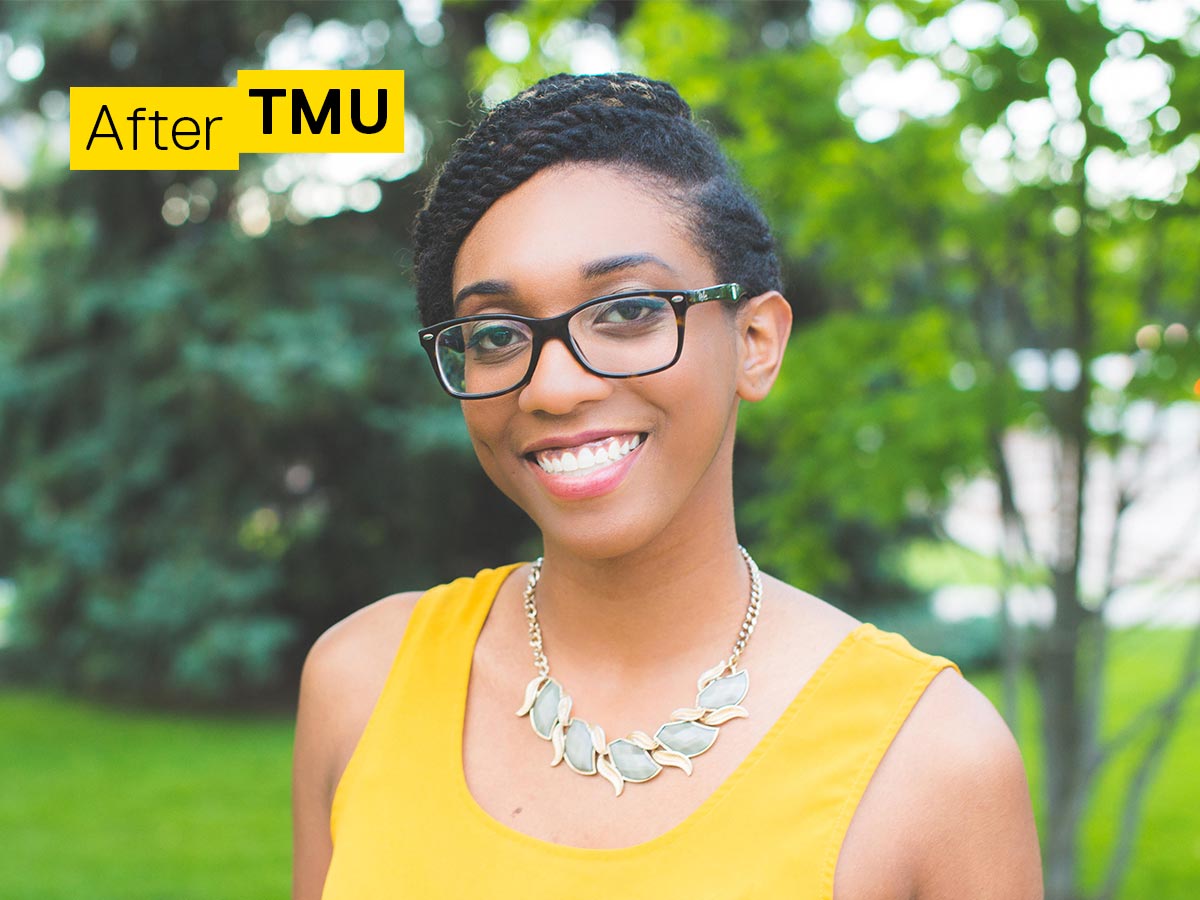
Alicia De Four, Radio and Television Arts ’14
Associate Producer, IGP Productions
1. What is a typical “Day in Your Work Life” like?
I’ve always found it difficult to pinpoint a ‘typical day’ in the life of a producer, because it’s such an all-encompassing job wherein you get your hands on many different aspects of production day-to-day. During a typical day in the office, we are working on numerous projects at various stages of development and production, including submitting funding applications, developing creative material, contracting key personnel, etc. Most recently, we were in production on the upcoming CBC drama Street Legal. While working on Street Legal, a typical day would range from tasks such as working alongside other key personnel to ensure all departments have what’s needed to run smoothly, handling finance partner deliverables, or being on set and having the opportunity to be involved in the creative process. As we lead through into post-production and final delivery, the cycle is continued to ensure that every logistical aspect is running on schedule, and preparing all of the material necessary to have a successful premiere on CBC March 4th at 9pm.
2. What are the best parts of your job; what are the necessary evils?
One of the best parts of my job is that every day is different. Through being an Associate Producer at an established production company, I get the opportunity to first-hand witness and be involved in the process of a production from the moment of its inception, up until it is complete and broadcast for the world to see. There are countless steps to take in between development to delivery, and I am fortunate enough to be able to work on all stages and get a full scope of what is necessary to succeed; whether this be during the creative process, logistics, financing, post-production, and anything in between.
I would say that a necessary evil of producing is the time and personal commitment that one must make to this line of work. TV/film production is not necessarily a 9-5 job, and there will be times that you spend 14-hour days between on set and in office, bright and early mornings tied to long red-eye nights. Producing is the type of career that you have to be passionate about in order to succeed and find fulfillment in, but if you do have the drive, then it is absolutely worth the effort.
3. Why did you choose to study at Ryerson University?
When I was in high school, I developed a love for television production through our in-house communication technology training program. While doing these courses throughout my time in high school, the RTA program was heralded as the ultimate goal for anyone who’s serious about wanting to work in production. I was heart-set on attending TMU’s Radio & Television Arts program from my early high school days, worked my way towards that goal through time and commitment, and was fortunate enough to be accepted into the program.
4. What are some skills you developed through university that help you in your career?
My education at TMU was certainly a great foundation for my current career. RTA provided us with the resources and access to industry-standard equipment, protocol, and information. Through having this foundation, I was provided the opportunity to expand on the various avenues of radio, TV, film, and digital production and get a better sense of where I felt most comfortable working in. I believe that TMU provides a good mix of hands-on work alongside the theoretical and informative training to assist students with finding their own niche within the field.
5. What do you wish you could tell your university self?
During my time at university, I think I was still focused on following through in the narrow understanding of production that was exposed to me in high school. I initially was determined to work in live-to-air studio productions, and that was all that I focused on during my time at TMU when choosing my courses. In hindsight, I now realize that is not where my personal preference falls, and I do wish I gave myself the opportunity to expand my horizons while I had the resources available in university.
6. How did your experience at TMU help you find your first position after graduation?
Upon graduation, I was at a point in my career where I wanted to work as a production designer. Through my final practicum film production at TMU, we made a short film entitled My Buddy, and I was the Production Designer on that film. I had a great time doing that project, and thought that I had found my niche in film, so I continued by working as a freelance Production Designer for a couple years. After a little while of doing this role, I realized that it wasn’t a position I felt used my best skills, and began steering my career towards producing. As a result of the wide scope of production roles that TMU exposed me to, I was able to better get a sense of what other options I have available for roles outside of production design, and I am grateful to have had the flexibility to know my options.
7. What are some attributes of individuals who are most successful in your field?
Through my experience with the various key personnel and producers that I’ve met so far, I would say one of the most important traits is being ambitious. As mentioned, this is not a career path for everyone. It takes a lot of commitment, sacrifice, and time management to be successful in such a demanding field. If one is not ambitious and passionate about this line of work, then it would be quite difficult to find fulfillment in committing such a significant amount of time in your life towards work.
I also believe that this field requires you to be flexible and versatile, because the scope of production is continually changing with the technology and resources available. Keeping an open mind and being adaptable to change can go a long way.
8. If you could start all over again, would you change your career path?
I don’t believe that I would want to change my career path, as I’ve been fortunate enough to have a good run so far within this field. As I’m still early on in my career, there is always room for change and growth, so I continue to keep an open mind towards other opportunities, but at the end of the day I do find fulfillment in storytelling and media production. If I do find myself compelled by other avenues to share captivating and important stories to the world, than I would be open to seeing where that could take me.