TMU founding class offers advice to incoming medical students
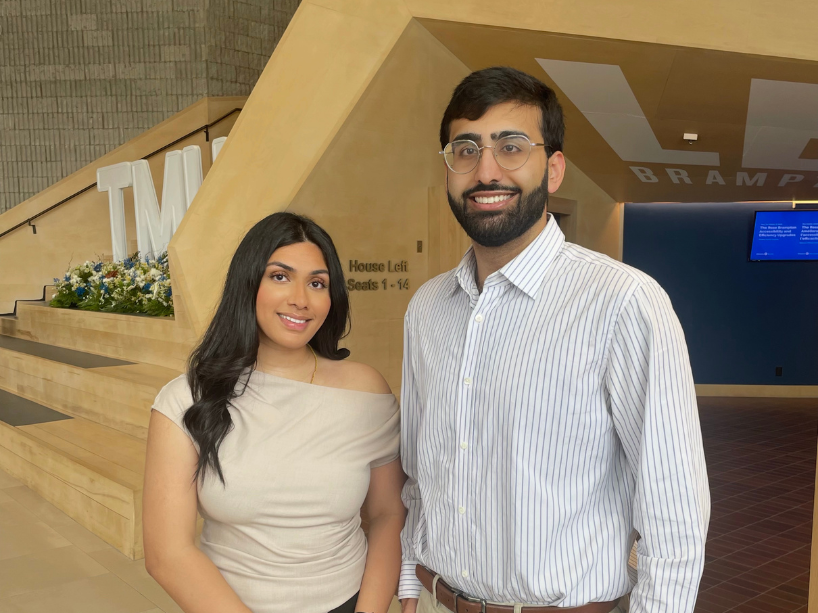
The first year of medical school has a daunting reputation, often compared to “drinking from a fire hose” because of the sheer volume of material to learn. But amid the challenge of adapting to a new learning environment and the pace of the curriculum, there are countless memorable moments—unique to medical school and TMU.
Shymega Arasaratnam and Haris Ahmad, co-presidents of the founding committee of the inaugural Medical Student Council (MSC), reflected on their first year: the highs, the lows, the lessons learned and the breakthroughs. Together, they shared what they wished they had known before starting medical school.
Your community is what keeps you going
You are not alone. Your classmates are taking the same classes, studying for the same exams and learning alongside you every step of the way. Lean on each other for support.
“I came in expecting to study alone, but I quickly realized I was surrounded by people going through the exact same thing,” Ahmad said. “You don’t have to do any of this by yourself.”
“No other school is close like we are. Everyone knows everyone here, and we support one another in a way that only a close-knit community can,” he added.
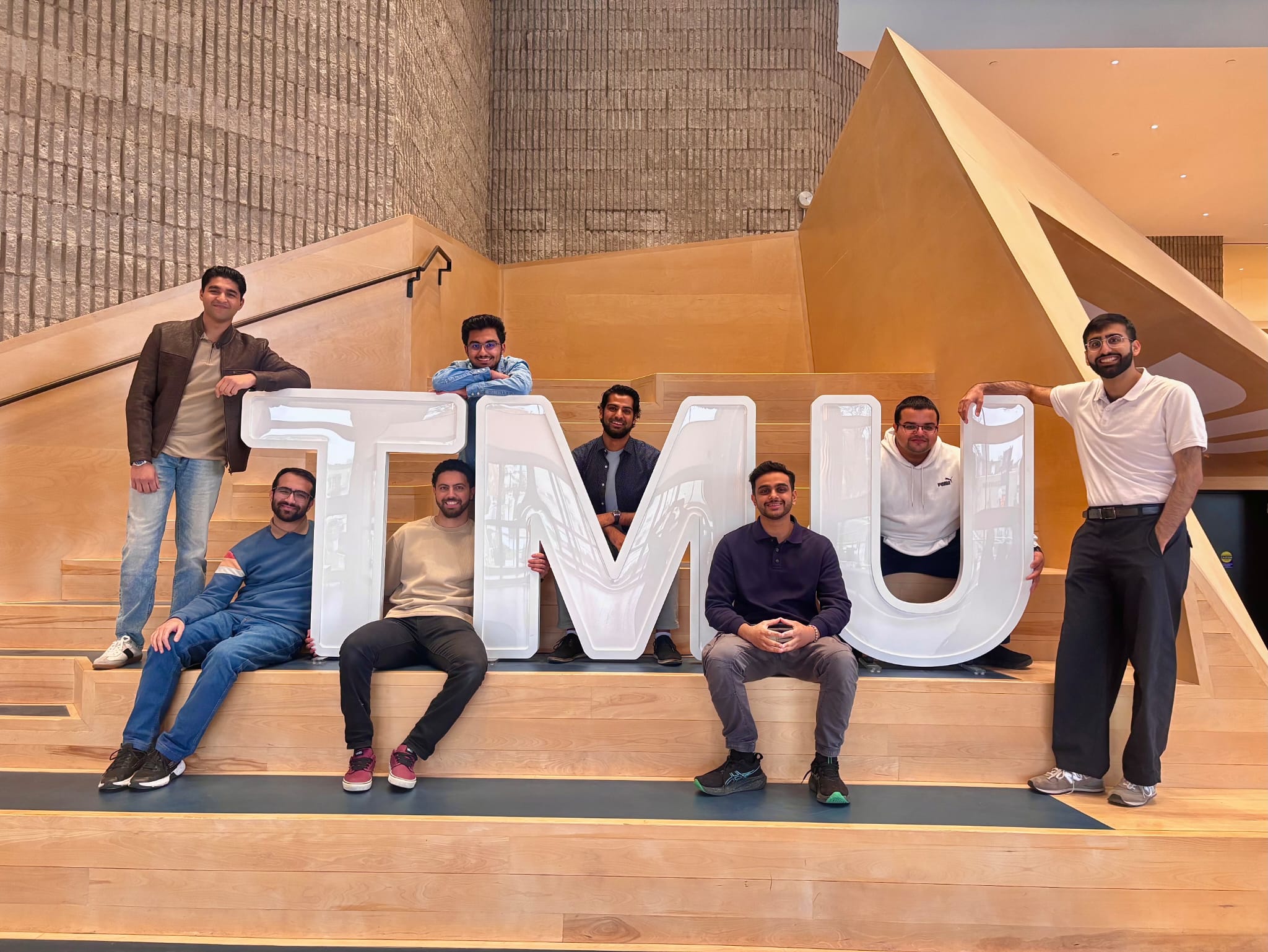
From left to right: Andullah Haris, Ali, Omar Radwan, Omar Shahid, Nabeel Mansuri, Adeeb Kutty, Idris Farid, Haris Ahmad.
Take time to find your study style
Studying in medical school is unlike anything many students have experienced before. With such a high volume of content, it’s important to identify what study methods work best for you.
“I quickly realized that the study tips that everyone recommends do not work for me,” Arasaratnam said. “I'm more of a visual person so I developed my own system where I compiled information into mind maps. I started realizing this is how I need to learn. These are things I can come back to beyond studying.”
Finding the approach that works for you is important, but consistency matters too. Coursework builds quickly, and staying on top of concepts as they are introduced is more effective than cramming before exams.
It’s okay to say no
Starting medical school is an exciting time, and you might feel pressure to do everything and meet everyone. But balance is essential to avoiding burnout.
“Saying no to one thing isn’t going to bar you from saying yes to the next thing,” Arasaratnam said.
“I used to sacrifice sleep for anything,” she added.“Now, I prioritize sleeping and working out to set myself up for a good day.”
Balancing school with work, family and friends and hobbies takes effort. Taking care of your physical and mental health is just as succeeding academically.
Make this school what you want it to be
Once you find your rhythm and discover your interests, get involved. As the second cohort of students, you get to shape the future of the MD program—from starting the clubs you want to join, building student council bylaws and providing feedback on classroom learning.
“What stands out is how the students on campus are treated with respect, not just as learners but as peers,” Ahmad said. “It truly feels like students have a voice here and a hand in shaping the School.”
Focus on the present. The future will come.
Take a moment—you made it into medical school. Before getting swept up in the pace of first year, congratulate yourself on making it this far.
“I feel like med students are always focused on the next step,” Arasaratnam said. “But take a moment to appreciate how incredible it is that you made it here to the TMU School of Medicine.”
Ahmad agrees.
“Take your time. You have four years to push boundaries. Get settled first, get your bearings and take a gradual approach.”
First year will inevitably change you, but you’ll feel more confident, with stronger study and time-management skills.
Just take it one step at a time.