Learning through stories: inside TMU’s case-based learning approach
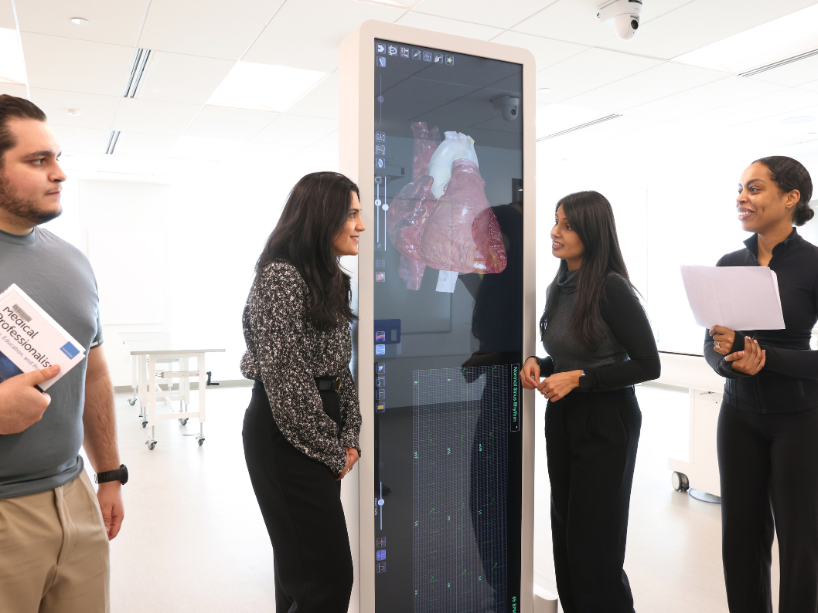
At Toronto Metropolitan University’s School of Medicine, medical education begins with a story.
Each week, MD students work through a clinical case in small groups through a primary teaching approach called case-based learning. Through these cases, they explore a new diagnosis, learning how to assess, investigate and manage care.
Guided by faculty, students learn through the stories of fictional patients—building the foundation for how they will deliver care as future physicians.
For Dr. Sheila Holmes, Director of Curriculum for Phase 1 (pre-clinical), what sets Toronto Metropolitan University (TMU) apart is how these cases are created. Dr. Jamie Harshman, Associate Director of Principles of Medicine, leads a core team that collaborates with local physician writers to bring these patient stories to life. The team includes Educational Developer Dahlia Benedikt, Interim Associate Dean of Curricular Innovation Dr. Clare Hutchinson, and Dr. Holmes.
“In medicine, the best way to remember things is to tie it to a person. Fleshing out personal details of our fictional patients to show the whole individual helps make learning stick and supports students in finding the solution to each case through compassionate care.”
Rather than focusing solely on symptoms, learners explore the broader content of a patient’s life, including their values, relationships and lived experiences. Cases often include narrative elements that reflect the social and emotional realities of care.
“There is a lot of what’s going on in the person’s mind and heart,” she said. “We’re trying to pull our learners into each scenario and make it feel more real.”
In one recent lesson, a learner experienced the pride of identifying a diagnosis, followed by the realization of what that diagnosis means for the patient’s life. According to Holmes, these moments are intentionally designed to push learners beyond the clinical facts and toward a deeper understanding of the human impact of care.
Designed with community in mind
At TMU, case-based learning is more than a teaching method—it’s a foundation for understanding medicine as both a scientific and human experience. A central feature of the four-year MD program, it shapes how students are introduced to medicine from the outset.
Behind each case is a structured design process: faculty identify key topics, develop learning objectives and collaborate across specialities to ensure both depth and accuracy.
“We wanted to align with modern instructional design that is driven by inquiry. If learners are given a problem they can dive into it, inquire and learn.”
Just as importantly, these cases are built to reflect the communities TMU serves. Many are set in primary care and feature patients whose backgrounds mirror the diversity of Peel Region.
“We wanted the patients to reflect the demographics of the community,” Holmes said. “Every case explores something beyond just the medical lens.”
That includes social determinants of health, cultural context and systemic barriers. Community voices have also helped shape cases. The team met with organizations during curriculum development and the collaboration resulted in highlighting cases grounded in reality.
As learners progress, they begin translating these narratives into clinical practice—writing notes, summarizing cases and making timely, informed decisions.
“Every week, they have the opportunity to think through what to ask, what to investigate and how to create a care plan,” Holmes said. “By the time they reach clinical settings, it won’t feel new.”
Ultimately, the goal is not just to teach students how to diagnose, but how to care. By anchoring medical education in stories, TMU is preparing future physicians to see not just the condition in front of them, but the person behind it—and to carry that perspective into every patient encounter.