Scholars of Excellence Workshop – Making Diaspora Finance Work
- Date
- November 10, 2026 - November 11, 2026
- Time
- 9:00 a.m. - 12:00 p.m. ET
- Location
- Online via Zoom
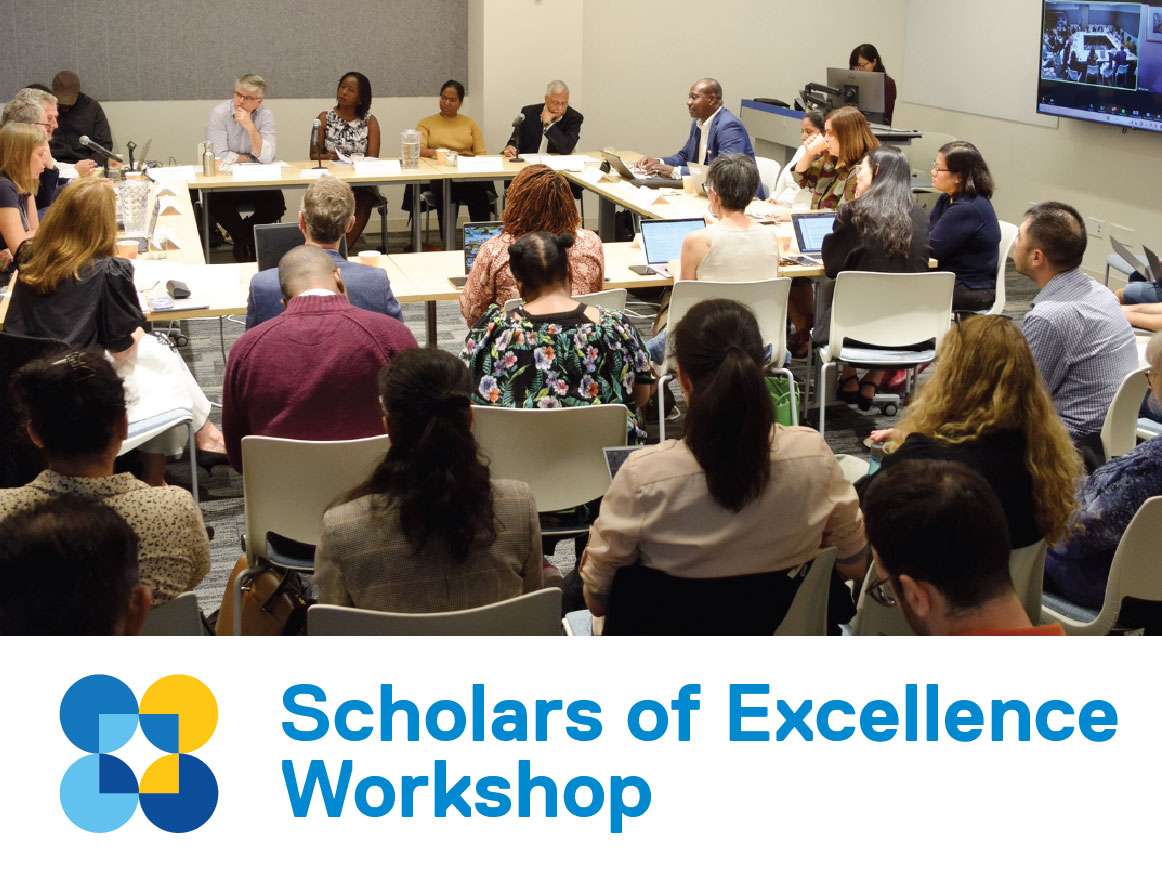
This workshop is co-convened by Stephen Gelb, Research Associate, PRISM, University of Cape Town, and Scholar of Excellence at the Global Migration Institute, and Anna Triandafyllidou, Scientific Director, Global Migration Institute, Toronto Metropolitan University.
This workshop will focus on diaspora finance, both remittances and investment in countries of origin by migrants and their descendants. Remittances have for many years been larger than overseas development assistance (foreign aid) and more recently also larger than foreign direct investment inflows into many developing countries. The gap with aid is likely to grow in future. A common complaint in the migration literature is that remittances to migrants’ families are focussed on individual household expenditure, rather than on growth- and development-inducing investment. Yet little policy attention is paid to how remittances may link to investment, by families receiving remittances, as well as at a macro level in the recipient economy. Equally important from a long-term growth perspective is how addressing diaspora finance can help to expand financial inclusion, which is low in many CoOs for both households and small/micro enterprises.
Fintech innovations like mobile phone-based money transfer apps help by lowering transaction costs and increasing security of transfers, but mobile money remains a small share of formal cross-border remittances: less than 3% globally and less than 1% in sub-Saharan Africa, according to GSMA, the mobile network association. Nor does mobile money adequately address financial inclusion, since it does not encourage savings, give access to credit or other financial products. Remittances need to be linked with deposit-taking institutions to allow for their pooling and aggregation, to support lending to other borrowers and thus wider economic expansion. In most countries, links between fintech apps and lending institutions are just starting, and require significant technical innovation and regulatory change, and therefore time and patience.
Small and micro enterprises, especially in Africa, find it difficult to access capital or credit to support business growth, with limited local financial markets and few potential investors willing or able to lend into that high-risk market segment. Yet diaspora investors may be willing to purchase equity in small firms, especially in their CoO, since the latter often provide stronger growth opportunities, and returns, than do larger firms in their CoD or CoO.
Diaspora finance could help to expand financial inclusion for small business, if a transactions arena for ‘early stage capital provision’ (ESCP) can be established. This requires construction of distinct financial value chains for CoO enterprises of different sizes and capital needs, again involving innovation and regulatory change in the CoO, and often the CoD too, and therefore also time and patience.
Through a series of case studies mainly looking at specific projects or programmes, many in Africa, the workshop will explore the links between diaspora finance, diaspora knowledge, and expanded financial inclusion, and their wider inclusive impacts. The first panel will focus on remittances, looking at remittance use and digitalisation in the Philippines, collective remittances supporting community infrastructure in Moldova, and remittances and their linkages with bank deposits in Morocco and Pakistan. The second panel will focus on provision of diaspora resources to small and medium size enterprises in origin countries, looking at an SME fund run by the Malian diaspora in France, at diaspora returnees in Senegal, at diaspora use of a Europe-based crowdfunder, and at returnee employees at an FDI investor in Nigeria.
Each speaker will have about 15 minutes to present, responding to questions put to them prior to the workshop by Stephen Gelb, followed by 15 minutes of discussion on their case. At the end of each session, there will be about 45 minutes of general discussion, across the case studies.
| Day 1 - Tuesday, November 10 | |
| 9AM - 12PM EDT | PANEL I : REMITTANCES Welcome and introduction: Anna Triandafyllidou and Stephen Gelb Philippines: Geoffrey Ducanes (Scalabrini Centre) Morocco: Samia Mansour Hamouda (UN Economic Commission of Africa) Moldova: Oxana Maciuca (UNDP, Chișinău) More speakers to be announced General discussion |
| Day 2 - Wednesday, November 11 | |
| 9AM - 12PM EDT | PANEL II: CAPITAL PROVISION TO ENTERPRISES Welcome and introduction: Anna Triandafyllidou and Stephen Gelb Diaspora venture capital: Bouba Cissoko (Ciwara, France & West Africa) Crowdfunding: Jadiel Guantai (Energise Africa, UK) More speakers to be announced General discussion |
By participating in TMU events and online communities, participants agree to abide by the TMU Code of Conduct Guideline. TMU reserves the right to update and modify this policy as needed to ensure a safe and inclusive environment for all participants.