Global Migration Institute Research Dialogue Series
- Date
- November 25, 2026
- Time
- 10:00 a.m. - 12:15 p.m. ET
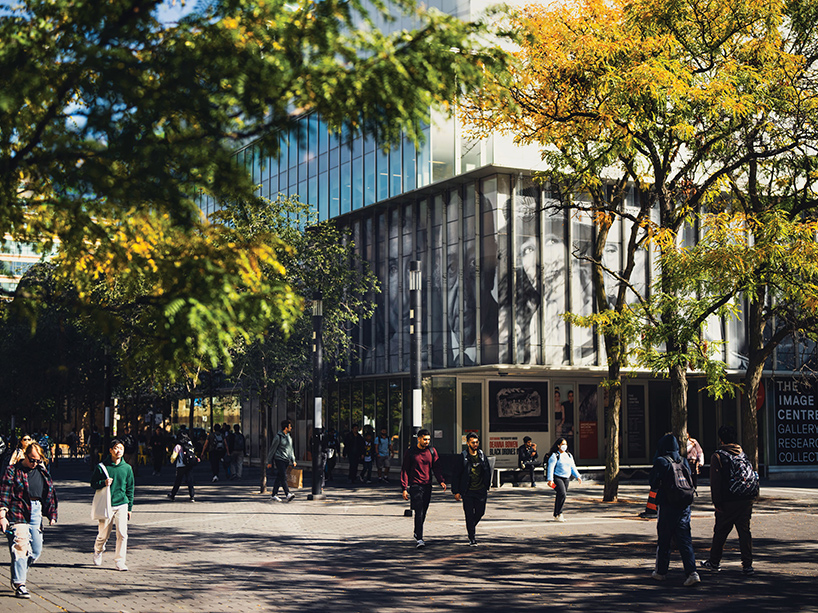
- Location
- Global Migration Institute/Bridging Divides Office, 220 Yonge, TEC-204 (Eaton Centre)
Lightning Talks and Deep Dive Conversation
The Research Dialogue Series spotlights the work of visiting scholars and fellows alongside members of the wider TMU community who work on topics connected to migration and integration. Each session includes time for Q&A, informal networking, and a light lunch.
The Research Dialogue Series is chaired by TMU Associate Professor Zhixi Zhuang.
| Program Agenda | |
| 10 – 10:10 AM | Welcome and Introductions | Zhixi C. Zhuang, Toronto Metropolitan University |
| 10:10 – 10:45 AM | Lightning Talks Dirty trade, clean ledgers: How cross-border pollution reporting traces the environmental roots of migration from North Africa Local Anti-Discrimination Governance and Inclusive Urban Institutions in Multicultural Cities Middle-Class Migration Aspirations and Social Media Impact on (Im)mobility Mobilising Refugee Admission Infrastructure: Canada’s Responses to Syria, Afghanistan and Ukraine |
| 10:45 AM – 12:15 PM | Deep Dive Discussion |
| 12:15 PM | Light Lunch |
Dirty trade, clean ledgers: How cross-border pollution reporting traces the environmental roots of migration from North Africa
Khalid Bencherif, Independent Journalist (Journalism Fellow)
This presentation investigates how European industrial waste exports to North Africa trigger severe environmental and health crises that function as direct push-factors for cross-border migration. By examining regulatory loopholes in international trade law and EU policy—such as the reclassification of toxic waste as secondary raw materials, the Corporate Sustainability Due Diligence Directive (CSDDD), and upcoming waste export bans—the presentation traces how transboundary pollution destroys local agrarian and coastal livelihoods, contaminates water sources, and displaces vulnerable populations. Methodologically, it integrates cross-border trade datasets from the Basel Action Network, customs records, and qualitative case studies in industrial hubs like Casablanca-Settat and Jorf Lasfar. Drawing on the Untold Mag investigation supported by Journalismfund Europe, the research connects environmental injustice directly to contemporary migration pressures from North Africa to Europe.
Khalid Bencherif is an award-winning Moroccan journalist based in Berlin in Germany, specializing in climate migration and environmental displacement across North Africa and the Mediterranean. He won the 2022 Michael Elliott Award for Excellence in African Storytelling from the International Center for Journalists and was a finalist for the Livingston Award in International Reporting for his investigation into climate-induced migration from his native oasis village in Morocco's Tafilalet region. His work focuses on uncovering hidden climate displacement stories that official migration statistics miss. As a native Arabic speaker with over a decade reporting across North Africa, he brings unique cultural and linguistic access to communities experiencing environmental collapse. His reporting has appeared in In These Times, Knight Center for Journalism, and Earth Journalism Network.

Local Anti-Discrimination Governance and Inclusive Urban Institutions in Multicultural Cities
Kibreab Habtemichael Gebereselassie, Ombuds Department for Anti-Discrimination, City of Frankfurt am Main (Civil Society Fellow)
This presentation examines how cities develop and implement local approaches to anti-discrimination and inclusion in increasingly diverse urban contexts. The research focuses on the cases of Frankfurt and Toronto, with particular attention to institutional innovation and collaboration between municipalities and civil society organizations. It will discuss comparative approaches to urban migration governance, institutional innovation, and policy transfer. By adopting a comparative approach to urban migration governance, the project will examine how local institutions respond to migration and anti-discrimination, how innovative governance practices emerge, and how policies and institutional approaches are transferred across urban contexts. It also considers the broader geopolitical trends shaping migration governance and local anti-discrimination policies, exploring how global and national developments influence the capacity of cities to promote inclusive institutions and practices.
Kibreab Habtemichael Gebereselassie holds a PhD in Administrative Sciences and studied Socio-Political Geography, alongside Sociology. Currently, he serves as the Head of the Ombuds Department for Anti-Discrimination. Throughout his distinguished career, Dr. Gebereselassie has held numerous leadership positions. He served for several years as the Director of the Viernheim Integration Office and went on to lead the Department of Migration and Human Rights at the Academy of the Diocese Rottenburg-Stuttgart. Additionally, he was the Head of the Department for International Affairs and Europe for the City of Sindelfingen, and the Head of the Office for Integration and Social Development at the Rhein-Neckar-Kreis District Office. As an active Senior Lecturer at various Universities in Germany, his research and teaching focus on migration theory, migration and geopolitics, migrant representation, administrative response to migration, intercultural communication, and diversity.
Middle-Class Migration Aspirations and Social Media Impact on (Im)mobility
Aysen Ustubici, Toronto Metropolitan University
MIDSCAPES (Middle-Class Migration Aspirations and Social Media Impact on (Im)mobility) investigates why some skilled middle-class individuals leave unstable contexts while others with similar profiles stay, specifically examining how digital information shapes these decisions. By integrating the aspirations-(cap)abilities framework with digital migration studies, the project addresses critical policy dilemmas: high-income countries’ interest in attracting the global talent versus middle-income countries’ struggles with "brain drain". The research focuses on the timely case of migration from Türkiye to Canada, employing a multi-sited, mixed-method approach that includes in-depth interviews with migrants and stayers, digital ethnography of "digital migration brokers" (DMBs), and online survey experiments to measure the impact of social media on shaping aspirations.
Aysen Ustubici is an Associate Professor in the Departments of International Relations and Sociology at Koç University, Istanbul and serves on the executive board of the Migration Research Center at Koç University (MiReKoc). She received her PhD in 2015 through a joint doctorate from the University of Amsterdam and Koç University. She was the PI for two EU Horizon 2020 projects, MIGNEX (Aligning Migration Management and the Migration–Development Nexus) and ADMIGOV (Advancing Alternative Migration Governance). Her research has been supported by other funding institutions including TÜBİTAK (The Scientific and Technological Research Council of Türkiye), IPC-Stiftung Mercator, and the Volkswagen Stiftung Foundation, Science Academy Türkiye. Since 2020, she has served as an editor of the journal International Migration. She is currently a Marie Skłodowska-Curie Global Fellow at the Global Migration Institute at Toronto Metropolitan University
Mobilising Refugee Admission Infrastructure: Canada’s Responses to Syria, Afghanistan and Ukraine
Roberto Cortinovis, Toronto Metropolitan University
This presentation draws on ongoing research for the ESCAPES project examining how states translate political commitments to refugee admission into operational responses. Focusing on Canada’s responses to displacement from Syria, Afghanistan and Ukraine, it adopts the notion of refugee admission infrastructure to capture the interlinked regulatory, organisational and social arrangements through which admission is made operational. The comparison identifies different patterns of infrastructural mobilisation across the three displacement situations, including scaling up established resettlement and sponsorship arrangements, adapting existing refugee-admission infrastructure through special programmes and changes to eligibility and referral arrangements, and drawing on instruments from the broader migration system for displacement-related purposes. The presentation discusses what the Canadian experience reveals about the mobilisation of refugee admission infrastructure. In particular it examines the processes through which political priorities are translated into operational response by mobilising and adapting existing capacities. It also draws attention to how these arrangements shape and channel access to admission pathways for displaced People.
Roberto Cortinovis’s research focuses on migration and refugee protection in Europe and internationally, with particular attention to refugee admission policies, including resettlement and complementary pathways of admission. He is currently a Marie Skłodowska-Curie Global Fellow at the Global Migration Institute at Toronto Metropolitan University. His MSCA project, ESCAPES (Safe Pathways to Protection for Displaced Populations in Canada and Europe), examines refugee admission policies from a comparative perspective. The project analyses the policy, legal, and institutional factors shaping states’ use of resettlement and complementary pathways and explores the normative issues raised by those policies, particularly in relation to equity, non-discrimination, and access to rights.
About the Research Dialogues
The Dialogues Sessions are conducted in two formats.
The Anchor Talk and Research Roundtable provides a forum for established scholars to provide a short lecture on a conceptual, methodological, or field-setting topic. The following research roundtable brings in researchers and practitioners to present their work and ideas surrounding the focus topic and act as discussants. Finally a whole group discussion allows for audience questions as well as for both presenters and attendees to discuss and engage with the discussion topics.
The Lightning Talks and Deep Dive provides a forum for researchers and students to share brief, focused presentations on research topics, ongoing projects, or practical challenges emerging from their work. Following the lightning talks, there is a guided group discussion to dive deeper into the topics, allow the presenters to receive feedback, and for all attendees to share their perspectives.