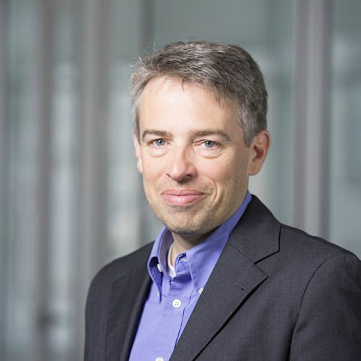
Two Geography faculty members among top 2% scientists worldwide
The workload of university faculty members is usually split between teaching and research duties. Teaching may be more visible to students and the public, yet university-based research and development (R&D) plays an important role: "Universities performed $16 billion in R&D in 2022, accounting for 40 percent of total Canadian research and development," according to Universities Canada (external link, opens in new window) with reference to data from Statistics Canada.
The professors thinking up and supervising this research aim to publish their findings for the benefit of other researchers and decision-makers in the public and private sectors. For better or worse, the impact of a researcher is often measured by citations of their published work. Based on a standardized citation metric developed at Stanford University, two professors in TMU's Department of Geography and Environmental Studies, Drs. Harald Bauder and Claus Rinner, are ranked among the top 2% scientists in the world.

The annual ranking of "science-wide author databases of standardized citation indicators" is divided into scientific fields and subfields. The October 2023 update (external link, opens in new window) lists Prof. Bauder among the world's top 2% geographers for his career-long impact. He also appears in the single-year tabulation, which captures publications during the preceding 2022 calendar year.
Bauder (opens in new window) , a former Graduate Program Director of the MA program in Immigration and Settlement Studies and founding director of the Toronto Metropolitan Centre for Immigration and Settlement, says: "It's great to see an acknowledgement of the impact one's research has in academia and the real world. I am a proponent of the Humboldtian model of higher education, which aims to integrate scholarship with post-secondary education for the benefit of students and society."
Bauder's research focuses on sanctuary cities and decolonizing immigration. He leads a large partnership grant on "Urban Sanctuary, Migrant Solidarity and Hospitality in Global Perspective (opens in new window) " funded by the Social Sciences and Humanities Research Council of Canada.
Prof. Rinner's research impact features in the top 2% of the Geological & Geomatics Engineering subfield of the Stanford ranking due to his publication record in geographic information science. Rinner is former Chair of Geography and Environmental Studies, former Graduate Program Director of the Master of Spatial Analysis program, and current Undergraduate Program Director of the BA (Hons) in Geographic Analysis.
"Rankings that are based on a combination of multiple indicators have to be taken with a grain of salt," notes Rinner (opens in new window) . He teaches students in "GIS and Decision Support" about the benefits and shortcomings of such composite metrics that are widely used to create lists such as the "most livable cities", "top regional employers", or "best countries to visit this summer." Nevertheless, Rinner appreciates the recognition that comes with the scientists ranking. After all, making a difference is the job of an academic!
Rinner's current research focuses on reassessing the COVID-19 pandemic response. He leads the international RECOVER19 (external link, opens in new window) project supported by the Government of Canada's New Frontiers in Research Fund.